 The American operation that killed the leader of the Afghan Taliban, Mullah Akhtar Mohammad Mansoor, on May 21, was unprecedented in more ways than one. It marked the first known effort by the United States to neutralize the leadership of the Afghan Taliban. It was also the first US drone strike in Pakistani Baluchistan, a region that is far removed from the Federally Administered Tribal Areas, where American operations have traditionally focused. Mullah Mansour’s killing also marked the most high-profile American incursion into Pakistani territory since the May 1, 2011 attack that killed al-Qaeda co-founder Osama bin Laden.
  Ironically, just hours before killing Mansour, Washington was calling the Taliban to join the negotiation table for peace talks with the Afghan government. So what exactly was America’s intention in killing the leader of the Afghan Taliban?
PROSPECTS FOR A MODERATE SUCCESSOR
There is no question that Mansour represented the most intransigent and militant segment of Afghanistan’s militant Pashtuns. He consistently dismissed efforts by Washington and Kabul to strike a deal with his forces as a ploy designed to weaken the Taliban’s role in Afghan politics. So the primary outcome that the US is seeking from his death is the possibility that a more moderate figure will emerge from within the ranks of the Taliban. That, however, is far from guaranteed. Even if it does happen, it will probably come after a period of leadership struggle between different factions and tribes within the Taliban, much like the heated infighting that broke out after the announcement of the death of the Taliban’s founding leader, Mullah Mohammad Omar. There are even some who believe that the death of two successive Taliban leaders in such a short period may split the group into three or more factions.
To avoid such a prospect, the Afghan Taliban have already begun internal consultations in order to quickly enthrone a new emir. Major candidates include the late Mullah Omar’s son, Mullah Yakoub, and his brother, Mullah Abdul Manan Akhund. The list of contenders also features the late Mullah Mansour’s deputies, including Sirajuddin Haqqani, head of the Haqqani Network, which recently consolidated its forces with those of the Afghan Taliban. Many observers believe that Haqqani is Mansour’s most likely successor, as well as the most militant of all contenders for the group’s leadership.
THE END OF PEACE NEGOTIATIONS?
If the Afghan Taliban are led by Haqqani, a man described by the White House as a terrorist mastermind, the chances of seeing Afghanistan’s militant Pashtuns join peace negotiations with Kabul are slim to none. The country’s President, Ashraf Ghani, said last week that he hoped that the death of Mansour would weaken the Taliban hardliners and open the path to negotiations with his government. It is difficult to see, however, how the Taliban could sit at the table with the Afghan government and its American allies, namely the same people who just  killed the group’s leader.
They only way that could possibly happen is if Pakistan, which is the Afghan Taliban’s state patron, compels them to do so. But such a prospect is unlikely. In the hours after Mansour’s assassination, the US Secretary of State John Kerry described it as an “action that sends a clear message to the world that we will continue to work with our Afghan partners”. Indeed, Mansour’s killing was a source of jubilation in Kabul. But there were no celebrations in Islamabad, which was notified about the US drone strike on its soil after its completion. The Pakistani position has always been that military action against the Afghan Taliban will only push them further underground. Instead, Pakistan argues that the Taliban should be brought to the table to sign a comprehensive peace treaty that will ensure ethnic rights for Afghanistan’s Pashtun population. But the prospect of that happening after Mansour’s assassination are slim, even if a more moderate figure succeeds him at the helm.
THE FUTURE OF THE AFGHAN WAR
What are, then, the prospects for peace in Afghanistan? A notable rise in violence should be expected, as various Taliban factions lash out against the government in Kabul with the aim of augmenting their standing against internal competitors. The Taliban now control more territory in Afghanistan than at any other point following the 2001 US invasion. If their alliance with the Haqqani Network survives, they will continue to be a formidable force in the country and the surrounding region, and will become increasingly difficult to defeat militarily. The group will continue to operate with considerable force even if Mansour’s position is not filled soon, as local Taliban forces have shown that they are capable of taking unilateral initiative in times like this. In the meantime, observers in Kabul and Islamabad, as well as the Afghan Taliban’s leadership in Quetta, will be wondering whether the assassination of Mansour marks the beginning of a more aggressive approach by Washington in the ongoing Afghan war. The answer to that question remains elusive, but will likely shape the future of the 40-year-old Afghan war.
► Author: Joseph Fitsanakis | Date: 24 May 2016 | Permalink
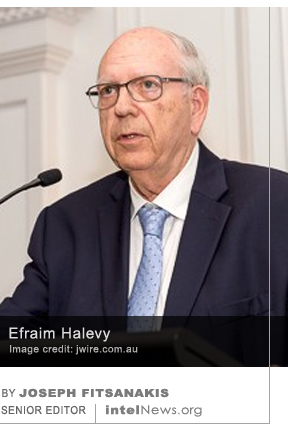 A former director of Israel’s Mossad intelligence agency has called on the Israeli government to reach out to Hamas, arguing that the Palestinian group is now ready to accept a peace settlement. Efraim Halevy directed the Mossad, Israel’s primary external intelligence agency, for five years before retiring in 2002. He is best known for helping forge a historic peace treaty between Israel and Jordan in 1994, which made the Hashemite Kingdom the second Arab country, after Egypt, to sing a peace accord with the Jewish state.
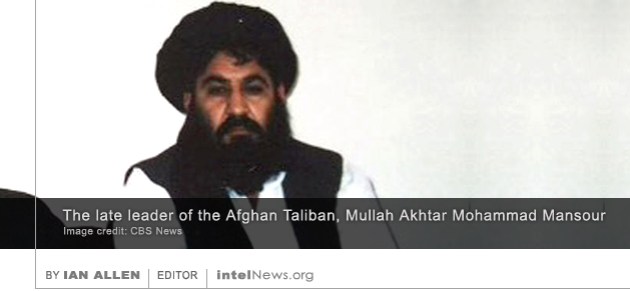 Frequent trips to Iran caused the demise of the late leader of the Afghan Taliban, Mullah Akhtar Mohammad Mansour, who was
  A Portuguese intelligence officer arrested a week ago in Rome, allegedly while passing classified documents to his Russian handler, may have accomplices with access to North Atlantic Treaty Organization (NATO) secrets. IntelNews
  A Russian intelligence officer, who posed as a banker in the United States, has been handed a prison sentence by a court in New York. Evgeny Buryakov, 41, posed as an employee of the New York branch of Vnesheconombank, a Russian state-owned bank headquartered in Moscow. However, in January 2015, the Federal Bureau of Investigation
 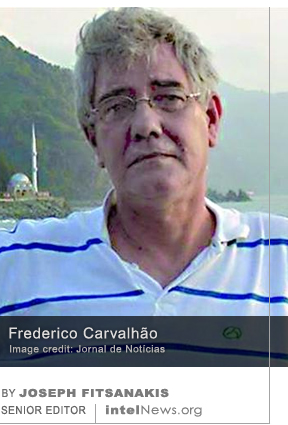 Two intelligence officers, one Russian and one Portuguese, have been arrested by Italian authorities on charges of espionage. The arrests took place in Rome on Monday by Italian police, who were reportedly accompanied by Portuguese counterintelligence officers. It is suggested in Portuguese media that the two men were arrested in the act of exchanging classified documents and money. The Portuguese intelligence officer has been identified in
 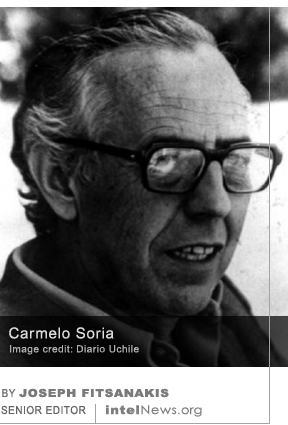 The Supreme Court of Chile will request that the United States extradites three individuals, including an American former professional assassin, who are implicated in the kidnapping, torture and murder of a United Nations diplomat. Carmelo Soria was a Spanish diplomat with dual Chilean nationality, who in the early 1970s was employed in the United Nations Economic Commission for Latin America and the Caribbean. In 1971, when the leftist Popular Unity party won Chile’s elections and became the nation’s governing coalition, Soria became an advisor to the country’s Marxist President, Salvador Allende. After the 1973 violent military coup, which killed Allende and overthrew his government, Soria used his diplomatic status to extend political asylum to a number of pro-Allende activists who were being hunted down by the new rightwing government of General August Pinochet.
 Egypt’s aviation minister has joined the head of Russia’s domestic security service, unnamed US intelligence sources, as well as a host of aviation security experts, in seeing terrorism as the most likely cause behind the EgyptAir MS804 air disaster. That is despite the absence of a clear ‘smoking gun’ and silence from the Islamic State, which leads many to still caution that the possibility of an accident should not be ruled out. The regularly scheduled flight departed Paris, France, late on Wednesday, heading for Cairo, Egypt. But it disappeared from radar screens just minutes after entering Egyptian airspace and is now believed to have crashed into the Mediterranean Sea.
 In the early hours of Thursday, May 19, EgyptAir, Egypt’s national airline carrier,
  efforts. The group has remained silent since early this morning, when EgyptAir announced the disappearance of flight MS804. However, it typically waits for several hours, and sometimes days, before assuming responsibility for high-profile attacks.
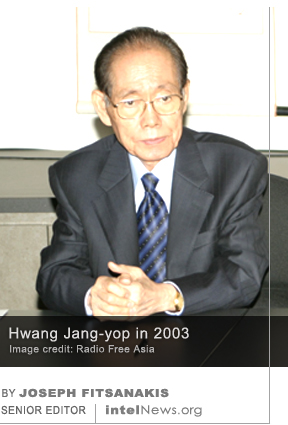 An appeals court in Seoul has upheld the conviction of a South Korean member of a spy cell that planned to assassinate the most senior North Korean defector to the South. The man, identified in media reports only by his last name, Park, is a South Korean citizen who allegedly helped a North Korean spy cell “based in China” plan the assassination of Hwang Jang-yop. In 1997, Hwang caused a sensation on both sides of the border when he defected to the South. A former secretary of the Korean Workers’ Party, Hwang was Pyongyang’s primary theorist and the ideological architect of juche, the philosophy of self-reliance, which is North Korea’s officially sanctioned state dogma. He was also believed to have ideologically mentored North Korean Supreme Leader Kim Jong-il, the father of the country’s current Supreme Leader, Kim Jong-un. Until his
 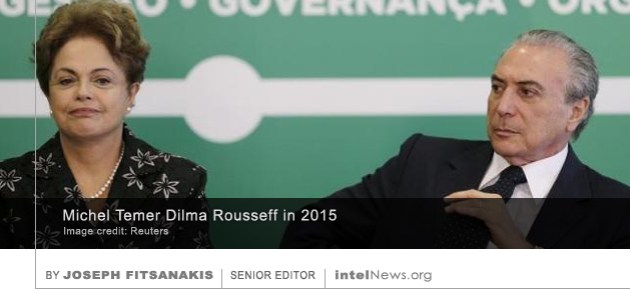 The new acting president of Brazil briefed American diplomats on sensitive political matters in 2006, according to cables published by the international whistleblower website WikiLeaks. Michel Temer is leader of the Brazilian Democratic Movement Party, known as PMDB. Although it is one of Brazil’s largest political parties, the PMDB has been unable to muster enough electoral support to govern the country on its own. As a result, under Temer’s leadership, the PMDB has been a partner of every governing coalition in Brazil since 1995. During the administration of leftwing President Dilma Rousseff, Temer held the post of Vice President.
 The arrest of Nelson Mandela in 1962, which led to his 28-year incarceration, came after a tip from the United States Central Intelligence Agency, according to an American diplomat who was in South Africa at the time. At the time of his arrest, Mandela was the head of uMkhonto we Sizwe (MK), an organization he founded in 1961 to operate as the armed wing of the anti-apartheid African National Congress (ANC). But the white minority government of South Africa accused Mandela of being a terrorist and an agent of the Soviet Union. The US-Soviet rivalry of that era meant that the ANC and its leader had few supporters in America during the early stages of the Cold War.
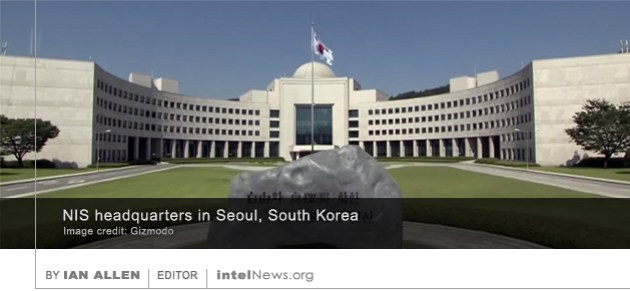 The intelligence agency of South Korea has admitted it made an error when it claimed earlier this year that North Korean authorities had executed one of the regime’s most prominent military figures. On February 10, South Korean newspapers printed a series of articles suggesting that Pyongyang had executed General Ri Yong-gil, who led the Korean People’s Army (KPA), holding post that was equivalent to the United States’ chairman of the Joint Chiefs of Staff. The articles said at the time that the information about General Ri’s execution came directly from the National Intelligence Service (NIS), South Korea’s primary external spy agency. The general had allegedly been executed after being found guilty of “factionalism, abuse of power and corruption”. The reports added that General Ri had turned into an alcoholic and was in poor health as a result. Speculation as to the reason for General Ri’s alleged execution brought up the possibility that he had led an opposition faction within the KPA. This, in turn, led some analysts to speculate that the administration of Kim Jong-un was close to collapse.
 Over 50 journalists and their contacts were systematically spied on by the Polish intelligence services between 2007 and 2015, according to the former director of an anti-corruption watchdog. Until 2009, Mariusz Kamiński led the Central Anti-Corruption Bureau, which was set up by the office of the Polish Prime Minister in 2006 to address corruption in the country. The body is also responsible for monitoring the operations of Poland’s intelligence services, including the Internal Security Agency (ABW).






 intelNews.org
Relations between UK spy agencies “broke down” during war on terrorism
June 2, 2016 by Joseph Fitsanakis 1 Comment
In Britain, the administration of Prime Minister Tony Blair secretly supported Washington’s extraordinary rendition operations. It instructed the Secret Intelligence Service, known as MI6, to assist its American counterpart, the Central Intelligence Agency, in efforts to abduct and rendition terrorism suspects. However, not everyone in Britain’s intelligence establishment was in agreement with government policy. One strong critic was Eliza Manningham-Buller, the then-director of Britain’s Security Service, commonly known as MI5, which she led from 2002 to 2007. According to The Guardian’s sources, Manningham-Buller was “evidently furious” when she discovered that MI6 had secretly colluded with governments like those of Libya and Egypt to rendition terrorism detainees. Believing extraordinary rendition and torture to be “wrong and never justified”, the MI5 director effectively stopped her agency from cooperating with MI6. She even “threw out” of MI5’s Thames House headquarters several MI6 liaison staff who were working there at the time, said The Guardian.
Soon afterwards, Manningham-Buller complained in writing to Prime Minister Blair about the conduct of some MI6 officers, whose actions allegedly “threatened Britain’s intelligence gathering” and “compromised the security and safety of MI5 officers and their informants”. The Guardian does not provide further elaboration of the contents of Manningham-Buller’s letter to the prime minister, but alleges that it contributed to a “serious and prolonged breakdown” in relations between MI5 and MI6. The paper says it contacted the two intelligence agencies, as well as Manningham-Buller, who has since retired, but no one wished to comment on the story. Sources did tell the paper, however, that the relationship between the two agencies “has now been repaired after a difficult period”.
► Author: Joseph Fitsanakis | Date: 02 Jun 2016 | Permalink
Filed under Expert news and commentary on intelligence, espionage, spies and spying Tagged with Eliza Manningham-Buller, extraordinary rendition, intelligence cooperation, MI5, MI6, News, torture, UK