December 31, 2015
by intelNews
 Ever since 2008, when we launched intelNews, we have monitored daily developments in the highly secretive world of intelligence while providing an expert viewpoint removed from sensationalism and conspiratorial undertones. As 2015 is about to conclude, we take a look back at what we think are the ten most important intelligence-related developments of the past 12 months. Regular readers of this blog will surely agree that we witnessed our fair share of significant intelligence-related stories this year. Some of them made mainstream headlines, while others failed inexplicably to attract the attention of the news media. In anticipation of what 2016 may bring, we present you with our selection of stories, which are listed below in reverse order of significance. This is part two in the series; part one was published yesterday.
5. CIA may have pulled officers from Beijing embassy following OPM hack. Up to 21 million individual files were stolen in June 2015, when hackers broke into the computer system of the US Office of Personnel Management. The office, known as OPM, handles applications for security clearances for agencies of the federal government.ch The breach gave the unidentified hackers access to the names and sensitive personal records of millions of Americans who have filed applications for security clearances. In late November it was reported that the Central Intelligence Agency (CIA) pulled a number of officers from the United States embassy in Chinese capital Beijing, following the massive cyber hacking. The irony is that, according to The Washington Post, the records of CIA employees were not included in the compromised OPM database. The latter contains the background checks of employees in the US State Department, including those stationed at US embassies or consulates around the world. It follows that US diplomatic personnel stationed abroad whose names do not appear on the compromised OPM list “could be CIA officers”, according to the paper.
4. Provisional IRA ‘still broadly in place’, says Northern Ireland police chief.. On July 28, 2005, the Provisional Irish Republican Army (PIRA), which fought British rule in Northern Ireland for decades, announced that was ceasing all paramilitary operations and disbanding as of that day. Three years later, the Independent Monitoring Commission declared that the PIRA’s Army Council, which steered the activities of the militant organization, was “no longer operational or functional”. In the ensuing years, which have seen the implementation of the Good Friday Agreement that restored peace in Northern Ireland, it has been generally assumed that the PIRA had ceased to exist. In August, however, George Hamilton, the head of the Police Service of Northern Ireland, told reporters that “some of the PIRA structure from the 1990s remains broadly in place” in the area. Hamilton was speaking in reference to the murder earlier that month of Kevin McGuigan in east Belfast. McGuigan, a 53-year-old father of nine, was a former member of the PIRA, who had fallen out with the organization. He was gunned down at his home, allegedly in retaliation for the murder last May of Gerard Jock Davison, a former commander of the PIRA, who was also shot dead in the Markets area of Belfast.
3. US Pentagon may have doctored intelligence reports on the Islamic State. Many Middle East observers, including this website, have made notably dire projections about the continuing reinforcement and territorial expansion of the Islamic State. In August, a leaked US intelligence report published by the Associated Press said the Islamic State’s strength had remained stable throughout 2014 and 2015, despite a US bombing campaign. However, earlier assessments by the Defense Intelligence Agency (DIA), which were communicated to senior US policymakers, including President Barack Obama, were far more optimistic about America’s ability to defeat the militant group. Why the discrepancy? According to The Washington Post, which published the story in late August, officials with the US Central Command (CENTCOM), the Pentagon body that directs and coordinates American military operations in Egypt, the Middle East and Central Asia, had systematically doctored the conclusions of intelligence reports about the Islamic State before passing them on to American leaders. It appears that the evidence pointing to deliberate manipulation of intelligence assessments was convincing enough to prompt the Pentagon’s Office of the Inspector General to launch an official probe into the matter.
2. China and Taiwan swap jailed spies in historic first. Few ongoing intelligence conflicts are as fierce as the one that has been taking place between China and Taiwan since 1949, when the two countries emerged following a bitter civil conflict between communist and nationalist forces. Observers were therefore surprised when, two weeks ahead of a historic November 7 meeting between Chinese President Xi Jinping and Taiwanese President Ma Ying-jeou, the two countries announced a spy swap. The exchange, which took place in secret in late October, was the first of its kind in the history of the two bitter rivals. Taipei released Li Zhihao, a mysterious Chinese intelligence officer known in spy circles as “the man in black”, who had been arrested in 1999 and was serving a life sentence. In return, Beijing freed Chu Kung-hsun and Hsu Chang-kuo, two colonels in Taiwan’s Military Information Bureau, who were arrested in mainland China’s nearly a decade ago. It is believed that they were the highest-ranked Taiwanese spies imprisoned in China. Their release, therefore, marks an unprecedented development in Chinese-Taiwanese relations.
1. Russia, Iraq, Iran, Syria, now officially sharing intelligence in war against ISIS. The increased involvement of major powers in Syria has been arguably the greatest intelligence-related development of 2015. The United States, Russia, Iran, Turkey, Israel, Germany, France, and the United Kingdom, are only some of the state and non-state actors that are now actively engaged on the ground in Syria, both with armies and with intelligence personnel. A significant related development is the growing relationship between the intelligence apparatus of US ally Iraq and a number of countries with which Washington has an adversarial relationship. Intelligence-sharing had been practiced for a while between Russia, Syria and Iran. But in September of this year, Iraq entered the intelligence alliance for the first time. According to the Baghdad-based Iraqi Joint Forces Command, the agreement entails the establishment of a new intelligence-sharing center in the Iraqi capital. It is staffed with intelligence analysts from all four participating countries, who pass on shared information to their respective countries’ militaries. In October, The Washington Times reported that Iraq had been fully integrated into the Russian-led intelligence-sharing alliance, and that the Iraqi government was already using Russian-supplied intelligence in its war against the Islamic State, according to officials in Baghdad.
► Authors: Joseph Fitsanakis and Ian Allen | Date: 31 December 2015 | Permalink
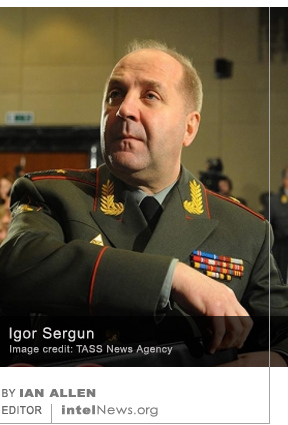 The director of Russia’s powerful military intelligence agency has died unexpectedly at 58, according to the Kremlin, which has yet to release precise information about the circumstances of his death. General Igor Sergun had led the Main Intelligence Directorate, known as GRU, since 2011, when he replaced his predecessor, Colonel General Aleksandr Shlyakhturov, in a Kremlin-instigated reshuffle. The Russian government said at the time that Shlyakhturov, who had spearheaded a major shake-up of the GRU since his appointment in 2009, had “reached retirement age” and gave no other reason for his sudden replacement. General Sergun’s death was announced in a statement posted on the official website of the Kremlin on January 4. It said that the GRU director had “suffered a sudden death” on January 3. It gave no further details as to the exact cause or circumstances surrounding the general’s death.
 American intelligence agencies spied on Israeli Prime Minister Benjamin Netanyahu during the negotiations between the United States and Iran over the Islamic Republic’s nuclear program, according to officials. Tehran entered a deal, referred to as ‘the Geneva pact’, following drawn-out negotiations with a group of nations that came to be known as P5+1, representing the five permanent members of the United Nations Security Council plus Germany. The government of Israel, however, strongly criticized the negotiations. Prime Minister Netanyahu called the pact a “historic mistake” that would enable “the most dangerous regime in the world” to get closer to “attaining the most dangerous weapon in the world”. Israel’s strong reaction, which included open criticism of US President Barack Obama, caused some in the US to
  Ever since 2008, when we launched intelNews, we have monitored daily developments in the highly secretive world of intelligence while providing an expert viewpoint removed from sensationalism and conspiratorial undertones. As 2015 is about to conclude, we take a look back at what we think are the ten most important intelligence-related developments of the past 12 months. Regular readers of this blog will surely agree that we witnessed our fair share of significant intelligence-related stories this year. Some of them made mainstream headlines, while others failed inexplicably to attract the attention of the news media. In anticipation of what 2016 may bring, we present you with our selection of stories, which are listed below in reverse order of significance. This is part one in the series; part two is available
 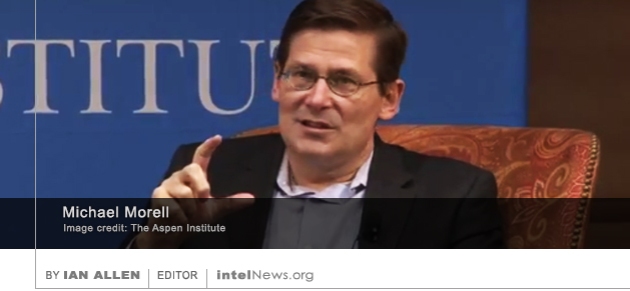 A senior Central Intelligence Agency official, who led the agency as its acting director before retiring in 2013, has said that not having sources in the Iraqi government’s upper echelons led to the intelligence failure of 2003. Michael Morell retired as deputy director of the CIA, after having served twice as its acting director, in 2011 and from 2012 to 2013. A Georgetown University graduate, Morell joined the agency in 1980 and rose through the ranks to lead the Asia, Pacific and Latin America divisions. In May 2015, Morell published his book, The Great War of Our Time: The CIA’s Fight against Terrorism from al Qa’ida to ISIS, which he has been promoting while working as a consultant in the private sector.
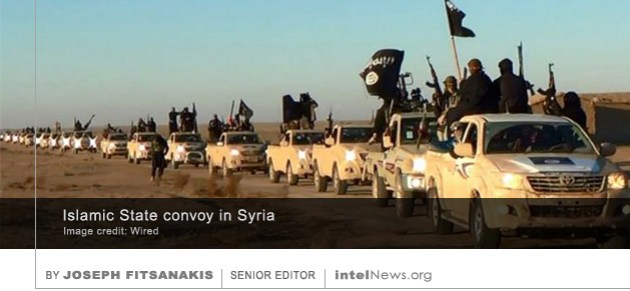 Much emphasis has been given to the Islamic State’s Western recruits, but there is almost nothing known about Westerners fighting against the Islamic State in Iraq and Syria. Last week, an investigative website published the first substantial study on the subject, focusing on volunteers who are citizens of the United States. Entitled “The Other Foreign Fighters”, the study focuses on those Americans who have voluntarily traveled to the Middle East to take up arms against the group, which is also known as the Islamic State in Iraq and Syria (ISIS). It was authored by Nathan Patin, an independent researcher who often publishes his work through Bellingcat, a website specializing in open-source investigations.
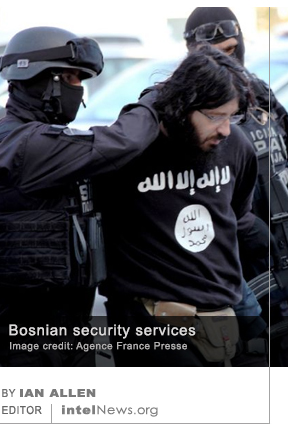 Authorities in Bosnia and Herzegovina have announced the arrest of several people on suspicion of having direct links with the Islamic State and other militant groups fighting in Iraq and Syria. At least 11 people were arrested by police in simultaneous raids at a number of locations on Tuesday, including businesses and private homes, across the Bosnian capital Sarajevo. A police spokeswoman said the eleven men had been charged with having links to terrorist groups, financing terrorist groups, or inciting and helping organize criminal acts. A number of them were also charged with recruiting young men and women to join militant groups in Syria and Iraq, she said.
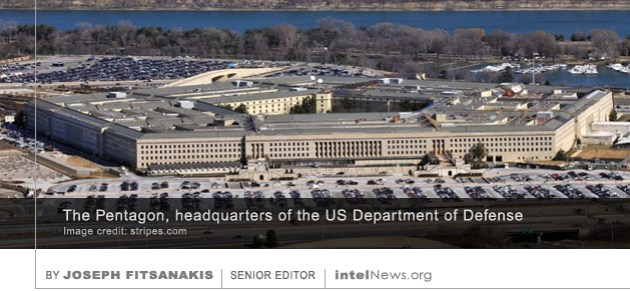 The United States Department of Defense has been secretly sharing intelligence with the Syrian government of President Bashar al-Assad without authorization by the White House, according to an American journalist. Officially, the US government is opposed to the Assad regime in Damascus and has repeatedly stated that peace in Syria can only be achieved if the Assad family leaves power. But in a report published yesterday in The London Review of Books, the veteran American investigative journalist Seymour Hersh claims that America’s military leadership has been secretly aiding the Assad family’s efforts to defeat Islamist groups in Syria.
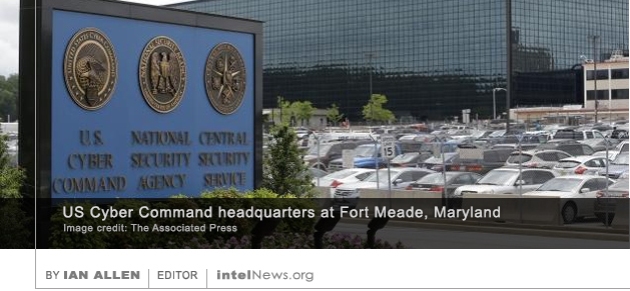 Following a request from the White House, the United States Department of Defense is putting together options to launch offensive cyber operations of an unprecedented scale against the Islamic State. The White House
 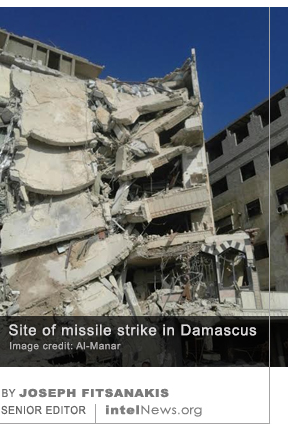 Israel has refused comment following the death of a senior official of Lebanese militant group Hezbollah, who was killed on Saturday in a missile strike in Syria. Samir Kuntar (also spelled Qantar) was a Druze who joined the Syrian-backed, Lebanese-based, Palestine Liberation Front (later Popular Front for the Liberation of Palestine – General Command) at a young age. In 1979, Kuntar was jailed for an attack on an apartment block in Israel’s northern coastal town of Nahariya, which resulted in the death of four Israeli civilians and two of the attackers. However, he was freed after nearly three decades in prison in exchange for the bodies of two Israel Defense Force soldiers, who had been captured and executed by Hezbollah in 2006.
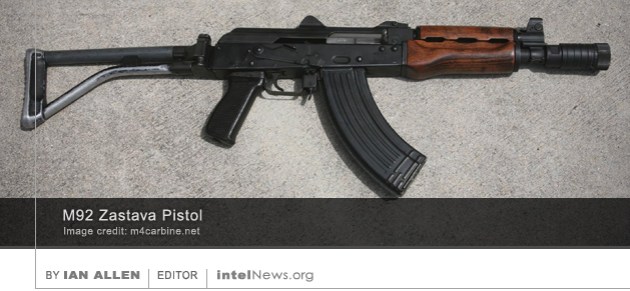 One of the guns used by Islamist militants to attack locations in downtown Paris on November 13 was purchased legally through a dealer in the United States, according to a report by the Associated Press. Investigators have confirmed that several of the weapons used in the attack, which killed 130 and injured hundreds more, were manufactured in Serbia. Most are slightly modified versions of the Soviet-era AK-47, known in the West as “shortened Kalashnikov”. All were produced in a weapons factory called Zastava, which is located in the city of Kragujevac, in central Serbia. They were made in the 1980s and sold within the former Yugoslavia.
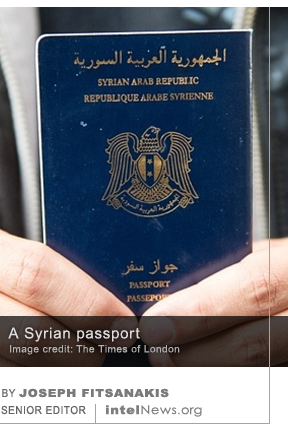 The Islamic State in Iraq and Syria (ISIS) is now able to produce authentic-looking Syrian passports using machines that are typically available only to governments, according to an American intelligence report. The report was accessed by the New York-based station ABC News, which
 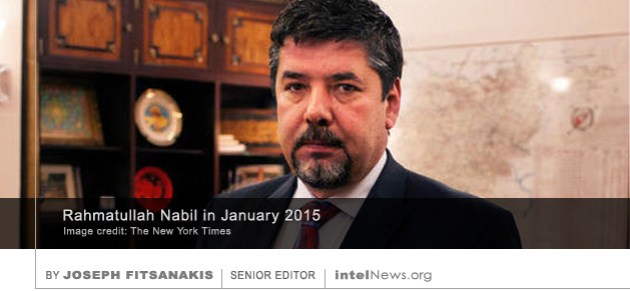 The bleak landscape of Afghan national politics became even bleaker on Thursday, after the sudden resignation of the country’s spy chief, allegedly due to “disagreements” with the government in Kabul. Rahmatullah Nabil led Afghanistan’s National Directorate of Security (NDS) from 2010 to 2012 before returning to the post in 2013, while his predecessor, Asadullah Khalid, recovered from injuries suffered from an unsuccessful assassination attempt against him by the Taliban. But on Thursday afternoon, Nabil
  The man who masterminded November’s Islamist attacks in Paris was based in Athens, and last January managed to escape arrest during a joint Greek-Belgian police operation aimed at capturing him. Moroccan-born Abdelhamid Abaaoud, who had lived in Brussels for years, died in a gun battle with French police on November 18, just days after the multiple attacks in Paris that killed 130 people and injured hundreds. It is believed that the perpetrators of the attacks, who were based in Belgium, were guided and directed by Abaaoud. He, however, was not based in Belgium, but in Athens, Greece. It was from there that he directed the Islamist cells, mostly by phone, according to the BBC.







Dutch technical experts helped US bug foreign embassies in Cold War
January 6, 2016 by Joseph Fitsanakis 2 Comments
According to Dutch website De Correspondent, which published a summary of the research, the secret collaboration was initiated by the CIA. The American intelligence agency reached out to the Dutch technical experts after interception countermeasures specialists discovered a Soviet-made bug inside the US embassy in Moscow. The bug, known as ‘the Thing’, had been hidden inside a carved wooden ornament in the shape of the Great Seal of the United States. It had been presented as a gift to US Ambassador W. Averell Harriman by the Young Pioneer organization of the Soviet Union in 1945, in recognition of the US-Soviet alliance against Nazi Germany in World War II. But in 1952, the ornament, which had been hanging in the ambassador’s office in Moscow for seven years, was found to contain a cleverly designed listening device. The bug had gone undetected for years because it contained no battery and no electronic components. Instead it used what are known as ‘passive techniques’ to emit audio signals using electromagnetic energy fed from an outside source to activate its mechanism.
Wiebes and Martijn say the CIA reached out to the Dutch in 1952, soon after the discovery of ‘the Thing’, in fear that “the Soviets were streets ahead of the Americans when it came to eavesdropping technology”. According to the authors, the approach was facilitated by the BVD, the Cold War predecessor of the AIVD, Holland’s present-day intelligence agency. In the following years, technical specialists in the Netherlands produced the West’s answer to ‘the Thing’ —a device which, like its Soviet equivalent, used ‘passive techniques’ to emit audio signals. Moreover, the Americans are believed to have used the Dutch-made device to but at least two foreign embassies in The Hague, the Soviet Union’s and China’s, in the late 1950s and early 1960s.
The work by Wiebes and Martijn was initially published in Dutch by De Correspondent in September of last year. An English-language version of the article, which was published in December, can be read here.
► Author: Joseph Fitsanakis | Date: 06 January 2016 | Permalink
Filed under Expert news and commentary on intelligence, espionage, spies and spying Tagged with BVD (Netherlands), CIA, Cold War, communications interception, history, intelligence cooperation, Nederlands Radar Proefstation, Netherlands, News, Operation EASY CHAIR, US embassy in Russia