Canada stops sharing intelligence with Five Eyes partners over data breach
January 29, 2016 1 Comment
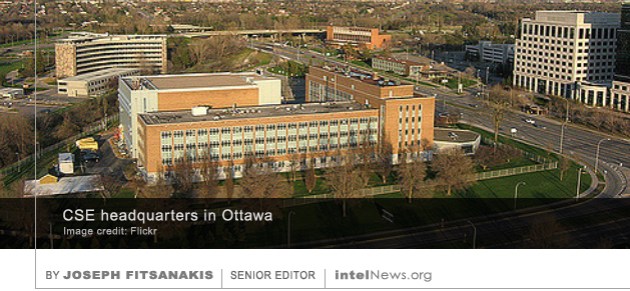 Canada says it will stop sharing certain types of intelligence with some of its closest international allies until it ensures that Canadian citizens’ information is not included in the data given to foreign spy agencies. The announcement follows an official admission, made earlier this week, that a Canadian intelligence agency failed to remove Canadian citizens’ data from information it shared with member-agencies of the so-called Five Eyes Agreement. The pact, which is sometimes referred to as the UK-USA Security Agreement, has been in existence since World War II. It provides a multilateral framework for cooperation in signals intelligence (SIGINT) between the United Kingdom, the United States, Canada, Australia, and New Zealand.
On Thursday, the Commissioner of the Communications Security Establishment (CSE) of Canada, Jean-Pierre Plouffe, published a report on the activities of the CSE —the country’s primary SIGINT agency. The document, which is published annually by the Commissioner, states that the majority of the CSE’s SIGINT collection activities took place in accordance with Canadian law. However, the report found that some of the data shared by CSE with its Five Eyes partners contained data that could potentially be used to identify the identities of Canadian citizens. According to Canadian law, the CSE is not allowed to specifically target the communications of —or information about— Canadian citizens or Canadian companies. Moreover, information pertaining to those, which may be indirectly collected in the course of legitimate targeting of foreign citizens, is supposed to be immediately purged by CSE collection staff.
However, the Commissioner’s report found that some metadata —namely information pertaining to communications other than their content— that could be used to identify Canadian citizens had been shared by the CSE with Five Eyes spy agencies. Later on Thursday, Harjit Sajjan, Canada’s Minister of Defense, announced that SIGINT intelligence-sharing would be suspended until the metadata breach identified in the Commissioner’s report could be adequately addressed and corrected. Minister Sajjan said the roots of the breach had to do with “technical deficiencies” at the CSE, but added that it was crucial that the privacy of Canadians was protected. Therefore, he said, the spy agency would “not resume sharing this information with our partners” until he was “fully satisfied” that the proper control systems were in place.
► Author: Joseph Fitsanakis | Date: 29 January 2016 | Permalink
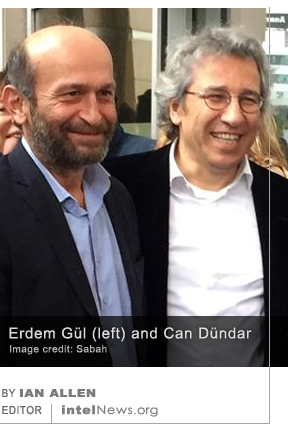 Two leading Turkish journalists, who claimed in a series of articles that Ankara has been arming militant Islamists in Syria, are facing espionage charges for “airing Turkish state secrets”. The two, Can Dündar and Erdem Gül, work for Cumhuriyet, (The Republic), Turkey’s oldest newspaper, which typically voices staunchly secularist views representing the center-left of the political spectrum. Last year Dündar, who is the paper’s editor, and Gül, who serves as the paper’s bureau chief in Ankara, published a series of articles claiming that the Turkish government was secretly supporting Salafi Jihadist groups in Syria.
 A Russian former intelligence officer, who is accused by the British government of having killed another Russian former spy in London, said the British intelligence services tried to recruit him in 2006. British government prosecutors have charged Andrei Lugovoi with the killing of Alexander Litvinenko, a former employee of the Soviet KGB and one of its successor agencies, the FSB. In 2006, Litvinenko died in London, where he had defected with his family in 2000, following exposure to the highly radioactive substance Polonium-210. In July of 2007, the British government charged Lugovoi and another Russian, Dmitri Kovtun, with the murder of Litvinenko, and expelled four Russian diplomats from London. Last week, following the conclusion of an official inquest into the former KGB spy’s death, the British government took the unusual step of summoning the Russian ambassador to London, to file an official complaint about Moscow’s refusal to extradite Lugovoi and Kovtun to the United Kingdom.
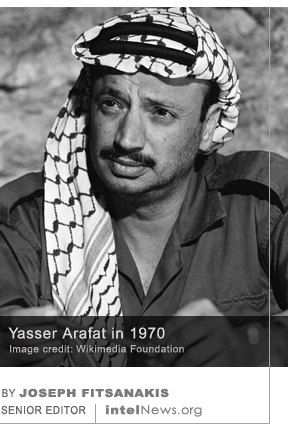 Switzerland secretly agreed in the 1970s to support calls for Palestinian statehood, in return for not being targeted by Palestinian militants, according to a new book. Written by Marcel Gyr, a journalist with the Zurich-based Neue Zürcher Zeitung, the book
  The British government has taken the unusual step of summoning the Russian ambassador to London, following the conclusion of an official inquest into the death of a former KGB officer who is believed to have been killed on the orders of Moscow. Alexander Litvinenko, an employee of the Soviet KGB and one of its successor organizations, the FSB, defected with his family to the United Kingdom in 2000. But in 2006, he died of radioactive poisoning after meeting two former KGB/FSB colleagues, Dmitri Kovtun and Andrey Lugovoy, in London. A public inquiry into the death of Litvinenko, ordered by the British state,
 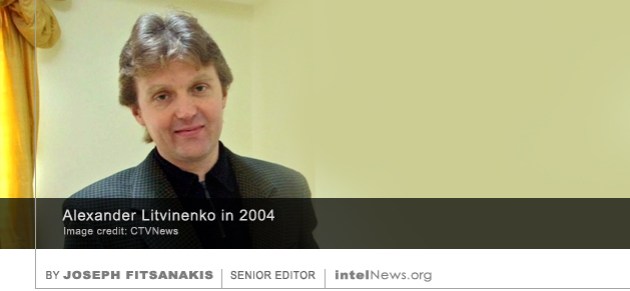 The long-awaited concluding report of a public inquiry into the death of a former Soviet spy in London in 2006, is expected to finger the Russian state as the perpetrator of the murder. Alexander Litvinenko was an employee of the Soviet KGB and one of its successor organizations, the FSB, until 2000, when he defected with his family to the United Kingdom. He soon became known as a vocal critic of the administration of Russian President Vladimir Putin. In 2006, Litvinenko came down with radioactive poisoning after meeting two former KGB/FSB colleagues, Dmitri Kovtun and Andrey Lugovoy, at a London restaurant. In July of 2007, after establishing the cause of Litvinenko’s death, which is attributed to the highly radioactive substance Polonium-210, the British government officially charged the two Russians with murder and issued international warrants for their arrest. Whitehall also announced the expulsion of four Russian diplomats from London. The episode, which was the first public expulsion of Russian envoys from Britain since end of the Cold War, is often cited as marking the beginning of the worsening of relations between the West and post-Soviet Russia.
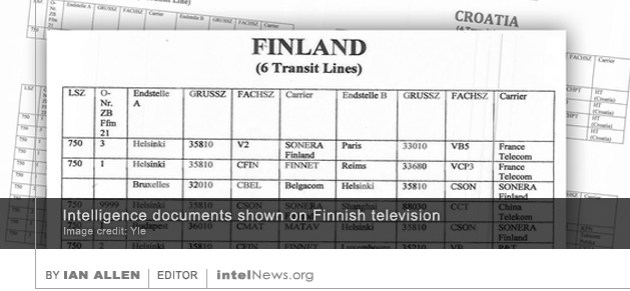 German intelligence, possibly with the collaboration of the United States, monitored communications lines connecting Finland with at least five countries in the early 2000s,
 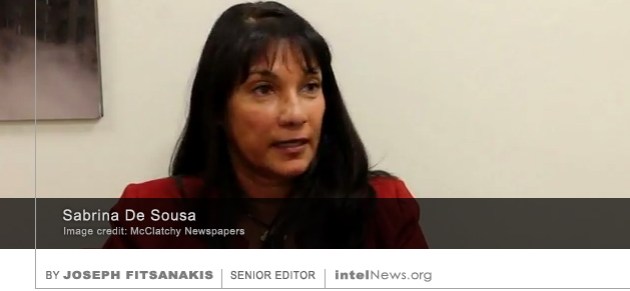 A court in Portugal has ruled to extradite a former officer of the United States Central Intelligence Agency to Italy, where she faces charges of kidnapping a man as part of a secret operation. Sabrina De Sousa, 59, was an accredited diplomat stationed at the US consulate in Milan, Italy, in 2003, when a CIA team kidnapped Hassan Mustafa Osama Nasr from a Milan street in broad daylight. Nasr, who goes by the nickname Abu Omar, is a former member of Egyptian militant group al-Gama’a al-Islamiyya, and was believed by the CIA to have links to al-Qaeda. Soon after his abduction, Nasr was renditioned to Egypt, where he says he was brutally tortured, raped, and held illegally for years before being released without charge.
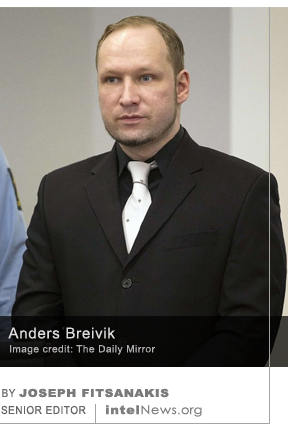 Police in Germany caught Anders Breivik with ammunition and weapon parts in 2009, two years before he killed nearly 80 people in Norway, but did not arrest him and failed to notify Norwegian police, according to a new documentary. Breivik is a jailed far-right terrorist, who in 2011 single-handedly perpetrated two terrorist attacks that killed 8 people in Norwegian capital Oslo and another 69 on the island of Utøya. During his trial, he said he killed his victims, most of whom were participants at a Norwegian Labor Party summer camp, in order to protest against “multi-culturalism” and “Islamization” in Norway. The attack, which included the use of a car bomb and semi-automatic weapons, is considered the deadliest terrorist incident in Norway’s history since World War II.
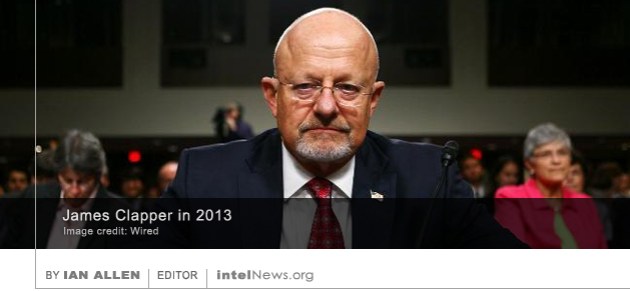 A member of a hacker group that took responsibility for breaking into the personal email account of the director of the Central Intelligence Agency last year has now hacked the email of the most senior intelligence official in the United States. In October 2015, the hacker group referred to by its members as “Crackas With Attitude” —CWA for short—
 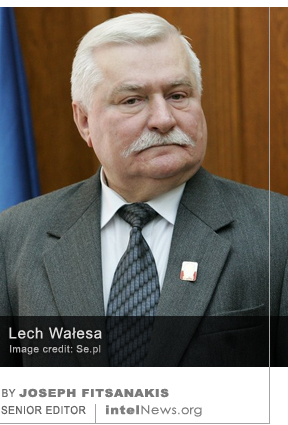 Poland’s first post-communist president, Lech Wałęsa, has denied allegations that he was secretly a communist spy and has called for a public debate so he can respond to his critics. In 1980, when Poland was still under communist rule, Wałęsa was among the founders of Solidarność (Solidarity), the communist bloc’s first independent trade union. After winning the Nobel Peace Prize in 1983, Wałęsa intensified his criticism of Poland’s communist government. In 1990, following the end of communist rule, Wałęsa, was elected Poland’s president by receiving nearly 75% of the vote in a nationwide election. After stepping down from the presidency, in 1995, Wałęsa officially retired from politics and is today considered a major Polish and Eastern European statesman.
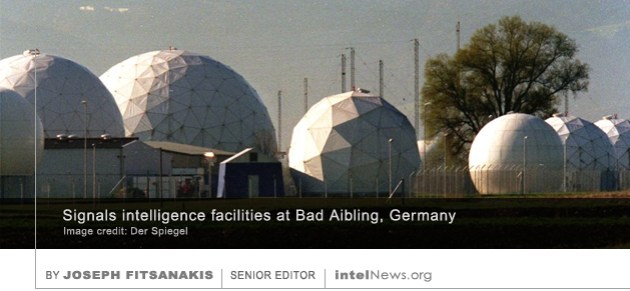 Cooperation on surveillance between German and American intelligence agencies has reportedly resumed following a row between the two countries that was caused by reports that the United States had spied on the German government. In 2014, Berlin
  Russia’s official envoy to Afghanistan has said that Moscow is now working with the Afghan Taliban in order to stop the growth of the Islamic State in the region. Many Taliban fighters are direct descendants of the Afghan and Pakistani Pashtuns who fought the Soviet Red Army in the 1980s, when the USSR invaded Afghanistan and fought a bloody decade-long war there. But the militant group, which today continues to control much of Afghanistan, despite a prolonged American-led military effort to defeat it, is now being challenged by the Islamic State. Known also as the Islamic State in Iraq and Syria (ISIS), the group enjoys growing popularity in Afghanistan, and some tribal warlords have already declared their allegiance to it. In contrast, the leadership of the Taliban has rejected the legitimacy of ISIS and refused to recognize its leader, Abu Bakr al-Baghdadi, as the caliph of all Sunni Muslims. According to Sunni doctrine, a caliph is the recognized political and religious successor to Muhammad, Islam’s prophet, and thus commands the Muslim ummah, or community.
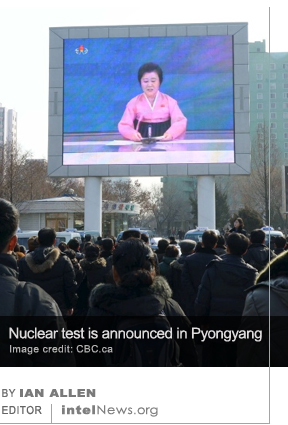 Intelligence agencies outside North Korea, including those of South Korea and the United States, are skeptical of Pyongyang’s claims that it conducted a successful test of a hydrogen bomb. On the surface, North Korea’s








Joint British-American operation hacked Israeli drones, documents show
February 1, 2016 by Joseph Fitsanakis 1 Comment
In an article published on Thursday, The Intercept said the joint GCHQ-NSA operation was headquartered in a Royal Air Force military facility high on the Troodos Mountains in the Mediterranean island of Cyprus. The documents provided by Snowden suggest that British and American spies were able to collect footage captured by the Israeli drone for at least two years, namely in 2009 and 2010. It is not clear whether that period included the first three weeks of January 2009, when the Gaza War was fought between Israel and Hamas. During that time, there were persistent rumors that Tel Aviv was seriously considering launching air strikes against Iran.
According to The Intercept, the main goal of operation ANARCHIST was to collect information about Israeli “military operations in Gaza” and watch “for a potential strike against Iran”. Additionally, the UK-US spy program “kept tabs on the drone technology Israel exports around the world”, said the article. According to one GCHQ document cited by The Intercept, the access to Israeli drone data gained through ANARCHIST was “indispensable for maintaining an understanding of Israeli military training and operations”.
Speaking on Israel’s Army Radio on Friday, Israel’s Minister for National Infrastructure, Energy and Water, Yuval Steinitz, said he was not surprised by the revelations. “We know that the Americans are spying on the whole world, including their friends”, said Steinitz. But it was “disappointing”, he said, given that Israel had “not spied” on the US “for decades”. Israeli intelligence agencies had “not collected intelligence or attempted to crack the encryption of the United States”, said the Minister, implying that recent revelations of US spying on Israel may cause a change of strategy in Israeli intelligence policy.
► Author: Joseph Fitsanakis | Date: 01 February 2016 | Permalink
Filed under Expert news and commentary on intelligence, espionage, spies and spying Tagged with Cyprus, Edward Snowden, GCHQ, Israel, News, NSA, Operation ANARCHIST, SIGINT, surveillance drones, UK, United States, Yuval Steinitz