US Pentagon probing claims of falsely optimistic intel reports on ISIS
August 27, 2015 Leave a comment
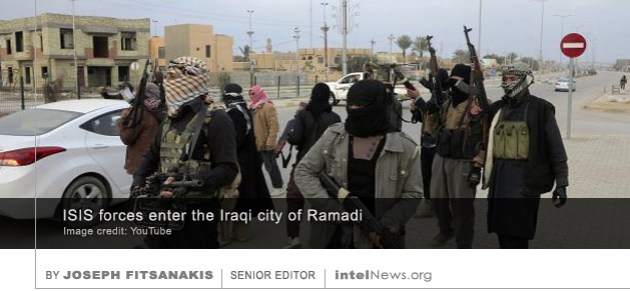 The United States Department of Defense is investigating claims that some of its officials doctored intelligence reports to give a falsely optimistic account of the campaign against the Islamic State. Citing “several officials familiar with the inquiry”, The New York Times said in a leading article on Tuesday that the Pentagon launched a probe into the allegations in recent weeks. According to the paper, the probe was launched following a complaint filed by at least one analyst in the Defense Intelligence Agency (DIA), the Pentagon’s primary human-intelligence agency. According to the analyst, intelligence reports were deliberately tweaked by officials at the US Central Command (CENTCOM), the Pentagon body that directs and coordinates American military operations in Egypt, the Middle East and Central Asia. The reports related to the Islamic State, known also as the Islamic State of Iraq and al-Sham (ISIS), a militant Sunni organization that currently controls large swathes of territory in Iraq and Syria.
Many Middle East observers, including this website, have made notably dire projections about the continuing reinforcement and territorial expansion of ISIS. Earlier this month, the Associated Press published an unconfirmed assessment of a “strategic stalemate” in Syria, which allegedly represented the views of the Central Intelligence Agency (CIA), the DIA and other members of the US Intelligence Community. According to the news agency, the report said that ISIS is “fundamentally no weaker” today than it was a year ago, when the United States began a bombing campaign targeting ISIS strongholds.
But earlier assessments by DIA, which were communicated to senior US policymakers, including President Barack Obama, were far more optimistic about America’s ability to defeat the militant group, said The Times. According to the paper, the DIA analyst had evidence showing that CENTCOM officials had systematically doctored the conclusions of intelligence reports about ISIS before passing them on to American leaders. It appears that the evidence pointing to deliberate manipulation of intelligence assessments was convincing enough to prompt the Pentagon’s Office of the Inspector General to launch an official probe into the matter.
When asked to respond to The Times’ allegations, CENTCOM spokesman Colonel Patrick Ryder said he was unable to comment on an ongoing investigation by the Inspector General. If the allegations are substantiated by the probe, the Inspector General is legally required to share them with the intelligence oversight committees of the US Congress.
► Author: Joseph Fitsanakis | Date: 27 August 2015 | Permalink
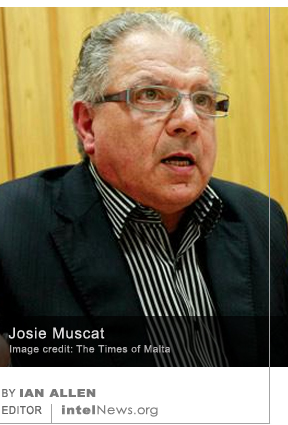 A Maltese ultra-nationalist group believed to be behind a string of bombings in the 1980s was believed by British intelligence to have links to the United States Central Intelligence Agency (CIA), according to recently declassified documents. The Front Freedom Fighters (FFF) was a staunchly anticommunist group whose members violently objected to what they saw as Malta’s overly close contacts with the Communist Bloc. During the 16-year rule of the Maltese Labour Party, which began in 1971, the Mediterranean island maintained close relations with countries during such as Libya and North Korea. The Maltese Nationalist Party, which formed the main opposition to Labour, was highly critical of these contacts, but failed to win three consecutive electoral contests and was thus unable to influence the country’s foreign policy in any significant way.
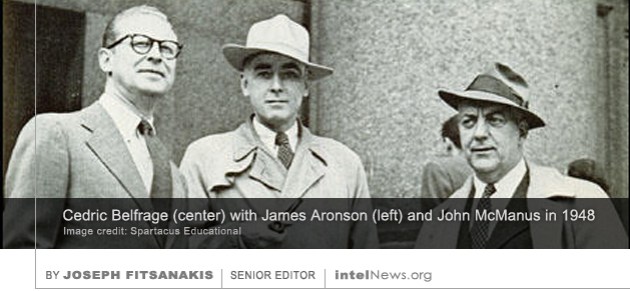 The British government has released a nine-volume file on an influential film critic who
 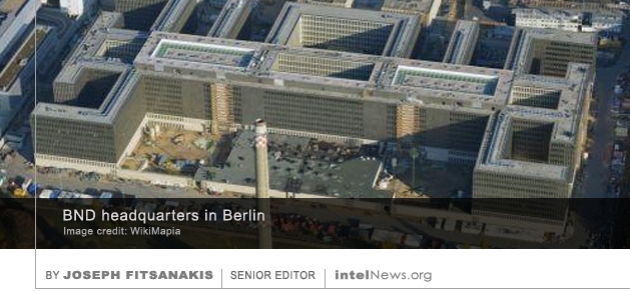 A German intelligence officer, who is accused of spying for the United States Central Intelligence Agency, has been
  General Hamid Gul, a controversial Pakistani spymaster who helped facilitate America’s covert involvement during the closing stages of the Soviet-Afghan war,
 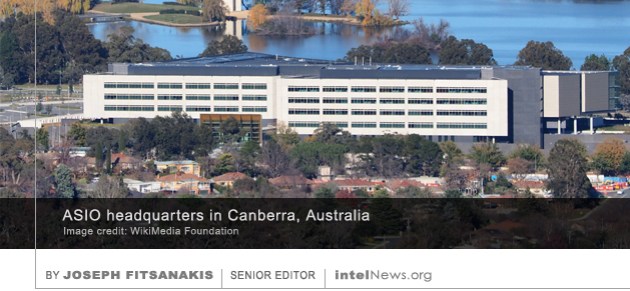 A Soviet double spy was able to penetrate the senior echelons of Australia’s intelligence agency during the Cold War, according to a retired Australian intelligence officer who has spoken out for the first time. Molly Sasson, was born in Britain, but worked for the Australian Security Intelligence Organisation (ASIO) from 1969 until her retirement in 1983. A fluent German speaker, Sasson was first recruited during World War II by the Royal Air Force, where she worked as an intelligence officer before transferring to the Security Service (MI5), Britain’s domestic intelligence agency. At the onset of the Cold War, Sasson helped facilitate the defection to Britain of Colonel Grigori Tokaty, an influential rocket scientist who later became a professor of aeronautics in London. But in the late 1960s, Sasson moved with her husband to Australia, where she took up a job with ASIO, following a personal invitation by its Director, Sir Charles Spry. Upon her arrival in Canberra, Sasson took a post with ASIO’s Soviet counterintelligence desk, which monitored Soviet espionage activity on Australian soil.
 A Russian former officer in the Soviet KGB, who defied deportation orders issued against him by the Canadian government by taking refuge in a Vancouver church for six consecutive years, has voluntarily left the country. Mikhail Lennikov, who spent five years working for the KGB in the 1980s, had been living in Canada with his wife and son since 1992. But in 2009, Canada’s Public Safety Ministry rejected Lennikov’s refugee claim and
  The White House has warned the Chinese government to stop deploying on American soil intelligence operatives masquerading as tourists, business executives or other false covers. Nowadays the standard practice for intelligence personnel deployed abroad is to be posted as diplomatic staff in a foreign embassy or consulate. But there are some intelligence officers who do not follow that practice. These are known as non-official-cover operatives, or NOCs in American intelligence parlance. NOCs are typically high-level principal agents or officers of an intelligence agency, who operate without official connection to the diplomatic authorities of the country that is employing them. They typically pose as business executives, students, academics, journalists, or non-profit agency workers. Unlike official-cover officers, who are protected by diplomatic immunity, NOCs have no such protection. If
 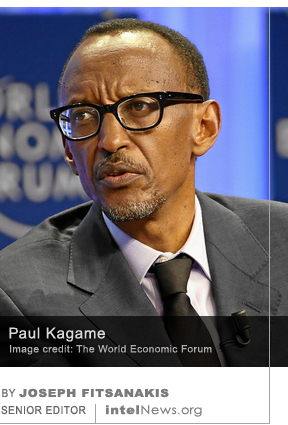 The government of Rwanda uses intelligence operatives to systematically spy on, harass, and even kill opposition figures living abroad, according to a report issued by a Canadian security agency. The report was written by the National Security Screening Division of the Canada Border Services Agency, and was partly based on information from the Canadian Security Intelligence Service (CSIS). It was released as part of a court case involving a Rwandan man living in Canada, who was accused of working as a spy for the government of Rwanda.
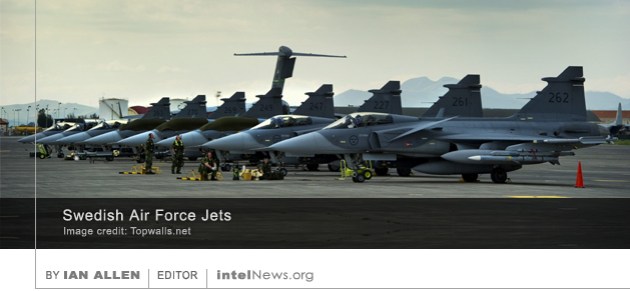 Swedish Air Force spy planes conducted reconnaissance flights over Russia on Wednesday —and there was nothing the Kremlin could do about it. The flights were part of the 1992 Treaty on Open Skies, an international agreement designed to build trust among former Cold War rivals. The treaty was first proposed by the United States in 1990, with the intention of covering all member-states of the Warsaw Pact and the North Atlantic Treaty Organization. When it was eventually signed, on March 24, 1992, it was ratified by 23 countries, including the US and Russia. An additional 11 states have joined the treaty at various times since, with Sweden joining in 2002. On Wednesday, Swedish reconnaissance airplanes conducted flights over a number of Russian military installations as part of the treaty, as they do every year during predetermined times.
 A government watchdog in Canada is preparing to hold a series of closed-door hearings to weigh accusations that the country’s intelligence services illegally spied on law-abiding activists opposing the construction of oil pipelines. The British Columbia Civil Liberties Association (BCCLA) sued the Royal Canadian Mounted Police (RCMP) and the Canadian Security Intelligence Service (CSIS) in February 2014,
 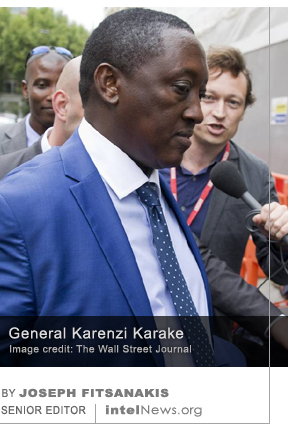 A Rwandan former intelligence chief, whose legal team is led by the wife of British former Prime Minister Tony Blair, has been freed after a court in the United Kingdom refused to extradite him to Spain to face war crimes charges. General Emmanuel Karenzi Karake, 54, was the most senior intelligence official in the administration of Rwandan President Paul Kagame. He rose to fame as a commander in the Rwandan Patriotic Front (RPF), an armed rebel group from Rwanda’s minority Tutsi tribe that fought to end the genocide inflicted upon the Tutsis by their rival Hutus. In 1994, following the death of nearly a million people, the RPF took power in Rwanda and ended the slaughter. That accomplishment caused a rapid upsurge in the popularity of Karake and other senior RPF leaders. Karake’s popularity remains strong among the Tutsis despite his dramatic falling-out with Kagame in 2010, which led to the general’s dismissal from the government.
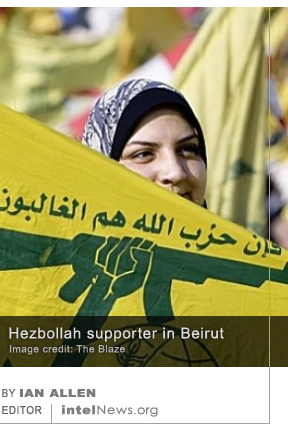 Israeli authorities have charged a Swedish citizen with working as an intelligence officer for the Lebanese militant group Hezbollah. It is believed that Hassan Khalil Hizran, 55, was born to Palestinian refugees in Lebanon, from where he emigrated to Sweden many years ago. But he was
 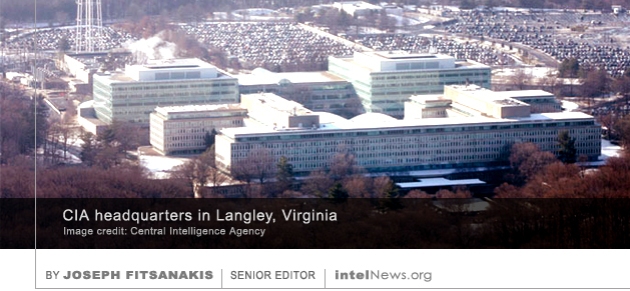 The administration of United States President Barack Obama has yet to nominate a replacement for the Central Intelligence Agency’s inspector general despite calls by Congress to quickly fill the sensitive post. The position has remained vacant since the end of January of this year, when David Buckley







IRA is still ‘broadly in place’, says Northern Ireland police chief
August 28, 2015 by Joseph Fitsanakis 1 Comment
In the ensuing years, which have seen the implementation of the Good Friday Agreement that restored peace in Northern Ireland, it has been generally assumed that the PIRA had ceased to exist. Last week, however, George Hamilton, the head of the Police Service of Northern Ireland, told reporters that “some of the PIRA structure from the 1990s remains broadly in place” in the area. Hamilton was speaking in reference to the murder earlier this month of Kevin McGuigan in east Belfast. McGuigan, a 53-year-old father of nine, was a former member of the Provisional IRA, who had fallen out with the organization. He was gunned down at his home, allegedly in retaliation for the murder last May of Gerard Jock Davison, a former commander of the Provisional IRA, who was also shot dead in the Markets area of Belfast.
Some allege that McGuigan had participated in Davison’s murder, and that the Provisional IRA’s Army Council authorized McGuigan’s killing in response. Chief Hamilton said last week that the PIRA had probably not authorized McGuigan’s killing, but added that the militant separatist organization was still in existence. In response to his statement, the Irish government said on Tuesday that it would reassess its intelligence on the activities of the PIRA during the last decade. Meanwhile, Gerry Adams, the leader of Sinn Fein, which is believed to be the political wing of the PIRA, has denied that the armed separatist group is still active and insisted that the PIRA “left the stage in 2005”.
► Author: Joseph Fitsanakis | Date: 28 August 2015 | Permalink
Filed under Expert news and commentary on intelligence, espionage, spies and spying Tagged with George Hamilton, Kevin McGuigan, Northern Ireland, Police Service of Northern Ireland, Provisional IRA, Séanna Walsh, UK