Senior Turkish intelligence official found dead in Romania
February 19, 2015 Leave a comment
 By JOSEPH FITSANAKIS | intelNews.org
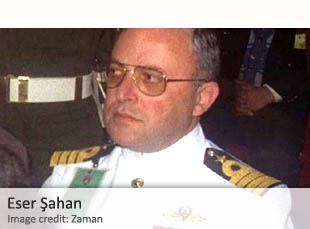
The shadowy former director of Turkey’s naval intelligence agency, who had been facing charges for his role in a military coup in Turkey, has been found dead in Romania. Retired Colonel Eser Şahan, 66, headed the Turkish Navy’s intelligence wing in the 1990s, and participated in a swift military coup that toppled the government. The coup, known in Turkey as “the 1997 military memorandum” unfolded on the evening of February 28, 1997, when secularist officers from every branch of Turkey’s Armed Forces forced the resignation of Prime Minister Necmettin Erbakan and ended the rule of his coalition government.
The putsch was primarily directed against Erbakan’s Islamist-based Welfare Party, which was seen as violating Turkey’s constitutional separation between religion and state institutions. Although the parliament remained in session and the constitution continued to be in effect following the February 28 military coup, Turkey’s Constitutional Court outlawed the Welfare Party shortly afterwards. But many of its Islamist members, including Istanbul mayor, Recep Tayyip Erdoğan, formed a new political group called the Virtue Party, and eventually the Justice and Development Party, which took power in the country 2002. With Erdoğan in power, the leaders of the 1997 coup, including Colonel Şahan, were tried for subverting Turkey’s democracy.
But Şahan managed to escape to Romania, where he promptly requested —and was eventually given— political asylum. He had been living there since 2004. Turkish media said last week that authorities in Romania had released very little information about the circumstances of Şahan’s death. However, several Turkish newspapers, including the leading Zaman, said the retired colonel’s body had been found lying on a park bench in the Romanian capital Bucharest. A handgun was allegedly found on the ground next to him. Sources claim he committed suicide.


















British spy testifies in disguise in alleged al-Qaeda member’s trial
February 20, 2015 by Ian Allen Leave a comment
A heavily disguised British intelligence officer has given evidence in the trial of the alleged leader of an al-Qaeda cell who is being tried in the United States for planning to bomb the New York subway system. Abid Naseer, 28, from Pakistan, was a studying in Britain in April 2009, when he was arrested by British police along with 12 other people for allegedly planning a series of suicide bombings in a popular shopping center in the city of Manchester. In January 2013, however, he was extradited to the US, where he also faces changes of having tried to organize suicide attacks against the New York public transportation system.
American prosecutors claim Naseer received paramilitary training in Pakistan before moving to the UK intent on carrying out terrorist attacks. Last year, the prosecution asked the judge whether six intelligence officers from the UK’s Security Service (also known as MI5), who monitored Naseer’s activities in the months leading up to his arrest, could provide evidence in court. Moreover, the prosecution requested that the MI5 officers be allowed to provide evidence without revealing their identities, since they work as surveillance operatives and are currently involved in counterterrorism investigations. The judge agreed, and the first of the six MI5 officers gave evidence this week through a video link from an undisclosed location in the Britain.
The witness concealed his identity by wearing a false goatee beard, thick spectacles and what reporters described as “a long black wig”. He was also wearing heavy make-up and was identified in court only as “serial number 1603”, according to British newspaper The Daily Telegraph. He told the court that he was part of a large team of MI5 surveillance officers who closely followed Naseer for over a month while he was allegedly planning suicide operations in Britain and the US. The physical surveillance included following the suspect as he was scouting targets in Manchester and sitting behind him on a bus traveling from Manchester to Liverpool. Naseer is defending himself in the trial and had the chance to cross-examine the MI5 officer, said The Telegraph.
Filed under Expert news and commentary on intelligence, espionage, spies and spying Tagged with Abid Naseer, lawsuits, MI5, News, Pakistan, physical surveillance, terrorism, UK, United States