Western companies to suffer backlash in China-US espionage spat
May 22, 2014 Leave a comment
 By IAN ALLEN | intelNews.org
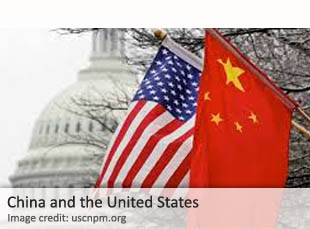
China’s response to America’s allegations of cyberespionage will probably not be directed against the United States government, but at Western technology companies, according to business insiders. On Monday, the United States Department of Justice identified five members of the Chinese People’s Liberation Army as directly responsible for a series of cyberespionage operations targeting American firms. Since then, sources in the business community have said that American companies operating in China were “caught off guard” by the Justice Department’s charges, and that they were “given no advanced notice” by US government officials. On the one hand, business insiders claim that Chinese cyberespionage against Western firms is so aggressive that many in the corporate community were broadly supportive of Washington’s move. But, on the other hand, some industry analysts have told the Reuters news agency that, although Beijing’s response to Washington’s allegations will not be “immediate or obvious”, Western technology firms should prepare to face a lot more difficulties in doing business in China. Specifically, some business observers expect the Chinese government to respond to America’s cyberespionage allegations by “precluding foreign companies from certain sectors” of its economy. Beijing might even use the controversy to justify a “turn to internal suppliers” of technological products and services, say experts. The news agency reports that American hardware and software suppliers have already seen their sales in China drop as a result of the revelations by American intelligence defector Edward Snowden. The current clash over cyberespionage between America and China is likely to have a further negative effect on American business activities all over Southeast Asia. The ongoing dispute between the two countries is likely to have an effect in Europe as well, say The Financial Times. The London-based paper reports that Washington’s recent indictment has “struck a chord in German industry”, which is also concerned about the perceived theft of intellectual property by Chinese hackers. Read more of this post
















 intelNews.org
Analysis: The Politics Behind the Thailand Coup Explained
May 23, 2014 by Joseph Fitsanakis 3 Comments
In the early hours of Thursday, the Thai government of acting caretaker Prime Minister Niwatthamrong Boonsongpaisan, which had been appointed on May 7 of this year, was dissolved. Executive rule is now in the hands of the Peace and Order-Maintaining Command (POMC), led by Army General Prayuth Chan-ocha and composed of the commanders-in-chief of the Royal Air Force, Navy and Police. The 2007 Constitution has been suspended and the leaders of all political factions have been arrested. The POMC has taken over all broadcasting facilities in the country and has warned social media hosts that they are not allowed to publish content that is “misleading” to the public, “escalates political conflict” or “opposes the mandate of the POMC”. Thai military officials continue to deny that this is a coup, but the actions of the POMC reflect textbook tactics of juntas, down to the suspension of regular broadcasts and their replacement with patriotic songs and military marches.
None of this is surprising, given Thailand’s turbulent political history. Since 1932, when the country became a constitutional monarchy, there have been nearly 30 military-led mutinies, rebellions, and armed insurrections in the country, including 18 attempted coups, 12 of them successful. The most recent coup prior to last Thursday’s was in 2006, when the armed forces toppled the legally elected government of Prime Minister Thaksin Shinawatra, who was accused of abusing his power and disrespecting the country’s monarchy. In January of this year, political forecaster Jay Ulfelder, who served for a decade as research director of the United States government’s Political Instability Task Force, predicted that Thailand was close to a military coup. He published a mathematical model analyzing the likelihood of a military coup materializing in most of the world’s countries in 2014. Notably, Thailand was the only non-African nation among the ten candidates that topped Ulfelder’s list.
Read more of this post
Filed under Expert news and commentary on intelligence, espionage, spies and spying Tagged with Analysis, coup plots, Prayuth Chan-ocha, Thailand, Thaksin Shinawatra