CIA bankrolling Afghan government officials ‘on a vast scale’
April 29, 2013 7 Comments
 By JOSEPH FITSANAKIS | intelNews.org |
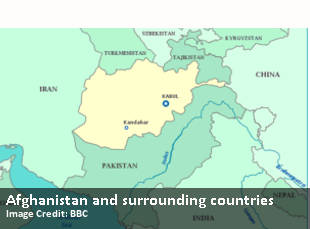
The United States Central Intelligence Agency (CIA) has delivered “tens of millions of dollars [in] off-the-books cash” to Afghanistan’s governing elite, but there is little evidence that such bribes have helped promote Washington’s interests in the country, according to a new exposé published over the weekend in The New York Times. The paper cites “current and former advisers to the Afghan leader” Hamid Karzai, who allege that, for over a decade, the CIA has secretly delivered to the presidential palace in Afghan capital Kabul monthly payments ranging “from hundreds of thousands to millions of dollars”. According to Khalil Roman, who was President Karzai’s Chief of Staff for four years until 2005, Afghan officials called the CIA funds “ghost money” because “it came in secret [and] left in secret”. The article suggests that the cash given to the Afghan government appears to be handled outside the CIA’s standard financial assistance programs, which are typically subject to restrictions and oversight from administrators both inside and outside the Agency. Some American officials, who spoke to The Times on condition of anonymity, said the CIA’s goal in funding the inner circle of the Afghan government is to maintain access to its members and to “guarantee the Agency’s influence at the presidential palace”. But there is little evidence that the funds, which are handled exclusively by a “small clique at [Afghanistan’s] National Security Council” have bought the CIA the political influence it seeks. Read more of this post















 intelNews.org
Is US-Mexico anti-drug intelligence cooperation about to end?
April 30, 2013 by Joseph Fitsanakis 2 Comments
Some senior American officials believe that the anti-drug intelligence cooperation between the United States and Mexico is in its closing stages, following tens of thousands of deaths in the past decade. Intelligence cooperation between the two countries reached unprecedented levels in the post-9/11 era, following the establishment of the US Office of the Director of National Intelligence (ODNI). In the past decade, cooperation between Mexico’s Center for Research and National Security (CISEN) and ODNI, as well as the Central Intelligence Agency, resulted in what some observers call “unprecedented bilateral action” directed against Latin American narcotics cartels. This arrangement culminated under the administration of Mexico’s President Felipe Calderón, when the CIA —and to a lesser extent the US Drug Enforcement Administration and the National Security Agency— were given unprecedented access to Mexican territory and civilian communications networks. However, in an extensive article published Sunday, The Washington Post says the close operational connection between Mexican and US intelligence agencies is quickly winding down. Citing interviews with over “four dozen current and former US and Mexican diplomats, law enforcement agents, military offices and intelligence officials”, the paper suggests that Mexico City is wary about Washington’s involvement in the so-called ‘war on drugs’. The major change on the Mexican side, says The Post, occurred last December with the inauguration of Mexico’s new President, Enrique Peña Nieto, of the Institutional Revolutionary Party (PRI), which has returned to power after 13 years in opposition. Under Nieto’s administration, the Mexican security establishment, worn out by over 60,000 deaths and as many as 25,000 forced disappearances in the past few years, is intent on shifting its priorities. Instead of focusing on so-called ‘beheading operations’ —arresting or otherwise neutralizing the leadership of drug cartels— it has decided to stabilize the situation by containing —rather than eliminating— the operations of drug networks. Read more of this post
Filed under Expert news and commentary on intelligence, espionage, spies and spying Tagged with CISEN (Mexico), DNI, Eduardo Medina Mora, Enrique Peña Nieto, intelligence cooperation, Mexico, narcotics trade, News, United States, war on drugs