Australia fears Asia backlash over PRISM surveillance revelations
June 26, 2013 8 Comments
 By JOSEPH FITSANAKIS | intelNews.org |
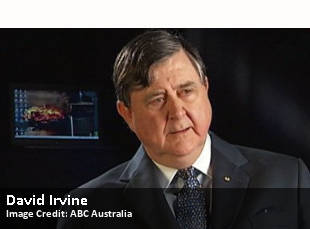
The government of Australia is concerned that American whistleblower Edward Snowden may leak classified information that could damage Australia’s relations with its Asian neighbors, including China and Malaysia. Early this month, Snowden, a former technical assistant for the United States Central Intelligence Agency (CIA), disclosed the existence of PRISM, a clandestine electronic surveillance program operated by the US National Security Agency (NSA). Information provided by Snowden to British newspaper The Guardian suggests that Washington routinely shares PRISM intelligence with Canada, New Zealand, the United Kingdom and Australia. These four countries, along with the United States, are signatories to the so-called UKUSA agreement, a multilateral accord for cooperation in signals intelligence (SIGINT) collection, which was established secretly in 1946. Australian media reported on Wednesday that the Australian Parliament’s Joint Committee on Intelligence and Security had been briefed by senior intelligence officials on Australia’s role in PRISM. The Sydney Morning Herald said that David Irvine, Director of the Australian Security Intelligence Organisation, and Ian McKenzie, who heads Australia’s Defence Signals Directorate, were among those who briefed the parliamentary Committee. Its members were reportedly told that the disclosures about PRISM were likely to damage Canberra’s relations with several Asian countries, in ways that are difficult to predict. One unidentified Australian intelligence official told The Herald that Snowden had “very wide access” to classified information held by the NSA, and that some of it probably includes “much detail of communications intelligence cooperation between the US and Australia”. One source went as far as to say that Snowden’s disclosures have already “damaged […] Australia’s intelligence capabilities”. Read more of this post












Germany probes UK spy program revealed by CIA whistleblower
June 27, 2013 by Joseph Fitsanakis 14 Comments
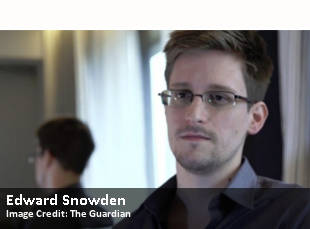
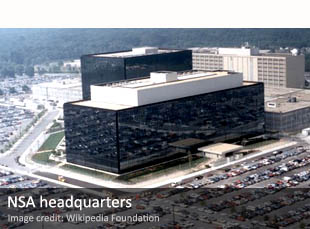
Germany wants to know whether its citizens were spied on under a British government surveillance program revealed by American intelligence whistleblower Edward Snowden. The program, codenamed Project TEMPORA, was disclosed earlier this week by Snowden, a former technical assistant for the United States Central Intelligence Agency (CIA). Snowden remains holed up at Moscow’s Sheremetyevo International Airport, as Russian authorities have rejected repeated requests by Washington to extradite him to the US. According to British newspaper The Guardian, which first wrote about Project TEMPORA on June 21, Britain’s General Communications Headquarters (GCHQ) has been able to “plug into the cables that carry internet traffic into and out” of the United Kingdom. The agency, which is tasked with communications interception, has therefore collected and stored massive quantities of foreign telephone call data and email messages, and has shared much of it with its US counterpart, the National Security Agency. On June 25, Germany’s Federal Minister of Justice, Sabine Leutheusser-Schnarrenberger, wrote a letter to her British counterpart, Chris Grayling, asking for immediate clarification on the precise legal basis for Project TEMPORA. In her letter, which was copied to the British Home Secretary, Theresa May, the German cabinet minister also inquires whether TEMPORA has been authorized by the appropriate judicial authorities. She argues that “European institutions should shed light on this [issue] immediately” and warns her British colleagues that she plans to raise the subject during the July 2013 meeting of European Union Justice and Home Affairs ministers, which will be held in Brussels, Belgium. Read more of this post
Filed under Expert news and commentary on intelligence, espionage, spies and spying Tagged with Chris Grayling, communications interception, Edward Snowden, European Union, GCHQ, Germany, News, privacy, Project TEMPROA, Sabine Leutheusser-Schnarrenberger, surveillance, Theresa May, UK