Israel’s ‘Prisoner X’ identified as Australian Mossad agent

Ben ZygierBy JOSEPH FITSANAKIS | intelNews.org |
In late 2010, an unnamed man known in Israel as ‘Prisoner X’ allegedly hanged himself while being held at a maximum-security prison near Tel Aviv. He committed suicide despite being under constant surveillance inside a facility originally built for the man who assassinated Israeli Prime Minister Yitzhak Rabin in 1995. So secret was the identity of the mysterious prisoner that, it was claimed, not even his guards knew his identity. Some in Israel speculated at the time that it might have been an abducted Iranian general. On Tuesday, however, an investigative Australian television program identified the dead man as an Australian citizen who had allegedly been recruited by the Mossad, Israel’s covert-action agency. ABC’s Foreign Correspondent program identified ‘Prisoner X’ as Ben Zygier, an Australian father of two, who moved to Israel in 2000 at the age of 24. The program said Zygier, who in Israel went by the name Ben Alon, was arrested by Israeli authorities in 2010 for unknown reasons. There is intense speculation, however, that Zygier’s secretive incarceration might be connected with an extremely serious security case, possibly involving high treason against the state of Israel. Despite the allegation by ABC of Zygier’s Mossad connection, Israeli news outlets are subjected to an active court order authorizing Israel’s Shin Bet internal security service to prohibit any media discussion on the subject. Israeli newspaper Ha’aretz reported on Tuesday that, hours after ABC’s revelation of Zygier’s identity, Israeli news outlets received telephone calls from the Office of the Israeli Prime Minister. Read more of this post

News you may have missed #823

Richard FaddenBy IAN ALLEN | intelNews.org |
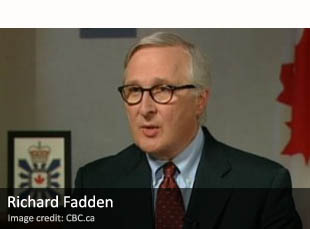
►►Canada spy chief won’t rule out more double spies. Canadian Security Intelligence Service Director Richard Fadden has told a Senate committee that the Jeffrey Delisle spy case was neither “catastrophic” nor an incident that could be dismissed as a one-off. Fadden said that the Delisle case “is one case that we caught. I suspect there will be others over time, both here and within our allies”. Last week, Delisle was sentenced to 20 years in jail for passing secret material to Russian agents over nearly a five-year period.
►►Former CIA operative’s trial postponed again. Raymond Davis, a CIA contractor who made national headlines for killing two Pakistani men in 2011 in what he said was self-defense, had been scheduled to be tried this week for allegedly assaulting a 50-year-old man over a parking space in Colorado. The trial was supposed to begin in September but was pushed until February due to the two sides not being ready. If no settlement is reached prior to March 1, all offers will be off the table and the trial will be set for July 15 with a pretrial hearing scheduled for June 28.
►►Obama officials say Iran building militias inside Syria. Iran and Hezbollah, its Lebanese proxy, are building a network of militias inside Syria to preserve and protect their interests in the event that President Bashar al-Assad’s government falls or is forced to retreat from Damascus, US and Middle Eastern officials have told The Washington Post. A senior Obama administration official cited Iranian claims that Tehran was backing as many as 50,000 militiamen in Syria, saying: “It’s a big operation. The immediate intention seems to be to support the Syrian regime. But it’s important for Iran to have a force in Syria that is reliable and can be counted on”.

French, US intelligence intensify 23-year hunt for Algerian militant

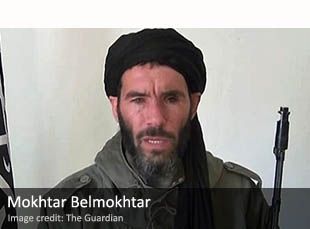
Mokhtar BelmokhtarBy JOSEPH FITSANAKIS | intelNews.org |
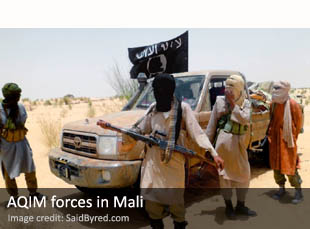
Although many Westerners are aware of the ongoing upsurge in al-Qaeda-linked activity in northwest Africa, few are able to point to the individual leaders behind it. To an important extent, Islamist-inspired groups in the region, notably Al-Qaeda in the Islamic Maghreb (AQIM) mirror the decentralized insurgency model developed by Islamist groups in Iraq and elsewhere during the past decade. However, the decentralized nature of the insurgency in northwest Africa does not necessarily entail the complete absence of principal figures in the movement. One case in point is that of Mokhtar Belmokhtar, who leads an AQIM-linked brigade known as al-Muaqioon Biddam (Those Who Sign With Blood). Born in 1972, Belmokhtar is an Algerian nomad who has reportedly been tracked by the United States Central Intelligence Agency for over 20 years. In the late 1980s, Belmokhtar traveled to Pakistan and then to Afghanistan, where he was taught the art of insurgency at al-Qaeda-funded training camps. Following the Soviet withdrawal, he left Afghanistan and returned to his homeland, where he joined the Armed Islamic Group of Algeria (GIA) and fought in the brutal 10-year civil war that ripped the country apart. In 2003, two years after the end of the war, Belmokhtar and his militia were pushed into northern Mali by the Algerian military. He soon set up camps in the area and used them to stage abduction raids into southern Algeria, targeting foreign oil workers and tourists. The Wall Street Journal reports that, according to the US department of State, in less than a decade, Belmokhtar’s militia managed to raise approximately $50 million through kidnapping foreigners and extorting cocaine smugglers traveling through Mali on their way to Europe. His big break came in 2011, when the collapse of the Libyan regime resulted in the unprecedented availability of illicit weapons previously in the hands of Muammar al-Gaddafi’s army. Belmokhtar’s militia became one of the principal buyers of Libyan weapons available in huge quantities in the black market. Read more of this post

Did the CIA exclude Israel from its extraordinary rendition program?

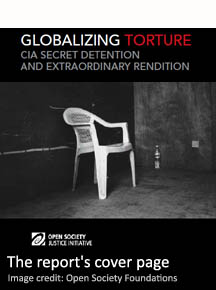
Open Society Foundations report coverBy JOSEPH FITSANAKIS | intelNews.org |
The most comprehensive non-classified account of the United States Central Intelligence Agency’s extraordinary rendition program has been published by a human-rights advocacy group. It details for the first time the fate of nearly 140 known targets of the controversial program, who were abducted by the CIA mostly during the administration of US President George W. Bush. Under the controversial program, individuals were systematically detained and transferred without due process to countries where the use of torture on prisoners was –in the words of the report– standard practice. The report, entitled Globalizing Torture: CIA Secret Detention and Extraordinary Rendition, was authored by Amrit Singh, formerly of the American Civil Liberties Union and currently senior legal officer at the National Security and Counterterrorism program at the Open Society Justice Initiative. It concludes that the CIA was able to build and maintain the program with significant assistance from 54 countries, including 13 in Africa, 14 in Asia and 25 in Europe. The long list of countries that willingly cooperated with the CIA’s extraordinary rendition practices includes Canada, Denmark, Australia, Finland, Mauritania, Romania and South Africa. It even includes countries that are known to have had tense relations with Washington in the past decade, such as Zimbabwe, Syria, Pakistan, Libya, and even Iran. Certainly, the Open Society Justice Initiative report points to the fact that it is both shortsighted and inaccurate to refer to the Bush administration’s post-9/11 extraordinary rendition program as “an American operation”. It was informed and supported at all levels by America’s North Atlantic Treaty Organization allies, as well as by many countries which, for one reason or another, wished to be on the good side of the US. But the list of complicit states is also interesting for what it doesn’t include. Most importantly, it doesn’t include Israel. Read more of this post

Comment: Are Somalia’s militant Islamist ‘defectors’ genuine?

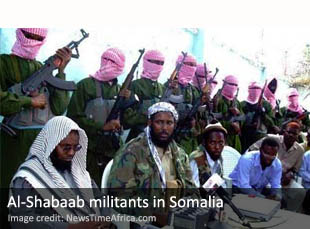
Al-Shabaab militants in SomaliaBy IAN ALLEN| intelNews.org |
During the past two years, the once powerful influence of Islamic militancy in Somalia appears to be steadily declining. Not long ago, much of the country was firmly controlled by al-Shabaab (The Party of Youth), formerly the youth wing of the Islamic Courts Union, which ruled Somalia until 2006. The group, which is thought to have approximately 5,000 armed members at its disposal, emerged as a powerful force in Somalia in 2009. Three years later, in 2012, it formally announced its operational alignment with al-Qaeda. Its power began to wane, however, once the Western-backed Somali government decided to confront it militarily, with the support of the United States Central Intelligence Agency and several European-funded private security companies. A major indicator of this optimistic trend seems to center on the unprecedented numbers of al-Shabaab members who are defecting –apparently en masse– and joining the ranks of the Somali armed forces. Many of these defectors are trained by private security companies employed by the European Union before being sent to the front to fight against their former comrades. Read more of this post

Canadian passports still highly coveted by spies and terrorists

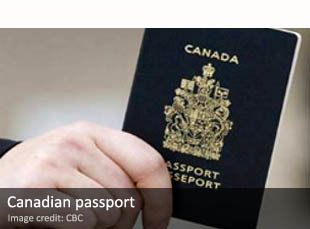
Canadian passportBy JOSEPH FITSANAKIS | intelNews.org |
An extensive investigation into a bus bombing that targeted Israeli tourists in Bulgaria points to the continued attraction of forged Canadian passports for terrorist groups and intelligence agencies. Bulgaria’s Minister of the Interior, Tsvetan Tsvetanov, said on Tuesday that the July 18, 2012, terrorist attack, was perpetrated by Al-Muqawama al-Islamiyya, the military wing of Hezbollah. The militant Shiite group, which controls large parts of southern Lebanon, has denied involvement in the bombing, which killed seven people, including five Israeli tourists. Tsvetanov said that, during a lengthy police investigation, which was assisted by American and Israeli investigators, the printer used to produce forged driver licenses found on two of the plotters was traced to Lebanon. He also told a press conference in Bulgarian capital Sofia that the suicide bomber, who died in the attack, entered Bulgaria using a forged Canadian passport. Commentator Paul Koring, of Canadian newspaper The Globe and Mail, correctly suggests that the revelation by the Bulgarian authorities points to the continued status of Canadian passports as the international travel documents of choice for both spies and terrorists. In the 1970s, Hezbollah’s biggest enemy, the Israeli intelligence service Mossad, used Canadian passports in Operation WRATH OF GOD (also known as Operation BAYONET). The operation exterminated almost every original member of Black September, the Palestinian group that perpetrated the massacre of the Israeli athletes in the 1972 summer Olympic Games in Munich. In 1997, the Israeli spy agency employed Canadian passports once again, during the famously disastrous attempt to kill Khaled Mashal, Chairman of the Political Bureau of Palestinian militant group Hamas, in Jordan. Read more of this post

German authorities had monitored Turkish bomber of US embassy

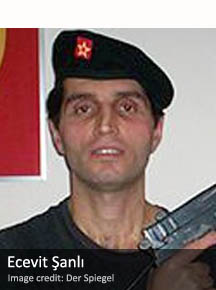
Ecevit ŞanlıBy JOSEPH FITSANAKIS | intelNews.org |
Some observers were surprised by news last week that the suicide attack at the US embassy in Turkish capital Ankara was perpetrated by secular Marxists, instead of religious extremists. But students of terrorism know that modern suicide bombings have historically been employed by secular separatist groups. These include the Liberation Tigers of Tamil Eelam (LTTE) in Sri Lanka, as well as the Kurdistan Workers Party (PKK) in Turkey. The Revolutionary People’s Liberation Party/Front (DHKP/C), which assumed responsibility for last Friday’s attack in Ankara, is a Marxist-Leninist splinter group, which has carried out suicide operations against its ideological enemies since at least 2001. Last week’s attack, which killed two and injured over a dozen people, was perpetrated by Ecevit Şanlı, a 40-year-old Turk from the city of Gölköy in northeastern Turkey. A member of DHKP/C for at least 20 years, in 2000 Şanlı became a cause célèbre among far-leftists in Turkey. During that year, he played a leading role in a hunger strike organized by self-described political prisoners in Turkey, in protest over prison conditions. The protest was brutally suppressed by Turkish security forces, and Şanlı barely survived it. He was eventually released on probation after serving a lengthy prison sentence. According to German sources, upon his release from prison, Şanlı moved to Germany, home to the world’s largest Turkish expatriate community. While there, he joined local leftist causes and appears to have been active in DHKP/C’s network of supporters among the Turkish community there. In 2009, German authorities briefly detained Şanlı after he was found in possession of propaganda literature belonging to DHKP/C, which is a designated foreign terrorist organization by the German government. Read more of this post

Turkey refused to extradite bin Laden’s son-in-law to US

Ghaith (left) with bin Laden and al-ZawahiriBy JOSEPH FITSANAKIS | intelNews.org |
Turkish authorities have reportedly rejected a formal extradition request by the United States for a son-in-law of Osama bin Laden, who was arrested in Ankara on Friday following a tip-off by the Central Intelligence Agency. Suleiman Abu Ghaith was born in Kuwait but had his citizenship revoked after publicly opposing the rule of the Kuwaiti monarchy and demanding the institution of shari’a law in the oil emirate. In 2000, he traveled to Afghanistan where he met Osama bin Laden and joined al-Qaeda. He eventually married Fatima bin Laden, one of bin Laden’s numerous daughters, who is currently living in Saudi Arabia. He gradually rose within the ranks of the organization, eventually becoming one of its public spokesmen. Soon after the US invasion of Afghanistan, in 2001, Ghaith is believed to have escaped from Afghanistan by entering Iran on foot. He was eventually captured by Iranian government forces and placed in a detention camp along with other suspected al-Qaeda and Taliban members. It is not known how he managed to leave Iran and enter Turkey (though some say he was released the by Iranian authorities), or how the CIA knew of his presence there. However, according to Turkey’s leading daily Milliyet, the Agency contacted members of the Turkish National Intelligence Organization (known as MİT) and told them that Ghaith had entered the country on a forged passport. He was arrested soon afterwards at a hotel in Ankara’s affluent Çankaya district. The hotel where Ghaith was captured is reportedly located near the official residence of the Turkish President and a stone’s throw from numerous foreign embassies —including the embassy of the US, which was attacked by a suicide bomber on February 1. Read more of this post

News you may have missed #822 (Israeli airstrikes on Syria)

Mapping of the Israeli airstrikes in SyriaBy IAN ALLEN | intelNews.org |
►►Should we be preparing for another Mideast war? Assad may not want a war with Israel, but Tehran could have other calculations. Over the weekend, Iran warned that it would consider any attack on Syria to be an attack on Iran. Claims by Syrian television that Israel hit a research facility near Damascus might be a pretext for an Iranian escalation with Israel. The Israeli army also deployed some of its Iron Dome batteries to northern Israel for the first time. It would not have done so if the chances of a war on Israel’s northern border weren’t increasing.
►►Why did Israel attack Syria now and why did the Syrians admit it? Two days before the Israeli attack on Syria, Iran said it would view any attack on Syrian territory as an attack against Iran itself. But the combination of strategic circumstances in the region at the moment makes the chance of a direct Iranian response unlikely. A Syrian military response seems even less likely, though neither possibility can be ruled out. The most worrying unknown since Tuesday night concerns Hezbollah’s reaction. It seems we are at the beginning of the story —and not the end.
►►Ex-Mossad head says Syria and Hezbollah will not respond. The former Director of Israel’s Mossad spy agency, Danny Yatom, has ruled out any response by the Syrian army or Hezbollah in Southern Lebanon to the Israeli attack on Syria. He told newspaper Yedioth Ahronoth on Wednesday he did not think there would be “any response, since there is no benefit for Hezbollah and Syria to do so”. He added: “Al-Assad is experiencing deep problems in his country and Hezbollah is doing its best to help him, so I don’t think that they will consider any response”.

[Updated] World braces as Israel attacks Syria for first time in 5 years

Cyprus, Israel, Syria, LebanonBy JOSEPH FITSANAKIS | intelNews.org |
Alarm bells were sounding all over the Middle East Wednesday as Syria confirmed it had been attacked by Israeli military jets for the first time since 2007. It remains unclear at this point whether the Israeli airstrikes were meant to disrupt the flow of weapons to neighboring Lebanon, or whether Israel has officially entered the Syrian Civil War. Unnamed United States officials told The New York Times late on Wednesday that the Israel Air Force had entered Syrian airspace and destroyed a single truck transporting a “game-changing” cache of weapons to Lebanon. The cargo, allegedly consisting of Russian SA-17 anti-aircraft missiles, is said to have been destined for Hezbollah, the Shiite militant group that controls large parts of southern Lebanon. The alleged attack occurred near Zabadani, a small town on the road that connects Syrian capital Damascus to the Lebanese border. Hours later, however, Syrian state television confirmed the Israeli attack, but said the target was a “military research center aimed at raising the level of resistance and self defense” of the Syrian nation, located near Damascus. Some Israeli media suggest that, if the Syrian government’s claims are accurate, the target of the Israeli attack would seem to have been the so-called Syrian Scientific Studies and Research Center, also known as CERS. Both The New York Times and Israel’s Ha’aretz newspaper report that Israel informed the United States prior to launching the attack, but neither Washington nor Tel Aviv have so far commented on the airstrikes. In the absence of credible corroboration, confusion persists on whether the Israeli action was directed against Hezbollah, or meant to assist the aims of the Syrian opposition –or both. Read more of this post

Syrian President’s mother said to have ‘defected’

Anisah Makhlouf with Hafez al-Assad in 1994By IAN ALLEN | intelNews.org |
Arab media reports appeared to confirm yesterday an allegation made last week by a senior American diplomat that the mother of embattled Syrian President Bashar al-Assad had abandoned the country. Speaking to CNN last week, Ambassador Robert Ford, who served as the United States’ envoy to Syria until he was recalled by Washington in 2011, said Anisah Makhlouf al-Assad had escaped to the United Arab Emirates. The 78-year-old widow of late Syrian President Hafez al-Assad, who ruled the country with an iron fist from 1970 until his death in 2000, is a revered figure among government supporters. As the current President’s mother, she is said to exercise significant influence on the Syrian regime’s core decision makers, despite her advanced age. According several reports in Arab media, Anisah has now joined her daughter Bushra al-Assad in the Emirates. Bushra, who is the Syrian President’s oldest sister, escaped with her five children to the Gulf oil state in July 2012, after her husband, Assef Shawkat, Syria’s deputy Minister of Defense, was assassinated by the opposition in Damascus along with two other senior Syrian government officials. In his CNN interview, Ambassador Ford argued that Anisah’s defection showed that, “little by little, the inner core [of the Syrian regime] is weakening” as its members are “flaking off. They themselves know they are losing”, he added. Read more of this post

Would UK, USA, share intel with independent Scottish spy agencies?

United Kingdom and IrelandBy JOSEPH FITSANAKIS | intelNews.org |
Scotland plans to set up its own security and intelligence agencies if its people vote in favor of independence from the United Kingdom in 2014, according to policy planners. But critics contend that it might be some time before Scotland’s spy organizations are trusted by their sister intelligence agencies in Britain and the United States. The Scottish National Party (SNP) which won an absolute majority in the Scottish Parliament in the 2011 election, has put forward a plan for a referendum proposing Scotland’s full independence from the UK, to be held in late 2014. On Monday, the Scottish Parliament’s Committee on Foreign Affairs met in Edinburgh to conduct an official inquiry into the possible foreign policy implications of an independent Scotland. Nicola Sturgeon, the SNP’s Deputy Leader and Deputy First Minister of Scotland, told the Committee that an independent Scotland would have to build a domestic intelligence agency to combat security threats such as terrorism, organized crime and cyber attacks. She said the agency would serve the interests of the Scottish people and the Scottish government, but would maintain “very close intelligence sharing with the rest of the UK”. According to Sturgeon, given that Scotland shares “an island with the rest of the UK”, a Scottish domestic security service would inevitably find itself “sharing intelligence and sharing our response to some of these threats”. She also suggested that an independent nation of Scotland would have the option to establish an “external security service” modeled on Britain’s MI6, also known as the Secret Intelligence Service. But Committee members opposed to independence directed heavy criticism against the minister’s plans, arguing that the financial cost of replicating existing UK intelligence and security structures would be colossal. They also warned Sturgeon that Scottish intelligence agencies would have to prove that they were reliable and safe before they struck intelligence-sharing arrangements with British and American organizations. Read more of this post

Israel intelligence confirms ‘major blast’ at Iran nuclear plant

Fordo nuclear facility, IranBy JOSEPH FITSANAKIS | intelNews.org |
Intelligence officials in Israel have confirmed reports of a “major explosion” that is believed to have severely damaged an Iranian nuclear enrichment facility, but refused comment on rumors that Israeli jets were seen flying nearby around the time of the blast. The blast was initially reported late on Sunday by Reza Kahlili, an Iranian former agent of the United States Central Intelligence Agency inside Iran’s Revolutionary Guard Corps. Citing Hamidreza Zakeri, a former officer in Iran’s Ministry of Intelligence and National Security, Kahlili said that the explosion severely damaged the nuclear enrichment plant in Fordo, centrally located in Iran’s Qom Province. According to Zakeri, the blast was strongly felt across a three-mile radius around Fordo and “destroyed much of the installation” itself. The former government official added that around 240 plant workers had been trapped underground by the powerful explosion. Following the blast, according to Zakeri, Iranian troops quickly cordoned off the plant and prevented anyone from getting closer than 15 miles from Fordo. A few hours after Kahlili’s report, Seyyed Shamseddin Barbroudi, Deputy Head of the Iranian Atomic Energy Agency told Iranian media that there had been “no explosion in Fordo Nuclear Facility”. His denial was echoed by Alaeddin Boroujerdi, member of the Iranian Parliament’s Committee on Foreign Policy and National Security. He told the Islamic Republic News Agency that rumors of an explosion at Fordo were “Western-made propaganda” aimed at destabilizing Iran.  On Monday morning, however, the London-based Times newspaper said its “sources in Tel Aviv” had confirmed the blast took place in Fordo. Read more of this post

Will former US government informant face terror charges in India?

David HeadleyBy IAN ALLEN | intelNews.org |
A former United States government informant, who helped an Islamist militant group plan the 2008 Mumbai attacks in India, has been sentenced to 35 years in prison. David Coleman Headley, a former US Drug Enforcement Administration informant, was arrested by the Federal Bureau of Investigation in 2009 for helping to plot an attack by Islamist radicals on a Danish newspaper. It eventually became apparent that Headley had been a member of Pakistani militant group Lashkar e-Taiba and had also helped plan the 2008 attacks in the Indian city of Mumbai. The terrorist plot involved at least a dozen attacks on tourist and other civilian targets in India’s largest city, conducted by small cells of highly trained LeT members who had arrived from Pakistan by boat. The coordinated attacks, which began on November 26 and ended three days later, killed 164 and wounded over 300 people. According to the FBI, Headley, who was born to a Pakistani father and an American mother, took advantage of his Western manners and physique to travel to Mumbai posing as an American tourist, in order to help map out the LeT operation. On Thursday, a court in Chicago sentenced Headley to 35 years in prison. Prior to his sentencing, Headley had pleaded guilty to all 12 counts brought against him by US prosecutors and is said to be cooperating with authorities —which is reportedly why he was spared the death penalty. However, the question in the minds of many terrorism observers is, will Headley be extradited to India to face charges there for what is often referred to as ‘India’s 9/11’? The answer is not so simple. Read more of this post

Philby’s son, widow, speak on 50th anniversary of his defection

Philby interview c.1967 By IAN ALLEN | intelNews.org |
For most of us, January 23, 2013, was a day like any other. But for intelligence history aficionados it marked the 50th anniversary of the escape to Moscow of notorious double spy Harold Adrian Russell Philby. Known as ‘Kim’ to his friends, Philby secretly defected to the USSR from his home in Beirut, Lebanon, in 1963. He is widely considered history’s most successful double spy. While working as a senior member of British intelligence, he spied on behalf of the Soviet NKVD and KGB from the early 1930s until his defection. In 1965, he was awarded the Order of the Red Banner. When he died, in 1988, he was buried with honors by the Soviet authorities. Philby’s defection sent ripples of shock across Western intelligence and is often described as one of the most dramatic moments of the Cold War. On the 50th anniversary of Philby’s defection to Moscow, British newspaper The Daily Telegraph carried an article with excerpts of interviews with one of Philby’s sons, Dudley Thomas Philby, and his Russian widow, Rufina Pukhova Philby. Born in 1946, Dudley ‘Tommy’ Philby is the third of Kim’s five children with his second of four wives, Aileen Furse Philby. Aileen died in 1957, when Tommy was just 11 years old; his contact with his father was cut off as soon as the double spy defected to the USSR in January 1963. But it was resumed a few months later, when he received a letter from his father in Moscow. Eventually, Tommy visited Kim five times in Moscow in the 1970s. Speaking on the anniversary of his late father’s defection, he described him as “a very kind man” and “a very good father”, who “had his belief [in] communism [and] carried it out”. He told The Telegraph that he personally did not agree with his father’s political views, but added: “he was what he was, what could I do?”. He told the paper that Kim eventually came to think that “it was all wrong”, implying that Philby grew disillusioned with the Soviet system. Read more of this post