News you may have missed #621

Pakistan

Pakistan

►►Pakistan denies spying on German forces in Afghanistan. Pakistani officials have rejected a German newspaper report that the country’s secret service spied on German security forces in Afghanistan. Without citing its sources, mass-selling weekly Bild am Sonntag reported on Sunday that Germany’s BND foreign intelligence agency warned its interior ministry that Pakistan had spied on 180 German police officers deployed in Afghanistan to train locals.
►►CIA expert says US government lacks security operating system. Industry is not providing the US government with the basic tools it needs to build a secure information infrastructure, according to Robert Bigman, chief of the CIA’s Information Assurance Group. “What we need is a secure operating system”, he said during a panel discussion at the Security Innovation Network showcase in Washington last month. “We gave up some time ago on the battle to build a secure operating system, and we don’t have one”.
►►US increased spy spending in 2011. The US Congress appropriated $54.6 billion for intelligence programs in the 2011 fiscal year, the Office of the Director of National Intelligence disclosed last week. The amount, which does not include what was spent on military intelligence, is a slight increase from the year before but could be the end of the upward trend, says CNN’s Security Clearance blog.

Did Australian bodyguard help Gaddafi’s son flee to Niger?

Gary Peters

Gary Peters

By JOSEPH FITSANAKIS | intelNews.org |
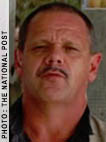
An Australian private security consultant is accused of having helped one of Colonel Muammar al-Gaddafi’s sons escape to relative safety in Niger. For several years, Gary Peters, who lives in Ontario, Canada, worked as a personal bodyguard for Al-Saadi al-Gaddafi, the third oldest son of Libya’s deceased former leader. A few days ago, Peters, who is now back in Canada, told the country’s National Post newspaper that he led “an international security team” tasked with exfiltrating Saadi Gaddafi to the African country of Niger, located immediately to the south of Libya. He also told the paper that he was injured when the three-car convoy carrying Gaddafi’s international security team came under fire as it returned to Libya from Niger. But he said he only “discovered” his injuries while onboard a flight back to Toronto, and was subsequently hospitalized in Canada. Now the paper hosts comments from Nada Basir, spokesperson of the Canadian Libyan Council, which has called for an official investigation into whether Peters broke international laws and sanctions imposed on Libya, by helping a member of the Gaddafi family escape abroad. As with other members of Libya’s former ruling family, Saadi Gaddafi is wanted by INTERPOL, which has issued an international arrest warrant in his name. Basir told The Post that it was an insult to have a Canadian resident apparently defy the NATO mission in Libya, to which the government of Canada is party; he added that Canada’s Libyan community hopes that the government takes this issue seriously. Peters previously told the newspaper that he had been interviewed by the Royal Canadian Mounted Police, but that no charges had been filed against him. Read more of this post

News you may have missed #620 (cyberespionage edition)

GCHQ

GCHQ

►►Canada government ‘warned prior to cyberattack’. Canada’s spy agency, CSIS, warned the government that federal departments were under assault from rogue hackers just weeks before an attack crippled key computers. A newly released intelligence assessment, prepared last November, sounded a security alarm about malicious, targeted emails disguised as legitimate messages —the very kind that shut down networks two months later.
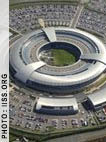
►►GCHQ warns cyber crime reaches ‘disturbing’ levels. Cyber attacks on the British government, the public and industry have reached “disturbing” levels, according to the director of Britain’s biggest intelligence agency. Iain Lobban, who runs the British government’s listening centre, GCHQ, has warned that the “UK’s continued economic wellbeing” is under threat.
►►Japanese parliament hit by cyber-attack. Alleged Chinese hackers were able to snoop upon emails and steal passwords from computers belonging to lawmakers at the Japanese parliament for over a month, according to Japanese daily Asahi Shimbun. The paper claims that computers and servers were infected after a Trojan virus was emailed to a Lower House member in July. The Trojan then allegedly downloaded malware from a server allegedly based in China —allowing remote hackers to secretly spy on email communications and steal usernames and passwords from Japanese lawmakers.

FBI ‘used Google Translate’ to indict alleged Syrian spy, claims lawyer

Mohamad Anas Haitham Soueid

Mohamad Soueid

By JOSEPH FITSANAKIS | intelNews.org |
The lawyer of a Syrian national accused by the United States of spying for Syria has accused the Federal Bureau of Investigation of resorting to Google to prepare the case against his client. Mohamad Anas Haitham Soueid was arrested last summer and charged with conducting political espionage against Syrian and American citizens participating in demonstrations against the regime of Syrian President Bashar al-Assad. The alleged espionage appears to have been organized by members of the Syrian embassy in Washington, DC. A few weeks prior to Soueid’s arrest, the US Department of State had communicated to Syria’s ambassador to Washington, Imad Moustapha, “a number of […] concerns with […] reported actions of certain Syrian embassy staff in the United States”. The concerns centered on confirmed sightings of Syrian diplomats conducting technical surveillance against Syrian opposition activists in several US cities. Soueid was subsequently arrested for allegedly gathering intelligence on protesters and planning an extensive intimidation campaign. But Soueid’s lawyer, Haytham Faraj, told the court last week that his client’s name, as transcribed in the FBI indictment, had been wrongly transliterated into English using Google Translate. He also wrote in a court filing that the prosecution had “demonstrated a serious deficit in its ability to translate recorded conversations from Arabic into English”. Soueid’s defense also argues that federal prosecutors appear “to have taken extensive liberties with a playful [telephone] conversation” between the accused and his wife back in Syria, eventually producing an English-language translation “that has no basis in fact”. In one case highlighted by the defense, the accused allegedly told his wife that the Syrian intelligence agency was monitoring telephone calls; but in English, the phrase was changed to say “this phone belongs to intelligence agency”. Read more of this post

News you may have missed #619 (WikiLeaks edition)

Peter Van Buren

Peter Van Buren

►►US suspends diplomat for linking blog to WikiLeaks. The State Department has suspended Peter Van Buren (pictured), a 23-year veteran foreign service officer, for writing a book critical of US policy in Iraq and blog posts that included a link to a WikiLeaks cable. Van Buren, who worked in human relations, said he was escorted out of the State Department on Monday and barred from returning for two days while officials there decide what to do next with him. They had stripped him of his top secret security clearance a few days earlier, he said.
►►Solomon Islands minister was CIA source. Classified US diplomatic cables from 2006, recently published by WikiLeaks, have revealed that the Solomon Islands’ former Foreign Affairs Minister and businessman Laurie Chan has acted as a reliable source of US and Australian intelligence in the Pacific island country.
►►Diplomatic cable sheds light on suicides of Bulgarian spies. A diplomatic following cable, sent by John Beyrle, US Ambassador to Bulgaria before going to Moscow, dated January 25, 2007, has been released by WikiLeaks. The cable sheds light on reshuffles in the leadership of the country’s intelligence services and the suicides of two high-ranking intelligence employees.

News you may have missed #618

Abdullah al-Senoussi

Al-Senussi

►►US Congressman urges expulsion of ‘Iranian spies’ at the UN. New York Congressman Peter King says the US should kick out Iranian officials at the UN in New York and in Washington because many of them are spies. Speaking at a hearing Wednesday, the Democrat said such a move would send a clear signal after the recent alleged Iranian plot to assassinate the Saudi ambassador in Washington.
►►Colombia’s intelligence chief denies knowledge of illegal wiretapping. Felipe Muñoz, the director of Colombia’s intelligence agency DAS has denied knowledge of illegal interception of unionists’ emails and phone calls by DAS employees, following the announcement that the Inspector General’s Office will be investigating these allegations. According to the allegations, Muñoz and other leading DAS officials were aware of the illegal interception.
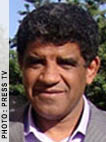
►►Gaddafi intelligence chief now in Niger. Moammar Gadhafi’s intelligence chief, Abdullah al-Senussi (pictured), who is wanted by the International Criminal Court, has slipped into the desert nation of Niger and is hiding in the expanse of dunes at the Niger-Algeria border, a Niger presidential adviser said last week. Meanwhile, Gaddafi’s former spy chief, Moussa Koussa, has denied claims made in a BBC documentary that he tortured prisoners.

News you may have missed #617

Ilan Grapel

Ilan Grapel

►►Analysis: Is the CIA Still an Intelligence Agency? Early September 2011, a former intelligence official commented to The Washington Post that, “The CIA has become one hell of a killing machine”. He then attempted to retract, but his words were on record. But is that really what it should be: a hell of a killing machine?
►►US National Security Agency helps Wall Street battle hackers. The National Security Agency, a secretive arm of the US military, has begun providing Wall Street banks with intelligence on foreign hackers, a sign of growing US fears of financial sabotage. While government and private sector security sources are reluctant to discuss specific lines of investigations, they paint worst-case scenarios of hackers ensconcing themselves inside a bank’s network to disable trading systems for stocks, bonds and currencies, trigger flash crashes, initiate large transfers of funds or turn off all ATM machines.
►►Israel okays deal with Egypt to free alleged spy. Israel’s security cabinet unanimously approved an agreement Tuesday for the release of Israeli-American law student Ilan Grapel (pictured), who has been in jail in Egypt since June 12 on spying allegations that were later reduced to incitement. In exchange, Israel will release 22 Egyptian prisoners, most of them Bedouin from the Sinai jailed for smuggling drugs or weapons.

Alleged Russian spies in Germany used low-tech methods to evade detection

Anna Chapman

Anna Chapman

By JOSEPH FITSANAKIS | intelNews.org |
A couple arrested in Germany last week on suspicion of working for Russian intelligence, was using low-tech radio communications to receive orders from Moscow, according to media reports. The two arrestees have been identified as Andreas and Heidrun Anschlag; German prosecutors accuse them of spying for SVR, the successor to the KGB’s First Chief Directorate (PGU), responsible for foreign operations and intelligence collection abroad. They are said to have worked as non-official-cover operatives for the KGB and SVR since at least 1990, when they entered Germany from Mexico, using forged Austrian travel documents. Authorities in Germany say that Heidrun Anschlag, 51, was caught by German police in the act of listening to encrypted radio messages from Moscow. German investigators are reportedly puzzled by the fact that, in the Internet age, when most intelligence operatives employ digital secure communications, the Anschlags insisted on using a low-tech method that mostly died with the end of the Cold War. But intelNews readers will remember the case of former United States State Department analysts Walter and Gwendolyn Myers, who were arrested in 2009 for spying on the US for Cuba for over 30 years. Shortly after the Myers’ arrest, we wrote that the couple appeared to have avoided capture for decades, precisely because their communications with the government of Cuba were too low-tech to be detected by sophisticated US monitors. The latter tend to focus on scanning for encrypted satellite or microwave communications which —among other hi-tech means— are now the communication method of choice for modern clandestine spy networks. But some intelligence agencies, including —apparently— the SVR, appear to insist on using old-school oral cipher signals, based on straightforward number-to-letter codes, which they broadcast to their agents over predetermined shortwave frequencies at specified times. Read more of this post

News you may have missed #616

CSIS seal

CSIS seal

►►S. Koreans say several N. Korean assassination bids stopped. South Korea has arrested several North Korean agents for plotting to assassinate anti-Pyongyang activists, according to Won Sei-Hoon, head of South Korea’s National Intelligence Service, who spoke to the parliament’s intelligence committee. Earlier this month, Seoul prosecutors charged a North Korean agent with trying to murder Park Sang-Hak, an outspoken activist in Seoul, with a poison-tipped weapon.
►►MI5 inspectors’ website shut down after security blunder. A new website for the former High Court judges responsible for oversight of MI5, MI6 and wiretapping has been shut down after it emerged that anyone could edit any page of it. The security blunder forced the Intelligence Services Commissioner, Sir Mark Waller, and the Interception of Communications Commissioner, Sir Paul Kennedy, to pull the plug on their new website.
►►Report urges Canadian spies to share more info with diplomats. Canada’s spy agency needs to share more information with the Department of Foreign Affairs so the department is better prepared for negative reactions to Canadian intelligence work overseas, according to a new report by Canada’s Security Intelligence Review Committee. The Committee, which reports to Parliament on the work of the Canadian Security Intelligence Service, found the organization had “limited exchanges” with Canada’s diplomats on its operations.

Secret MI6 documents warn about al-Qaeda-linked Libyan rebels

Abdel Hakim Belhaj

Abdel Belhaj

By JOSEPH FITSANAKIS | intelNews.org |
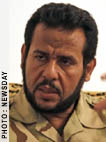
A secret intelligence report, found in the British ambassador’s abandoned residence in Tripoli, warns that some of Libya’s most active anti-Gaddafi rebels have direct links with al-Qaeda and other Islamist groups. The 58-page document, authored by MI6, Britain’s external intelligence agency, includes complete profiles of a dozen senior members of the Libyan Islamic Fighting Group (LIFG) based in Britain. It is widely believed that, in 2007, LIFG merged with al-Qaeda; but at least two of its members, Sami al-Saadi and Abdul Hakim Belhaj, currently hold leading positions in Libya’s National Transitional Council —the group that rules the country following the Muammar Gaddafi’s demise. Belhaj, also known as Abdullah al-Sadiq, revealed in September this year that in 2004 he was snatched by a CIA team in Malaysia and secretly transported to Thailand, where he says he was “directly tortured by CIA agents”. The CIA then renditioned him to Libya, where he says he was systematically tortured until his release from prison, in 2010. The documents discovered in the British ambassador’s Tripoli residence reveal that MI6 helped the CIA target several LFIG members after 2003; they also reveal that thee British intelligence agency  concluded that the kidnapping and torture of Belhaj and others was both tactically and strategically counterproductive. The report, which is marked “UK/Libya eyes only – Secret”, mentions that the abduction of senior LFIG members allowed even more extremist members to rise to the top of the group, and galvanized its fighters in Libya, Algeria, Iraq, and elsewhere. Read more of this post

Analysis: United States and Germany spy on each other

BND seal

BND seal

By JOSEPH FITSANAKIS | intelNews.org |
Newly released documents reveal that the Central Intelligence Agency has maintained an active program of espionage against Germany in the post-Cold War era, and experts say that Germany reciprocates the ‘favor’. According to an article in the latest issue of German newsmagazine Focus, the US intelligence community, led by the CIA, has been keeping tabs on Germany’s intelligence agencies since the 1950s, and continues to do so today. The magazine’s editors say they are in possession of internal government documents, which describe constant CIA monitoring on the Bundesnachrichtendienst (BND), Germany’s main external intelligence agency. The CIA’s spying extends to Germany’s counterintelligence agency, known as the Federal Office for Protection of the Constitution (Bundesamt für Verfassungsschutz). CIA operations against the Office have reportedly included the interception of telephone calls, some of which involved high-level conversations between German and British or French intelligence officials. Focus claims that CIA spying against the BND actually intensified following German reunification in 1990, as the American agency kept tabs on German intelligence officers with former Nazi or communist past. According to one report, the CIA was able to verify that at least two BND officers with service in the Nazi SS had joined a NATO sabotage unit. The magazine spoke to an unnamed former BND counterintelligence officer, who said he was not in the least surprised by the revelations. Commenting yesterday on the Focus report, Washington-based reporter Jeff Stein argued that a little friendly spying is to be expected among allied intelligence services. The veteran intelligence correspondent spoke to an unnamed former CIA officer, who told him that the espionage between Washington and Berlin has not been “a one-way street” —the BND also spies on the CIA and other American intelligence agencies. Read more of this post

News you may have missed #615

Clair E. George

Clair E. George

►►Ex-KGB spy Litvinenko’s widow seeks donations. The widow of Alexander Litvinenko has appealed for donations to help expose her husband’s murderers. Marina Litvinenko said she has to know the truth about the Russian ex-KGB spy’s death in London on November 23, 2006. He died of radioactive Polonium 210 poisoning in London’s University College Hospital. He had fallen ill shortly after drinking tea during a meeting with former KGB contacts at a West End hotel.
►►Memorial ceremony for controversial CIA figure. Clair George, who died in August from cardiac arrest at 81, has a rare status in CIA lore. He was the first high-ranking agency official to be found guilty of felony charges while carrying out official duties. Despite the public outrage about CIA actions during the Iran-Contra affair, George remained a popular figure among agency alumni because they believe his loyalty never faltered.
►►Taiwan intelligence agency accused of wasting money. Taiwan’s military-intelligence body has come under fire after one of its agents returned as a Le Cordon Bleu-certified chef following a so-called undercover mission in France. The agent, whose U$42,000 tuition for the cooking classes in France was sponsored by the military, has now lent his Le Cordon Bleu certificate to someone else for a fee, according to reports.

German commandos arrest couple ‘spying for Russia’

Russian and German flags

Russia & Germany

By JOSEPH FITSANAKIS | intelNews.org |
Members of an elite German commando unit have arrested a man and a woman, on suspicion of having spied for Russia for over two decades. A statement issued by the German prosecutor’s office does not name the couple, nor does it explicitly identify them as Russian spies. It says simply that they are “suspected of having worked in Germany over a long period of time for a foreign intelligence agency”. But an article in Germany’s leading newsmagazine, Der Spiegel, identifies the couple as “Andreas A.” and “Heidrun A.”, and claims that the two have spied for Russian intelligence since at least 1988. The newsmagazine reports that the suspected spies were caught separately in the towns of Balingen and Marburg, located in the states of Baden-Wuerttemberg and Hesse respectively. It also suggests that the two were apprehended by members of Germany’s GSG-9, the elite counter-terrorism and special operations unit of the German Federal Police, and that the woman was actually caught in the act of listening to a coded radio message. Both were found to be in possession of forged Austrian passports, as well as —apparently fake— birth certificates stating that they were born in Argentina (Andreas) and Peru (Heidrun). Following the Spiegel article, Germany’s Federal Prosecutor confirmed that two people had indeed been arrested on suspicion of espionage activities on behalf of a foreign country. If a Russian connection is established, it will be the first international espionage case linking Russia and Germany since the latter’s reunification in 1990. If they are followed by convictions, the arrests could constitute a much needed success story for the German intelligence community, whose reputation has lately been damaged by several unsavory media stories. Read more of this post

Trial of ‘Lord of War’ weapons smuggler underway in New York

Viktor Bout

Viktor Bout

By JOSEPH FITSANAKIS | intelNews.org |
He is considered the world’s most notorious weapons smuggler; dubbed ‘the merchant of death’, his life’s story inspired the Hollywood blockbuster Lord of War. But his trial, which is currently underway in New York, has so far gone largely unnoticed by the world’s media. Viktor Bout, a former Soviet military intelligence (GRU) officer, was arrested in a sting operation in Bangkok, Thailand, in March of 2008. At the time of his arrest, he and his two collaborators were negotiating a complex weapons deal with two individuals who said they were representatives of the Revolutionary Armed Forces of Colombia (FARC), Latin America’s largest leftist paramilitary group. However, the interested buyers turned out to be informants of the United States Drug Enforcement Administration (DEA), which was employing them as part of a sophisticated sting operation. Bout was arrested by the Thai Royal Police and was imprisoned in Bangkok, before being extradited to the United States last year. He is now being tried in Manhattan for attempting to supply arms to the FARC, including machine guns, rocket-propelled grenade launchers, and even two airplanes. Earlier this week, the jury heard excerpts from recorded conversations between Bout, his accomplices, and the DEA informants, in which the Russian weapons merchant is heard saying that he and the FARC “have the same enemy” —namely the Americans. Bout voiced this comment in response to a DEA informant’s exclamation that the FARC wanted to use the weapons supplied by Bout “to knock down those American sons of bitches”. The deal was never completed, as it was interrupted by Thai police officers, who stormed into the hotel room and captured a stunned Bout. In another sequence in the recordings, Bout is heard saying that he plans to convince the defense minister of an unidentified country to facilitate the transfer of weapons to the FARC by providing him with official documentation. Read more of this post

News you may have missed #614

James Clapper

James Clapper

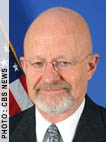
►►US spy chief proposes double-digit budget cuts. Director of National Intelligence James Clapper on Monday said he has proposed double-digit budget cuts in intelligence programs to the White House because “we’re all going to have to give at the office”. Clapper, in a speech at the GEOINT conference in Texas, said his office had “handed in our homework assignment” to the Office of Management and Budget, “and it calls for cuts in the double-digit range, with a B (for billion), over 10 years”.
►►French spy chief charged with snooping on reporter. France’s opposition on Tuesday called for the resignation of Bernard Squarcini, head of the country’s domestic intelligence agency, the DCRI, after he was charged over spying on a journalist with the daily Le Monde.
►►Researcher forecasts new virus similar to Stuxnet. The discovery of an espionage computer virus in Europe similar to the virus that attacked Iran’s nuclear plants last year suggests that a new, similar cyberattack is about to launch, computer virus researcher Mikko Hypponen says. The new virus, Duqu, was first reported by security company Symantec on its blog Tuesday. Its code is very similar to that of Stuxnet, the virus detected last year that was designed to sabotage equipment at Iranian nuclear plants.