Interview with alleged CIA spy in Iran

A Time to Betray

A Time to Betray

By IAN ALLEN | intelNews.org |
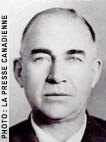
US government-owned Radio Liberty has aired an interview with an Iranian defector who claims to have worked as a CIA agent in the 1980s and early 1990s. The defector, who goes by the pseudonym Reza Kahlili (codename ‘Wally’), has authored what appears to be a CIA-sanctioned book, entitled A Time to Betray, in which he says he was a member of the Islamic Revolutionary Guard Corps. The IRGC is a sizable branch of the Iranian military that is ideologically committed to the defense of the 1979 Islamic Revolution. Kahlili, who now lives in California, says he concluded his studies in the US and returned to Iran shortly after the Revolution. But he quickly became disillusioned with the Islamic regime, and in 1981 met with the CIA in the United States and offered them his services. Read more of this post

News you may have missed #326

  • US spends millions on deception operations. The US Joint Information Operations Warfare Center at Lackland Air Force Base in Texas has a 435-person unit tasked with “development of television commercials and documentaries, focus group and polling services, television air time, posters, banners, and billboards”, as well as “novelty items”. Novelty items? Jeff Stein takes a closer look.
  • Iranian embassy in Australia spying on activists. The Iranian embassy in Canberra has been accused of spying on Iranian opposition activists in Australia, collecting intelligence on their activities and reporting back to Tehran. The allegations come amid growing concern within Australian security services over the activities of Iranian government-backed militants in Australia.
  • Newsflash: Israeli, Iranian spies active in Gulf! The profound commentary by Dubai Police continues. Last time they warned all spies “present in the Gulf” to leave the region within a week. This time they are reminding us that “Israel and Iran have their spies active in the Gulf region”. You don’t say.

Bookmark and Share

News you may have missed #325

  • CIA investigator sentenced. CIA employee Kerry Gerdes, who falsified interview reports while performing background checks on CIA employees and potential employees, has been sentenced to two months in prison and six months of home confinement.
  • President Ford authorized warrantless wiretaps, memo shows. Even though he replaced Richard Nixon, who was forced to resign the US Presidency over intelligence abuses, Gerald Ford secretly authorized the use of warrantless domestic wiretaps soon after coming into office, according to a declassified document.
  • Yemeni court upholds alleged spies’ sentences. Three Yemenis, who were accused last year by the government of having “links to Israeli intelligence”, have had their sentences upheld by an appeal court.

Bookmark and Share

Essential links on WikiLeaks video of Iraq shooting

WikiLeaks

WikiLeaks

By JOSEPH FITSANAKIS | intelNews.org |
Whistleblower site WikiLeaks has released a leaked video taken from a US military helicopter in July 2007, showing US forces indiscriminately firing on Iraqi civilians, killing 12 people and wounding two children. The dead included two employees of the Reuters news agency. There are several edited versions of the video, which can be found in its entirety here. Cryptome offers a series of selected stills from the leaked WikiLeaks video, with some visual analysis of the footage. It is worth keeping in mind that the leaked video is of substantially lower quality than what the US helicopter pilots saw, because it was converted through several stages before it was released by WikiLeaks. Read more of this post

Analysis: Can the CIA sabotage the Iranian nuclear weapons program?

Shahram Amiri

Shahram Amiri

By JOSEPH FITSANAKIS | intelNews.org |
There is no doubt that the CIA has been actively trying to sabotage Iran’s nuclear weapons program since at least February of 2008, when US President George W. Bush authorized Langley to intensify its covert efforts against Tehran. It is also true that the US was able to partially sabotage Iran’s nuclear program by eliminating the A.Q. Khan nuclear proliferation network, and by employing scientific front companies and cooperative suppliers, who gave the Iranians faulty hardware. The defection to Washington of senior Iranian nuclear scientist Shahram Amiri provides recent evidence of the existence of a covert US project to “decapitate” the Iranian nuclear weapons program, by luring away leading Iranian researchers. On the other hand, it is worth wondering why the CIA chose to remove Amiri from the Iranian nuclear program, instead of asking him to remain an agent-in-place, which would have been far more beneficial for Langley. Read more of this post

News you may have missed #324 (CIA edition)

  • Intelligence not hampered by waterboarding ban, says CIA’s top spy. Michael Sulick, head of the CIA’s National Clandestine Service, told a student audience last week that the spy agency has seen no fall-off in intelligence since waterboarding was banned by the Obama administration.
  • CIA given details of British Muslim students. Personal information concerning the private lives of almost 1,000 British Muslim university students is to be shared with US intelligence agencies. IntelNews has frequently reported on the CIA’s increased activities in the UK.
  • CIA death at Salt Pit gets fresh attention. Jeff Stein revisits the case of Gul Rahman, who died in 2002 after weeks of interrogations at the Salt Pit secret CIA facility in Afghanistan. His death was kept off the CIA books, and his body, which was secretly buried, has never been found.

Bookmark and Share

Situation report on the al-Haramain wiretap case

NSA Headquarters

NSA HQ

By IAN ALLEN | intelNews.org |
Max Fisher of The Atlantic Wire provides an excellent situation report on the recent decision by a US district court, which faulted the US government for unconstitutionally wiretapping a US-based Saudi charity. The charity, al-Haramain, was taken to court in September 2004 by the US government, which accused it  of having links to terrorist groups. But the charity has now successfully demonstrated that the National Security Agency (NSA) engaged in illegal spying against it, under the Bush administration’s STELLAR WIND warrantless spying program. Drawing from articles by a number of commentators, Fisher explains why the case took five years to conclude, pointing to the difficulty the plaintiffs had to prove that the NSA spied on the charity. Normally, this is close to impossible, as the NSA is not in the habit of disclosing information on its operations. Read more of this post

News you may have missed #323 (Cold War edition)

  • Story of the Soviet Trojan seal retold. Ken Stanley, who was chief technology officer at the US State Department’s Diplomatic Security Service from 2006 to 2008, retells the story of the large wooden replica of the US Great Seal, which the Soviets gave to the US ambassador to Moscow as a present in 1945. The seal, which was, of course, bugged, hanged in the US ambassador’s office until 1952, when it was discovered.
  • Soviet spy radio found in a Welsh field. It has been revealed that a Soviet encrypted radio transmitter was found near the Welsh coastal town of Ipcress in 1960. It is speculated that it belonged to the late Goronwy Rees, an academic from Aberystwyth, who was a friend of the Cambridge Five, although his daughter disputes it.
  • 1950s-60s spy gadgets on sale at eBay. Gadgets used by British spies who trained from the 1940s to the 1960s at top-secret camp Camp X near Ontario, Canada, are being sold off on eBay. They include a camera that shoots darts, a lipstick tube containing a dagger and fake monkey dung that explodes (!).


Bookmark and Share


Colombia, Venezuela, silent on alleged spy arrests

DISIP agents

DISIP agents

By IAN ALLEN | intelNews.org |
Caracas and Bogota are remaining silent on the arrests of eight alleged Colombian spies in northwest Venezuela. Eight people, members of a factory-owning family in Barinas, were charged with espionage last week, after Luis Carlos Cossio, 52, was allegedly caught photographing a telecommunications tower belonging to DISIP, Venezuela’s premier intelligence agency. Cossio, who is a dual Venezuelan-Colombian citizen, was arrested on Tuesday, along with his relative, Santiago Giraldo, 21. Two days later, Venezuelan counterintelligence agents raided the family’s factory in Barinas, arresting six more members of the same family. Colombian media report that at least two of the detainees, Cossio and Cruz Elva Giraldo, served in the same Colombian military unit in Medellin, namely the Colombian Army’s 4th Brigade. Read more of this post

News you may have missed #322 (Netherlands edition)

Bookmark and Share

News you may have missed #321 (CIA edition)

  • Uruguay ex-president sent to prison for 1973 coup. Declassified documents show that, at the time of the coup, Juan María Bordaberry told the US ambassador that “Uruguay’s democratic traditions and institutions […] were themselves the real threat to democracy”.
  • FSB ‘dropped the ball’ in Moscow metro bombings. Two Russian intelligence observers argue that Russia’s new strategy has shifted toward preventing coordinated actions by large groups of militants, which has come at the expense of taking measures to prevent individual suicide attacks, such as those of last Monday in Moscow.
  • Calls for expanded DoJ probe of FBI killing of Detroit imam. The US Justice Department is probing the killing of Detroit-area Islamic cleric Imam Luqman Ameen Abdullah, who was shot dead during an FBI raid shortly after being indicted on charges of conspiracy to commit federal crimes. The FBI said Abdullah was shot after he opened fire, but critics say he may have been targeted for assassination.

Bookmark and Share

More on alleged Mossad spy arrested in Algeria

Forged passports

Forged passports

By JOSEPH FITSANAKIS| intelNews.org |
On March 29, intelNews reported on allegations by the Algerian government that an Israeli intelligence agent had been arrested in the country, after he was found to be carrying a forged Spanish passport. The next day, Algerian authorities identified the man only as “Alberto”, and insisted he was a member of the Mossad, Israel’s foremost external intelligence agency. News sources have now identified the man’s forged identity as “Alberto Vagilo”, which appears to be the name listed on his Spanish travel documentation. According to Algerian government officials, the man, whose year of birth is listed as 1975 in his Spanish passport, entered the North African country in mid-March, via a regularly scheduled flight from Barcelona, Spain. Read more of this post

News you may have missed #320

  • Wikileaks alleges US government surveillance. British quality broadsheet The Guardian is one of a handful of mainstream media outlets to seriously examine the allegation of Wikileaks, that its editor and co-founder, Julian Assange, became the target of “half a dozen attempts at covert surveillance in Reykjavik”, by individuals who said they represented the US Department of State. The article, written by Joseph Huff-Hannon, also cites intelNews.
  • Saudi charity wins wiretap case against NSA. The Saudi-based charity Al-Haramain was taken to court in September 2004 by the US government, which accused it of maintaining terrorist links. But the charity has successfully demonstrated that the National Security Agency engaged in warrantless spying on it. However, the judge limited liability in the case to the government as an institution, rejecting the lawsuit’s effort to hold individual US government officials personally liable.
  • Kremlin accused of KGB-style honey-traps. The Kremlin has been accused of sanctioning a Soviet-style honey-trap campaign against opposition politicians and journalists using entrapment techniques based on money, drugs and women. The allegations follow the release of a string of videos on the web purporting to show an opposition politician, a political analyst and the editor of the Russian edition of Newsweek magazine in compromising situations.

Bookmark and Share

Senior Iranian scientist defected to CIA: report

Shahram Amiri

Shahram Amiri

By JOSEPH FITSANAKIS| intelNews.org |
ABC News appears to confirm earlier rumors, which intelNews reported on last December, that a senior Iranian nuclear scientist has defected to the CIA. The Iranian government had initially accused American and Saudi intelligence agencies of kidnapping Shahram Amiri, a central figure in the Iranian nuclear research program, who disappeared last June during a hajj pilgrimage in Mecca, Saudi Arabia. However, as intelNews reported last year, French intelligence sources  claimed that Amiri’s defection was facilitated through a carefully planned intelligence operation involving the CIA, as well as French and German operatives. Moreover, the alleged defector was said to have secretly briefed International Atomic Energy Agency inspectors in Frankfurt, Germany, before they traveled to Iran to inspect a previously undeclared Iranian nuclear facility near the city of Qum. According to ABC News, which cites “people briefed on the operation by intelligence officials”, not only has Amiri defected to the CIA, but he has already been “extensively debriefed” since his defection. Read more of this post

News you may have missed #319

  • CIA asks Gulf countries to monitor terrorist funding. The CIA has reportedly asked Arab/Persian Gulf countries “to tighten surveillance and look for any suspicious movement of funds” in regional banks.
  • Questions remain in Headley terrorism case. The New York Times has aired an update on the court case of Pakistani-American David Coleman Headley, a former US Drug Enforcement Administration informant, who was arrested by the FBI in October for plotting an attack on a Danish newspaper. The paper points out that Headley “moved effortlessly between the United States, Pakistan and India for nearly seven years, training at a militant camp in Pakistan on five occasions”. There has been intense speculation in India and Pakistan that Headley is in fact a renegade CIA agent.

Bookmark and Share