January 2, 2020
by intelNews
 Since 2008, when we launched intelNews, it has been our end-of-year tradition to take a look back and highlight what we believe were the most important intelligence-related stories of the past 12 months. In anticipation of what 2020 may bring in this highly volatile field, we present you with our selection of the top spy stories of 2019. They are listed below in reverse order of significance. This is part three in a three-part series. Part one is available here. Part two is available here.
04. No shortage of high-profile assassinations and abductions in 2019. There was no shortage of assassinations, assassination attempts, suspicious deaths and abductions in 2019. In January, the Dutch government officially accused Iran of ordering the contract murders of two Iranian men on Dutch soil in 2015 and 2017. The accusation prompted Iran to expel two Dutch diplomats from Tehran, which in turn prompted Holland to recall its ambassador from the Iranian capital. In March, a medical examination suggested that Mikhail Yuriyevich Lesin, a former senior adviser to Russian President Vladimir Putin, who died allegedly by falling while intoxicated in a luxury hotel room in Washington, may in fact have been strangled to death. According to the medical examiner —whose name has been redacted in the declassified report— the state of Lesin’s hyoid bone showed signs of “hanging or manual strangulation” or asphyxiation. Also in March, Daniel Forestier, a former paramilitary officer in France’s Directorate-General for External Security (DGSE), who was under investigation for allegedly plotting to kill General Ferdinand Mbahou, a senior Congolese opposition figure, was shot dead in the French Alps. According to a police report, Forestier had been shot five times in the chest and head in what a public prosecutor described as “a professional job”. In August, German authorities accused Moscow of ordering the assassination in Berlin of Zelimkhan Khangoshvili, a 40-year-old Chechen separatist who was shot in the head in broad daylight by a man wearing a wig and carrying a pistol fitted with a silencer. In October, Yossi Cohen, the chief of the Mossad —Israel’s main external intelligence agency— said in an interview that he had authorized “more than a few” assassinations during his tenure and warned that more may be on the way. In October, Iranian authorities announced the capture of Ruhollah Zam, a Paris-based Iranian dissident, who was reportedly lured out of France and then abducted by Iranian agents in a third country. It was later reported that the Iranian government may have used a female intelligence officer to lure Zam from his home in France to Iraq, where he was abducted by Iranian security forces and secretly transported to Iran. In November, Ibragim Eldzharkiev, a senior counter-terrorism officer in the Russian police, was gunned down along with his brother in a downtown Moscow street, in what authorities described as a contract killing.
03. Saudi Arabia hired Twitter employees to spy on users. In November US authorities charged two Saudi-born employees of the social media firm Twitter with spying on American soil. They also charged a member of staff of Saudi Arabia’s royal family with handling the two employees. They were allegedly recruited in 2015, on orders from the Saudi government, to spy on the identities of anonymous Twitter users who posted negative views of Saudi Arabia’s ruling dynasty. The employees gave the Saudis private information that included the email addresses, IP addresses and dates of birth of up to 6,000 Twitter users, who had posted negative comments about the Saudi royal family on social media. One of the two Twitter employees reportedly managed to escape to the oil kingdom before he was captured by the FBI. Remarkably, only a day after the US Department of Justice charged the three Saudi citizens with engaging in espionage on American soil, Saudi officials hosted in Riyadh Gina Haspel, the director of the CIA, reportedly to discuss “the longstanding Saudi-US partnership”.
02. A wiretapping scandal of vast proportions was unearthed in Spain. At the beginning of 2019, a Spanish court widened an investigation into an illegal network that spied on scores of politicians, business executives, journalists and judges for over 20 years. At the center of the case is José Manuel Villarejo, a 67-year-old former police chief, who allegedly spied on hundreds of unsuspecting citizens on behalf of corporate competitors and individual wealthy clients. A year earlier, five active police officers and an employee of Spain’s tax revenue service admitted to working for Villarejo’s network. They disclosed information about Operation KITCHEN, an espionage effort that targeted Luis Bárcenas, a senator and party treasurer of Spain’s conservative Partido Popular, who was eventually jailed for 33 years for his role in the so-called Gürtel case. The Gürtel case was the largest corruption scandal in modern Spanish history, and brought down the conservative government of Prime Minister Mariano Rajoy in July of 2017. The BBVA, Spain’s largest bank, is also accused of having made illicit payments of nearly $11.1 million to Villarejo for over 13 years.
01. US weapons given to UAE and Saudi Arabia are diverted to al-Qaeda. Weapons supplied to the Saudi and Emirati governments by the United States and other Western nations are ending up in the hands of al-Qaeda-linked Sunni militias in Yemen, according to two separate investigations. The weapons are being supplied to Saudi Arabia and the United Arab Emirates (UAE) by the West on the understanding that they will be used in the war in Yemen, in support of the country’s Sunni-dominated government. Since 2015, the Yemeni state has been at war with an Iran-backed alliance of rebel groups from Yemen’s Shiite communities, known as the Houthi movement. In an effort to support Yemen’s Sunni government, Western countries have supplied Saudi Arabia and the UAE with more than $5 billion-worth of weaponry. However, a report published in February by Amnesty International alleged that some of that weaponry, including machine guns, mortars and even armored vehicles, are being deliberately diverted to Sunni militia groups in Yemen, which have al-Qaeda links. A separate investigation aired by CNN claimed that weaponry given by Washington to the Saudi and Emirati militaries has been ending up in the hands of Salafist militias in Yemen. Among them is the Sunni Abu al-Abbas Brigade, which is closely linked to al-Qaeda in the Arabian Peninsula (AQAP).
This is part three in a three-part series; Part one is available here. Part two is available here.
► Author: J. Fitsanakis and I. Allen | Date: 2 January 2020 | Permalink
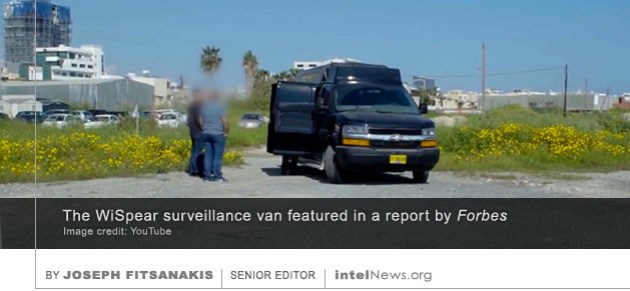 The government of Cyprus has issued international arrest warrants for three Israeli citizens, who are wanted in connection with a private security company that allegedly carried out espionage operations on the Mediterranean island. The warrants were sparked by what has become known in Cyprus as the “spy van case”.
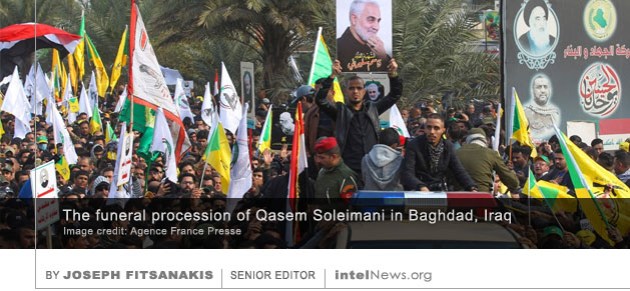 By assassinating Qasem Soleimani, a Shia celebrity and the Middle East’s most influential military leader, US President Donald Trump has made the most fateful decision of his presidency to date. Tehran has no option but to respond. When it does, the way that Mr. Trump and his administration handle the situation will largely determine the future of the Middle East and the fate of his presidency. In the meantime,
 it is becoming increasingly clear that victory, if and when it comes, will not be unblemished for whomever claims it.
 assassination. And yet, while publicly thanking Iran, Trump was likely formulating plans to kill its leading general.
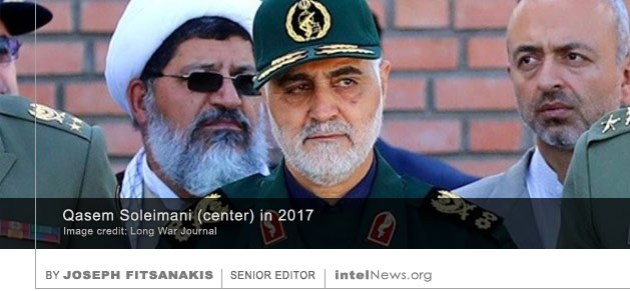 In an act whose implications are impossible to overstate, the United States has assassinated General Qasem Soleimani, arguably Iran’s second most powerful official. In the early hours of this morning, the entire Middle East stood on the verge of a regional war as the US Department of Defense
  why US President Donald Trump made the decision to kill Soleimani, and why he did so now.
 Since 2008, when we launched intelNews, it has been our
  Since 2008, when we launched intelNews, it has been our
 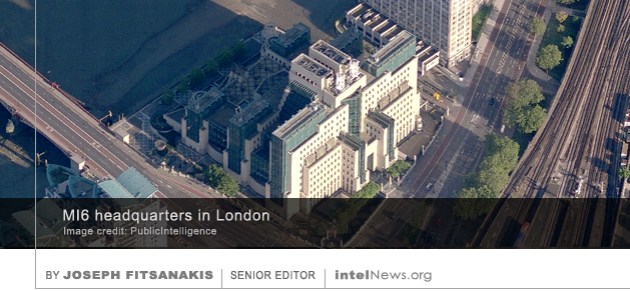 The floor plans of the headquarters of MI6, Britain’s foreign-intelligence agency, were temporarily lost by a contractor, an incident that led to a temporary lockdown of the building and the termination of the contract, according to media reports. The alleged incident took place at 85 Albert Embankment, a distinctive-looking building that has served since 1994 as the headquarters of MI6 —known officially as the Secret Intelligence Service, or SIS. The imposing structure is located on the bank of the River Thames alongside Vauxhall Bridge in downtown London.
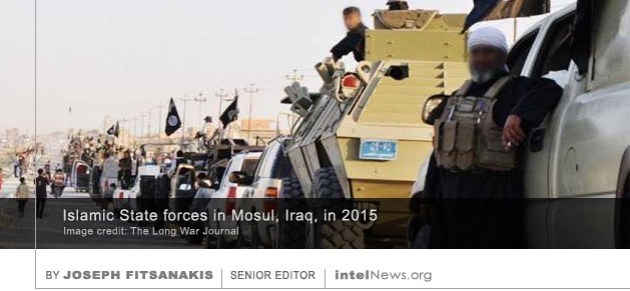 The Islamic State has regrouped, rearmed and refinanced itself, and its forces are now actively patrolling nearly all of northern Iraq, according to a senior intelligence official in Iraq’s Kurdistan region. The Islamic State, which is also known as Islamic State of Iraq and Syria (ISIS), used to control territory in the Levant that equaled the size of Germany. But its forces were pushed back by an international coalition of state armies and militias, a development that prompted several heads of governments, including United States President Donald Trump, to announce that ISIS had been defeated.
 The intelligence service of Russia has openly honored two British members of the so-called Cambridge Five spy ring, who caused great controversy during the Cold War by defecting to Moscow. The intelligence services of the Soviet Union recruited five Enlishmen, H.A.R. ‘Kim’ Philby, John Cairncross, Donald Maclean, Anthony Blunt, as well as an unnamed fifth person, to spy for them in the 1930s. All five were recruited while they were promising young students at Britain’s elite Cambridge University, and entered the diplomatic and security services in order to supply Moscow with classified information about Britain and its allies.
 The son of a Russian couple, who fraudulently acquired Canadian citizenship before being arrested for espionage in the United States, has won the right to keep his Canadian citizenship, which was effectively annulled when his parents were found to be Russian spies.
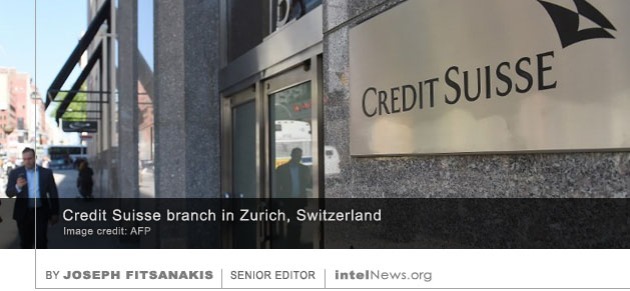 Credit Suisse, one of the world’s most powerful banking firms, says it has opened an investigation into claims that it paid private investigators to spy at individuals, just two months after a similar scandal involving espionage and surveillance rocked the company.
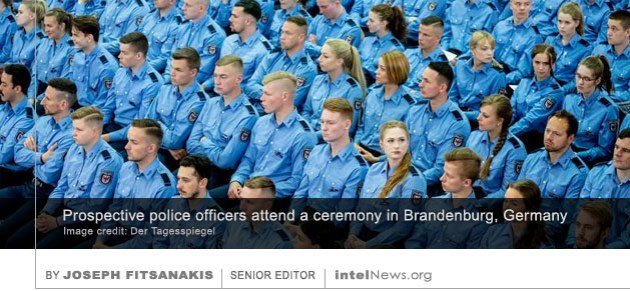 The German government has announced plans to hire hundreds of new police and intelligence officers, in order to step up its monitoring of violent far-right groups in the country. The announcement came at a press conference hosted on Tuesday in Berlin by Horst Seehofer, Germany’s Interior Minister.
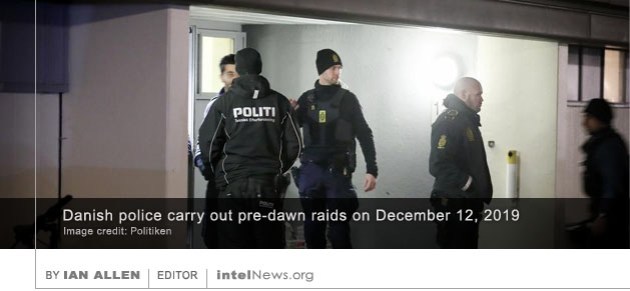 Last Thursday Danish authorities arrested 22 terrorism suspects in early morning raids across the country. Reports from Israel suggest that the raids were carried out following a tip from Israeli intelligence. The 22 suspects include men and women. Danish police said they were involved in the final stages of a plot to carry out attacks “in Denmark or abroad”, but have provided no specific information, except to say that the attacks were “thwarted” while they were well underway.
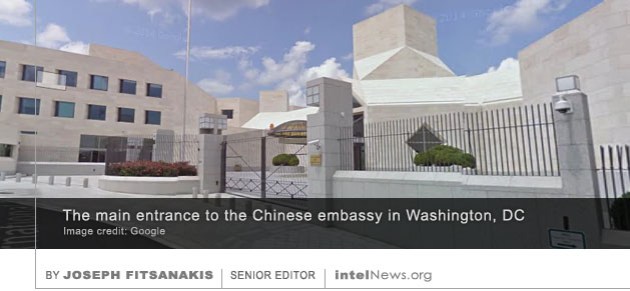 The United States quietly expelled two Chinese diplomats in October of this year, a move that neither Washington nor Beijing chose to make public, according to a report published on Sunday. If true, the incident would signify the first known expulsions of Chinese diplomatic personnel from the US since 1987.








Assessing the implications of Iran’s missile attack on Iraqi military bases
January 8, 2020 by Joseph Fitsanakis 1 Comment
There are two notable aspects in the attack. First, the fact that Tehran did not —as many expected— take aim at American targets using its proxies in Iraq, Lebanon, or Yemen. Instead, not only did the attack come directly from Iran, but the Islamic Revolutionary Guard Corps (IRGC), of which Soleimani was a leading commander, openly claimed responsibility for it. This is a major paradigm shift for the Iranians, who in the past have taken great care to avoid giving any indication of their direct involvement in military or paramilitary attacks on their opponents. It is clear that Soleimani’s killing is viewed by Tehran as too insulting to be responded to indirectly. This does not mean that Tehran will not revert to its standard method of employing proxies in the future. But the fact that it consciously chose to deviate from that time-tested method is in itself extremely important.
The second notable aspect of the attack is that it was markedly muted, especially considering the many options that are available to the Iranians. According to reports, 22 ballistic missiles were fired, most of which struck two military bases housing US troops in western and northern Iraq. The number of missiles fired is surprisingly low, given that Iran possesses the largest ballistic-missile force in the entire Middle East. Additionally, it is interesting that Tehran directed its attacks against the most obvious and predictable American target in the region —uniformed US personnel stationed in what is essentially Iranian-controlled territory. These troops have been on high alert since the moment Soleimani was assassinated. It is therefore highly unsurprising that no American casualties have been reported (although Iranian state media are apparently telling their domestic audiences that “80 terrorists” died in the attack).
The fact remains that, if Iran’s leaders truly wanted to cross the point of no return, they could have attacked American diplomatic facilities in over a dozen countries in the region, including Iraq, Israel, Jordan, and many others. Alternatively, they could have directed their ire against American political and commercial targets in Saudi Arabia, of which there are countless. They could have also sent an unmistakably ominous message to the global financial markets by attacking energy facilities in the region, or by blocking maritime traffic in the Strait of Hormuz. Or they could have carried out all of the above simultaneously, thus virtually ensuring a US response, which would in turn ignite an all-out war. But they didn’t —which should be interpreted that the IRGC is not, for now, interested in going to war. Read more of this post
Filed under Expert news and commentary on intelligence, espionage, spies and spying Tagged with Analysis, Iran, Iraq, Islamic Revolutionary Guard Corps, Joseph Fitsanakis, Newstex, Qassem Soleimani, United States