Far-right spy row continues to rock Germany’s ruling coalition
August 19, 2019 Leave a comment
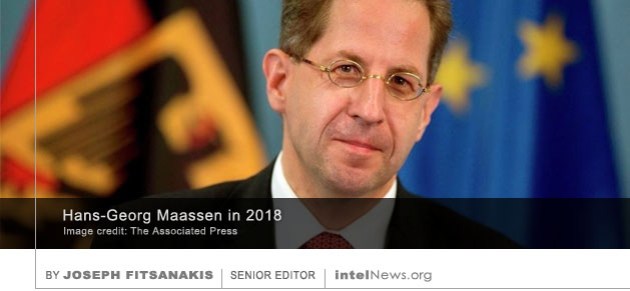 The successor to Angela Merkel in the leadership of Germany’s ruling Christian Democratic Union (CDU) urged the removal from the party of the country’s former spy chief for expressing far-right views. But she later appeared to retract her comments. Hans-Georg Maassen led Germany’s Federal Office for the Protection of the Constitution (BfV) from August 2012 until his removal last September. His BfV career was abruptly terminated following the so-called Chemnitz protests, a series of anti-immigrant rallies, pogroms and riots that shook the eastern German city of Chemnitz in August of last year. Maassen gave an interview at the time in which he seemed to question the authenticity of videos that surfaced on social media, which showed protesters throwing Nazi salutes and singing Nazi-era songs. The BfV director said that the videos may have been faked as part of a disinformation campaign aimed at stirring racial tensions in Germany. He was promptly dismissed from his post.
Following his dismissal from the BfV, Maassen joined the Werteunion (Values Union), an ultra-conservative group within the CDU, which campaigns for strict anti-immigration laws. Its leader, CDU politician Alexander Mitsch, argues that the CDU should not rule out a governing alliance with the far-right Alternative for Germany (AfD). The AfD is a coalition of Eurosceptic, anti-immigrant and neo-Nazi groups that has gained prominence since its establishment in 2013 and currently polls at around 12 percent nationwide. Mitsch’s view goes against the CDU’s recent decision at its annual conference to rule out any collaboration with the AfD and Die Linke, Germany’s main far-left party. Maassen has also given media interviews in which he has criticized the CDU for “moving far to the left” under the leadership of Angela Merkel.
Annegret Kramp-Karrenbauer, who succeeded Angela Merkel to the leadership of the CDU, and is tipped to become Germany’s next chancellor, gave an interview on Saturday, in which she dismissed Maassen’s views as nonsense. Kramp-Karrenbauer, who is currently serving as minister of defense, told the Funke Medien media agency she was pleased that Maassen had been dismissed from the directorship of the BfV. She added that she could not see anything in Maassen’s political views that connected him to the CDU. Kramp-Karrenbauer went on to say that she would not allow the CDU to be “radicalized from the inside” like the United States Republican Party had been radicalized by the Tea Party. This was widely interpreted as a call for Maassen and other Werteunion supporters to either resign or be expelled from the party.
On Sunday, however, Kramp-Karrenbauer spoke to the media again, this time to the Deutsche Presse-Agentur (DPA) news agency, saying that “neither during the [Funke Medien] interview nor elsewhere did I call for a party expulsion procedure” of Maassen and other Werteunion members. She continued by saying that “the CDU is a party with more than 400,000 members. The fact that each one has different opinions is what makes us interesting”. Meanwhile, Maassen told DPA, “it is a mystery to me who advised her to conjure up such thoughts”, referring to Kramp-Karrenbauer’s Saturday interview.
In September and October the CDU will be facing the AfD and several other parties in regional elections that will be taking place in three eastern German states, where the AfD is particularly strong. Many fear that Kramp-Karrenbauer’s party will see its electoral power shrink with many of its voters flocking to the anti-immigration AfD.
► Author: Joseph Fitsanakis | Date: 19 August 2019 | Permalink
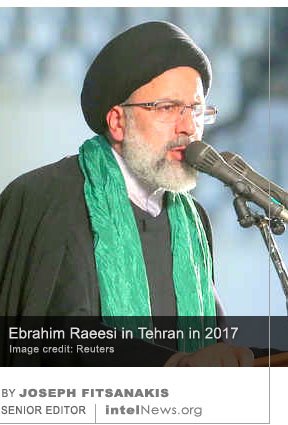 A senior Iranian intelligence official has confirmed widespread rumors that an unprecedented anti-corruption campaign is taking place at the top echelons of Iran’s all-powerful judiciary, with some senior figures already in prison. The Iranian judiciary is one of the most powerful and secretive institutions in the Islamic Republic. It is nominally supervised by the Iranian Justice Ministry, but its senior officials, including the chief justice (the head of the judiciary), are appointed directly by Iran’s Supreme Leader Ali Khamenei. It follows that the judiciary has been a deeply conservative institution throughout the country’s existence, and especially after the 1979 Islamic Revolution.
 Foreign spies are known to pose as journalists, which is why journalists should not be exempted from national security investigations, according to testimony by a senior Australian counterintelligence official. The testimony was given on Wednesday at a public hearing held in the Australian parliament to address a
 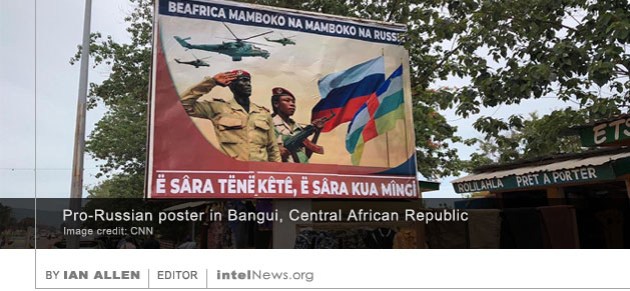 A new report by the American news network CNN has shed new light into the little-researched subject of Russian-owned private military and security operations in Africa. CNN said the report took a month to complete. It claims that a Russian tycoon by the name of
  The state-owned energy sector of Iran, one of the world’s most lucrative, has become a major target of international espionage since the imposition of new sanctions by the United States this year. The purpose of Washington’s sanctions is to limit the Islamic Republic’s ability to export energy, and by doing so end the country’s reliance on its primary source of income. It is estimated that Tehran’s energy exports have fallen by about 80 percent during the past year, and may continue to fall if the US has its way. This means that American and Iranian intelligence agencies are currently engaged in an intense war of espionage that concentrates on what remains of Iran’s oil exports. Iran continues to entice international buyers by selling energy at below-market prices, while sales are facilitated through the use of throwaway bank accounts that are difficult to trace. Exports are then carefully smuggled into overseas destinations through a variety of means.
 France allowed Palestinian militants to operate freely on its soil in exchange for not carrying out terrorist attacks there, according to the former director of France’s domestic security service. The alleged deal was struck between the French government and a die-hard Palestinian militant group known as the Abu Nidal Organization, or ANO. The group’s official name was Fatah – The Revolutionary Council, but it was usually referred to by the name of its founder and leader, Abu Nidal. The group was formed in 1974 after a split in Fatah, the Palestinian armed group led by Yasser Arafat. Abu Nidal (real name Sabri Khalil al-Banna) accused Arafat and other senior officials of Fatah and the Palestine Liberation Organization (PLO) of being conciliatory toward Israel. Eventually Abu Nidal moved to Iraq and declared war on Fatah and the PLO, accusing them of betraying the Palestinian cause.
 The United States Central Intelligence Agency plans to retain a strong presence on the ground in Afghanistan, despite reports that American troops may soon be leaving the country following a deal with the Taliban. Several news outlets
 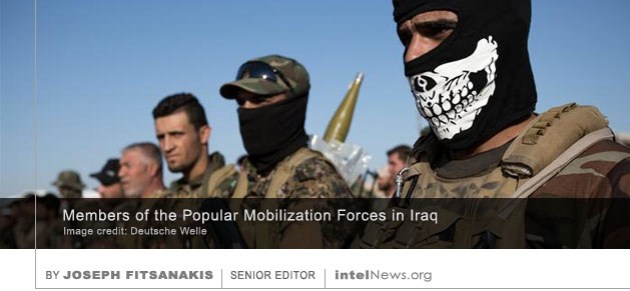 A powerful alliance of about 50 Shiite militias, who helped Iraq defeat the Islamic State, is resisting calls by the Iraqi government to surrender its weapons and join civilian life, according to observers on the ground. Much of the territory captured from the Islamic State (known also as the Islamic State of Iraq and Syria, or ISIS) in northern Iraq is currently controlled by the Popular Mobilization Forces (PMF), a collection of around 40 different Shiite militias consisting of over 150,000 armed fighters. The militias began to form in the summer of 2014, after Sayyid Ali al-Husseini al-Sistani, the spiritual leader of the Iraqi Shiite community, issued a fatwa (religious degree) that called or the destruction of ISIS. The Iranian-supported PMF proved instrumental in the territorial defeat of ISIS. However, the group’s leadership is ideologically aligned with Iran, and many of its members will not cooperate with the Iraqi Armed Forces, because of the latter’s proximity to the United States.
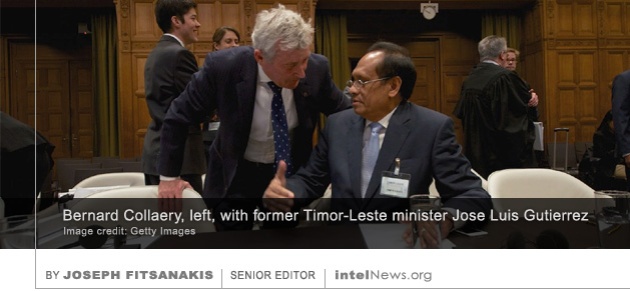 An Australian former intelligence officer will plead guilty to revealing an Australian spy operation against the impoverished nation of East Timor, which prompted international outcry and damaged Canberra’s reputation. IntelNews has covered the case of the former intelligence officer, known only as “Witness K.”
 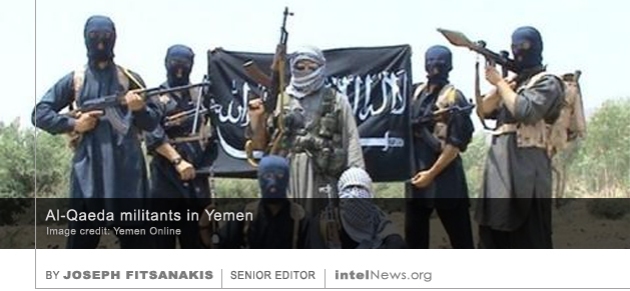 Al-Qaeda and its affiliate groups continue to be the most persistent transnational threats to the security of the West, according to experts who spoke after the alleged death of Osama bin Laden’s son, Hamza. Last week The New York Times
  At least 70 members of Taiwan’s presidential security detail used the president’s official trips abroad to smuggle thousands of cigarettes into the country, it has been announced by Taiwan’s’s spy chief. According to
  Facebook has disabled a large network of fake accounts that it says were involved in an extensive disinformation operation tied to the government of Saudi Arabia. The social media company said on Thursday that the operation concentrated on spreading state-approved propaganda that extolled the Saudi royal family and its policies in the Middle East. The operation employed over 350 fake accounts, which collectively had nearly 1.5 million followers. It is believed that the Saudi propaganda scheme was also active on Instagram, the popular image- and video-sharing service, which is owned by Facebook.
 Despite its military defeat in the Middle East, the Islamic State retains the ability to launch “complex international attacks” and will likely do so this year, according to a new report by a United Nations monitoring team. These attacks will occur in “unexpected locations” around the world, says the
  Spain’s second largest bank has been placed under investigation in connection with a probe into an illegal network that spied on scores of politicians, business executives, journalists and judges for over 20 years. The investigation centers on José Manuel Villarejo (pictured), a 67-year-old former police chief, who remains in pre-trial custody following his








Palestinian intelligence report warns of possible uprising in occupied territories
August 20, 2019 by Joseph Fitsanakis Leave a comment
The report draws on data collected from interviews conducted with young Palestinians in the West Bank, surveillance of militant groups, interrogations with young militant detainees, as well as opinion trends on social media. Much of the data represents the views of Palestinians who are between the ages of 20 and 30. It suggests that they are angry about the lack of opportunity in their homeland and see no future for themselves and their families. They are therefore susceptible to calls for violent action against Israel and against the leadership of the PNA, the report warns. The PNA is accused by young Palestinians of having failed to receive any concessions from Israel in return for its policies of collaborating with Israeli authorities for nearly a decade. It follows that young Palestinian see “no political benefit” in cooperating with Israeli authorities. At the same time, says the report, young Palestinians in the West Bank view Hamas’ call for violent resistance against Israel in an increasingly favorable light. They believe that exercising pressure on Israel through violence is more likely to draw a positive response from the Jewish state in the form of political recognition and financial aid.
The classified report warns that if the economic stagnation in the West Bank persists, and if young Palestinians continue to perceive the PNA’s cooperation with Israel as unproductive, there will be an increase in “shooting incidents and the use of explosive devices” against Israeli targets. Such actions will be easily facilitated by the widespread black market in weapons and explosives in the region, states the report. It also notes that calls for radical action are not only coming from members of Hamas, but also from younger activists within Fatah, the main political faction that makes up the PNA.
► Author: Joseph Fitsanakis | Date: 20 August 2019 | Permalink
Filed under Expert news and commentary on intelligence, espionage, spies and spying Tagged with Fatah, Hamas, Israel, News, Palestine, Palestinian National Authority