Russia jailed senior intelligence officers for helping CIA nab notorious hackers
August 25, 2017 2 Comments
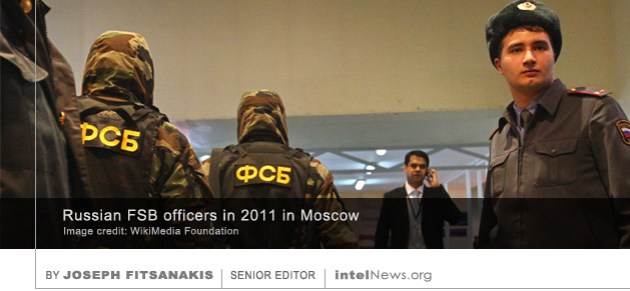 Two senior officers in the Russian intelligence services were charged with treason after they were found to have helped the United States catch two notorious Russian hackers, according to reports in the Russian media. Sergey Mikhailov was a career officer in the Federal Security Service —a descendant of the domestic section of the Soviet-era KGB— which is often referred to as Russia’s equivalent of the United States Federal Bureau of Investigation. Mikhailov had risen through the ranks of the FSB to eventually head the agency’s Center for Information Security. Known in Russia as CIB, the Center is tasked with investigating electronic crime in the Russian Federation.
But in December 2016, Mikhailov and one of his trusted deputies in the CIB, Dmitry Dokuchaev, were suddenly removed from their posts and arrested. The arrests marked some of the highest-profile detentions of intelligence officers in Russia since the demise of the Soviet Union. Russian authorities refused to reveal the reasons for the arrests, but confirmed that the two men had been charged with treason. Reports soon surfaced in the Russian media, claiming that Mikhailov and Dokuchaev were arrested for their involvement in a Russian criminal hacker gang. Some Western media, including The New York Times, speculated that the two men may have been arrested for helping US intelligence investigate Russian interference in the 2016 US presidential election.
But now a new report alleges that Mikhailov and Dokuchaev were charged with treason after helping the US Central Intelligence Agency catch two prolific Russian hackers. The report was aired on Russian television station TV Dozhd, also known as TV Rain, a privately owned channel based in Moscow, which broadcasts in Russia and several other former Soviet Republics. One of the hackers, Roman Seleznev, known in hacker circles as Track2, reached worldwide notoriety for defrauding major credit card companies of tens of millions of dollars. He was arrested in 2014 in the South Asian island country of Maldives and eventually extradited to the US to stand trial. He was sentenced to 27 years in prison, which he is currently serving. The other hacker, Yevgeniy Nikulin, was arrested in the Czech Republic in 2016, pursuant to a US-issued international arrest warrant. He is now awaiting extradition to the US, where he is expected to be tried for hacking several high-profile companies, including DropBox and LinkedIn.
TV Dozhd said that Russian authorities are also suspecting the men of being members of hacker gangs, but that their main charges relate to their close cooperation with American intelligence agencies, reportedly in exchange for cash.
► Author: Joseph Fitsanakis | Date: 25 August 2017 | Permalink
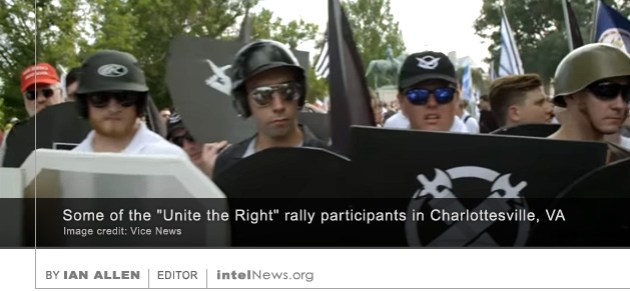 Canadian spy organizations are working with domestic and international agencies in response to reports that several Canadian far-right activists attended the “Unite the Right” rally in Charlottesville, Virginia, earlier this month. The rally drew the attention of the world’s media after violent clashes between protesters and counter-protesters left a woman dead. Two Virginia State Police officers were also killed when a helicopter used in crowd control in Charlottesville crashed near the site of the demonstrations. The rally, which took place on August 11 and 12, drew members of various white supremacist, white nationalist, neo-Nazi and neo-Confederate groups. There were also heavily armed members of a self-styled militia at Emancipation Park, where a soon-to-be-removed statue of the late Confederate General Robert E. Lee became the focal point of the far-right demonstrators.
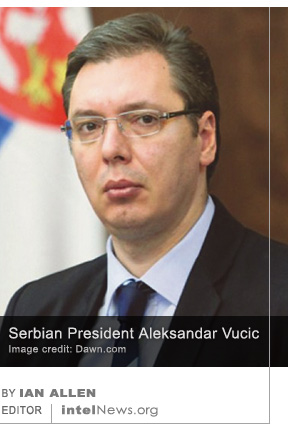 Serbia recalled its entire diplomatic staff from its embassy in the Former Yugoslav Republic of Macedonia on Monday, claiming that it wanted to protect its diplomats from “offensive intelligence activities” directed against them. The move came without warning and surprised journalists in the two former Yugoslav republics. No official reason was given for the
  Australia has expressed concern about a plan by a Chinese telecommunications company to provide high-speed Internet to the Solomon Islands, a small Pacific island nation with which Australia shares Internet resources. The company, Huawei Technologies, a private Chinese venture, is one of the world’s leading telecommunications hardware manufacturers. In recent years, however, it has come under scrutiny by Western intelligence agencies, who view it as being too close to the Communist Party of China.
 The United States Central Intelligence Agency recently warned Spanish authorities that the Islamic State planned to attack Barcelona, according to Spanish media. The disclosure follows Thursday’s dramatic events in the Catalan capital, where a white van deliberately drove into a crowd in the pedestrian mall of La Rambla, killing at least 16 people and injuring more than 100. The attack was followed by reports early on Friday that Catalan police had shot dead four suspects who were planning a second strike.
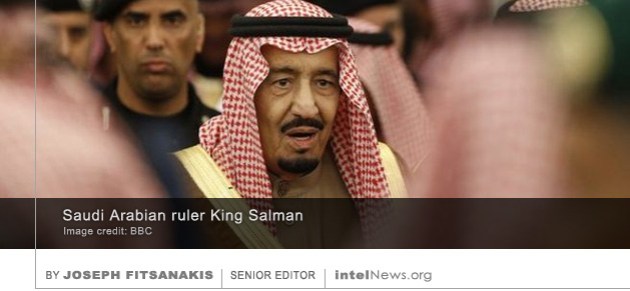 At least three prominent Saudi dissidents living in Europe, who openly criticized Saudi Arabia’s system of government, have been illegally abducted by the country’s monarchy in the past two years, according to a report by the BBC. All three, who are members of the Saudi royal family, are missing, believed to be dead or held against their will in Saudi Arabia. But the country’s government will not comment on their fate.
 Germany has launched an unprecedented investigation into three officers of Switzerland’s intelligence agency on suspicion that they spied on German tax investigators who were probing the activities of Swiss banks. News of the investigation comes three months after authorities in Germany
 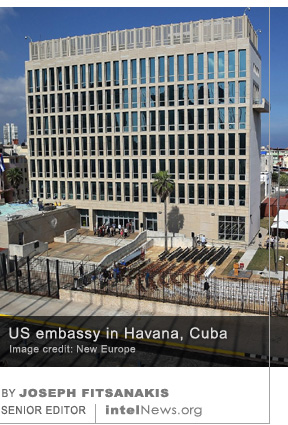 Authorities in Cuba, the United States and Canada are investigating reports that several foreign diplomats stationed in Havana have been experiencing severe hearing loss in recent months.
  Russian intelligence services say they have foiled a large-scale bomb plot, after raiding an explosives laboratory belonging to the Islamic State and arresting four suspects. The four men were allegedly planning to target the Moscow Metro transit system and a busy shopping center in the Russian capital. In a statement released to the media this morning, the Russian Federal Security Service (FSB) did not specify the intended targets of the plotters. But it said it had arrested four people during an early morning raid at an explosives laboratory located in the Moscow suburbs. The FSB said that its officers
 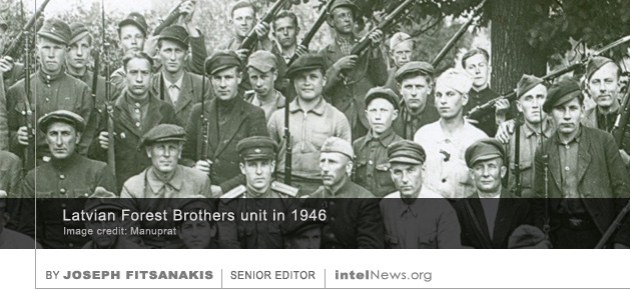 The role of the CIA in funding and helping to organize anti-Soviet groups inside the USSR has been known for decades. But, as intelNews explained in
 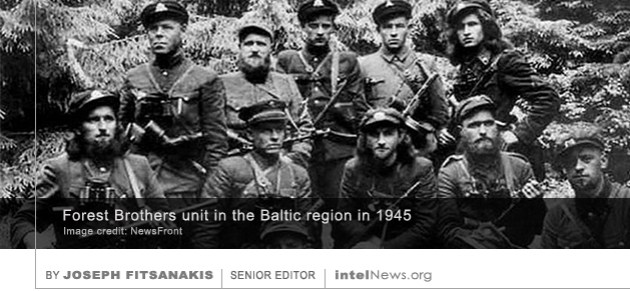 Recently declassified documents from the archive of the Central Intelligence Agency detail financial and material support given by the United States to groups of armed guerrillas in Soviet Latvia in the 1950s. The documents, initially marked ‘Top Secret’ but now declassified, show that the CIA was aware and supported the activities of an anti-Soviet guerrilla army known as ‘the Forest Brothers’. Known also as ‘the Forest Brethren’, the group was formed in the Baltic States in 1944, as the Soviet Red Army established Soviet control over the previously German-occupied states of Estonia, Latvia and Lithuania. The Soviet Union had previously occupied and annexed the three Baltic countries, in a failed attempt to pre-empt Germany’s eastward military expansion. Groups like the Forest Brothers consisted of the most militant members of anti-Soviet groups in the Baltic States, many of whom were ideologically opposed to Soviet Communism.
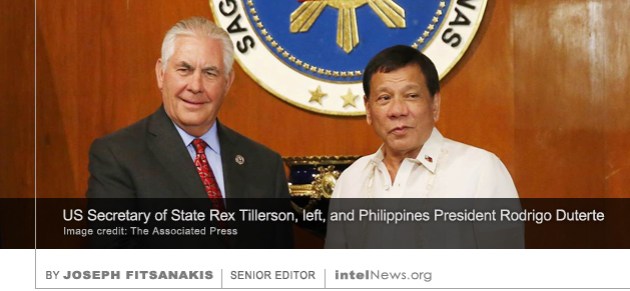 The United States is reportedly weighing plans to launch airstrikes in the Philippines, against militant groups that are affiliated with the Islamic State of Iraq and Syria. However, some American officials are skeptical about reports of possible airstrikes, while Philippine government officials claim no such action is necessary. For more than 40 years, the Philippine army has been fighting a counterinsurgency campaign against secessionist Moros in the country’s southwest. The region is home to most of the Philippines’ Muslim population, which constitutes around 6 percent of the country’s overall population. In recent years, some Muslim secessionist groups, including the most formidable, Abu Sayyaf, have pledged allegiance to the Islamic State of Iraq and Syria, known as ISIS.
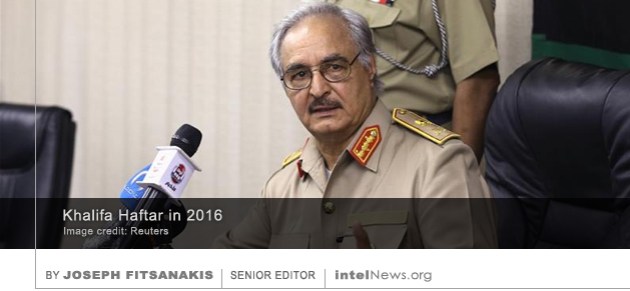 Israel is secretly providing military assistance to Khalifa Haftar, commander of the Libyan National Army, one of the factions in the Libyan Civil War, according to a British-based publication. Libya has remained in a state of war since 2011, when a popular uprising backed by the West and its allies led to the demise of the country’s dictator, Colonel Muammar Gaddafi. Currently the strongest faction in the ongoing Libyan Civil War is the eastern-based Tobruk-led Government, which is affiliated with the Libyan National Army (LNA). The commander of the LNA is Field Marshal Khalifa Haftar, an old adversary of Colonel Gaddafi, who lived in the United States under Washington’s protection for several decades before returning to Libya in 2011 to launch his military campaign.
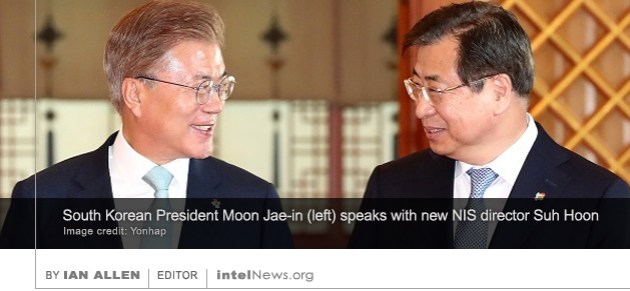 An internal investigation has found that the intelligence agency of South Korea tried to steer the result of the 2012 presidential election in favor of the conservative candidate, and placed liberal politicians under surveillance in the run-up to the election. South Korea’s intelligence agency, the National Intelligence Service (NIS) has fallen into disrepute in recent years, after it was found to have secretly sided with conservative political candidates for public office.






 intelNews.org
Ukraine releases rare footage showing arrests of North Korean nuclear spies
August 28, 2017 by Joseph Fitsanakis 2 Comments
On August 14, a report by the London-based International Institute of Strategic Studies (IISS) suggested that North Korea’s technological leap had been achieved with assistance from abroad. The report claimed that one possible source of North Korea’s technical advancement was the Yuzhnoye Design Office, a corporation that specializes in the design of rockets and satellites. Based in the central Ukrainian city of Dnipro, Yuzhnoye has its roots in the Soviet space and weapons program of the early 1950s. Following the publication of the IISS report, some experts claimed that North Korean spies may have illicitly purchased or stolen missile designs from Yuzhnoye. Ukrainian authorities strongly denied these allegations, and argued that Russia was a far more likely source of North Korea’s technical knowledge —something that Moscow refutes. In an effort to strengthen their claims, Ukrainian officials were authorized to release details of counterespionage operations against North Korean spies in recent years. They told the US-based news network CNN that several North Korean spies had been caught spying in Ukraine in recent years, and that Ukraine responded in 2016 by barring all North Koreans from entering the country.
The Ukrainians also released to CNN surveillance footage filed during a sting operation in 2011, in which three North Korean diplomats were caught photographing classified documents in Ukraine. The documents, which contained technical blueprints of missiles, were fake, and the operation had been planned by the Ukrainians several years prior. The three North Koreans had traveled to Ukraine from the Democratic People’s Republic of Korea’s embassy in Moscow. One of the men, who had been tasked with transporting stolen hardware missile parts out of Ukraine, was deported following his arrest. His two accomplices are currently serving eight-year prison sentences in a Ukrainian prison located nearly 90 miles west of Kiev. Reporters from CNN were also granted access to the two North Korean prisoners, known only as “X5” and “X32”. The younger prisoner, who goes by X32, declined to be interviewed. But X5, who is in his mid-50s, told CNN that he was born in Pyongyang and that at the time of his arrest he was serving as a trade representative in the DPRK’s embassy in Belarus.
Ukrainian officials told CNN that the two men were visited in jail once by officials in the DPRK’s embassy in Moscow, but that was their only contact —face-to-face or otherwise— with North Korean citizens since their arrest. The officials argued that this information about Ukraine’s counterespionage operations against North Korean spies should help dispel all allegations that Pyongyang may have acquired its missile knowhow from Ukrainian sources.
► Author: Joseph Fitsanakis | Date: 28 August 2017 | Permalink
Filed under Expert news and commentary on intelligence, espionage, spies and spying Tagged with espionage, News, North Korea, North Korean nuclear program, Ukraine, Yuzhnoye Design Office