Germany’s celebrity spy Werner Mauss on trial for multi-million dollar tax evasion
September 19, 2017 Leave a comment
 Germany’s most famous living spy is on trial this week for hiding assets totaling $50 million in offshore bank accounts. He claims the money was given to him by unspecified “Western intelligence agencies” for his services. Werner Mauss became widely known in 1997, when he was arrested in Colombia for using a forged passport. He had traveled to the Latin American country to secure the release of a German woman who had been kidnapped by leftist guerrillas. The Colombian authorities eventually released him, following heavy diplomatic pressure from the German government. But the German media began investigating his background, and it soon became apparent that he was working for the German Federal Intelligence Service.
Following his unmasking in 1997, Mauss enjoyed celebrity status in Germany. Published accounts of his exploits claim that he was directly involved in neutralizing over 100 criminal gangs and that his work led to the capture of 2,000 criminals and spies. Mauss also claims to have helped prevent dangerous chemical substances from falling into the hands of terrorist groups, and that he stopped the Italian Mafia from killing Pope Benedict. Last year, however, Mauss saw his celebrity status diminish after the German government charged him with tax evasion. German prosecutors uncovered several overseas bank accounts belonging to him, which they said contained tens of millions of dollars in hidden income. They alleged that Mauss used the funds to finance a luxurious lifestyle centered on expensive overseas holidays, luxury cars, expensive gifts to women, as well as a private jet.
On Monday, the 77-year-old Mauss made his final plea in a lengthy court case concerning two of his off-shore accounts, located in UBS bank branches in the Bahamas and Luxembourg. The prosecution alleges that he failed to pay tax on assets totaling in excess of $50 million in the decade between 2002 and 2012 alone. Additionally, it is claimed that Mauss traveled from Germany to Luxembourg several times a year, to withdraw approximately $330,000 in cash per month from his secret accounts. But the accused former spy claims that the money was given to him by “Western intelligence agencies” in return for his services against international crime and terrorism, and that he should not have to pay taxes on it. In previous court appearances, he claimed that the money was not his, but belonged to various Western intelligence agencies and he simply used it to carry out intelligence operations.
The trial continues. If Mauss is convicted, he could spend nearly seven years in prison.
► Author: Ian Allen | Date: 19 September 2017 | Permalink
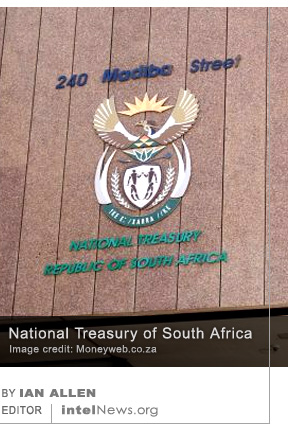 South Africa’s National Treasury threatened to terminate all funding for covert operations last year, after the country’s spy agency refused to account for tens of millions of dollars in expenses, saying the money had been put to “secret use”. An investigation by two leading South African news outlets, the Afrikaans-language weekly newspaper Rapport and the English-language online news portal News24, has revealed the existence of a major bureaucratic spat between the National Treasury and the State Security Agency (SSA), the country’s primary civilian intelligence organization.
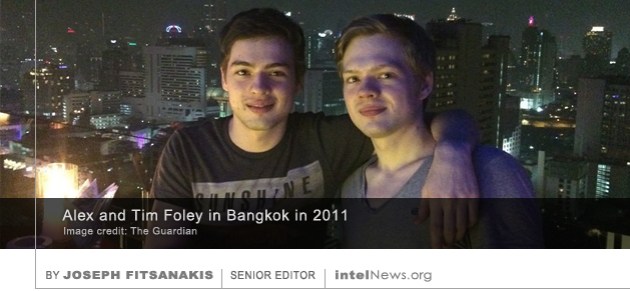 The sons of a Russian couple, who fraudulently acquired Canadian citizenship before being arrested for espionage in the United States, are seeking to reinstate their Canadian citizenship, which was annulled when their parents were found to be Russian spies. Tim and Alex Vavilov are the sons of Donald Heathfield and Tracey Foley, a married couple arrested in 2010 under Operation GHOST STORIES —a counterintelligence program run by the US Federal Bureau of Investigation (FBI). Following their arrest, their sons, who allegedly grew up thinking their parents were Canadian, were told that their parents were in fact Russian citizens and that their real names were Andrei Bezrukov and Elena Vavilova. Their English-sounding names and Canadian passports had been forged in the late 1980s by the KGB, the Soviet Union’s primary external intelligence agency.
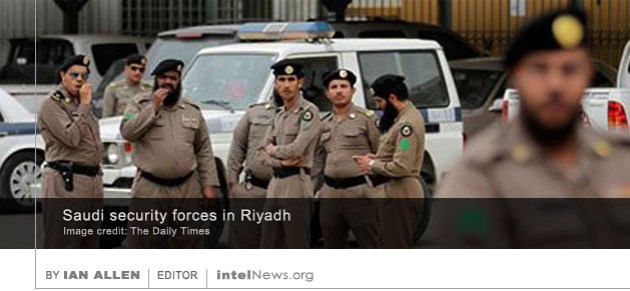 Officials in Saudi Arabia said on Tuesday that they foiled an elaborate suicide attack on the country’s defense ministry headquarters and infiltrated a foreign spy ring in the Kingdom, arresting its members. The near-simultaneous announcements were made by a member of the Presidency of State Security, an intelligence body founded only in July of this year, which is directly accountable to the county’s prime minister.
 A former director of Kazakhstan’s feared intelligence agency has been given a lengthy prison sentence, as a ruthless power struggle between rival factions surrounding the country’s president widens. From 2001 to 2006, Nartai Dutbayev directed the Kazakh National Security Committee (KNB), a direct institutional descendant of the Soviet-era KGB. Founded in 1992, the KNB is today directly controlled by Kazakhstan’s authoritarian President, Nursultan Nazarbayev. Many officials serving in senior KNB positions are members of the president’s family, or close friends.
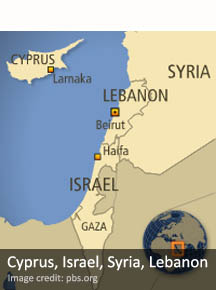 A sophisticated spying device disguised as a rock, which was allegedly planted by Israeli intelligence, was found by Lebanese Army troops on a hill located a few miles from the Lebanese-Israeli border. The discovery was reported early on Saturday by several Lebanese news websites, including Al-Mayadeen and Al-Manar, which are closely affiliated with Hezbollah. Al-Manar
  The Turkish government has refused to comment on reports from Iraq, which suggest that Kurdish forces have captured at least two senior Turkish intelligence officers. News of the arrests first
 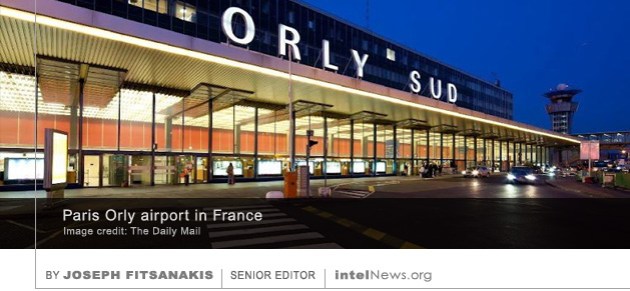 A French police officer has been charged with illegally sharing secret government documents in an espionage case involving France’s border police and diplomats from Morocco and Algeria. According to information published by the French daily Libération, the police officer supplied Moroccan intelligence with classified information about France’s border-control policies and procedures. He also gave the Moroccans information about the movements in France of Moroccan nationals and senior Algerian government officials.
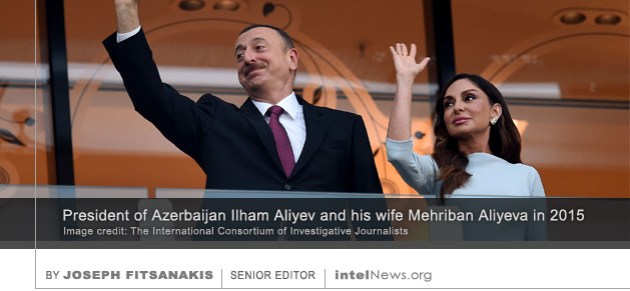 An investigation by a consortium of European newspapers has uncovered details of a massive slush fund worth nearly $3 billion, which was allegedly used by Azerbaijan’s governing elite to bribe officials, business leaders and journalists at home and abroad. The fund was operated out of Baku, the capital of the former Soviet state, which is routinely accused of human-rights abuses. Western countries, including the United States,
  The Parliament of Australia is reportedly reviewing the use of cell phones built by a Chinese manufacturer, after an Australian news agency expressed concerns about the manufacturer’s links with the Chinese military. The cell phone in question is the popular Telstra Tough T55 handset. It is made available to Australian parliamentarians though the Information, Communications and Technology (ICT) unit of the Department of Parliamentary Services (DST). Any parliamentarian or worker in Australia’s Parliament House can order the device through the Parliament’s ICT website. According to data provided by the DST, 90 Telstra Tough T55 cell phones have been ordered through the ICT in the current financial year.
 American officials have revealed more information about a mysterious sonic device that is believed to have caused numerous diplomats to suffer hearing loss and other serious ailments. Last month, the Associated Press
 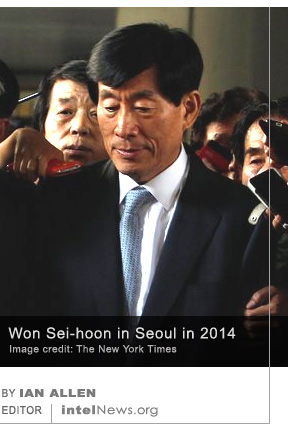 The former director of South Korea’s main intelligence agency has been sent to prison for organizing a large-scale illegal campaign to influence the result of the country’s 2012 presidential election. Won Sei-hoon headed the NIS from 2008 to 2013, during the administration of conservative President Lee Myung-bak. During the 2012 presidential election, Won ordered a group of NIS officers to “flood the Internet” with messages accusing liberal political candidates of being “North Korean sympathizers”. One of those candidates, Moon Jae-in, of the left-of-center Democratic Party of Korea, is now the country’s president. Mr. Moon succeeded his main right-wing rival, Park Geun-hye, who resigned in March of this year following a series of financial scandals. She is now facing charges of bribery, abuse of power, leaking government secrets, and corruption.
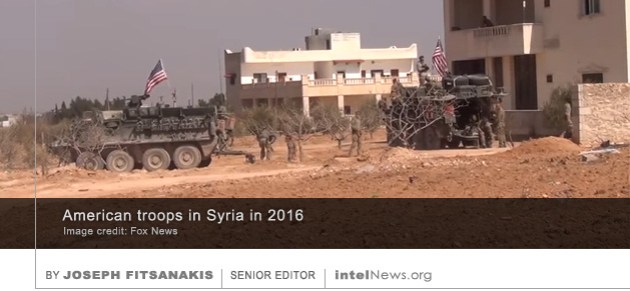 American troops deployed in Syria have exchanged fire with rebels that were until recently supported by the United States Central Intelligence Agency. In 2013, soon after the outbreak of the Syrian Civil War, the then-US President Barack Obama instructed the Central Intelligence Agency to provide covert support to fighters in Syria. Acting on the president’s directive, the CIA promptly joined forces with spy agencies from Britain, France, Saudi Arabia and the United Arab Emirates, to assist fighters affiliated with the Free Syrian Army. At that time, Washington saw the Free Syrian Army and forces affiliated with it as ideologically moderate. It also agreed with the group’s main aim, which was to topple the regime of Syrian President Bashar al-Assad.
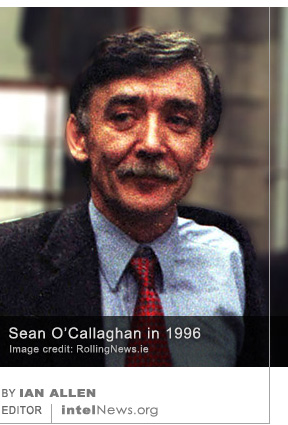 Sean O’Callaghan, one of the most contentious figures in the history of the Provisional Irish Republican Army, has died in Jamaica. He was born in County Kerry, Republic of Ireland, in a strongly republican family, which sided with opponents of the Ango-Irish treaty and fought against the official Irish government in the Irish Civil War of 1922-1923. In 1971, aged just 17, O’Callaghan joined the Provisional Irish Republican Army, which fought to unite British-controlled Northern Ireland with the independent Republic of Ireland. Not long after, O’Callaghan was arrested by the Garda Síochána (Irish police) in his home county of Kerry, when a small quantity of explosives he was hiding in his parents’ house accidentally detonated.






 intelNews.org
Australia rejected CIA request to open embassy in North Korea
September 20, 2017 by Joseph Fitsanakis Leave a comment
Throughout that time, Australia has maintained relatively smooth diplomatic relations with North Korea, but has refrained from opening a residential mission in the communist country. Instead, employees of Australia’s embassy in South Korea occasionally travel to the North to perform diplomatic tasks. But in 2014, the US Department of State reached out to Canberra to request that the Australian government consider the possibility of establishing a permanent residential mission in Pyongyang. According to The Australian, the request came from the CIA, which hoped to use the Australian embassy as a base from where to collect intelligence on the isolated country. The US, which lacks an embassy in North Korea, has always found it difficult to collect intelligence there.
The American request was promptly communicated to the then-Prime Minister Tonny Abbott and his Minister of Foreign Affairs, Julie Bishop. Both appeared willing to consider Washington’s proposal. But the civil servants of the Department of Foreign Affairs and Trade, who were tasked with putting together a cost-benefit analysis of the request, came back with a negative response. They allegedly contacted their colleagues working in other countries who maintain permanent residential diplomatic missions in Pyongyang. They told them that their consular employees are kept in complete isolation from North Korean society and government. Additionally, they are subjected to constant surveillance by the North Koreans, who are extremely suspicious of all foreign diplomats. Moreover, Canberra was worried that opening an embassy in Pyongyang would inevitably be seen by the North Koreans as an invitation to reopen their embassy in Australia. It would require significant effort and resources to monitor the activities of North Korean diplomats, who are notorious for abusing their diplomatic status by engaging in illicit activities of all kinds.
Eventually, therefore, the US request was rejected by Australia’s Department of Foreign Affairs and Trade. The latter concluded that Canberra should not proceed with opening a new embassy in Pyongyang, despite the allegedly “strong suggestion” of the CIA. The matter, said The Australian, never reach the cabinet and Washington never brought it up again.
► Author: Joseph Fitsanakis | Date: 20 September 2017 | Permalink
Filed under Expert news and commentary on intelligence, espionage, spies and spying Tagged with Australia, Australian Department of Foreign Affairs and Trade, CIA, diplomacy, News, North Korea, United States