North Korean state now uses cyber attacks to steal cash, says report
July 31, 2017 Leave a comment
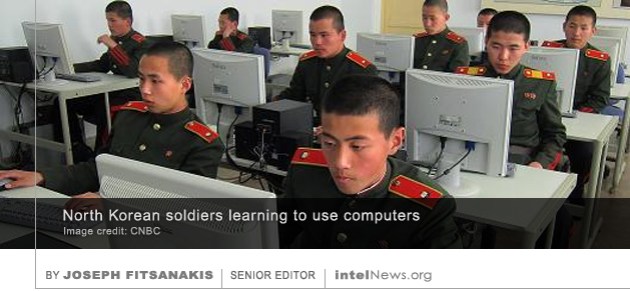 North Korea’s intelligence establishment has shifted its attention from spying for political gain to spying for commercial advantage –primarily to secure funds for the cash-strapped country, according to a new report. Since the 1990s, the Democratic People’s Republic of Korea (DPRK) has used computer hacking in order to steal political and military secrets from its rivals. But there is increasing evidence that Pyongyang is now deploying armies of computer hackers in order to steal cash from foreign financial institutions and internet-based firms. This is the conclusion of a new report by the Financial Security Institute of South Korea, an agency that was set up by Seoul to safeguard the stability of the country’s financial sector.
The report, published last week, analyzed patterns of cyber attacks against South Korean state-owned and private financial institutions that took place between 2015 and 2017. It identified two separate computer hacking groups, which it named Lazarus and Andariel. According to the report, both groups’ activities, which are complementary, appear to be directed by the government of North Korea. An analysis of the groups’ targets suggests that Pyongyang has been directing its computer spies to find ways to secure hard currency for use by the government. Foreign currency has been increasingly hard to come by in North Korea in recent years, due to a host of international sanctions that were imposed on the country as a form of pressure against its nuclear weapons program.
Several cyber security experts and firms have claimed in recent months that North Korea has been behind recent cyber attacks against international banking institutions. The DPRK has also been blamed for a 2014 attack against the Hollywood studios of the Japanese multinational conglomerate Sony. Regular readers of intelNews will recall our story in March of this year about comments made on the subject of North Korea by Rick Ledgett, a 30-year veteran of the United States National Security Agency. Speaking at a public event hosted by the Aspen Institute in Washington, Ledgett expressed certainty that the government of North Korea was behind an attempt to steal nearly $1 billion from Bangladesh Bank —the state-owned central bank of Bangladesh—in 2016. Eventually the bank recovered most of the money, which were made through transactions using the SWIFT network. But the hackers managed to get away with approximately $81 million.
More recently, cyber security experts have claimed that the government of North Korea has been behind attempts to hack into automated teller machines, as well as behind efforts to steal cash from online gambling sites. In April of this year, the Russian-based cyber security firm Kaspersky Lab identified a third North Korean hacker group, which it named Bluenoroff. The Russian experts said Bluenoroff directed the majority of its attacks against foreign financial firms. There are rumors that Pyongyang was behind the wave of WannaCry ransomware attacks that infected hundreds of thousands of computers in over 150 countries in May. But no concrete evidence of North Korean complicity in the attacks has been presented.
► Author: Joseph Fitsanakis | Date: 31 July 2017 | Permalink
 A cyber espionage group that has alarmed security researchers by its careful targeting of government agencies has links to the Iranian state, according to a new report. The existence of the group calling itself CopyKittens was first confirmed publicly in November of 2015. Since that time, forensic analyses of cyber attacks against various targets have indicated that the group has been active since at least early 2013. During that time, CopyKittens has carefully targeted agencies or officials working for Jordan, Saudi Arabia, Turkey, Israel, the United States, and Germany, among other countries. It has also targeted specific offices and officials working for the United Nations.
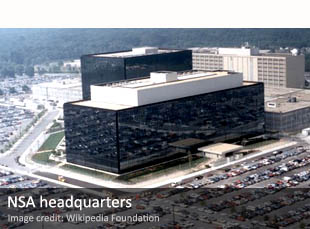 The director of the United States National Security Agency appears to have backed away from a proposal to set up a joint American-Russian cyber security working group, with the aim of defending both countries from hackers. Earlier in July, US President Donald Trump said he was considering the establishment of what he described as “an impenetrable cyber security unit” that would be a joint project between the United States and Russia. The unit would have the task of defending both countries from cyber attacks aimed at hacking their election systems and other vital state functions. The US president said he had discussed the idea with his Russian counterpart, President Vladimir Putin, during the G20 summit in German city of Hamburg. Last week, a Russian official confirmed that Moscow and Washington were considering the creation of a working group that would examine the creation of a joint cyber defense force.
 Dozens of Western European and American citizens are participating in the ongoing takeover of Raqqa, the de facto capital of the Islamic State in Syria, despite being prohibited from doing so by their own governments, according to recent news reports. Much has been written about foreign fighters who enter Iraq and Syria in order to join the ranks of the Islamic State, the Sunni militant group that previously went by the name Islamic State of Iraq and Syria (ISIS). But relatively little attention has been paid to the thousands of foreign fighters who have traveled to the region to join the war against ISIS.
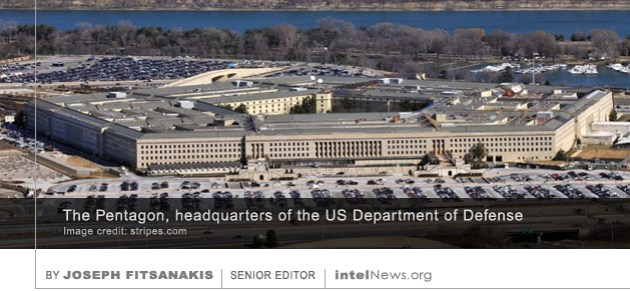 The White House will soon announce its decision to strengthen the United States Cyber Command and separate cyber war operations from intelligence functions, according to insider reports. For many decades, the National Security Agency has been in charge of protecting America’s cyber network and combating online threats. But in 2009, the Administration of US President Barack Obama established a brand new Cyber Command, proposing that the online environment represented a new theater of war. Since that time, the US Department of Defense has been campaigning in favor of strengthening the new Cyber Command and completely removing it from the patronage of the NSA –despite the fact that the latter is also a Pentagon agency.
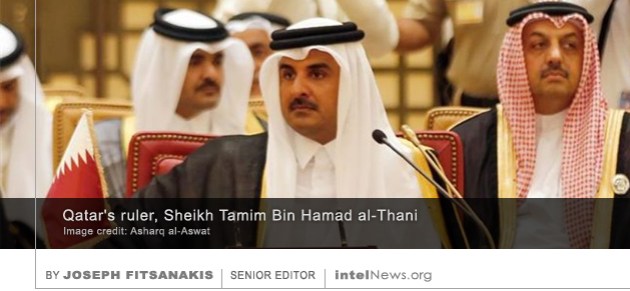 American officials appear to confirm Qatar’s allegations that its news media were hacked by its Gulf adversaries, who then used the fake news posted by hackers to launch a massive campaign against it. Tensions between Qatar and other Muslim countries have risen since late May, when the country’s state-controlled news agency appeared to publish an incendiary
 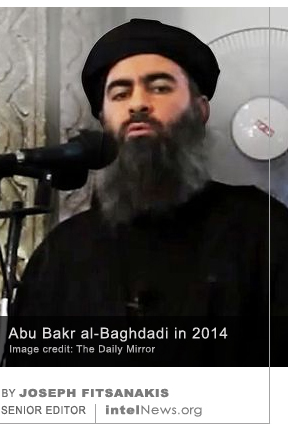 A senior Iraqi intelligence official has rejected assurances given by Russia that Abu Bakr al-Baghdadi, the founder and leader of the Islamic State, is dead, insisting instead that the Iraqi-born cleric is alive in Syria. In mid- June, Russia’s Ministry of Defense said that, according to its sources, al-Baghdadi
 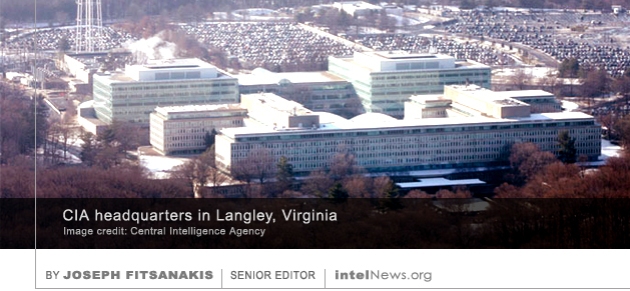 A contractor for the United States Central Intelligence Agency has complained in an interview that no action has been taken in the seven years since he revealed a “billion-dollar fraud” and “catastrophic intelligence failure” within the Agency’s ranks. John Reidy argues that his case illustrates the unreasonable delay that impedes investigations by whistleblowers like him inside the CIA. Individuals like him, he argues, are forced to seek justice through leaks to the media, something which could be avoided if the CIA’s Office of the Inspector General addressed concerns more promptly.
 Staff at a Russian disaster relief center in southern Serbia have rejected claims by American officials that the facility operates as an espionage arm of Moscow’s foreign policy in the Balkans. The Russian-Serbian Humanitarian Center was built in 2012, at a cost of nearly $40 million, following an agreement between Belgrade and Moscow. Its
  Russia is planning to expel approximately 30 American diplomats from its territory, and seize buildings and property belonging to the United States Department of State, according to Russian media reports. The expulsions will be in response to the expulsion last December of 35 Russian diplomats stationed in the US by the administration of President Barack Obama. In addition to expelling the diplomats, Washington also reclaimed two “recreational facilities” (in reality intelligence outposts) that were used by the Russians in New York and Maryland. The White House said that the expulsions were ordered in response to alleged efforts by Russia to interfere in the 2016 US presidential election.
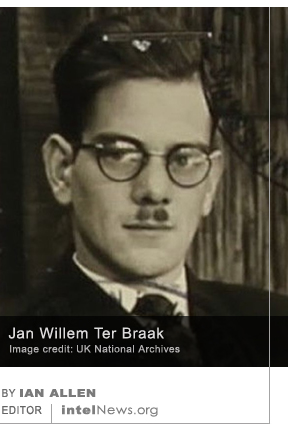 The unmarked grave of a Dutch-born Nazi spy, who killed himself after spending several months working undercover in wartime Britain, will be marked with a headstone, 76 years after his death by suicide. Born in 1914 in The Hague, Holland, Englebertus Fukken joined the National Socialist Movement in the Netherlands, the Dutch affiliate of the National Socialist German Workers’ Party led by Adolf Hitler, in 1933. In 1940, shortly after the German invasion of Holland, Fukken, who had been trained as a journalist, was recruited by the Abwehr, Nazi Germany’s military intelligence. Abwehr’s leadership decided to include Fukken in the ranks of undercover agents sent to Britain in preparation for Operation SEA LION, Germany’s plan to invade Britain.
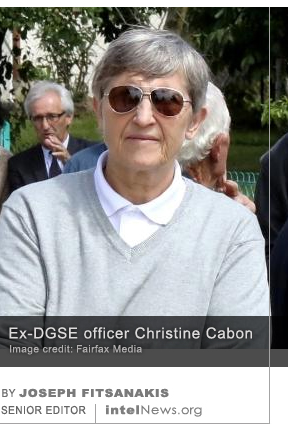 A French spy who infiltrated the environmentalist group Greenpeace and in 1985 helped bomb the organization’s flagship, the Rainbow Warrior, has spoken to the media for the first time. The British-based activist organization had purchased the trawler from the British government in 1977 and used it to carry out maritime research and other operations. In July 1985, the Rainbow Warrior, captained by the American environmental activist Peter Wilcox, was docked at the port of Auckland, New Zealand. It was being prepared to lead a flotilla of vessels to the French Polynesian atoll of Mororoa, in order to try to stop a planned nuclear test by the French military.
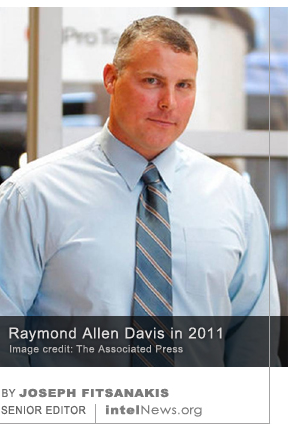 A former contractor for the United States Central Intelligence Agency, who was released from a Pakistani prison in 2011 despite being implicated in a double murder there, says he was freed with the help of senior Pakistani officials. Raymond Allen Davis was a CIA contractor posted in the US consulate in Pakistan’s Punjabi capital, Lahore, which is also the country’s second-largest city. It has been
 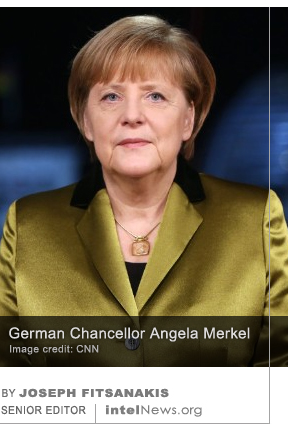 A lengthy parliamentary report on American intelligence activities in Germany was presented last week in Berlin, but was condemned by opposition parties as insufficient and incomplete, prompting calls for a new investigation. The parliamentary probe was initiated in 2013, following a series of






 intelNews.org
Industrial espionage damages a country’s long-term productivity, study finds
August 1, 2017 by Joseph Fitsanakis 1 Comment
The history of industrial and economic espionage by governments is indeed extensive. It includes lucrative efforts by the United States to steal industrial production methods from Europe in the 19th century, and successful attempts by the Soviet Union to steal atomic technology from the American-led Manhattan Project in the 1940s. But there have been no systematic attempts to evaluate the effect of state-sponsored industrial espionage on the entire economy of the sponsoring nation –until now.
This new study –the first of its kind– was carried out by two economists, Erik Meyersson, from the Stockholm School of Economics in Sweden, and the Spain-based Albrecht Glitz of Pompeu Fabra Univeristy in Barcelona. The two researchers describe their preliminary findings in a working paper entitled: “Industrial Espionage and Productivity”, published by the Institute of Labor Economics in Bonn, Germany. Its findings are based on an analysis of nearly 152,000 declassified industrial-espionage-related communiqués sent by Stasi spies to their handlers between 1970 and 1988. The communiqués were examined with reference to their date of authorship and the content-descriptive keywords appended to them by the Stasi.
The report concludes that stealing industrial secrets can boost a nation’s economic activity in the short run. However, in the long run, a nation’s strategic focus on industrial espionage tends to impede homegrown research and development, and ultimately stifles technological productivity on a national scale. This is because “easy access to secrets” from abroad tends to “discourage both state and private investment in research and development”, according to Meyersson and Glitz. That is precisely what happened to East Germany, argues the report. The country’s total factor productivity (TFF –the growth of its output measured in relation to the growth in inputs of labor and capital) rose significantly as a result of its industrial espionage.That was especially noticeable in the digital electronics sector, where the output gap between East and West Germany was narrowed by a fourth. However, that trend was temporary, and East Germany was never able to develop an organic digital-electronics industry. Industrial espionage is like “research and development on cocaine”, professor Meyersson told Science, the magazine of the American Association for the Advancement of Science. “Maybe you can have a little bit of fun with it, but it’s not good for you in the long run”.
► Author: Joseph Fitsanakis | Date: 01 August 2017 | Permalink
Filed under Expert news and commentary on intelligence, espionage, spies and spying Tagged with academic research, Albrecht Glitz, Cold War, East Germany, economics, Erik Meyersson, industrial espionage, scientific intelligence, Stasi (GDR)