MI6 to revert to old-fashioned ways of recruitment, says director
March 3, 2017 1 Comment
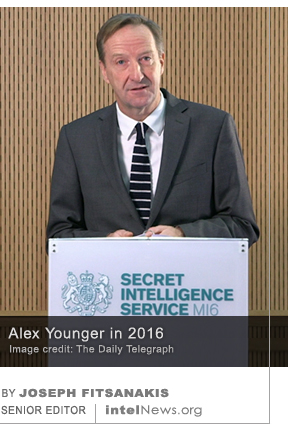 Britain’s primary external-intelligence agency will revert to old-fashioned ways of recruiting employees, including the co-called “tap on the shoulder” method, according to its director. Known informally as MI6, the Secret Intelligence Service (SIS) was founded in 1908 to protect Britain’s national security by collecting intelligence from foreign sources. However, the agency has had difficulty recruiting a diverse group of people, and many still view it as a professional destination for a small wealthy elite, drawn primarily from Britain’s most prestigious universities such as Oxford and Cambridge.
MI6 is now trying to diversify the makeup of its employees, according to its director, Alex Younger. Younger, who is known at MI6 as ‘C’, gave an interview to British newspaper The Guardian on Thursday. He did so as the agency he leads prepares to increase its personnel numbers by 40 percent in the next four years. Last year, the British government announced that MI6’s personnel strength would grow from its current size of 2,500 employees to approximately 3,500 by 2020. The reason for the increase, said Younger, is that Britain is facing “more threats than ever before […] from terrorist groups and hostile states”. As a result, “the demands on our services [and] capabilities are on the up”, Younger told The Guardian in his first-ever interview with a national newspaper.
But MI6 would function more efficiently and achieve better results it if had a “more diverse workforce”, said Younger. Therefore, he said, the agency must go out of its way to “draw in a new cadre of black and Asian officers”. In doing so, the spy service would need to reach out to minority communities who are “selecting themselves out” of working for the British intelligence community. Useful in this process are what Younger called “old recruitment techniques”, such as the so-called “tap on the shoulder”. The term refers to the deliberate recruitment of individuals who will be approached by MI6 without having applied for employment with the agency. “We have to go to people that would not have thought of being recruited to MI6”, said Younger, adding that the “tap on the shoulder” method can be redeployed in order to increase diversity among MI6’s workforce and “reflect the society we live in”.
The spy agency is preparing to launch an aggressive recruitment campaign next week, aiming at bringing its overall size to 3,500 —a historic high, according to intelligence observers.
► Author: Joseph Fitsanakis | Date: 03 March 2017 | Permalink
 The Islamic State is facing imminent financial collapse, according to a new study conducted by a London-based research group in association with one of the world’s leading international accounting firms. The recently launched report is entitled
  For a very long time, the field of Intelligence Studies has been dominated by analysis of the Five Eyes community, which is comprised of the United States, Great Britain, Australia, New Zealand, and Canada. In reality, that study is more often the study of intelligence in the US and the UK. While not entirely fair to characterize this as Western prejudice —access to data is better in these two countries and intelligence scholars and analysts for the most part do not fear retribution or reprisal— more voices need to come forward to consider intelligence and its role on societies beyond the Five Eyes.
 electoral reforms back in April of 2016. The protests were geared to influencing the December 2016 presidential election, which ultimately saw the defeat of incumbent President/Strongman Yahya Jammeh to Adama Barrow. Jammeh had corruptly governed the country since rising to power as a young military officer in a bloodless military coup in 1994.
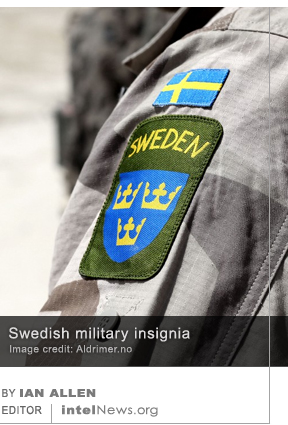 The military intelligence service of Sweden warned last week that there were increasing incidents of espionage perpetrated against Sweden by operatives identified “beyond doubt” as agents of foreign powers. In its
  The White House has instructed the Central Intelligence Agency to halt military support to armed groups that are associated with the Free Syrian Army (FSA), a group opposed to Syrian President Bashar al-Assad. Some believe that the move indicates a change in American policy under United States President Donald Trump. But Syrian rebel commanders say they believe the move is temporary, and that military aid will be restored. For several years, the CIA has
  A Japanese television channel has aired
  Indonesian authorities said on Sunday that they will investigate a North Korean restaurant in the country, after a Singaporean news agency claimed it was being used as a center for espionage. The announcement comes amidst heightened tensions between North Korean and its neighbors, following the
  Turkish state agencies have asked the country’s diplomats stationed all over Europe to spy on Turkish expatriate communities there, in an effort to identify those opposed to the government, according to a German report. The government of Turkish President Recep Tayyip Erdoğan accuses members of the so-called Gülen movement of orchestrating a military coup in July of last year, which resulted in an armed attack on the country’s parliament and the murder of over 200 people across Turkey. The Gülen movement consists of supporters of Muslim cleric Fethullah Gülen, who runs a global network of schools, charities and businesses from his home in the United States. The government of Turkey has designated Gülen’s group a terrorist organization and claims that its members have stealthily infiltrated state institutions since the 1980s.
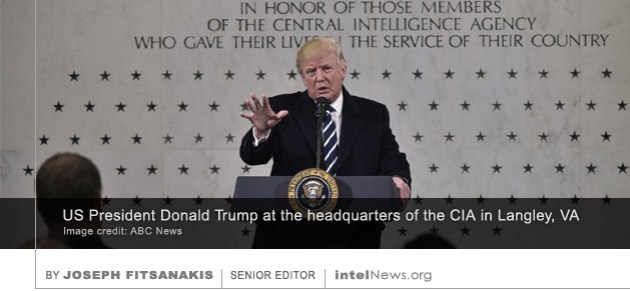 In a leading article published on Wednesday, The Wall Street Journal alleged that American intelligence officials are choosing to withhold sensitive intelligence from President Donald Trump, fearing that it might be compromised. The WSJ, America’s leading newspaper by circulation, which is highly influential in conservative circles,
 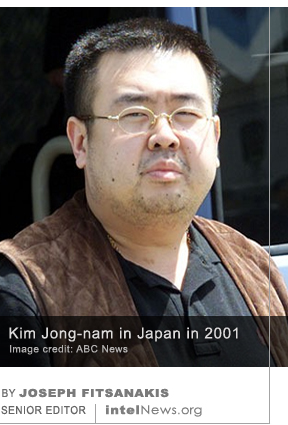 Two women have been arrested in the past 48 hours in connection with the assassination of Kim Jong-nam, half-brother of North Korea’s supreme leader, who died in Malaysia on Monday. Kim, the grandson of North Korea’s founder Kim Il-Sung, died after two women approached him at the Kuala Lumpur International Airport and splashed his face with liquid poison. Some reports suggest that he was injected with a poisoned needle.
  The half-brother of North Korean Supreme Leader Kim Jong-un has been killed in an audacious attack in Malaysia, reportedly by two female assassins who used a poisonous substance to murder him. Kim Jong-nam, was the eldest son of Kim Jong-il, and grandson of Kim Il-Sung, who founded the Democratic People’s Republic of Korea in 1948. However, he left the country in 2007, reportedly after it became clear that his younger half-brother, Kim Jong-un, was the regime’s preferred successor to his father, Kim Jong-il.
 The ongoing security crisis in the United States reached new heights last night as Michael Flynn, President Donald Trump’s national security advisor, resigned. In his letter announcing his decision, the former general
  number of former insiders warn that senior intelligence officials are —in the words of former National Security Agency officer
  Mr. Trump summarily fired the head of the Department of Justice and openly
  inconceivable magnitude, with implications that may well shape the future of America and its place in the world.
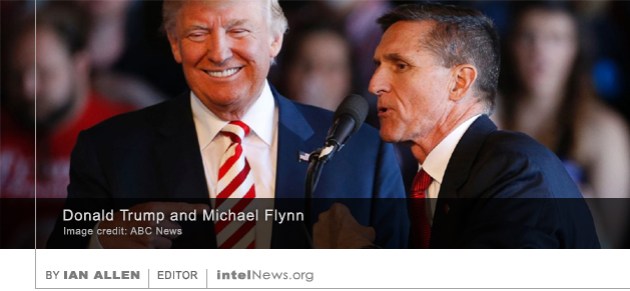 A senior aide to Michael Flynn, National Security Adviser to United States President Donald Trump, will have to step down from his post because his application for a security clearance was rejected, say sources. Flynn had chosen Robin Townley, a former intelligence officer in the US Marine Corps, to serve as Senior Director for Africa on the National Security Council, a forum chaired by the president, which makes key decisions on domestic and foreign issues. Townley, who is described as “one of Flynn’s closest deputies”, held a top-secret security clearance for many years during his government career. But joining the National Security Council requires a so-called “sensitive compartmented information” clearance. This elite-status clearance allows designated individuals to access government programs and operations that are deemed highly sensitive.
 France’s primary intelligence agency warned the country’s government this week that Russia has launched a secret operation to try to influence the outcome of the upcoming French presidential election in favor of the far right. According to the Paris-based weekly newspaper Le Canard Enchaîné, France’s Directorate-General for External Security (DGSE) has notified the country’s leadership that a covert operation by the Kremlin is already underway, and is expected to intensify in the run-up to April’s election. The spy agency allegedly believes that Russian efforts aim to promote Marine Le Pen, leader of the ultra-right National Front. Le Pen wants to curb immigration to France and remove the country from the European Union.






 intelNews.org
Opinion: Trump’s astonishing wiretapping claims deepen volatility of US politics
March 6, 2017 by Joseph Fitsanakis 13 Comments
Mr. Trump appears to claim that Mr. Obama personally instructed the machinery of government to intercept the telecommunications of his campaign in the run-up to the 2016 US presidential election. But experts —including the present author, whose PhD focuses on government-sponsored wiretapping— correctly note that, barring a complete and systematic breakdown of law and order at the highest levels of the American government, Mr. Trump’s claims cannot possibly be true. American presidents have not been legally allowed to order wiretaps since 1978, when the Foreign Intelligence Surveillance Act (FISA) was established. Prompted by the abuse of executive power revealed through the Watergate scandal, FISA forces government agencies to seek the approval of specially mandated judges before installing wiretaps. If an agency like the Federal Bureau of Investigation (FBI) wants to wiretap an individual or group suspected of acting as agents of a foreign power, it must convince one of 11 federal district judges who rotate on the FISA court that the case warrants a wiretap order. Thus, before authorizing the wiretap, a FISA judge must be convinced by examining the available evidence presented before him or her.
Usually FISA counterintelligence cases involve foreign subjects who are suspected of operating in the US as unregistered agents of a foreign power —that is, spies or handlers of spies. However, if the case proposed by the FBI involves the targeting of American citizens’ communications, then the application for a wiretap must be personally reviewed by the US attorney general. Only if the attorney general approves the application does it get sent to a FISA judge. That is precisely why President Trump’s allegation is so explosive: if Mr. Obama personally directed a law enforcement or intelligence agency to wiretap the Trump campaign’s telecommunications, it would mean that a US president deliberately violated FISA regulations and kept the Department of Justice in the dark while wiretapping the telecommunications of American citizens. Read more of this post
Filed under Expert news and commentary on intelligence, espionage, spies and spying Tagged with 2016 US presidential election, Analysis, Donald Trump, Joseph Fitsanakis