Pakistani Taliban leaders found dead in Kabul hotel, culprits unknown

Inter-Continental Hotel KabulTwo senior members of the Pakistani Taliban, who were carrying fake identification documents, were reportedly assassinated earlier this month in the vicinity of a luxury hotel in the Afghan capital Kabul. The culprits remain unknown, although the leadership of the Pakistani Taliban has blamed the United States for their death.

According to the BBC, which reported on the incident on Friday, the bodies of the two men were found in or near the Inter-Continental, a five-star hotel located in western Kabul. According to Afghan government sources, the two men were carrying forged identification papers. In a statement issued on Thursday, the Pakistani Taliban identified the dead men as Sheikh Khalid Haqqani and Qari Saif Younis. Sheikh Haqqani had served as the group’s deputy leader, and was a member of its leadership council. Younis was among the group’s most powerful military commanders.

The Pakistani Taliban said that the two men had secretly traveled to Kabul from Paktika, a Taliban stronghold in the east-central region of Afghanistan, in order to attend a high-level meeting. The group did not say who the two men were meeting and why. But it is rare for leading figures of the Pakistani Taliban to leave the areas that the group controls, and even rarer for them to travel to Kabul or any other big city in the region.

The statement from the Pakistani Taliban claimed that the two men were killed “in a clash with American forces”. But the BBC quoted an unnamed “source within the group” who said that they could also have been targeted by militant groups linked to the Pakistani government, which is a sworn enemy of the Pakistani Taliban. United States officials have yet to comment on this developing story.

Author: Joseph Fitsanakis | Date: 10 February 2020 | Permalink

Despite imminent US-Taliban deal, CIA plans to keep proxy units in Afghanistan

Armed guerillas Khost AfghanistanThe United States Central Intelligence Agency plans to retain a strong presence on the ground in Afghanistan, despite reports that American troops may soon be leaving the country following a deal with the Taliban. Several news outlets reported this week that Washington has resolved its differences with the Taliban about withdrawing American troops from Afghanistan, after receiving assurances by the Taliban that they will not cooperate with other militant Islamist groups, including al-Qaeda. An announcement of an agreement between the United States and the Taliban may thus be imminent. But in an article for Foreign Policy, Stefanie Glinski points out that the CIA is not planning to leave the Central Asian country any time soon.

The American intelligence agency is known to support, arm and train several proxy forces throughout Afghanistan. Langley plans to keep those proxy forces operating in the country for the foreseeable future, regardless of whether US troops pull out, says Glinski. She gives the example of the Khost Protection Force (KPF), a 6,500-strong unit of Afghan soldiers who are “trained, equipped and funded by the CIA”. The KPF is the most active and visible of an extensive network of CIA-sponsored paramilitary groups in Afghanistan. It operates almost exclusively along the Afghan-Pakistani border and has a strong presence in Taliban strongholds like Ghazni, Paktia and Khost. The roots of the KPF go back to the days immediately after the attacks of September 11, 2001, which prompted the US military invasion of Afghanistan. It therefore precedes the Afghan National Army, Afghanistan’s state-run military apparatus, and does not operate under its command. Instead, it is solely directed by the CIA, which uses it to secure the Afghan-Pakistani border and disrupt the activities of Taliban, al-Qaeda and Islamic State fighters in the Afghan borderlands.

Members of the KPF claim that they are “better trained than the Afghan National Army”. They are also paid much better, over $1000.00 per month, which is an enormous sum for Afghanistan. Perhaps unsurprisingly, Glinski reports that most KPF fighters joined the group for the money and the ability to eventually seek permanent resettlement in the United States. But alongside the group’s elite image, KPF members have acquired notoriety and are often seen as trigger-happy and unaccountable. Several reports in Western media have said that the KPF’s tactical accomplishments have come at a high price, with countless reports of civilian deaths and, some claim, even war crimes. These risk “alienating the Afghan population”, said a New York Times report last year. Glinski says it is possible the KPF’s aggressive tactics may be “radicalizing portions of the very population it intends to pacify or frighten into submission”. In April of this year, a United Nations report alleged that more Afghan civilians died as a result of attacks by Afghan government and American military attacks than at the hands of the Taliban and other guerilla groups. The CIA did not respond to several requests for comment from Foreign Policy, says Glinski.

Author: Joseph Fitsanakis | Date: 09 August 2019 | Permalink
ISIS in Afghanistan is now more dangerous than the Taliban, say experts

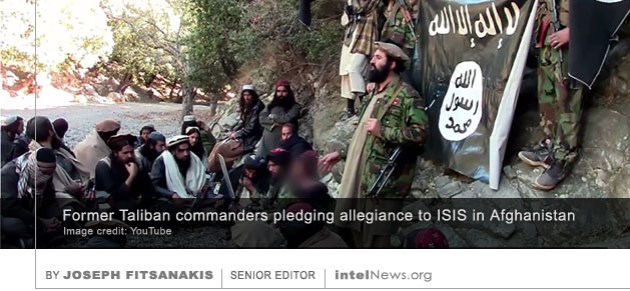
ISIS Islamic State AfghanistanThe Islamic State group in Afghanistan is now more threatening than the Taliban to both Afghan and Western interests, according to some experts, who warn that many of its fighters are moving there from the Middle East. It was in late 2014 when the Islamic State, known formerly as the Islamic State of Iraq and Syria (ISIS), made its initial appearance in Afghanistan. Soon an official Islamic State affiliate emerged in Afghanistan, calling itself Islamic State – Khorasan Province. Security observers estimated the group’s strength to below 150 armed fighters, most of them Pakistani Taliban who had sought refuge in Afghanistan, or small cadres of Afghan Taliban who pursued a more globalized Salafist agenda. Aided by the growing worldwide notoriety of its parent organization in Iraq and Syria, the Islamic State – Khorasan Province grew in size in 2015 and 2016. Its armed cadres were joined by Salafist-jihadists from Central Asia and the Indian subcontinent, as well as by radical Muslims from China’s northwestern Xinjiang Province. In 2016, as the Islamic State began retreating in the Middle East, fighters from there gradually began to make their way to Afghanistan, adding to the numerical strength of the organization’s Khorasan Province branch.
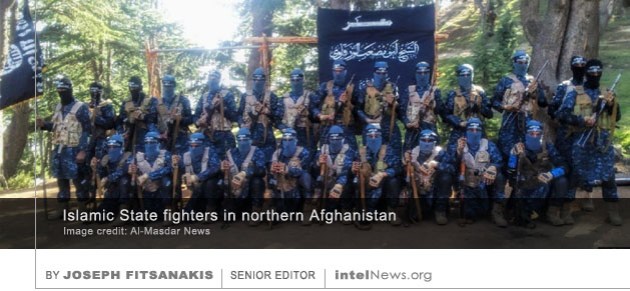
Today, the strength of the Islamic State in Afghanistan is concentrated in four northeastern Afghan provinces, Nuristan, Nangarhar, Kunar and Laghman. Nearly all of these provinces border Pakistan and none are far from the Afghan capital Kabul. According to the Associated Press’ Kathy Gannon, who wrote an extensive article about the current state of the Islamic State in Afghanistan, the primary military goal of the group’s Khorasan Province branch is to expand its territory. Some believe that the Islamic State aspires to one day conquer Jalalabad, a city of nearly 400,000 residents that serves as the administrative center of Nangarhar Province. This aspiration is not delusional; Gannon cites an unnamed US intelligence official who insists that the Islamic State is now a more deadly threat than the Taliban to Afghan and Western security. Islamic State fighters are acquiring increasingly sophisticated military hardware, which enables them to broaden their tactical capabilities. Additionally, unlike the Taliban, who largely follow a policy of limiting their attacks on government and military targets, the Islamic State appears to be deliberately targeting civilians. What is more, security experts see these attacks as “practice runs for even bigger attacks in Europe and the US”. In other words, the Islamic State – Khorasan Province is actively using its Afghan base to plan “external attacks in the US and Europe [and] it’s just a matter of time” before these occur, says a US intelligence official.

According to Gannon, the growth of the Islamic State in Afghanistan is so alarming that some security experts are beginning to see the Taliban as a potential partner of the West in containing the danger. One expert says that the Taliban remain bigger and stronger than the Islamic State, and their fighters “know the terrain [and] territory” of northeastern Afghanistan. Furthermore, the Islamic State has declared war on the Taliban and the two groups are active adversaries in the region. Gannon claims that Russia would not be opposed to the idea of utilizing the Taliban to fight off the Islamic State. As intelNews reported last month, Russia’s Federal Security Service warned that thousands of Islamic State fighters were operating in Afghanistan’s northern border regions and were attempting to destabilize former Soviet Republics with substantial Muslim populations.

Author: Joseph Fitsanakis | Date: 11 June 2019 | Permalink

ISIS threatens stability of former Soviet Republics, says Russian spy chief

ISIS Afghanistan

Thousands of Islamic State fighters are operating in Afghanistan’s northern border regions and are attempting to destabilize former Soviet Republics with substantial Muslim populations, according to Russia’s domestic spy chief. This warning was issued by Alexander Bortnikov, director of Russia’s Federal Security Service (FSB), which functions as Russia’s primary counter-terrorism agency. Bortnikov made these remarks during a visit to the capital of Tajikistan, Dushanbe, for a meeting of the heads of intelligence agencies of the Commonwealth of Independent States (CIS), an intergovernmental organization comprised of former Soviet Republics in the Eurasian region. The meeting was reportedly held behind closed doors, but Russia’s government-owned news agency TASS carried a summary of Bortnikov’s remarks.

The Russian intelligence chief said that, with the aid of the intelligence services of CIS states like Uzbekistan, Azerbaijan, Tajikistan, Kyrgyzstan, and others, the FSB was able to uncover and suppress eight Islamic State cells in the past year, which operated in the Central Asian region. However, the reach of the CIS countries does not extend to Afghanistan, said Bortnikov, where as many as 5,000 Islamic State fighters are congregating along the country’s border with three CIS states, namely Turkmenistan, Uzbekistan and Tajikistan. Many of these fighters are Turkmens, Uzbeks, Tajiks, Russians, and other citizens of CIS states, who previously fought with the Islamic State in Syria and elsewhere, and now form integral components of the Islamic State’s fighting force in Afghanistan and Pakistan. It appears that the Islamic State is now attempting to exploit the mountainous and porous borders of northern Afghanistan in order to destabilize neighboring countries, he said. These fighters intend to exploit “migrant and refugee flows [in Central Asia] in order to operate covertly from the Afghan battle zones to neighboring countries” and from there possibly to Russia, according to Bortnikov.

These covert activities of Islamic State fighters have already caused an escalation of tensions in the region and can be expected to continue to do so, as these groups radicalize and co-opt Muslim communities in CIS countries, noted Bortnikov. He added that popular responses to Islamist radicalization are prompting increasing incidents of “anti-Islamic terrorism”, which further-fuel religious and ethnic tensions in the region. As a reminder, last week the Islamic State announced that its so-called Khorasan Province fighters would be amalgamated into a new armed group calling itself Islamic State – Pakistan Province. Earlier this month, the group also proclaimed the establishment of a new overseas province in India’s Jammu and Kashmir state, called “wilayah al-Hind” (province of Hind). In addition to these two forces, there are currently an estimated 3,000 to 4,000 Islamic State fighters in Afghanistan’s Pashtun regions.

Author: Joseph Fitsanakis | Date: 22 May 2019 | Permalink

Afghan government in crisis as senior security and spy chiefs tender mass resignations

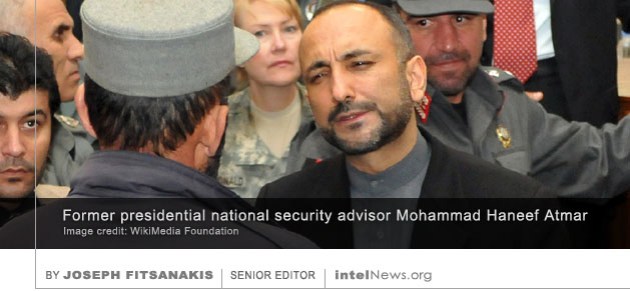
Mohammad Haneef AtmarThe government of Afghanistan is facing one of its most serious crises since the end of the Taliban reign in 2001, as the country’s most senior security and intelligence officials tendered their resignations this week. The unprecedented move followed a dramatic escalation in attacks against Afghan government installations by Taliban and Islamic State forces, which have resulted in dozens of casualties throughout the Central Asian country. On Saturday, Mohammad Haneef Atmar, long time national security adviser to President Ashraf Ghani and one of the Afghanistan’s most recognizable and powerful political figures, tendered his resignation. Many seasoned observers were surprised when President Ghani, who is a close political ally of Atmar, accepted his resignation and replaced him with Hamdullah Mohib, who until recently was Afghanistan’s ambassador to the United States.
But the political crisis deepened on Sunday, when three more senior officials tendered letters of resignation. Tariq Shah Bahrami, Minister of Defense, Wais Ahmad Barmak, Minister of the Interior, and Masoom Stanekzai, head of Afghanistan’s National Security Directorate, all resigned their posts. All three have been subjected to intense criticism by Afghanistan’s political opposition and national media, for having failed to stop the anti-government insurgency, which is intensifying in nearly every one of the country’s provinces. Criticism of the three men became even sharper last week, after the Taliban launched a spectacular rocket attack on the Presidential Palace in the Afghan capital Kabul, which was heard in the background during President Ghani’s speech to commemorate the Muslim festival of Eid.

Late on Sunday, however, a presidential spokesman told media representatives that President Ghani had rejected the three officials’ resignations. Instead, he demanded that they stay in their posts and redouble their efforts to enhance the security of Afghanistan. Later that same evening, the Presidential Palace issued a written statement to the media, which said that President Ghani “did not approve the [officials’] resignations”. Instead, he “gave them the necessary instructions to improve the security situation” in the country. Meanwhile on Tuesday US Defense Secretary James Mattis insisted during a press conference in Washington that the current US strategy in Afghanistan is working and that the Talian would eventually be forced to negotiate, thus ending the country’s ongoing civil war.

Author: Joseph Fitsanakis | Date: 30 August 2018 | Permalink

Russia, US, deny conducting mystery airstrikes in Tajikistan

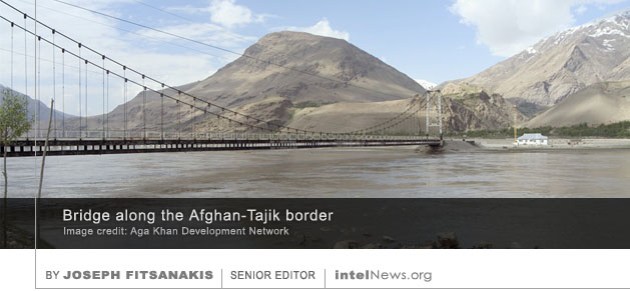
Afghanistan TajikistanRussia, the United States and Tajikistan have all denied that they were behind a series of mystery airstrikes that took place along the Tajik-Afghan border on Sunday, while the identity of the targets also remains unknown. The 800-mile border between Afghanistan and Tajikistan consists of mountainous terrain. Unlike the Afghan-Pakistani border, which is rife with skirmishes and firefights, the Afghan-Tajik border is usually peaceful and sparsely guarded. But on Sunday, August 26, local officials from both sides of the Afghan-Tajik border reported that fighter jets conducted a series of airstrikes. News media in Tajikistan’s capital Dushanbe said that Tajik border guards exchanged fire with Taliban fighters, killing as many as eight, but losing two officers in the process. However, on Monday a Tajik border police official denied media reports and said that the border incident involved Tajik lumberjacks who were attacked by unknown assailants from Afghanistan.

Adding to the mystery, Afghan officials said on Sunday that fighter jets bombed Afghan territory adjacent to the Tajik border. They added that they did not know if the fighter jets were Russian or Tajik. However, Tajikistan has a nominal air force consisting of no more than four Czech-made light-attack aircraft, which have not been used in over a decade. That leaves Russia, which maintains an air base in the suburbs of Dushanbe, 100 miles from the Afghan border. But on Monday, Moscow denied any involvement in the incident, as did Tajikistan. Russian officials placed the blame on the US, saying that the American-led North Atlantic Treaty Organization (NATO) force in Afghanistan is known to regularly launch airstrikes throughout Afghanistan. But US Pentagon officials said that they were not involved. When asked by reporters in Kabul, Afghan government representatives said that Afghanistan lacked the ability to monitor its airspace due to a lack of radar equipment. They called on the US-led NATO force to investigate Sunday’s incident.

Meanwhile, the identity of the persons targeted in the alleged airstrikes is also in doubt. On Monday, the Taliban denied that they had engaged with either Afghan or Tajik government forces along Afghanistan’s northern borderlands, saying that they had not authorized their fighters to operate in the area. Additionally, the Taliban have not been known to engage Tajik government troops in the past. Some observers have opined that the border skirmish may have been caused by drug smugglers who regularly transport drugs from Afghanistan to Russia or the Caspian Sea region through Tajikistan and Uzbekistan. However, there are no prior reported incidents of Russian, American or Tajik fighter jets having been deployed along the Afghan-Tajik border to combat drug traffickers.

Author: Joseph Fitsanakis | Date: 28 August 2018 | Permalink

US diplomats secretly met with Taliban without Afghan government

TalibanIn a dramatic change to longstanding policy, senior United States diplomats have reportedly held secret meetings with Taliban leaders without the presence –and presumably knowledge– of the Afghan government. For over a decade, the Taliban have refused to negotiate with the Afghan government, which they view as a puppet regime controlled by Washington. They have instead sought to speak directly with the United States, without Kabul’s mediation. In 2015, the United States sought to initiate peace talks with the Taliban in the Qatari capital Doha, but the effort collapsed after the Afghan government denounced it and demanded a seat at the table. The negotiation process has remained dormant since then.
Last week, however, The Wall Street Journal reported that a series of unannounced meetings have been taking place between a delegation of senior Taliban officials and an American team led by Alice Wells, principal deputy assistant secretary of the US Department of State’s Bureau of South and Central Asian Affairs. On Saturday, The New York Times confirmed the story, saying that meetings between the two sides were being held in Qatar, where the Taliban maintain an informal diplomatic mission. Citing “two senior Taliban officials”, The Times said that the American diplomats have been meeting with members of the Taliban’s political commissariat. But the paper said it had no information about the substance or progress of the talks. If The Times’ claims are accurate, they would mark a dramatic reversal of longstanding US policy on the Taliban. Since 2001, Washington has consistently argued that any negotiation process involving the Taliban would be “Afghan-owned and Afghan-led”. Therefore, direct talks between Washington and the Taliban without Kabul’s mediation would mark a major shift in America’s security strategy in Afghanistan and beyond.

The New York Times said it contacted the US Department of State in Washington, seeking clarification about the alleged talks. But a spokesman refused to discuss the claims and insisted that “any negotiations over the political future of Afghanistan will be between the Taliban and Afghan government”. However, The Times noted that the spokesman did not expressly deny the existence of the talks with the Taliban.

Author: Joseph Fitsanakis | Date: 31 July 2018 | Permalink

Spy chiefs from Russia, China, Iran and Pakistan hold high-level meeting

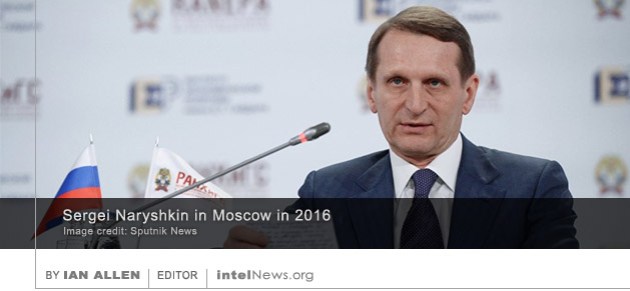
Sergei NaryshkinIntelligence directors from Russia, China, Iran and Pakistan met on Tuesday to discuss regional cooperation with particular reference to combating the Islamic State in Afghanistan. Information about the high-level meeting was revealed yesterday by Sergei Ivanov, media spokesman for the Russian Foreign Intelligence Service (SVR). Ivanov told Russia’s state-owned TASS news agency that the meeting was held in Pakistan and included the participation of SVR director Sergei Naryshkin. TASS reported that the meeting was held under the auspices of Pakistan’s powerful Inter-Services Intelligence (ISI) Directorate and was attended by “senior intelligence officials” from Pakistan, Russia, Iran and China.

Ivanov said that discussions during the meeting “focused on the dangers arising from a buildup of the Islamic State on the Afghan territory”. The Islamic State announced the formation of its Afghan province (wilayah in Arabic) in January 2015, using the term “Khorasan Province”. By July 2016, two of its most prominent leaders had been killed in coordinated drone strikes by the United States, but the group continues to launch operations to this day. Its core is thought to be made up of nearly 100 fighters from the Islamic State’s former strongholds in Syria and Iraq. According to Russian reports, security officials in China, Russia, Pakistan and Iran are concerned that the Islamic State’s Afghan command is becoming stronger as fighters from the group are leaving the Middle East and moving to Afghanistan.

Tuesday’s high-level meeting in Islamabad follows an announcement last month by the Beijing-led Shanghai Cooperation Organization (SCO) that it would adopt a more active stance on security issues in Afghanistan. Early in June, Afghan President Mohammad Ashraf Ghani described the SCO as “an important platform for anti-terrorist cooperation and enhancing regional connectivity” in Central and South Asia. President Ghani made these comments shortly before traveling to China to attend the annual summit of the SCO, of which Afghanistan is an observer country.

Author: Ian Allen | Date: 11 July 2018 | Permalink

Taliban pose open threat to 70% of Afghanistan, BBC study finds

TalibanThe Taliban have an open and constant presence in 70 percent of Afghanistan, according to an extensive study undertaken by the BBC, which was conducted over several months in every corner of the country. The report comes nearly 17 years after a military coalition led by the United States invaded Afghanistan in response to the attacks of September 11, 2001. Since then, Western forces, most of them members of the North Atlantic Treaty Organization, have spent countless lives and billions of dollars in an effort to defeat the Pashtun-led insurgency of the Taliban. American forces in the country, which at the end of 2009 numbered close to 100,000 troops, were reduced to a force of fewer than 8,000 by 2014, when US President Barack Obama declared the war over.

But the BBC study has found that the Taliban have grown in strength since the US military withdrawal, and are now more powerful than at any time in the past decade. The BBC said that it carried out the study between August and November of 2017, with the help of a large network of reporters who spoke to more than 1,200 local sources. Thousands of interviews were conducted either in person or by telephone with Afghans across the country, and every report of a Taliban-related violent incident was cross-referenced with as many as six other sources, said the BBC. The interviews covered every one of Afghanistan’s 399 districts, using a representative sample from both urban and rural areas.

The findings were described by one expert, Kate Clark, co-director of the Kabul-based Afghanistan Analysts Network, as “shocking”. They show that more than half of Afghanistan’s population resides in areas that are either mostly controlled by the Taliban, or where Taliban forces are openly and regularly active. The group is now in complete control of 14 Afghan districts, which represent 4 percent of the country’s territory. But they maintain an open armed presence in another 263 districts, which represent a further 66 percent of Afghan territory. No open Taliban presence was reported in 122 districts (30 percent of Afghanistan), but the BBC cautioned that many attacks by the Taliban are not reported by the locals. The statistics published in the study show that the Taliban have managed to establish strongholds far beyond their traditional strongholds of southeastern Afghanistan. They are now openly active in much of central, western, and even northern Afghanistan, where their power had been limited in the past.

The BBC reported that the Afghan government dismissed the findings of the study, arguing that its forces are in control of most areas in the country. The US government has not commented on the BBC study. US President Donald Trump said last week that his representatives would not hold talks with the Taliban, and announced that 1,000 more American troops would be sent to the country.

Author: Joseph Fitsanakis | Date: 31 January 2018 | Permalink

US Pentagon wasted $450 million in Afghan spy training program, says watchdog

Afghan National ArmyNearly half a billion of American taxpayers’ funds were wasted by contractors hired by the United States government to train Afghan intelligence personnel, according to a scathing report by a Congressional body. The funds were spent between 2010 and 2013 by the US Department of Defense, in order to train several thousand members and a few dozen aspiring trainees of the Afghanistan National Defense and Security Forces (ANDSF). Two companies, Legacy Afghanistan R&D and Afghanistan Source Operations Management, oversaw the training program. It was primarily executed by a contractor, Imperatis Corporation, and a subcontractor, New Century Consulting, at a total cost of $457 million to the US taxpayer.
But according to a new report, the four-year program was a monumental, multimillion dollar waste. The report was written by the Special Inspector General for Afghanistan Reconstruction (SIGAR). The body was established by the US Congress in 2008 to supervise the effectiveness of US government-funded reconstruction programs in Afghanistan. Dated July 2017, the SIGAR report says it is “almost impossible” to evaluate the effectiveness of the ANDSF intelligence-training program, because none of the contractors and subcontractors involved in it kept adequate training records. Based on the available information, the SIGAR report concludes that there is virtually “no indication of improvement in intelligence operations” by ANDSF as a result of the four-year training program.

Part of the reason for the poor value of the program is that “a significant portion” of the intelligence trainees enrolled in it performed below the minimum standards required. Additionally, few trainees actually completed the courses that were required prior to graduation. Shockingly, the US Pentagon paid the contractors in full despite the fact that they had failed to keep adequate records of their performance, an omission which legally entitled the Pentagon to refuse to payment. Even more incredibly, the SIGAR report also found that Imperatis Corporation billed the US taxpayer nearly $4 million between March and December of 2011 for training courses that had been canceled and were not being offered.

The training program’s subcontractor, New Century Consulting (owned by retired US Special Forces Colonel Tim Collins), was criticized two years ago in another SIGAR report for spending $130 million of US taxpayers’ funds on “unsupported” and “questioned” purchases. The program’s main contractor, Imperatis Corporation, went out of business in May 2016.

Author: Ian Allen | Date: 03 August 2017 | Permalink

Late Taliban leader’s regular trips to Iran helped US spies track him down

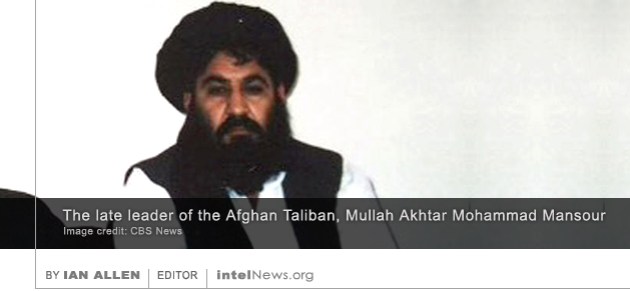
Mullah Akhtar Mohammad MansourFrequent trips to Iran caused the demise of the late leader of the Afghan Taliban, Mullah Akhtar Mohammad Mansour, who was killed in a secret American operation on May 21. The death of Mansour, who had led the Afghan Taliban since July 2015, when he succeeded Mullah Mohammad Omar, was announced by the Taliban on May 26. Early reports stated that Mansour was killed while traveling to the Pakistani city of Quetta from Iran. He is believed to have been visiting family or seeking medical treatment in Iran, which he appears to have entered using a forged passport.

According to The Wall Street Journal, the United States found out in February that Mansour made regular trips to Iran, as well as the precise route that the Taliban leader took to enter the country. American intelligence agencies also received “details about the devices [Mansour] used for communications” while in Iran. They then intercepted communications from Iran that matched Mansour’s electronic signature and followed these signals across the border into Pakistan. The Taliban leader entered Pakistan’s Baluchistan province on Saturday, May 21. Once in Pakistan, Mansour entered a Toyota Corolla, believed to be a taxi, and made his way through the N-40 National Highway, heading to Quetta.

The Journal report states that the Taliban were aware that Baluchistan’s airspace is outside the Central Intelligence Agency drones’ operational area, and thus “felt more comfortable there”. Indeed, the paper claims that no CIA drones were actively targeting Mansour at the time. However, US President Barack Obama had given ordered the Joint Special Operations Command to have the Taliban leader killed. Reaper drones were deployed to launch two Hellfire missiles at Mansour’s car, which was totaled, killing the Taliban commander and his driver. According to the Journal, the White House had decided to ambush Mansour before he entered the city of Quetta, in order to prevent civilian casualties. After firing at it, the American drones hovered over the remains of Mansour’s vehicle to ensure that there were no survivors, before exiting Pakistani airspace.

Author: Ian Allen | Date: 30 May 2016 | Permalink

Analysis: Mullah Mansour’s killing will shape future of Afghan War

Mullah MansourThe American operation that killed the leader of the Afghan Taliban, Mullah Akhtar Mohammad Mansoor, on May 21, was unprecedented in more ways than one. It marked the first known effort by the United States to neutralize the leadership of the Afghan Taliban. It was also the first US drone strike in Pakistani Baluchistan, a region that is far removed from the Federally Administered Tribal Areas, where American operations have traditionally focused. Mullah Mansour’s killing also marked the most high-profile American incursion into Pakistani territory since the May 1, 2011 attack that killed al-Qaeda co-founder Osama bin Laden. Q QuoteIronically, just hours before killing Mansour, Washington was calling the Taliban to join the negotiation table for peace talks with the Afghan government. So what exactly was America’s intention in killing the leader of the Afghan Taliban?

PROSPECTS FOR A MODERATE SUCCESSOR

There is no question that Mansour represented the most intransigent and militant segment of Afghanistan’s militant Pashtuns. He consistently dismissed efforts by Washington and Kabul to strike a deal with his forces as a ploy designed to weaken the Taliban’s role in Afghan politics. So the primary outcome that the US is seeking from his death is the possibility that a more moderate figure will emerge from within the ranks of the Taliban. That, however, is far from guaranteed. Even if it does happen, it will probably come after a period of leadership struggle between different factions and tribes within the Taliban, much like the heated infighting that broke out after the announcement of the death of the Taliban’s founding leader, Mullah Mohammad Omar. There are even some who believe that the death of two successive Taliban leaders in such a short period may split the group into three or more factions.

To avoid such a prospect, the Afghan Taliban have already begun internal consultations in order to quickly enthrone a new emir. Major candidates include the late Mullah Omar’s son, Mullah Yakoub, and his brother, Mullah Abdul Manan Akhund. The list of contenders also features the late Mullah Mansour’s deputies, including Sirajuddin Haqqani, head of the Haqqani Network, which recently consolidated its forces with those of the Afghan Taliban. Many observers believe that Haqqani is Mansour’s most likely successor, as well as the most militant of all contenders for the group’s leadership.

THE END OF PEACE NEGOTIATIONS?

If the Afghan Taliban are led by Haqqani, a man described by the White House as a terrorist mastermind, the chances of seeing Afghanistan’s militant Pashtuns join peace negotiations with Kabul are slim to none. The country’s President, Ashraf Ghani, said last week that he hoped that the death of Mansour would weaken the Taliban hardliners and open the path to negotiations with his government. It is difficult to see, however, how the Taliban could sit at the table with the Afghan government and its American allies, namely the same people who just Q Quotekilled the group’s leader.

They only way that could possibly happen is if Pakistan, which is the Afghan Taliban’s state patron, compels them to do so. But such a prospect is unlikely. In the hours after Mansour’s assassination, the US Secretary of State John Kerry described it as an “action that sends a clear message to the world that we will continue to work with our Afghan partners”. Indeed, Mansour’s killing was a source of jubilation in Kabul. But there were no celebrations in Islamabad, which was notified about the US drone strike on its soil after its completion. The Pakistani position has always been that military action against the Afghan Taliban will only push them further underground. Instead, Pakistan argues that the Taliban should be brought to the table to sign a comprehensive peace treaty that will ensure ethnic rights for Afghanistan’s Pashtun population. But the prospect of that happening after Mansour’s assassination are slim, even if a more moderate figure succeeds him at the helm.

THE FUTURE OF THE AFGHAN WAR

What are, then, the prospects for peace in Afghanistan? A notable rise in violence should be expected, as various Taliban factions lash out against the government in Kabul with the aim of augmenting their standing against internal competitors. The Taliban now control more territory in Afghanistan than at any other point following the 2001 US invasion. If their alliance with the Haqqani Network survives, they will continue to be a formidable force in the country and the surrounding region, and will become increasingly difficult to defeat militarily. The group will continue to operate with considerable force even if Mansour’s position is not filled soon, as local Taliban forces have shown that they are capable of taking unilateral initiative in times like this. In the meantime, observers in Kabul and Islamabad, as well as the Afghan Taliban’s leadership in Quetta, will be wondering whether the assassination of Mansour marks the beginning of a more aggressive approach by Washington in the ongoing Afghan war. The answer to that question remains elusive, but will likely shape the future of the 40-year-old Afghan war.

Author: Joseph Fitsanakis | Date: 24 May 2016 | Permalink

Analysis: Taliban-Haqqani alliance marks new phase in Afghan war

Haqqani NetworkAn expanding alliance between two of the most powerful armed groups in Afghanistan, the Taliban and the Haqqani Network, is reshaping regional power dynamics and possibly altering the course of the ongoing Afghan war. It was last summer when it was announced that Sirajuddin Haqqani, the leader of the notorious Haqqani Network based in southeastern Afghanistan, had been appointed deputy leader of the Taliban. The move, which brought together two groups that traditionally acted autonomously, was seen as largely symbolic at the time. But observers are now suggesting that the two groups are actively integrating more than ever before, and that their increasing cooperation is drastically changing the dynamics of the bloody Afghan war.
THE HAQQANI NETWORK

The Haqqani Network dates from the mid-1970s, when a group of pro-royalist Pashtuns took up arms against the government of Mohammad Daud Khan, a former cabinet minister who in 1973 led a coup that overthrew the country’s king, Mohammad Zahir Shah. The group, founded by Jalaluddin Haqqani, was actively supported by Pakistan, which perceived Khan’s government as pro-Soviet. As it became increasingly clear that the Soviet Union would invade the country, Pakistan’s assistance to the Haqqani Network was augmented by support from Saudi Arabia and the United States. During the Afghan-Soviet War of the 1980s, the Haqqani Network formed a major backbone of the anti-Soviet resistance. The group, and the Pashtun tribes that form its base in Afghanistan and Pakistan, have remained in a state of war against various invaders ever since. Today the Haqqani Network is led by Jalaluddin’s son, Sirajuddin Haqqani, who has closely followed in his father’s footsteps. He has continued to pledge allegiance to the Taliban by recognizing its commander-in-chief, Mullah Akhtar Mansour, as the Leader of the Faithful —essentially the Emir of the Islamic caliphate. At the same time, however, like his father, Siraj has maintained the Haqqani Network as an autonomous entity that operates based on its own command structure andQ Quote tactical priorities.

THE HAQQANI-TALIBAN ALLIANCE

The deepening cooperation between the Haqqani Network and the Taliban must be examined within the context of the failed efforts to broker a peace treaty between the Afghan government and the Taliban. In early 2016, the Quadrilateral Coordination Council, set up by the United States, China, Pakistan and the Afghan government, sought to bring the Taliban to the negotiation table, so that an official peace treaty could be put in place between them and Kabul. Throughout that time, however, the Afghan government has become increasingly weaker, faltering under the weight of its own ineptitude, corruption and sectarian divisions. The growing discontent against it among the people, as signified by the rise in mass immigration by young Afghans, has weakened Kabul’s trustworthiness as a national actor and strengthened the Taliban. At the same time, the Taliban, although strong, are not unilaterally capable of solidifying their power across the country unless they have the support of the many autonomous tribes and clans. For that reason, Taliban leader Mullah Mansour has spearheaded a policy of consolidation between his forces and regional groups, including the Haqqani Network.

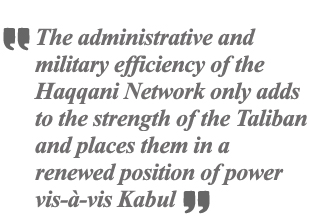
The latter are also extremely capable militarily, having maintained a powerful armed force since the late 1970s, with its own heritage, traditions and command structure. During the 1980s, they were trained and supplied with ample war materiel by Saudi, Pakistani and American intelligence agencies, while also developing their own funding channels abroad. Today, Siraj Haqqani’s mother, who is an Arab, and many of his brothers, are located in the Persian Gulf, and are able to pursue alliances between the Network and oil-rich Arab donors. The group also maintains a large network of shell companies that operate internationally and bring in a substantial revenue to the group. Consequently, due to their strong financial backing, Haqqani forces are well-trained, well-supplied and have near-unparalleled military capabilities in the region. They are currently one of a handful of groups that have shown to be capable of striking at the heart of the Afghan government inside Kabul. Alongside their military prowess, Haqqani forces maintain an efficient, parallel administrative infrastructure in southeastern Afghanistan, which includes a justice Q Quotesystem, job centers, taxation offices and community militias. The administrative and military efficiency of the Haqqani Network only adds to the strength of the Taliban and places them in a renewed position of power vis-à-vis Kabul.

THE PAKISTANI FACTOR

Along with the Haqqanis and the Taliban, the Pakistanis have also gained strength in the past year as a regional actor. There is little doubt that the Haqqani Network, which operates a series of bases inside Pakistan’s North Waziristan region, maintains close connections with Inter-Services Intelligence directorate (ISI), Pakistan’s powerful spy agency. These links, which were forged in the 1980s during the Afghan-Soviet War, continue unabated and often —though not always— allow the Pakistanis to use the Haqqani Network as a proxy group to advance their interests in Afghanistan. Islamabad does not want India to dominate the region and has done more than any other regional actor to maintain the Taliban, Haqqanis, and other Pashtun groups as strong rivals to the central government in Kabul. By strengthening the role of the Haqqanis, which, unlike the Taliban, the US officially classifies as a terrorist group, Islamabad is making it more difficult for Washington to reach out to the Taliban in search of a comprehensive peace treaty. This development spells more violence and war in Afghanistan for the foreseeable future, as local and regional actors appear to be positioning themselves for a showdown between the Afghan government and its tribal rivals.

Author: Joseph Fitsanakis | Date: 10 May 2016 | Permalink

Moscow is working with Taliban against ISIS, says Russian envoy

Zamir KabulovRussia’s official envoy to Afghanistan has said that Moscow is now working with the Afghan Taliban in order to stop the growth of the Islamic State in the region. Many Taliban fighters are direct descendants of the Afghan and Pakistani Pashtuns who fought the Soviet Red Army in the 1980s, when the USSR invaded Afghanistan and fought a bloody decade-long war there. But the militant group, which today continues to control much of Afghanistan, despite a prolonged American-led military effort to defeat it, is now being challenged by the Islamic State. Known also as the Islamic State in Iraq and Syria (ISIS), the group enjoys growing popularity in Afghanistan, and some tribal warlords have already declared their allegiance to it. In contrast, the leadership of the Taliban has rejected the legitimacy of ISIS and refused to recognize its leader, Abu Bakr al-Baghdadi, as the caliph of all Sunni Muslims. According to Sunni doctrine, a caliph is the recognized political and religious successor to Muhammad, Islam’s prophet, and thus commands the Muslim ummah, or community.
For the past two years, allegations have surfaced in the world’s media that Russia, fearing the continuing growth of ISIS in Central Asia, has reached out to the Taliban in hopes of halting ISIS’ popularity. Last week, however, Zamir Kabulov, Moscow’s special envoy to Afghanistan, openly admitted that Russia is collaborating with the Taliban against ISIS. “The interests of the Taliban completely coincide with ours”, said Kabulov, and added that Moscow maintains “communication channels with the Taliban to exchange intelligence”. It is important to note that Kabulov, who was born in Soviet Uzbekistan, is arguably the most knowledgeable Russian diplomat on matters relating to Afghanistan. Until 2009, he served as Russia’s ambassador to Afghanistan, having also served in Iran and Pakistan. Western observers believe that Kabulov is not simply a “career diplomat”, as he presents himself, but a former officer in the KGB, the USSR’s foremost intelligence agency. He is also believed to have served as the KGB’s chief of station in Kabul during the Soviet occupation of the 1980s, and to have worked closely with Khad, the intelligence agency of Soviet-dominated Afghanistan.

Kim Sengupta, a defense correspondent of British broadsheet The Independent, argues that Kabulov’s announcement reflects the growing ties between the Federal Security Service (FSB), one of the KGB’s successor agencies, and the National Directorate of Security (NDS), Afghanistan’s current intelligence agency. The latter maintains open lines of communication with the Taliban. There is also a question about the extent of Russia’s collaboration with the Taliban in pursuit of common goals. Kabulov implied last week that the collaboration centers on intelligence-sharing. But Sengupta suggests that Moscow may also be supplying weapons and ammunition to the Taliban, through Russian ally Tajikistan. He also notes that other regional powers, including China and Iran, are warming up to the Taliban, which they increasingly view as a more reasonable alternative to ISIS.

Author: Joseph Fitsanakis | Date: 08 January 2016 | Permalink

Political rift widens in Afghanistan as head of spy service resigns

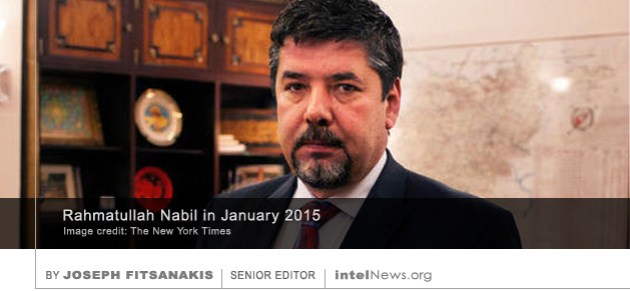
Rahmatullah NabilThe bleak landscape of Afghan national politics became even bleaker on Thursday, after the sudden resignation of the country’s spy chief, allegedly due to “disagreements” with the government in Kabul. Rahmatullah Nabil led Afghanistan’s National Directorate of Security (NDS) from 2010 to 2012 before returning to the post in 2013, while his predecessor, Asadullah Khalid, recovered from injuries suffered from an unsuccessful assassination attempt against him by the Taliban. But on Thursday afternoon, Nabil posted a resignation letter on Facebook, saying that “a lack of agreement on some policy matters” made it impossible for him to continue to lead the NDS.

Nabil’s resignation could not have taken place at a more symbolic moment: it was announced just as Afghan President Ashraf Ghani was returning home from a trip to neighboring Pakistan. The Afghan leader had attended part of the Heart of Asia regional conference, which was held in Pakistani capital Islamabad. But it is common knowledge that President Ghani’s visit was aimed at reinforcing the rapprochement between Kabul and Islamabad, as peace talks with the Taliban are about to restart. Critics of the Pakistani government accuse it of sponsoring the Taliban insurgency and believe that Islamabad’s consent is necessary for peace to prevail in Afghanistan. The Afghan government had entered negotiations with the leadership of the Taliban, but they ended abruptly in July, after it was revealed that Mullah Omar, the longtime leader of the Afghan Taliban, had been killed. Since that time, Taliban forces have taken the northern city of Kunduz, near the Afghan-Tajik border, while at the same time launching surprise raids against other cities, including Kandahar.

However, the NDS under Nabil’s leadership has staunchly opposed attempts by President Ghani to negotiate with the Taliban through the Pakistanis. In the past, Nabil had accused Islamabad of interfering in the domestic affairs of Afghanistan, while at the same time dismissing efforts by the Afghan government to reach out to Pakistan as “ill-fated”. Last week, Nabil accused President Ghani of surrendering Afghanistan’s “5,000-year history [to] Pakistan’s 60-year history”. But the President appeared conciliatory when speaking to reporters on Thursday. He praised Nabil for having done “a lot to improve information technology within NDS” and dismissed accusations that the service had been politicized. Nabil’s resignation would inevitably change the internal structure of the NDS, but such personnel changes were “common occurrences”, said President Ghani.

Author: Joseph Fitsanakis | Date: 11 December 2015 | Permalink