Britain summons Russian envoy to protest killing of ex-KGB spy in London
January 22, 2016 3 Comments
 The British government has taken the unusual step of summoning the Russian ambassador to London, following the conclusion of an official inquest into the death of a former KGB officer who is believed to have been killed on the orders of Moscow. Alexander Litvinenko, an employee of the Soviet KGB and one of its successor organizations, the FSB, defected with his family to the United Kingdom in 2000. But in 2006, he died of radioactive poisoning after meeting two former KGB/FSB colleagues, Dmitri Kovtun and Andrey Lugovoy, in London. A public inquiry into the death of Litvinenko, ordered by the British state, concluded this week after six months of deliberations involving sworn testimony by over 60 witnesses, including British intelligence officers who worked closely with Litvinenko.
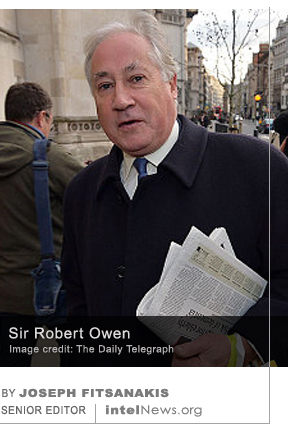
In releasing the inquiry report, the presiding judge, Sir Robert Owen, said it was clear that Kovtun and Lugovoi “were acting on behalf of someone else” when they killed their former colleague in London. He added that members of the administration of Russian President Vladimir Putin, including the Russian president himself, had “motives for taking action” against Litvinenko, “including killing him”. Moreover, President Putin’s systematic protection of Lugovoi, the primary suspect in the case, whom Russia currently refuses to extradite to the UK, “suggest a level of approval for the killing” at the highest levels of the Russian government, said Sir Robert.
Speaking during a session in the British House of Commons on Thursday, the UK’s Home Secretary Theresa May described Litvinenko’s killing as “a blatant and unacceptable breach of the most fundamental tenets of international law and civilized behavior”. On the same day, David Lidington, a Minister of state at the British Foreign Office, who currently serves as the country’s Minister for Europe, summoned the Russian Ambassador to London, Alexander Yakovenko, to file an official protest against Litvinenko’s murder. Meanwhile, the British state has moved to freeze the assets of the two main suspects in the case, while British Prime Minister David Cameron said further punitive measures against Russia were possible. Speaking to reporters in Davos, Switzerland, where he is participating in the World Economic Forum, Cameron said Britain wanted to have “some sort of relationship” with the Kremlin in light of the situation in Syria. But Whitehall would “look very carefully at the report and all the detail” and would proceed “with clear eyes and a very cold heart”, he said.
► Author: Joseph Fitsanakis | Date: 22 January 2016 | Permalink
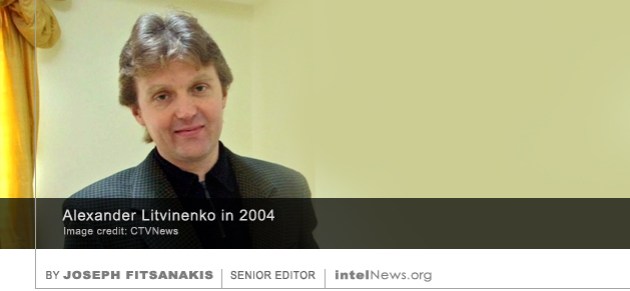 The long-awaited concluding report of a public inquiry into the death of a former Soviet spy in London in 2006, is expected to finger the Russian state as the perpetrator of the murder. Alexander Litvinenko was an employee of the Soviet KGB and one of its successor organizations, the FSB, until 2000, when he defected with his family to the United Kingdom. He soon became known as a vocal critic of the administration of Russian President Vladimir Putin. In 2006, Litvinenko came down with radioactive poisoning after meeting two former KGB/FSB colleagues, Dmitri Kovtun and Andrey Lugovoy, at a London restaurant. In July of 2007, after establishing the cause of Litvinenko’s death, which is attributed to the highly radioactive substance Polonium-210, the British government officially charged the two Russians with murder and issued international warrants for their arrest. Whitehall also announced the expulsion of four Russian diplomats from London. The episode, which was the first public expulsion of Russian envoys from Britain since end of the Cold War, is often cited as marking the beginning of the worsening of relations between the West and post-Soviet Russia.








 intelNews.org
Ex-KGB spy accused of Litvinenko murder says MI6 tried to recruit him
January 26, 2016 by Joseph Fitsanakis 1 Comment
But Lugovoi, who is now a member of the Russian Duma, denies any involvement in Litvinenko’s murder and has dismissed as “completely absurd” the inquest’s conclusion that he was behind the killing. Speaking last week on Russian television, Lugovoi reiterated his criticism of the report and claimed British intelligence had tried to recruit him shortly before Litvinenko’s murder. The Duma member was a guest on This Evening, a high-profile talk show on Russia’s Channel 1 television, hosted by Vladimir Sovolyev, a popular television personality and talk show host. Lugovoi told Sovolyev that he found it interesting that the British government “was always happy to grant me visas” to travel to the UK, even though London knew he was a former KGB spy. “Then, in May of 2006”, approximately six months before Litvinenko was killed, “MI6 tried to recruit me”, he added. He was referring to the Secret Intelligence Service, Britain’s primary external intelligence organization.
The former KGB officer then reiterated his longstanding argument that he and Kovtun were also poisoned by the same Polonium given to Litvinenko by the person or persons who killed him. He told Sovolyev that, after meeting Litvinenko in London a few days before his death, he fell violently ill and had to spend several months in a Russian hospital recovering from radiation poisoning. Lugovoi also hinted that the British government may have killed Litvinenko for reasons of its own. The Russian Ministry of Foreign Affairs did not comment on Lugovoi’s statement, but said in a press release that London’s accusations against the two former spies were “politically motivated” and “non-transparent”. The UK maintains that Lugovoi and Kovtun fell ill because they did not handle the Polonium given to them by their handlers with the appropriate amount of care.
► Author: Joseph Fitsanakis | Date: 26 January 2016 | Permalink
Filed under Expert news and commentary on intelligence, espionage, spies and spying Tagged with Alexander Litvinenko, andrei Lugovoi, KGB, News, poisoning, Russia, suspicious deaths, UK