Opinion: Bizarre fake murder plot points to Ukrainian state’s recklessness, unreliability
June 1, 2018 4 Comments
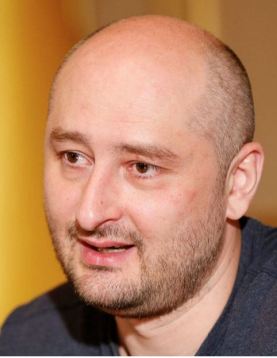
Arkady Babchenko
Western audiences were treated to a small taste of the bizarreness of Eastern European politics this week, when a Russian journalist who had reportedly been assassinated by the Kremlin, made an appearance at a live press conference held in Kiev. On Tuesday, Ukrainian media reported that Arkady Babchenko, a Russian war correspondent based in Ukraine, had been shot dead outside his apartment in the Ukrainian capital. A day later, after Babchenko’s murder had prompted global headlines pointing to Russia as the most likely culprit, Babchenko suddenly
appeared alive and well during a press conference held by the Security Service of Ukraine (SBU). The SBU then said that Babchenko’s killing had been staged in an attempt to derail a Russian-sponsored plan to kill him. The bizarre incident concluded with Babchenko meeting on live television with Ukrainian President Petro Poroshenko, who praised him as a hero. Later that night, the Russian journalist wrote on his Facebook page that he planned to die after “dancing on [Russian President Vladimir] Putin’s grave”.
Welcome to Ukraine, a strange, corrupt and ultra-paranoid state that is on the front lines of what some describe as a new Cold War between the West and Russia. Like the Cold War of the last century, the present confrontation is fought largely through information. The Russian government, which appears to be far more skillful than its Western adversaries in utilizing information for political purposes, immediately sought to capitalize on the Babchenko case. In fact, this baffling and inexplicable fiasco may be said to constitute one of the greatest propaganda victories for the Kremlin in years.
Ever since accusations began to surface in the Western media about Moscow’s alleged involvement in the 2016 presidential elections in the United States, Russia has dismissed these claims as “fake news” and anti-Russian disinformation. When Sergei and Yulia Skripal were poisoned in England in March, the Kremlin called it a false-flag operation. This is a technical term that describes a military or intelligence activity that seeks to conceal the role of the sponsoring party, while at the same time placing blame on another, unsuspecting, party. Most Western observes reject Russia’s dismissals, and see the Kremlin as the most likely culprit behind the attempt to kill the Skripals.
As one would expect, Russia stuck to its guns on Tuesday, when the world’s media announced the death of Arkady Babchenko in the Ukraine. Moscow claimed once again that we were dealing here with a false flag operation that was orchestrated by anti-Kremlin circles to make Russia look bad at home and abroad. It turns out that Moscow was right. Babchenko’s “murder” was indeed a false flag operation —admittedly a sloppy, shoddy and incredibly clumsy false flag operation, but a false flag operation nonetheless. Moreover, Babchenko’s staged killing could not possibly have come at a worse time for Ukraine and its Western allies. In the current environment, global public opinion is extremely sensitive to the phenomenon of ‘fake news’ and disinformation. Within this broader context, the Ukrainian state and its intelligence institutions have placed themselves at the center of an global disinformation maelstrom that will take a long time to subside. In doing so, the government of Ukraine has irreparably harmed its reputation among the general public and in the eyes of its Western allies. The Kremlin could not possibly have asked for a better gift from its Ukrainian adversaries.
The amateurishness and recklessness of some Eastern European countries that the West sees as allies in its confrontation with Russia, such as Ukraine, Poland, Hungary, and others, would be humorous if it were not so dangerous. The manifest idiocy of the Babchenko fake plot also poses serious questions about the West’s policy vis-à-vis Russia. It is one thing for the West to be critical of the Kremlin and its policies —both domestic and foreign. It is quite another for it to place its trust on governments and intelligence services as those of Ukraine, which are clearly unreliable, unprofessional, and appear to lack basic understanding of the role of information in international affairs.
► Author: Joseph Fitsanakis | Date: 01 June 2018 | Permalink

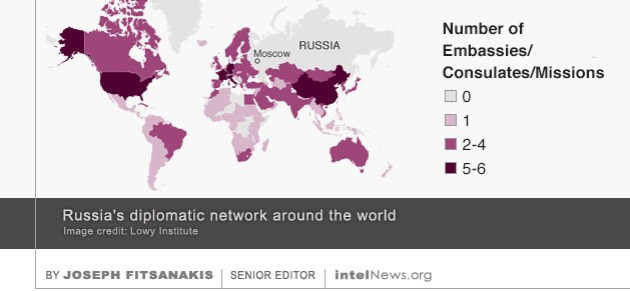 Though unprecedented in size, the recent expulsions of over 150 diplomats by nearly 30 countries and organizations around the world have hardly made a dent on Russia’s huge diplomatic footprint. The
 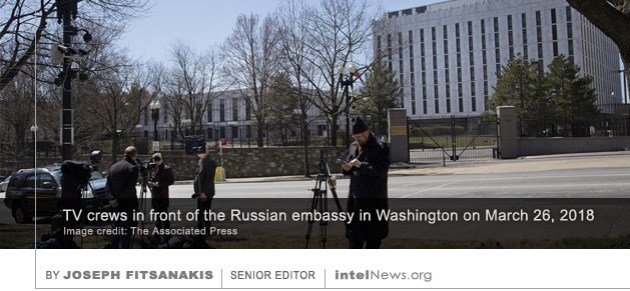 Relations between Russia and much of the West reached a new low on Monday, with the expulsion of over 100 Russian diplomats from two dozen countries around the world. The unprecedented expulsions were publicized on Monday with a series of coordinated announcements issued from nearly every European capital, as well as from Washington, Ottawa and Canberra. By the early hours of Tuesday, the number of Russian diplomatic expulsions had reached 118 —not counting the 23 Russian so-called “undeclared intelligence officers” that were expelled from Britain last week. Further expulsions of Russian diplomats are expected in the coming days.
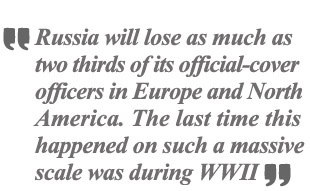 predecessor, Barack Obama, and his Secretary of State Hillary Clinton, who is known for her hardline anti-Russian stance. In Europe, the move to expel dozens of Russian envoys from 23 different countries —most of them European Union members— was a rare act of unity that surprised European observers as much as it did the Russians.
 For the past year, the Netherlands has had a new law governing its two secret services, the AIVD and the MIVD. The new Intelligence and Security Services Act (Wet op de inlichtingen- en veiligheidsdiensten or Wiv) was and still is heavily criticized, especially because it allows untargeted access to cable-bound telephone and internet traffic. Under the previous law, which dates from 2002, the intelligence services were only allowed to conduct bulk interception of wireless transmissions, like satellite and radio communications —besides of course the traditional targeted telephone and internet taps aimed at individual targets.
 With
With 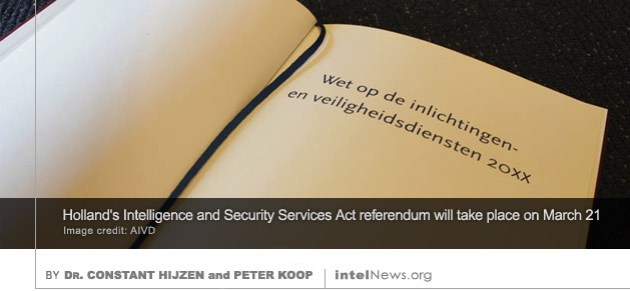 On March 21, the Dutch public cast their vote about the new Intelligence and Security Services Act, in Dutch
 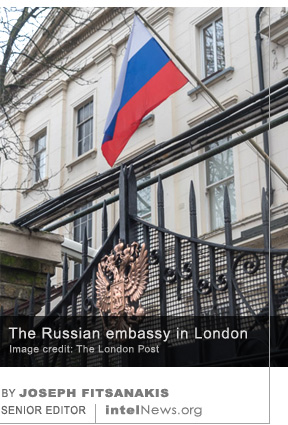 As expected, Moscow snubbed the British government’s demand for information into how a Russian-produced military-grade nerve agent ended up being used in the streets of Salisbury, England. As British Prime Minister Theresa May addressed the House of Commons on Wednesday afternoon, Sergei Skripal continued to fight for his life in a hospital in southern England. His daughter, Yulia, was also comatose, having been poisoned with the same Cold-War-era nerve agent as her father. This blog has
  the latest expulsions are dwarfed by the dramatic expulsion in 1971 of no fewer than 105 Soviet diplomats from Britain, following yet another defection of a Soviet intelligence officer, who remained anonymous.
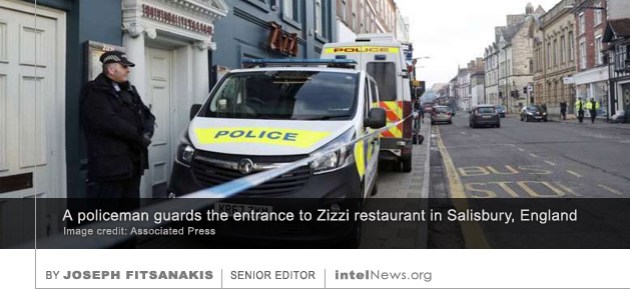 Most state-sponsored assassinations tend to be covert operations, which means that the sponsoring party cannot be conclusively identified, even if it is suspected. Because of their covert nature, assassinations tend to be extremely complex intelligence-led operations, which are designed to provide plausible deniability to their sponsors. Consequently, the planning and implementation of these operations usually involves a large number of people, each with a narrow set of unique skills. But —and herein lies an interesting contradiction— their execution is invariably simple, both in style and method. The
  Skripal, who continued to provide his services to British intelligence as a consultant while living in the idyllic surroundings of Wiltshire. Like the late Russian defector Alexander Litvinenko, who died in London of radioactive poisoning in 2006, Skripal entrusted his personal safety to the British state. But in a country that today hosts nearly half a million Russians of all backgrounds and political persuasions, such a decision is exceedingly risky.
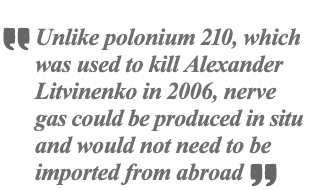 from abroad. It is, in other words, a simple weapon that can be dispensed using a simple method, with little risk to the assailant(s). It fits the profile of a state-sponsored covert killing: carefully planned and designed, yet simply executed, thus ensuring a high probability of success.
 Since 2008, when we launched intelNews, it has been our
  04. Unprecedented security changes are taking place in Saudi Arabia. Analysts agree that the Kingdom of Saudi Arabia is undergoing its most important political changes in generations. On November 4, 2017, nearly 50 senior Saudi officials, including at least 11 princes, some of them among the world’s wealthiest people, were suddenly
 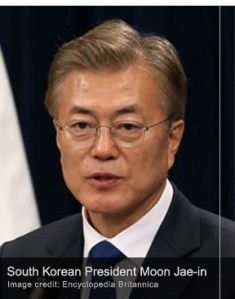 taking place in the intelligence infrastructure of South Korea, which are arguably as important as developments north of the 38th parallel. In June, the new center-left government of President Moon Jae-in
  assist policy-makers, including the president. So when the CIA and the FBI conclude that the Russian government launched an extensive and sophisticated campaign to undermine the 2016 US presidential election, one expects the president to take that advisement under serious consideration. However, the US leader has openly dismissed the conclusions of his own Intelligence Community and has
  Since 2008, when we launched intelNews, it has been our
  as a result of “acute poisoning from an undefined substance”, according to his doctors. Also in February, Kim Jong-nam, half-brother of North Korean Supreme Leader Kim Jong-un, was killed in an
  support for the rebels could backfire by causing the suddenly unemployed fighters to join jihadist organizations. In August, there were reports that US troops
  Since 2008, when we launched intelNews, it has been our
  10.
10. 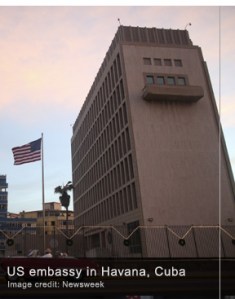 the alleged device may have been deployed by an intelligence service of a third country —possibly Russia— without the knowledge of the Cuban authorities. In October, the White House expelled 15 Cuban diplomats from the US in response to the incident. But the question of what harmed the health of at least 20 employees at the US embassy in Havana remains largely unanswered.
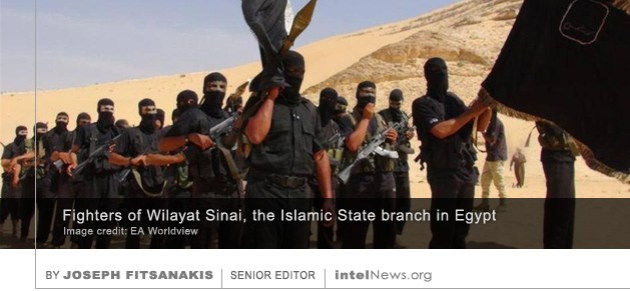 Through a series of meticulously planned terrorist strikes and assassinations, Wilayat Sinai has emerged as the strongest international arm of the Islamic State of Iraq and Syria (ISIS), according to some experts. Known officially as ISIS – Sinai Province, Wilayat Sinai claimed responsibility for the October 2015 downing of Metrojet Flight 9268. All 224 passengers and crew, most of them Russians, died when the plane blew up in midair over Egypt’s Sinai Peninsula. The incident marked the worst aviation disaster in Russian history. The same group, Wilayat Sinai, was behind last month’s attack on the Al Rawda Sufi mosque in bir al-Abed, Egypt. The massacre resulted in the deaths of 311 people, making it the worst terrorist attack in the history of modern Egypt.
 Dozens of Saudi senior figures, some of them among the world’s wealthiest people, have been fired or arrested, as the king and his son appeared to be removing their last remaining critics from the ranks of the security services. The unprecedented arrests took place without warning less than two hours after state-run media announced the creation of a new “supreme committee to combat corruption”. A






 intelNews.org
Analysis: The Islamic State is far from dead; it is regrouping and rebranding itself
June 11, 2018 by Joseph Fitsanakis 1 Comment
Soufan, a well-read analyst and complex thinker, who today presides over The Soufan Group and oversees the Soufan Foundation, is right to warn against the notion that the Islamic State is on its way out. The group’s meteoric rise marked a watershed moment in the modern history of militant Sunni Islam. Even if it is militarily annihilated —a prospect that is far from certain— its physical absence will in no way erase its impact and influence among its millions of supporters and sympathizers. In fact, experts warn that the group is —like al-Qaeda before it— proving to be resilient and able to withstand intense military pressure from its enemies. Currently, all signs show that the Islamic State is actively reorganizing under the command of its leader, Abu Bakr al-Baghdadi. The prolonged absence of the Iraqi-born al-Baghdadi has prompted wild speculation about this supposed demise or severe incapacitation. There are even some who claim that he was killed by an Islamic State faction in an internal coup.
But most intelligence agencies agree that al-Baghdadi —and his core lieutenants— remain very much alive and well. Three weeks ago, The Washington Post cited anonymously a “senior United States counterterrorism official” who confirmed that, by all indications, al-Baghdadi was alive and was coordinating the group’s activities in its last strongholds in eastern Syria. This is supported by communications intercepts, detainee interrogations and statements by informants, said The Post. It is important to note that Al-Baghdadi continues to have alongside him some of the militant group’s most hardened commanders, most of whom were trained in intelligence and military tactics during the reign of Saddam Hussein. Under their guidance, retreating Islamic State forces are leaving behind cell-based formations of underground fighters in areas that are liberated by the fragile US-led coalition. Read more of this post
Filed under Expert news and commentary on intelligence, espionage, spies and spying Tagged with Africa, Ali Soufan, Analysis, Islamic State, Joseph Fitsanakis, News, Newstex, War on Terrorism