Revealed: British prime minister was not told about fourth Cambridge spy ring member
July 24, 2018 Leave a comment
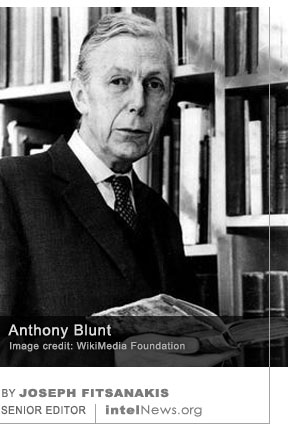 The Prime Minister of Britain, Sir Alec Douglas-Home, was kept in the dark by his own home secretary about the discovery of a fourth member of the infamous Cambridge Spy Ring in 1964, according to newly released files. The Cambridge Spies were a group of British diplomats and intelligence officials who worked secretly for the Soviet Union from their student days in the 1930s until the 1960s. They included Guy Burgess, Donald Maclean and H.A.R. “Kim” Philby, all of whom eventually defected to the Soviet Union. In 1964, Sir Anthony Blunt, an art history professor who in 1945 became Surveyor of the King’s Pictures and was knighted in 1954, admitted under interrogation by the British Security Service (MI5) that he had operated as the fourth member of the spy ring.
Despite his allegedly full confession, Blunt was never seriously disciplined for his espionage activities against Britain. In return for revealing his spy activities and naming others who had assisted him, he was granted immunity from prosecution. He was also allowed to remain in his academic post and retained his title of Surveyor of the Queen’s Pictures –effectively the curator of Queen Elizabeth II’s art collection. It wasn’t until 1979 when British Prime Minister Margaret Thatcher revealed in a statement to the British House of Commons that Blunt had been the fourth member of the Cambridge Spy Ring. Minutes after the prime minister’s statement entered the public record, Buckingham Palace (which had been made aware of Blunt’s espionage role back in 1964, but had been asked by Britain’s Interior Ministry to not draw attention to the scandal) stripped him of his 1954 knighthood.
It has now been revealed known that, in the days following her House of Commons statement about Blunt, Prime Minister Thatcher received several letters by Henry Brooke, who was serving as home secretary in 1964, when Blunt’s treachery was discovered. In his letters, Brooke (by then Lord Brooke of Cumnoor) expressed his support for the prime minister’s revelation. But the letters, which were previously classified but were published on Tuesday by Britain’s National Archives, also reveal that Brooke kept Blunt’s 1964 confession hidden from the then Prime Minister Sir Alec Douglas-Home. In his 1979 letter to Thatcher, Brooke states that he did not inform the prime minister in 1964 in his “well-meant effort not to add to [Douglas-Home’s] burdens”. But he adds that “I may, with hindsight, have expressed my discretion wrongly”. By that time, Blunt had voluntarily withdrawn from public life and was rarely heard of. Upon his death in 1984, his unfinished memoir was given to the British Library by the executor of his will, under the stipulation that it be kept sealed for 25 years. It was released to the public in 2009.
► Author: Joseph Fitsanakis | Date: 24 July 2018 | Permalink








 intelNews.org
Cambridge spy ring member gave USSR British royals’ pro-Nazi letters
April 6, 2021 by Joseph Fitsanakis 2 Comments
ANTHONY BLUNT, A MEMBER of the so-called Cambridge ring of communist spies, gave Soviet intelligence private letters written by members of the British royal family, which revealed “the depth of their Nazi sympathies”, according to a new television documentary. This revelation is included in “Queen Elizabeth and the Spy in the Palace”, the second of a three-part documentary series entitled Royals Declassified. The program was aired last week by Britain’s Channel 4 television station. According to the documentary, Russia’s Foreign Intelligence Service (SVR), the post-Soviet inheritor of the KGB’s external functions, may still be in possession of these controversial letters.
The Cambridge Spies were a group of British diplomats and intelligence officers who worked secretly for the Soviet Union from their student days in the 1930s until the 1960s. They included Guy Burgess, Donald Maclean and H.A.R. “Kim” Philby, all of whom eventually defected to the Soviet Union. In 1964, Sir Anthony Blunt, an art historian and former British Security Service (MI5) agent, who in April of 1945 became Surveyor of the King’s Pictures and was knighted in 1954, admitted under interrogation by the British Security Service (MI5) that he had operated as the fourth member of the spy ring.
The Channel 4 documentary features an interview with Australian author and historian Roland Perry, who recounts his conversations with the late Soviet intelligence officer Yuri Ivanovich Modin. Modin handled the Cambridge Spies from 1948 to 1951 as an officer of the Ministry for State Security (MGB), the immediate forerunner of the KGB. According to what Modin told Perry, in 1945 Blunt was tasked with a secret mission by King George VI, father of Queen Elizabeth II, who is Britain’s current reigning monarch.
Blunt’s mission was to accompany the British royal family’s librarian, Sir Owen Morshead, on a trip to Germany’s Darmstadt region. By that time the Third Reich had collapsed and the Darmstadt region was under American military occupation. The purpose of the secret trip was to take ownership of nearly 4,000 personal letters sent by various British royals to their German relatives during the first four decades of the 20th century. According to Perry, among these letters were several items of correspondence written in the years immediately preceding World War II by two of George V’s sons, Princes Edward and George. Perry claims that the letters expressed strong support for German National Socialism and, according to media reports, “would have proved hugely embarrassing” for the British royal family, had they been made public. The potential fallout of these letters was deemed so critical that Blunt and Morshead’s secret mission was personally sanctioned, not only by George VI, but also by British Prime Minister Sir Winston Churchill.
The two men recovered the letters, the majority of which were held at Friedrichshof Castle, located 12 miles northwest of Frankfurt. But the Channel 4 documentary alleges that Blunt secretly took photographs of the letters and passed them on to the Soviets. Perry claims that Modin told him during one of their meetings that the letters were highly incriminating and that Soviet intelligence could have blackmailed the British royals, had it chosen to do so. But the Cambridge spy ring handler said that the KGB decided not to take action on the matter —most likely to protect Blunt.
Despite his allegedly full confession in 1964, Blunt was never seriously disciplined for his espionage activities against Britain. In return for revealing his spy activities and naming others who had assisted him, he was granted immunity from prosecution.
► Author: Joseph Fitsanakis | Date: 06 April 2021 | Permalink
Filed under Expert news and commentary on intelligence, espionage, spies and spying Tagged with Anthony Blunt, Cold War, Germany, history, KGB, News, Roland Perry, Yuri Modin