News you may have missed #826 (suspicious deaths edition)
March 14, 2013 4 Comments
 By IAN ALLEN | intelNews.org |
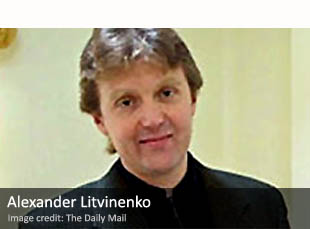
►►Key suspect in Russian spy murder refuses to cooperate. Andrey Lugovoi, who is now an elected official in Russia, says he will not talk even by video to British investigators about the poisoning of Alexander Litvinenko in London just over six years ago. The murder of former Russian spy Alexander Litvinenko in London in 2006, has never been solved and remains the subject of conflicting narratives and still-deepening intrigue over who may have killed him and why.
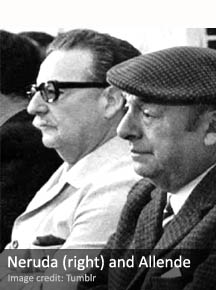
►►Exhumation of Neruda’s remains set for April. A court in Chile has set April 8 as the date for the exhumation of the remains of the Nobel Prize-winning poet Pablo Neruda, as part of an inquest into his death. The poet and leftwing activist died 12 days after a military coup replaced the socialist President Salvador Allende with General Augusto Pinochet. The poet’s family maintains that he died at 69 of advanced prostate cancer. But in 2011, Chile started investigating allegations by his former driver, Manuel Araya Osorio, that the poet had been poisoned.
►►Venezuela to investigate Chavez murder allegations. Venezuelan officials have said they will set up an inquiry to investigate suspicions that President Hugo Chavez was “murdered by foreign agencies”. Venezuelan Oil Minister Rafael Ramirez told the BBC the United States and Israel were to blame for Chavez’s death, and that he had no doubt that Chavez’s death was an act “similar to Yasser Arafat’s“. Earlier this week, the US expelled two Venezuelan diplomats following the expulsion of two American officials from Caracas.










Did MI6, not CIA, kill Congolese Prime Minister Patrice Lumumba?
April 2, 2013 by Joseph Fitsanakis 11 Comments
The 1961 abduction and murder of iconic Congolese Prime Minister Patrice Lumumba was organized by British, not American, intelligence, according to a claim made this week by a British Labour politician and Life peer. Lord Lea of Crondall said in a letter published in the current edition of The London Review of Books that he was told so by Baroness Park of Monmouth, who at the time headed the Leopoldville station of MI6, Britain’s primary external intelligence service. Lumumba was a pan-Africanist activist who in 1958 helped found the Mouvement National Congolais, later becoming the organization’s leader. In 1960, he became Congo’s first democratically elected Prime Minister. However, his government soon became embroiled in the Cold-War rivalry between the United States and the Soviet Union. Many believe that Washington, fearing that Lumumba would attach uranium-rich Congo to the Soviet sphere of influence, tasked the Central Intelligence Agency with organize a coup d’état against him. It was carried out by Congolese Colonel Joseph Mobutu Sese Seko, who then ruled Congo with an iron fist until his death in 1997. In January 1961, pro-Mobutu soldiers, assisted by Belgian troops, abducted Lumumba and executed him following several days of beatings and torture. But according to Lord Lea, Baroness Park told him shortly before she died, in 2010, that she had orchestrated Lumumba’s killing on behalf of MI6. Known as Daphne Park until she entered the peerage, Park was often referred to as “the queen of spies” due to her four decades in the service of MI6. As one of the top female British intelligence officers, Park served as Second Secretary at the British Embassy in Moscow between 1954 and 1956, before being transferred to Congo in 1959. While there, she served as Consul and First Secretary at the British embassy in Leopoldville —renamed Kinshasa following Congo’s independence. Read more of this post
Filed under Expert news and commentary on intelligence, espionage, spies and spying Tagged with Africa, assassinations, Baroness Park of Monmouth, Cold War, Congo, history, Kinshasa, Leopoldville, Lord Lea of Crondall, MI6, News, Patrice Lumumba