Former director of Venezuelan spy agency shot dead in Caracas
April 30, 2014 Leave a comment
 By JOSEPH FITSANAKIS | intelNews.org
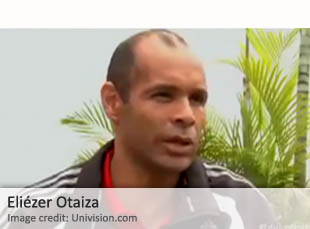
The former director of Venezuela’s primary intelligence agency has been found shot dead. Venezuelan officials said Eliézer Otaiza was shot dead sometime in the early hours of Saturday morning in Baruta, a suburb in the outskirts of capital Caracas. His bullet-ridden vehicle was later found abandoned in another part of the same barrio. Venezuela’s Minister of the Interior, Miguel Rodriguez Torres, told reporters on Tuesday that Otaiza’s body was discovered on Saturday, but that it took nearly two days for him to be identified due to the absence of identification documents on the body. At the time of his assassination, Otaiza headed the Libertador Bolivarian Municipality in Caracas which numbers over two million residents. Earlier in his career, however, Otaiza led an elite unit of the personal guard corps of Venezuelan President Hugo Chavez. The latter also appointed him director of the National Directorate of Intelligence and Prevention Services (DISIP), later renamed Bolivarian Intelligence Service, which is today Venezuela’s foremost intelligence organization. Otaiza was known as a stalwart supporter of Venezuela’s populist president, even in the early 1990s, when Chavez was still in opposition. In February of 1992, when Chavez led a failed military coup aimed at ousting President Carlos Andres Perez, Otaiza had been unable to participate on account of his absence from Venezuela. But he played a leading role in another pro-Chavez military mutiny in November of that year, when he led a small military force attempting to storm the Miraflores presidential palace in Caracas. He was shot several times in the chest but survived thanks to a bulletproof vest he was wearing. Venezuelan government media said Otaiza played “an important part in the events leading to the Bolivarian revolution”, and remained a strong supporter of Chavez throughout the president’s life. Read more of this post
 By JOSEPH FITSANAKIS | intelNews.org

 By JOSEPH FITSANAKIS | intelNews.org |










Kenyan state accused of role in killings of prominent Muslims
July 15, 2014 by Ian Allen Leave a comment
Human rights groups have accused the Kenyan government of being behind a spate of assassinations of prominent Muslims in the country, after a controversial Muslim businessman was shot dead in his car last week. Kenyan authorities had accused Mohamed Shahid Butt, a vocal Muslim entrepreneur, who owned several business ventures in the city of Mombasa, of inciting terrorism. He was due to appear in court in August to face charges of funding radical Muslim youth groups in Mombasa and instructing them to drive out moderate Muslim clerics from area mosques. According to court documents, the Kenyan government has been investigating several back accounts belonging to Mr. Butt, as part of a wider probe into alleged terrorism funding. However, on Friday evening the prominent businessman was gunned down in his car in Mombasa’s Chaani district by two men who then escaped, firing automatic rifles in the air. Mr. Butt was reportedly returning to downtown Mombasa from the Moi International Airport, after picking up his son who had arrived there on a flight from London. At approximately 8:15 p.m., Mr. Butt’s car was blocked and brought to a halt by another vehicle. As soon as his car was immobilized, two men emerged from the other vehicle and shot the businessman at close range before driving off. Mr. Butt died at the scene, while his son was slightly injured. Friday’s incident was the latest in a string of assassinations of prominent Muslims in the Mombasa region during the past two years. This past June, Sheikh Mohammed Idris, a moderate Sunni imam who chaired the Council of Imams and Preachers of Kenya, became the fourth prominent Muslim cleric to have been shot dead in Mombasa since 2012. Prior to his assassination, Idris had been ousted from Mombasa’s Sakina mosque, where Mr. Butt had been an elder. The mosque has since become an enclave of radical Muslims and has been renamed to Mujahedeen (holy warrior) mosque. Muslim and human rights groups accuse the Kenyan government of conducting the assassinations, in an attempt to neutralize what it sees as domestic enemies of the state. Read more of this post
Filed under Expert news and commentary on intelligence, espionage, spies and spying Tagged with Africa, al-Shabaab, assassinations, Kenya, Mohamed Shahid Butt, Mombasa, Sheikh Mohammed Idris, suspicious deaths