New law to give Australian intelligence officers more rights to use firearms
November 29, 2018 2 Comments
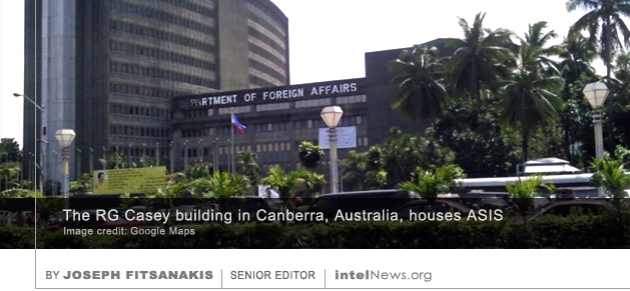 The Australian government has proposed a new law that would give intelligence officers broader powers to use firearms during undercover operations abroad. If it is approved by parliament, the new law would apply to the Australian Secret Intelligence Service (ASIS), a civilian intelligence agency that carries out covert and clandestine operations abroad. Modeled after Britain’s Secret Intelligence Service (MI6), ASIS was established in 1952, but its existence was not officially acknowledged by the Australian government until 25 years later, in 1977.
In 2004, ASIS was given legal permission for the first time to use firearms during undercover operations abroad. However, under current Australian law, this is allowed only as a last resort. ASIS personnel engaged in overseas operations are allowed to employ firearms in self-defense or to protect their agents —foreigners that have been recruited by ASIS to spy for Australia. However, the current government of Prime Minister Scott Morrison argues that ASIS personnel must be given broader powers to exercise “reasonable force” via the use of firearms during overseas operations. In a speech on Wednesday, Australia’s Minister for Foreign Affairs Marise Payne said that the overseas environment in which ASIS operates today is more complex than that of 2004, when the current laws of engagement were enacted. She added that nowadays ASIS personnel work in more hazardous locations, including warzones, and carry out “more dangerous missions in new places and circumstances”.
The government argues that the proposed changes will allow ASIS personnel to “protect a broader range of people and use reasonable force if someone poses a risk to an operation”. The new law will give ASIS officers permission to open fire against adversaries in order to protect parties other than themselves —such as hostages— or to avoid getting captured. This, says the government, will allow them to efficiently “protect Australia and its interests”. The last time that the Australian government flirted with the idea of giving ASIS broader powers to use firearms during undercover operations was in 2010. That year, the government of Prime Minister Kevin Rudd commissioned a multimillion dollar independent review of the Australian intelligence community’s mission and operations. The review proposed that ASIS personnel be allowed more powers to carry and handle weapons while engaging in “paramilitary activities” outside Australia. But the proposal was never enacted into law.
The latest proposal by the Morrison administration is scheduled to be discussed in the Australian Parliament today.
► Author: Joseph Fitsanakis | Date: 29 November 2018 | Permalink
 Police in the Australian state of Queensland have offered a $250,000 (US $182,000) reward for information that can help solve the murder of a former Soviet KGB colonel 18 years ago. The victim, Gennadi Bernovski, worked in the domestic wing of the Soviet KGB, until his retirement, which coincided with the dissolution of the USSR. In 1996, he moved to Australia with his family and bought a house in Benowa Waters, a luxury suburb of Gold Coast, a city located south of Brisbane on the country’s east coast. But on the evening of July 24, 2000, Bernovski was shot to death outside his home by what witnesses said were two men in combat diver suits. They
 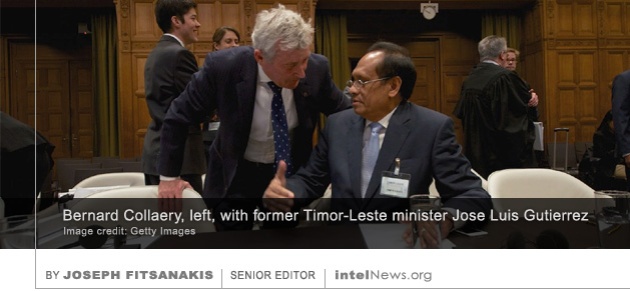 Australia continues to deny freedom of movement to a former intelligence officer who revealed that Canberra bugged government offices in the small island nation of Timor-Leste, in an effort to secure a lucrative oil deal. The former intelligence officer, known only as “Witness K.”, is believed to be a former director of technical operations in the Australian Secret Intelligence Service (ASIS), Australia’s foreign-intelligence agency. In 2013, he publicly objected to an intelligence-collection operation that targeted the impoverished Pacific island nation of Timor-Leste, known also as East Timor.
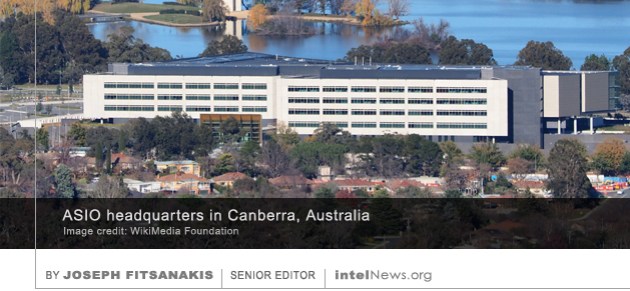 Foreign intelligence collection and espionage threats against Australia are greater today than at any time during the Cold War, according to a senior Australian intelligence official. The claim was made on Wednesday by Peter Vickery, deputy director general of the Australian Security Intelligence Organisation (ASIO), the country’s primary counterintelligence agency. He was speaking before a parliamentary committee that is considering aspects of a proposed bill, which aims to combat foreign influence on Australian political and economic life. If enacted, the bill would require anyone who is professionally advocating or campaigning in favor of “foreign entities” to register with the government. Several opposition parties and groups, including the Catholic Church, have
  Australia rejected a secret request by the United States Central Intelligence Agency to open an embassy in North Korea, which the Americans hoped to use as a base from where to collect intelligence on the communist state.
  The Parliament of Australia is reportedly reviewing the use of cell phones built by a Chinese manufacturer, after an Australian news agency expressed concerns about the manufacturer’s links with the Chinese military. The cell phone in question is the popular Telstra Tough T55 handset. It is made available to Australian parliamentarians though the Information, Communications and Technology (ICT) unit of the Department of Parliamentary Services (DST). Any parliamentarian or worker in Australia’s Parliament House can order the device through the Parliament’s ICT website. According to data provided by the DST, 90 Telstra Tough T55 cell phones have been ordered through the ICT in the current financial year.
 Australia has expressed concern about a plan by a Chinese telecommunications company to provide high-speed Internet to the Solomon Islands, a small Pacific island nation with which Australia shares Internet resources. The company, Huawei Technologies, a private Chinese venture, is one of the world’s leading telecommunications hardware manufacturers. In recent years, however, it has come under scrutiny by Western intelligence agencies, who view it as being too close to the Communist Party of China.
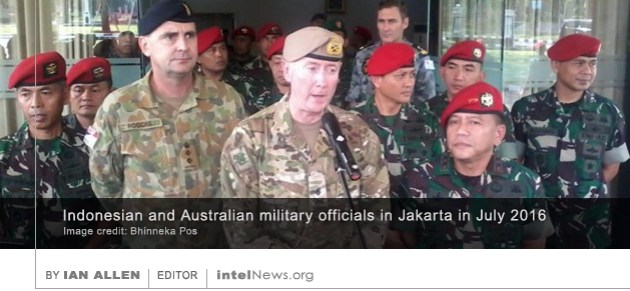 The Indonesian military has halted all forms of cooperation with the armed forces of Australia, with some media reports suggesting that the decision was prompted by fears of espionage. Indonesia and Australia have held joined military training sessions for many decades. In recent weeks, members of the Kopassus, the elite special forces of the Indonesian military, were training on a base in Perth, Australia, with their counterparts in the Australian Special Air Service. On Wednesday, however, the Indonesian government
  A Chinese diplomat, who made international news headlines in 2005 when he defected to Australia, has ended a decade of silence to warn about an alleged increase in Chinese espionage operations against his adopted country. Chen Yonglin was a seasoned member of the Chinese diplomatic corps in 2001, when he was posted as a political affairs consul at the Chinese consulate in Sydney, Australia. His job was to keep tabs on the Chinese expatriate community in Australia, with an emphasis on individuals and organizations deemed subversive by Beijing. He later revealed that his main preoccupation was targeting members of the Falun Gong spiritual movement, which is illegal in China. He also targeted supporters of Taiwanese independence, as well as Tibetan and East Turkestan nationalists who were active on Australian soil.
 The Chinese embassy in Canberra has strongly denied accusations that a Chinese government ship involved in the international effort to find the missing Malaysia Airlines Flight MH370 is spying on the Royal Australian Navy. The ship, the Dong Hai Jiu 101, is a salvage and rescue vessel built in Shanghai in 2012 and currently sailing under the Chinese flag. In April, the Chinese government contracted the Dong Hai Jiu 101 to join the international search effort for the wreckage of Flight MH370. The Boeing 777 aircraft disappeared over the South China Sea on March 8, 2014, while flying from Kuala Lumpur International Airport in Malaysia, to the Beijing Capital International Airport in China.
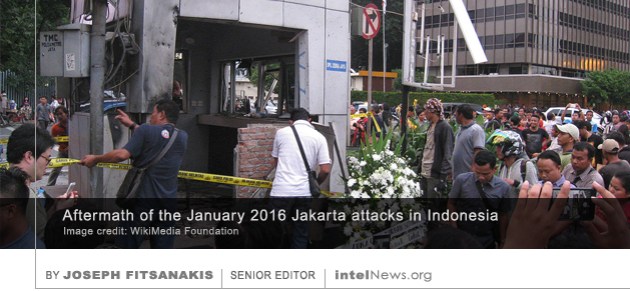 An ambitious new personnel exchange program between intelligence agencies in Australia and Indonesia aims to combat the unprecedented rise of militant Islamism in Southeast Asia, which is fueled by the Islamic State. The program, which is already underway, aims to strengthen intelligence cooperation between two traditionally adversarial regional powers.
 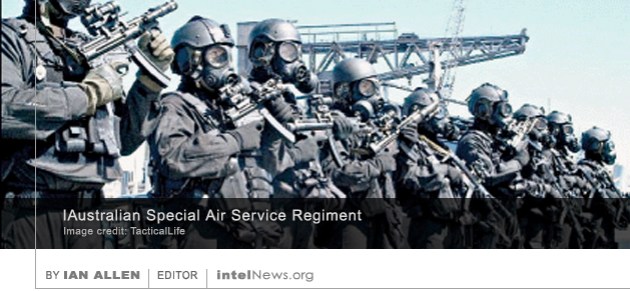 The use of firearms by Australian intelligence and security personnel stationed abroad is being reviewed following an incident in which an intoxicated special forces soldier pulled a gun on a spy in Afghanistan. According to reports in the Australian media, the review was conducted by the Inspector General of Intelligence and Security, a government-appointed office that monitors the conduct of Australian intelligence and security agencies.






 intelNews.org
Australian ex-intelligence officer pleads guilty to disclosing spy operation
August 7, 2019 by Joseph Fitsanakis Leave a comment
According to Witness K., a group of ASIS officers disguised themselves as members of a renovation crew and planted several electronic surveillance devices in an East Timorese government complex. The inside information gathered from those devices allegedly allowed the Australian government to gain the upper hand in a series of complex negotiations that led to the 2004 Certain Maritime Arrangements in the Timor Sea (CMATS) treaty. The treaty awards Australia a share from profits from oil exploration in the Greater Sunrise oil and gas field, which is claimed by both Australia and East Timor. But in 2013, the East Timorese government took Australia to the Permanent Court of Arbitration in The Hague, claiming that the CMATS treaty should be scrapped. The East Timorese argued that during the sensitive negotiations that preceded the CMATS treaty, the Australian government was in possession of intelligence acquired through illegal bugging.
The claim of the East Timorese government was supported by Witness K., who argued that ASIS’ espionage operation was both “immoral and wrong” because it was designed to benefit the interests of large energy conglomerates and had nothing to do with Australian national security. It is worth noting that Witness K. said he decided to reveal the ASIS bugging operation in 2012, after he learned that Australia’s former Minister of Foreign Affairs, Alexander Downer, had been hired as an adviser to Woodside Petroleum, an energy company that was directly benefiting from the CMATS treaty.
However, as soon as the East Timorese told the Permanent Court of Arbitration that they would be questioning a witness from ASIS, officers from the Australian Security Intelligence Organisation (ASIO), the country’s domestic intelligence agency, raided the Canberra law offices of Bernard Collaery, East Timor’s lawyer in the case. The raiders took away documents that revealed the identity of Witness K., and then proceeded to detain him for questioning. They also confiscated his passport, which prevented him from traveling to the Netherlands to testify in the case. Read more of this post
Filed under Expert news and commentary on intelligence, espionage, spies and spying Tagged with ASIS, Australia, Bernard Collaery, Certain Maritime Arrangements in the Timor Sea treaty, East Timor, economic espionage, energy resources, News, Witness K.