Pro-Soviet radicals planned to kill Gorbachev in East Germany, book claims

Mikhail GorbachevA group of German radicals planned to assassinate Soviet Premier Mikhail Gorbachev in East Germany in 1989, thus triggering a Soviet military invasion of the country, according to a new book written by a former British spy. The book is entitled Pilgrim Spy: My Secret War Against Putin, the KGB and the Stasi (Hodder & Stoughton publishers) and is written by “Tom Shore”, the nom de guerre of a former officer in the British Secret Intelligence Service (MI6). The book chronicles the work of its author, who claims that in 1989 he was sent by MI6 to operate inside communist East Germany without an official cover. That means that he was not a member of the British diplomatic community in East Germany and thus had no diplomatic immunity while engaging in espionage. His mission was to uncover details of what MI6 thought was a Soviet military operation against the West that would be launched from East Germany.

In his book, Shore says that he did not collect any actionable intelligence on the suspected Soviet military operation. He did, however, manage to develop sources from within the growing reform movement in East Germany. The leaders of that movement later spearheaded the widespread popular uprising that led to the collapse of the German Democratic Republic and its eventual unification with West Germany. While finding his way around the pro-democracy movement, Shore says that he discovered a number of self-described activists who had been planted there by the East German government or the Soviet secret services. Among them, he says, were members of the so-called Red Army Faction (RAF). Known also as the Baader Meinhoff Gang or the Baader-Meinhof Group, the RAF was a pro-Soviet guerrilla group that operated in several Western European countries, including Germany, Belgium and Holland. Its members participated in dozens of violent actions from 1971 to 1993, in which over 30 people were killed. Among other attacks, the group tried to kill the supreme allied commander of the North Atlantic Treaty Organization and launched a sniper attack on the US embassy in Bonn. The group is known to have received material, logistical and operational support from a host of Eastern Bloc countries, including East Germany, Poland and Yugoslavia.

According to Shore, the RAF members who had infiltrated the East German reform movement were planning to assassinate Soviet Premier Mikhail Gorbachev during his official visit to East Germany on October 7, 1989. The visit was planned to coincide with the 40th anniversary celebrations of the formation of the German Democratic Republic in 1949, following the collapse of the Third Reich. Shore says he discovered that the assassination plot had been sponsored by hardline members of the Soviet Politburo, the communist country’s highest policy-making body, and by senior officials of the KGB. The plan involved an all-out military takeover of East Germany by Warsaw Pact troops, similar to that of Czechoslovakia in 1968. But Shore claims that he was able to prevent the RAF’s plan with the assistance of members of the East German reform movement. He says, however, that at least two of the RAF members who planned to kill Gorbachev remain on the run to this day. The RAF was officially dissolved in 1998, when its leaders sent an official communiqué to the Reuters news agency announcing the immediate cessation of all RAF activities. However, three former RAF members remain at large. They are Ernst-Volker Staub, Burkhard Garweg and Daniela Klette, all of them German citizens, who are believed to be behind a series of bank robberies in Italy, Spain and France in recent years.

Author: Joseph Fitsanakis | Date: 11 September 2018 | Permalink

Pakistan bars its former spy chief from leaving the country over controversial book

Asad DurraniPakistan has officially barred a former director of its powerful intelligence agency from leaving the country, after he co-authored a controversial book with his Indian counterpart. Asad Durrani is a retired Pakistani Army general who served as director-general of Pakistan’s Directorate for Military Intelligence between 1988 and 1989. From 1990 to 1992, he served as director of the Inter-Services Intelligence Directorate, arguably Pakistan’s most powerful government institution. Durrani, 77, has been severely criticized in some Pakistani circles for co-authoring a book entitled The Spy Chronicles: RAW, ISI and the Illusion of Peace, with his Indian counterpart, A.S. Daulat. Daulat, 78, headed India’s Research and Analysis Wing from 1999 to 2000.

The book, which was edited by the widely respected Indian journalist Aditya Sinha, has prompted heavy criticism of its two co-authors in nationalist circles in the two rival regional powers. But Durrani’s position became more tenuous on Monday, after the government of Pakistan announced that he had been placed under formal investigation. Pakistani Army spokesman Major General Asif Ghafoor told reporters in Islamabad on Monday morning that the revelations made in Lieutenant General Durrani’s book would be investigated by a formal court of inquiry, headed by a three-star general. He also said that Durrani had been urgently summoned to the Pakistani Army’s headquarters to answer allegations that he violated the Pakistani military’s code of conduct. Additionally, Ghafoor announced that Durrani had been placed on an official government-administered “exit control list”, which means that he is not allowed to leave Pakistan until further notice.

The Pakistani armed forces have not explained the precise reasons why Durrani is under investigation. His book makes several controversial allegations relating to Islamabad’s intelligence operations. A large part of the book contains details about Pakistan’s systematic efforts to foment armed unrest in the heavily Muslim Indian state of Kashmir, for instance by funding and training a host of Islamist paramilitary organizations that operate in the disputed region. The book also claims that the Pakistani government was aware of the whereabouts of Osama bin Laden in 2011, and that it cooperated closely with the United States to kill the co-founder of al-Qaeda. Islamabad has consistently denied allegations that it knew of bin Laden’s hideout in the city of Abbottabad, and that it gave permission to US Special Forces troops to raid his compound. If Durrani is charged with having violated the Pakistani military’s code of conduct, he could face a minimum of two years in prison.

Author: Joseph Fitsanakis | Date: 30 May 2018 | Permalink
High-level MI6 spy inside al-Qaeda writes book detailing his work

Aimen Dean, a.k.a. Ramzi

Aimen Dean, a.k.a. Ramzi

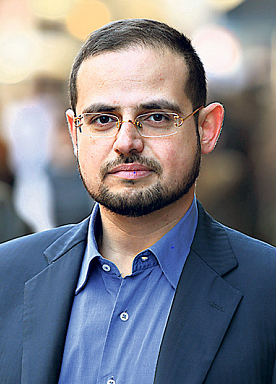
A Saudi-born man, who some refer to as the most valuable British-run spy inside al-Qaeda, has authored a soon-to-be-published book about his experiences. Aimen Dean, known in al-Qaeda circles simply as ‘Ramzi’, became radicalized in the first half of the 1990s in response to the Bosnian War. At that time, he traveled from his home country of Saudi Arabia to Bosnia, where he joined large numbers of foreign Muslim fighters who fought in support of Bosnian-Muslim forces. In subsequent interviews, Dean has said that he continues to view his participation in the Bosnian War as an “ethical and moral” act in defense of a “defenseless population”. Following the end of the Bosnian War, Dean joined many foreign-born fighters who followed al-Qaeda co-founder Osama bin Laden to Afghanistan. While there, he pledged allegiance to bin Laden and gained his trust.

Dean’s task in Afghanistan was to train new al-Qaeda recruits in Islamic theology and history. But he was also tasked with combat duties, which included bomb-making. He witnessed the drastic shift in al-Qaeda’s raison d’être from a group ostensibly fighting to defend Muslims under attack, to a center of a violent campaign against the West. Dean has stated that during his first period in Afghanistan, he sincerely believed that the West was involved in a systematic campaign to destroy Islam and Muslims. Gradually, however, Dean’s views began to conflict with those of al-Qaeda’s leaders. He especially objected to the use of suicide bombers and the deliberate targeting of civilians by al-Qaeda fighters. His disillusionment with al-Qaeda peaked in August of 1998, when the organization targeted the United States embassies in Kenya and Tanzania in coordinated strikes.

During a leave of absence from al-Qaeda’s Afghanistan stronghold, Dean was approached by the United Kingdom’s Secret Intelligence Service, more commonly known as MI6. He says that he quickly agreed to work as a spy for the British agency and did so from 1998 until 2007, when he claims that his cover was blown. Dean has now written a book, co-authored with two CNN reporters, Paul Cruickshank and Tim Lister. Entitled Nine Lives: My Time As MI6’s Top Spy Inside al-Qaeda, the book is due to appear in stores on June 7.

Author: Ian Allen | Date: 25 May 2018 | Permalink

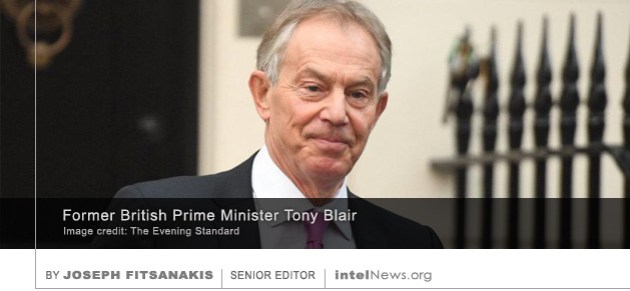
Tony Blair denies he warned Donald Trump British spies were after him

Tony BlairA spokesman for Tony Blair has dismissed as “categorically absurd” allegations that the former British Prime Minister warned the White House that President Donald Trump was targeted by British spy agencies. The claims are made in the book Fire and Fury: Inside the Trump White House, which is due to be published next week. Its author, Michael Wolf, says he based the information in the book on more than 200 interviews that he held with President Trump and members of his inner circle during the past year.
Wolf alleges that Blair, who was Britain’s prime minister from 1997 to 2007, visited the White House in secret in February of 2017. He allegedly did so as a private citizen, as he has held no public position since 2015, when he stepped down from his post as a Middle East envoy for the United Nations. While at the White House, Blair reportedly met with Jared Kushner, Trump’s son-in-law and senior aide. During that meeting, says Wolf, Blair told Kushner that Trump could have been under surveillance by British intelligence during his presidential election campaign. The former British prime minister allegedly said that any surveillance on Trump would have been carried out by the Government Communications Headquarters (GCHQ), Britain’s signals intelligence agency. Wolf further alleges that the administration of US President Barack Obama never asked London to spy on Trump. Instead, the White House “hinted” that intelligence collection about Trump would be “helpful”, says Wolf. The reason why Blair volunteered this information to Kushner, claims Wolf, was that he was hoping to gain the US president’s trust and be appointed as Washington’s envoy to the Middle East.

Blair’s revelation, which Wolf describes in his book as a “juicy nugget or information”, allegedly “churned and festered” in Trump’s mind. It was the basis for claims made on March 14, 2017, by a Fox News commentator that the GCHQ had spied on Trump on behalf of the White House. The claim was repeated on March 17 at the White House by Sean Spicer, Trump’s then-press secretary, who said that Obama had used the GCHQ to spy on Trump so as to evade American privacy laws. Spicer’s claim prompted an angry response from the British government in London and from the British spy agency itself. In a rare public comment, GCHQ called the allegations “utterly ridiculous”.

Late on Wednesday, a spokeswoman for the office of Tony Blair said in an email that Wolf’s claims in Fire and Fury were “a complete fabrication […], have no basis in reality and are simply untrue”. Last year, another spokesman for Blair dismissed claims that the former British prime minister had lobbied to be appointed Trump’s Middle East envoy. This claim was so “completely overblown” and “so far beyond speculation there isn’t a word for it”, said the spokesman. President Trump has not commented on Wolf’s claim about Blair’s alleged visit and subsequent meeting with Kushner.

Author: Joseph Fitsanakis | Date: 04 January 2018 | Permalink

Ex-CIA contractor says Pakistan’s leaders helped him escape murder charges

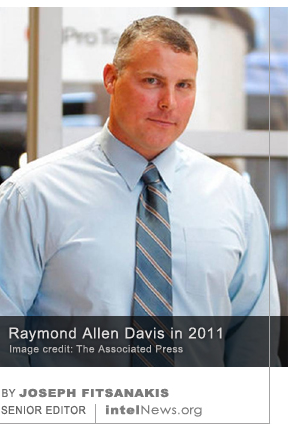
Raymond Allen DavisA former contractor for the United States Central Intelligence Agency, who was released from a Pakistani prison in 2011 despite being implicated in a double murder there, says he was freed with the help of senior Pakistani officials. Raymond Allen Davis was a CIA contractor posted in the US consulate in Pakistan’s Punjabi capital, Lahore, which is also the country’s second-largest city. It has been suggested that, for a while, Davis was the CIA’s acting station chief in Lahore, thus technically the most senior American intelligence officer in Punjab.
On January 27, 2011, while driving in downtown Lahore, Davis opened fire against two men riding on a motorcycle, killing them instantly. Soon after the incident, Davis appears to have contacted the US consulate in Lahore, which rapidly dispatched a consular vehicle to remove him from the scene of the shooting. However, the vehicle was unable to reach Davis, who was surrounded by an angry crowd. Unable to pick up Davis, the car then returned to the consulate after running down and killing a motorcyclist who was unconnected with the earlier incident. Eventually Davis was arrested and charged with double murder and illegal possession of a firearm. The Pakistani government dismissed Washington’s assertion that Davis was an accredited diplomat, and was thus not subject to Pakistan’s legal system because of his diplomatic immunity. With public opinion in Pakistan heavily against Davis, the case sparked a diplomatic crisis between Washington and Islamabad. Unexpectedly, however, Davis was released in March of the same year, after the families of the two men he killed appeared in court and said they forgave him and wanted him to be pardoned. It later emerged that the families of the murdered men had been given a total of $2.4 million as compensation for their deaths.

Read more of this post

New book reveals how MI5 infiltrated the British communist party

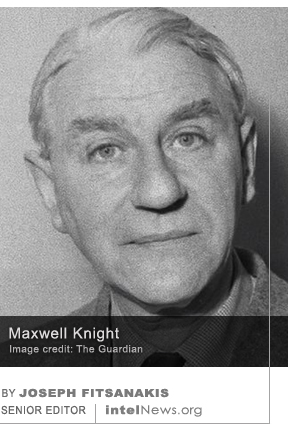
Maxwell KnightA new biography of famed British Security Service spymaster Maxwell Knight reveals that a number of prominent British communists were secret government agents in the 1930s. After serving in the British Royal Navy during World War I, Knight was recruited by the Security Service, Britain’s domestic intelligence agency, which is commonly known as MI5. He eventually rose to lead the agency’s Section B5(b), which was responsible for using agents to infiltrate political groups deemed radical by the authorities. During the interwar years, under Knight’s leadership, Section B5(b) focused largely on British fascist organizations, but also infiltrated the Communist Party of Great Britain. Knight, who died in 1968, left an indelible mark on the character and operations of MI5. He also served as a model for the character of ‘M’, the fictional director of the British Secret Intelligence Service (MI6) in the novels of Ian Fleming, creator of James Bond.
Now Preface Publishing has issued a new biography of Knight, authored by British author Henry Hemming. The book, entitled M: Maxwell Knight, MI5’s Greatest Spymaster, is largely based on the diaries of Knight. It reveals the identities of a number of MI5 agents that worked for the late spymaster in Section B5(b). They included British intellectuals, artists, activists and at least one barrister, Vivian Hancock-Nunn. A leftwing legal counsel, Hancock-Nunn provided pro-bono legal services to the publications of the Communist Party of Great Britain. However, is is now believed that he was agent M/7, run by Knight’s Section B5(b). Another agent, codenamed M/1 by Knight, was Graham Pollard, son of a highly respected British historian, who broke ranks with his wealthy family to join the Communist Party in the 1920s. By 1933, Pollard was a prominent and influential member of the Party, and regularly penned fiery articles in the Daily Worker, the Party’s newspaper. Hemming’s book, however, reveals that Pollard was an agent of MI5, who went as far as marrying a prominent communist activist in order to build his cover.

Hemming notes that some of the most prolific agents run by Knight were women. Three of them, Kathleen Tesch, Olga Grey and Mona Maund, infiltrated various levels of the Communist Party, which was known for its relatively inclusive treatment of women at the time. Knight relied on them for regular reports about the Party’s activity, despite the objections of his superiors, who believed that women should have no place in intelligence operations. The book’s author also notes that he was not able to confirm the identities of these agents in MI5 archives, because they remain classified. However, he told British newspaper The Guardian that he was “99.9 percent certain” of the accuracy of his information.

Author: Joseph Fitsanakis | Date: 12 May 2017 | Permalink

Danish court halts sales of book written by former spy boss (updated)

Jakob Scharf's "Ten Years With the PET"

Jakob Scharf’s “Ten Years With the PET”

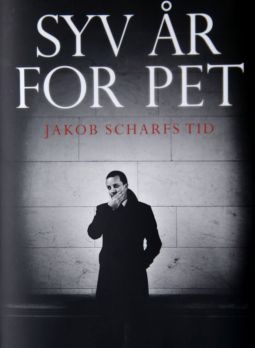
A court in Denmark has issued an injunction that prevents retail outlets from selling a book written by the former director of the country’s domestic intelligence agency. Titled Seven Years with the PET, the book is based on a series of interviews with Jakob Scharf, who directed Denmark’s Police Intelligence Service (PET) from 2007 to 2013. The book was scheduled for general release in bookstores across the country on October 17 by its publisher, People’s Press. By the end of the first week of October, the Copenhagen-based publisher had already supplied 5,000 copies of the book to 40 bookstores across Denmark, and several copies had already found their way into the hands of readers.

But last Friday night, the PET filed a request for an injunction to be placed on retail sales of the book, arguing that its pages might contain information pertaining to state secrets. The injunction was granted by a court in Copenhagen overnight, and communicated in the early hours of Saturday morning to the publisher, two online retailers and over 40 bookstores. The PET is listed as the requester of the injunction, and a rarely used ‘state secrets’ clause is given as justification for the urgent measure. On Saturday, the current director of the PET, Finn Borch Andersen, spoke to Denmark’s TV2 channel about the injunction. He told the television station that his agency filed the injunction after commercials appeared on television, advertising the book as “an exposure of PET operations”. He added that PET personnel “are currently reading” the book and that the agency will ask for the injunction to be lifted if no sensitive information is found.

But on Monday, Danish newspaper Politiken said it would defy the court injunction and publish excerpts of Scharf’s book. Speaking on the same day, the paper’s editor-in-chief, Christian Jensen, dismissed the ban, which he said “directly attacks the fundamental liberties on which our open society and free press depends”. Politiken had been scheduled to serialize Scharf’s book and was among the recipients of the court injunction.

The PET made headlines in 2012, after it was revealed that one of its double agents, Morten Storm, successfully infiltrated al-Qaeda in the Arabian Peninsula (AQAP). The revelation caused controversy in Denmark because of Storm’s admission that he broke domestic and international law in the course of his activities, and led to a pledge by the country’s justice minister to impose more governmental control over the PET. Scharf, who led the agency from 2007 to 2013, was head of the organization after Denmark became targeted by Islamist extremists, following the publication in 2005 of cartoons depicting the Prophet Muhammad. The latter is considered sacrilegious by literalist Muslims, including organizations that espouse militant versions of Islam.

Update Oct. 11, 2016, 12:35 GMT: It appears that Politiken proceeded to publish nearly the entire book on Sunday and Monday. The PET has just announced that it will withdraw its injunction request against the publication of the book, because it cannot be practically enforced at this point.

Author: Joseph Fitsanakis | Date: 11 October 2016 | Permalink

We had no asset in Saddam’s inner circle, says ex-CIA deputy director

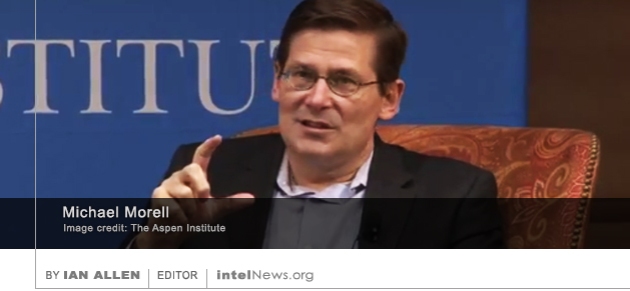
Morell - IA senior Central Intelligence Agency official, who led the agency as its acting director before retiring in 2013, has said that not having sources in the Iraqi government’s upper echelons led to the intelligence failure of 2003. Michael Morell retired as deputy director of the CIA, after having served twice as its acting director, in 2011 and from 2012 to 2013. A Georgetown University graduate, Morell joined the agency in 1980 and rose through the ranks to lead the Asia, Pacific and Latin America divisions. In May 2015, Morell published his book, The Great War of Our Time: The CIA’s Fight against Terrorism from al Qa’ida to ISIS, which he has been promoting while working as a consultant in the private sector.
Morell spoke at the Aspen Institute earlier this month, and once again offered a public apology to former United States Secretary of State Colin Powell for the CIA’s erroneous estimates on Iraq. He was referring to the Agency’s claims prior to the 2003 US invasion that Iraq maintained an active weapons-of-mass-destruction (WMD) program. The claims formed the basis of Powell’s February 2003 speech during a meeting of the United Nations Security Council, in which he claimed that the regime of Iraqi President Saddam Hussein had “biological weapons and the capability to rapidly produce […] many more.” There was no question, said Morell, that Powell’s reputation “was tarnished” as a result of the speech, and that a public apology was in order. The same apology, said Morell, applied “to every single American.”

The retired intelligence official went on to say that the main cause of the CIA’s erroneous assessment of Iraq’s WMD program was that the Agency had failed to penetrate the highest echelons of the Hussein regime. “We were not able to come up with the right answer [because] we didn’t do our fundamental job of penetrating [Hussein’s] inner circles with a human asset,” said Morell. As a result, there was “no information to give to the [CIA] analyst to say ‘here’s what this guy is up to’,” he added. The author of The Great War of Our Time, went on to suggest that the CIA’s failure to penetrate the inner circle of the Iraqi government prior to 2003 was “quite frankly a national security failure.”

Author: Ian Allen | Date: 29 December 2015 | Permalink

New book by ex-Mossad officer examines Israel’s intelligence doctrine

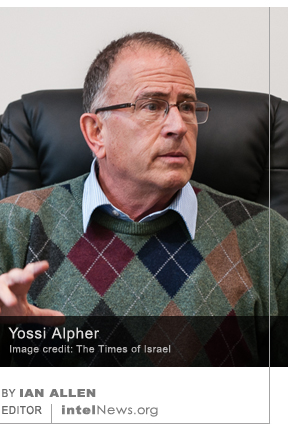
Yossi AlpherYossi Alpher, a former Israeli intelligence officer, who was directly involved in numerous top-secret operations during his spy career, has published a new book that analyzes the overarching strategy behind Israel’s spy operations. Alpher served in Israeli Military Intelligence before joining the Mossad, where he served until 1980. Upon retiring from the Mossad, he joined Tel Aviv University’s Jaffee Center for Strategic Studies, which he eventually directed. Throughout his career in intelligence, Alpher worked or liaised with every Israeli spy agency, including the Shin Bet –the country’s internal security service.

In Periphery: Israel’s Search for Middle East Allies, published this week by Rowman & Littlefield, Alpher examines Israel’s so-called ‘periphery doctrine’. This strategy was devised by Israel’s founder and first Prime Minister, David Ben-Gurion, and formed the basic operational doctrine of the Mossad since the organization’s inception, in 1949. The strategy was based on forging deep operational ties between Israeli and non-Arab intelligence services in the Middle East and Africa, and then presenting these alliances as assets to the United States, so as to win Washington’s support. In pursuit of the periphery doctrine, Israel focused on strengthening ties with religious or ethnic minorities in the Middle East, including the Kurds in Iraq and Syria, and signed intelligence cooperation agreements with countries such as Iran, Turkey, Ethiopia, Kenya and Uganda.

According to Alpher, the most ambitious part of the periphery doctrine was the secret intelligence pact signed between Israel, Turkey and Iran. Known as C’lil in Israel, and as Trident in the United States, the agreement was struck in Ankara in 1958. Almost immediately after signing the treaty, senior Israeli officials contacted Washington and presented the secret pact between three American allies as a barrier against Soviet influence in the Middle East. Alpher says the Americans’ response was so enthusiastic, that the Central Intelligence Agency even agreed to fund the construction of a two-story building in a remote region of Israel, which served as C’lil/Trident’s headquarters. The building still exists today, says Alpher.

In another aspect of the periphery doctrine, the Mossad trained the bodyguards of senior Moroccan government officials and funded the science and technology division of the Moroccan intelligence services, almost in its entirety. In the book, Alpher reveals that Yitzhak Rabin visited Morocco incognito when he was prime minister, wearing a blond wig, in order to avoid being noticed by the press, diplomats or foreign spies. Alpher also discusses in unprecedented detail Operation ROTEV, a secret program implemented by the Mossad in the 1960s to arm the Yemeni royalists involved in the North Yemen Civil War. He told Israeli newspaper Yedioth Ahronoth that he was personally tasked with inspecting Israeli weapons and ammunition destined for the Yemeni royalists, in order to ensure that they could not be traced back to Israel.

A number of Israeli authors, notably Shimon Shamir, professor emeritus of Middle East history at Tel Aviv University, have authored highly critical appraisals of the Mossad’s periphery doctrine, arguing that it prevented Israel from seeking peace with its Arab neighbors. Additionally, the periphery strategy prompted the Mossad to collaborate with several governments that Yedioth Ahronoth calls “dark regimes and terrible dictatorships, by actively supporting them and sometimes tipping the scales in their favor”. Alpher recognizes the ethical problems of the periphery doctrine; however, he remains supportive. The periphery doctrine allowed Israel to survive by giving it funds to develop weapons programs, which in turn allowed it to win two wars against Arab armies, he says.

Author: Ian Allen | Date: 23 June 2015 | Permalink: https://intelnews.org/2015/06/23/01-1720/

Some spy-related nonfiction books for the summer

BooksBy I. ALLEN AND J. FITSANAKIS | intelNews.org
It has been well established ever since we launched IntelNews, nearly six years ago, that readers of this blog are a well-read lot. The subject of books regularly comes up in our conversations with our readers, who often ask us for our personal spy-related book recommendations. We have several, but we thought we would suggest some recently published nonfiction for the summer that is now upon us. Our first suggestion is Dr. Kristie Macrakis’ fascinating new work entitled Prisoners, Lovers, and Spies: The Story of Invisible Ink from Herodotus to al-Qaeda, published by Yale University Press. Macrakis, an internationally recognized historian, is Professor in the School of History, Technology and Society at Georgia Tech, where she teaches classes in science and espionage. She is most known for two books on East German intelligence during the Cold War, the most recent of which was East German Foreign Intelligence (Routledge, 2010). In the book, the author displays her knowledge of both science and intelligence, in explaining how civilizations throughout history have used a variety of ingredients to hide written notes, ranging from citrus juices to cobalt, and even urine and semen. Her examples span the centuries as she highlights the role of secret writing in the American Revolution, the two World Wars, as well as the West’s current confrontation with al-Qaeda. The book is loaded with chemical terminology but it is written with the non-expert in mind and will be enjoyed by all those with a serious historical interest in intelligence. Another book we recommend is Glenn Greenwald’s No Place to Hide: Edward Snowden, the NSA, and the US Surveillance State (Metropolitan Books). Greenwald was the first journalist that the American intelligence contractor contacted when he decided to defect. Snowden’s actions have divided America, and we are aware that this includes this blog’s readership. But Greenwald’s account will be of interest to intelligence observers no matter where they stand on the issue. The author describes how he first heard from Snowden, via email in December of 2012, when he was a writer for Britain’s Guardian newspaper. He then tells the interesting story of his trip to Hong Kong to meet Snowden, which he undertook along with documentary filmmaker Laura Poitras. Greenwald’s style comes across as somewhat self-righteous at times, but the account offered in his book is crucial in helping intelligence observers piece together the story of Snowden’s defection, as well as the importance of his disclosures. One final nonfiction spy-related book to consider is The Good Spy: The Life and Death of Robert Ames (Crown Publishers), by American Pulitzer Prize-winning author and columnist Kai Bird. Read more of this post

IRA ‘tried to kill Queen’s husband’ during Australia visit

Prince Philip and Queen Elizabeth in 1973By JOSEPH FITSANAKIS | intelNews.org

The Provisional Irish Republican Army tried to assassinate Prince Philip, the Duke of Edinburgh and husband of Queen Elizabeth II, during an official Royal visit to Australia in the early 1970s, according to a new book. The claim is detailed in the book Shadow of a Spy, written by Warner Russell, a veteran Australian reporter and retired military intelligence officer. The alleged assassination attempt was uncovered in Sydney on March 15, 1973, during the Prince’s two-day visit to Australia. While there, the Queen’s husband attended a conservation meeting and led an official opening ceremony of a Royal Australian Air Force war memorial in capital city Canberra. According to Russell, two “crude explosive devices” were discovered in Sydney at locations that had been scheduled to be visited by the British Royal entourage. The first device was detected in a trash can in Dowling Street, in Sydney’s downtown Potts Point neighborhood. The second device was found inside a luggage locker at Sydney’s Central Station, a few miles away from the location of the first bomb. The book claims that the two other “suspicious packages” were found, one in a local government building located across the street from an officer’s club that the Prince was due to visit, and another in a trash can at Taylor Square, less than a mile from Central Station. Eventually, the two “suspicious packages” were determined to be “decoys”, says Russell. But the other two devices contained explosive material and were defused by an Australian Army bomb disposal team before being secretly taken to a forensic laboratory for examination. Russell claims that the bombs were defused just minutes before Prince Philip’s group arrived at the two Sydney locations, and Australian authorities were so nervous that they ordered the Prince’s motorcycle escort and protection team to “take evasive action” as they approached Dowling Street. Read more of this post

News you may have missed #866

Blackwater/Academi headquartersBy IAN ALLEN | intelNews.org
►►Academic study into the behavioral traits of contract killers. Using off-the-record interviews with informants, interviews with offenders and former offenders, court transcripts and newspaper archives, academics from Britain’s Birmingham City University identified patterns of ‘hitman’ behavior in an attempt to demystify their secret world. The criminologists, who examined 27 cases of contract killing between 1974 and 2013 committed by 36 men and one woman, found that the killers typically murder their targets on a street close to the victim’s home, although a significant proportion get cold feet or bungle the job.
►►Interview with Blackwater founder Erik Prince. The founder of private security group Blackwater is now based in Hong Kong and chairs Frontier Services Group, an Africa-focused security and logistics company with intimate ties to China’s largest state-owned conglomerate, Citic Group. In an interview with The Wall Street Journal, Prince says he would “rather deal with the vagaries of investing in Africa than in figuring out what the hell else Washington is going to do to the entrepreneur next”. The controversial businessman calls the US State Department “fickle” and the US “federal bureaucracy” a “bunch of rabid dogs”.
►►New book accuses Edward Snowden of ‘treason’. Economist columnist Edward Lucas says his new book, The Snowden Operation: Inside the West’s Greatest Intelligence Disaster, does not argue that Snowden is a Russian agent. But he says that the damage caused by the former NSA technical expert’s revelations “neatly and suspiciously fits the interests of one country: Russia”. Moreover, argues Lucas, “Snowden’s published revelations include material that has nothing to do with his purported worries about personal privacy”.

News you may have missed #824 (India edition)

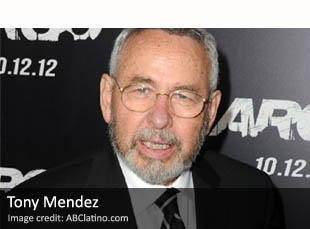
Tony MendezBy IAN ALLEN | intelNews.org |
►►CIA honed ARGO exfiltration skills in India. The Oscar-winning movie Argo has popularized the 1980 exfiltration by the CIA of a group of American diplomats from Tehran. But few know that Tony Mendez, the CIA officer in charge of the Iran operation, cut his teeth exfiltrating CIA targets in India. In his book, titled Argo, Mendez mentions the 1970 exfiltration of a Soviet defector in India codenamed Nestor. He claims that Nestor was a “huge catch” for the CIA, as he provided the Agency with “invaluable intelligence on the KGB’s operations in Central and Southeast Asia”.
►►Ex-CIA officer says al-Qaeda wanted India-Pakistan nuclear war. In his latest book, Avoiding Armageddon: America, India, and Pakistan to the Brink and Back, former CIA officer Bruce Riedel says al-Qaeda helped plan the 2008 Mumbai attacks. Its goal was to “spark a nuclear war between India and Pakistan in order to polarize the world between Islam and the ‘Crusader-Zionist-Hindu’ conspiracy”. But the group’s plan was hampered by India’s restraint and refusal to strike back using force, he argues.
►►Man passing defense info to Pakistan held in India. Reports suggest that Sumer Khan, 34, from Rajasthan’s Jaisalmer district, has been arrested for sending strategic information to Pakistan’s ISI intelligence agency via emails and mobile calls for the past three years. A source said that Khan was caught after his calls to Pakistan were intercepted by Indian military intelligence and Intelligence Bureau. The arrest comes just two days after the conclusion of India’s biggest-ever air exercise, ‘Iron Fist’, in Jaisalmer.

Canadian diplomats spied for the CIA in Cuba, claims new book

Embassy of Canada in Havana, CubaBy JOSEPH FITSANAKIS | intelNews.org |
Several accredited Canadian diplomats were recruited by the United States Central Intelligence Agency to spy on Cuba in the aftermath of the 1962 missile crisis, according to a new book. Authored by Canadian retired diplomat John Graham, the book, entitled Whose Man in Havana? Adventures from the Far Side of Diplomacy, is to be published this week by Penumbra Press. In it, Graham claims that he was among a number of Canadian diplomats stationed in Cuba, who were secretly recruited by the CIA. The US agency had been essentially forced out of the island after Washington and Havana terminated diplomatic relations in 1961, soon after the government of Fidel Castro declared itself a proponent of Marxism. The closure of the US embassy meant that the CIA had no base from which to operate in the Caribbean island. Two years later, in May 1963, US President John F. Kennedy personally asked Canadian Prime Minister Lester Pearson for assistance in intelligence-gathering efforts in Cuba. The Canadian leader consented and, according to Graham, Canadian diplomatic officials actively assisted the CIA until at least 1970. The author states in his book that he himself operated in Cuba for two years, from 1962 until 1964, under the official cover of Political Officer at the Canadian embassy in Havana. Prior to that, he says, he was provided with rudimentary training by the CIA, which consisted of spending “just a few days” at the Agency’s headquarters in Langley, VA. He was then tasked with conducting physical surveillance of Soviet military bases on Cuba and, if possible, identifying weapons and electronic security measures, and noting troop movements. Read more of this post

News you may have missed #793

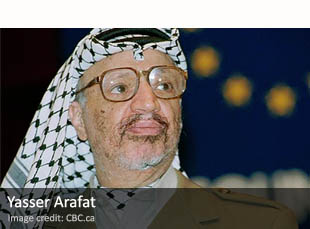
Yasser ArafatBy IAN ALLEN | intelNews.org |
►►Britain recruits tech start-ups for spy gadgets. British security services seem to have decided to widen the net for suppliers of state-of-the-art spyware for “covert surveillance”. Traditionally, British intelligence organizations including MI5 and GCHQ, have relied on a network of trusted contractors. But the change in approach represents an opportunity for burgeoning technology companies. According to a senior Whitehall official, who spoke to The Financial Times, these agencies “are appealing to a wide range of innovators, small and large, and saying: ‘Here are some problems we encounter. Can you solve them?’”.
►►French investigators to exhume Arafat’s remains. Three French investigating magistrates will travel to Ramallah in the West Bank to exhume the remains of the late Palestinian President Yasser Arafat so they can take tissue samples to determine what killed him. New evidence emerged from an investigation in July by the Al Jazeera television network when the Institut de Radiophysique, in Lausanne, Switzerland, said it had discovered significant traces of the rare radioactive element polonium-210 on the late leader’s clothing and toothbrush.
►►Panetta speaks out against book on bin Laden killing. As former US Navy SEAL Matt Bissonnette continues to make headlines about his book, No Easy Day, about the killing of al-Qaeda founder Osama bin Laden, US Defense Secretary Leon Panetta has spoken out publicly on the subject for the first time. The former Director of the CIA said “the American people have a right to know about this operation”. But, he added, “people who are a part of that operation, who commit themselves to the promise that they will not reveal the sensitive operations and not public anything […] when they fail to do that, we have got to make sure that they stand by the promise that they made to this country”.