Eighth person detained in sprawling Taiwanese probe of Chinese spy ring

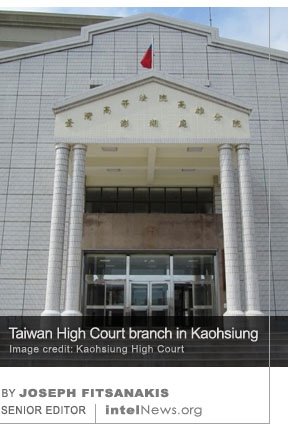
Kaohsiung High Court, TaiwanA SEVENTH PERSON HAS been detained in Taiwan as a result of a broadening investigation into a Chinese spy ring that allegedly provided Beijing with sensitive military intelligence. The existence of the investigation was revealed in January of this year, when the Taiwanese authorities announced the arrests of one retired and six active-duty military officers, all of whom were charged with spying for China.

On January 6 of this year, a retired Taiwanese Air Force colonel, identified only by his last name, Liu, was arrested for spying. According to court documents unsealed at the Taiwan High Court branch in Kaohsiung, Liu retired from the Air Force 2013. Soon afterwards, he began business dealings in China. It was during one of his trips to China when Liu was allegedly recruited by the Chinese government. He then carried out espionage operations on behalf of Beijing for approximately eight years.

Throughout his espionage activities, Liu allegedly used his military contacts to recruit six active-duty Taiwanese Air Force and Navy officers to carry out espionage, in return for monetary payments. The six active-duty military officers were arrested along with Liu on January 6. In April of this year, all seven individuals were formally charged with spying for China, in violation of Taiwan’s Classified National Security Information Protection Act.

Taiwanese government prosecutors alleged that each member of the spy ring received between NT$200,000 and NT$700,000 (approximately US$6,500-23,000) for agreeing to spy for Beijing. As the principal agent, Liu received individual bonuses of between NT$30,000 and NT$100,000 (US$1,000-3,200) each time he gave his Chinese handlers information gathered by one of the members of the spy ring.

On August 16, the Taiwanese government announced that one more individual, referred to as “a field officer” was detained on suspicion of spying for China. The suspect was identified only by his last name, Cheng. He was reportedly arraigned in the Taiwan High Court branch in Kaohsiung, the same court that last January delivered espionage charges against the other seven suspects involved in the spy ring investigation. All eight suspects have been denied bail. Their trial has not yet been set.

Author: Joseph Fitsanakis | Date: 21 August 2023 | Permalink

China arrests government worker who gave CIA ‘core information’ about military

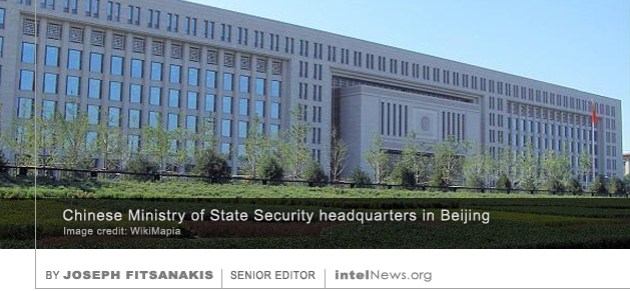
US embassy Rome ItalyA CHINESE GOVERNMENT EMPLOYEE gave “core information” about China’s military to the United States, after he was recruited by a Central Intelligence Agency (CIA) officer in Italy, a Chinese state agency has said. The allegation was made in a statement that was issued on Friday by China’s civilian intelligence agency, the Ministry of State Security (MSS), on its WeChat social media account.
The MSS statement did not specify the period during which the alleged espionage took place. But it named the alleged spy as “Zeng” and described him as a 52-year-old “staff member of a Chinese military industrial group and an important confidential employee” of the Chinese state. According to China’s state-owned newspaper The Global Times, Zeng had been sent to Italy by his employer, presumably in order to pursue graduate studies or receive technical training. While in Italy, Zeng was allegedly accosted by an employee of the United States embassy in Rome, which the MSS identified as “Seth”.

According to the MSS, Seth was a CIA case officer, who befriended Zeng through “dinner parties, outings and trips to the opera”. The Chinese man “developed a psychological dependence” on Seth and was “indoctrinated” by him “with Western values”, the MSS statement claims. Seth eventually convinced Zeng to sign an agreement with the CIA to conduct espionage, after which the Chinese man allegedly received intelligence tradecraft training. Upon returning to China from his stay in Italy, Zeng is alleged to have carried out espionage on behalf of his CIA handlers. The MSS claims Zeng gave his CIA handlers “a great amount of core intelligence” during “multiple secret meetings” with them.

The information Zeng is alleged to have provided to the CIA concerned “key developments about China’s military” to which he had access through his employer. In exchange for this information, Zeng is accused of having received “a huge amount of [financial] compensation” by his CIA handlers. The latter also promised him that they would help his family emigrate to the United States, as per the MSS statement. The spy agency said that Zeng remains in detention while the case is under investigation. The MSS statement also warned other Chinese citizens living or traveling abroad of “the risks and perils” of recruitment by Western spy agencies.

The Reuters news agency said it contacted the United States embassy in Beijing about the MSS allegations, but received no response.

Author: Joseph Fitsanakis | Date: 14 August 2023 | Permalink

China’s intelligence modernization has outpaced military increases: British report

Chinese Ministry of State SecurityTHE MODERNIZATION OF CHINA’S intelligence community is without parallel in recent history and has even outpaced the funding increases given to the Chinese military, a British government report has concluded. According to the same report, the Chinese government spends more on what it perceives as domestic threats than on external targets involving Western countries and their allies.

The redacted version of the report was issued last month by the British Parliament’s Intelligence and Security Committee, which monitors the activities of the British intelligence community. It concentrates on China’s domestic and global ambitions and discusses the role of the Chinese intelligence services in these pursuits. A theme that permeates the 222-page report is that China’s domestic and international ambitions are interconnected, as Beijing does not distinguish between its key national interests in the domestic and foreign domains. Moreover, the report notes that the Chinese intelligence community plays a central role in both facets.

The report notes that China “almost certainly maintains the largest state intelligence apparatus in the world”, dwarfing those of its Western rivals. The latter are forced to concentrate their counterintelligence work “on those aspects that are most demanding”. The official Chinese intelligence agencies are three, the report notes; they consist of the Ministry of State Security and the Ministry of Pubic Security —both of which are civilian— as well as the Strategic Support Force of the Chinese People’s Liberation Army. The latter provides signals intelligence support, whereas the two civilian agencies carry out a host of intelligence and counterintelligence duties.

Nevertheless, the Chinese state’s “whole-of-government” approach on matters of security means that almost every government agency fulfils some type of intelligence-related role. This makes it difficult to calculate with accuracy the full extent of the Chinese intelligence apparatus, the report notes.

Notably, Chinese intelligence agencies are focused primarily on what the Chinese government perceives as domestic threats to its rule, which Beijing has termed “the five poisons”. According to the report, these consist of: the Taiwanese independence movement; the separatist movements in Tibet and Xinjiang; the Falun Gong religious movement; and pro-democracy activism inside China. Intelligence collection and other operations that relate to the so-called “five poisons” include intelligence activities that take place abroad and target Chinese expatriate communities.

It is also worth noting that, according to the report, Beijing spends “almost 20% more on domestic security than on external defence”. Moreover, the rise in expenditures for intelligence infrastructure and operations is impressive by any standards of assessment and “has outpaced even China’s recent dramatic military modernization” of recent years, the report notes. The increase in spending “appears to have led to an improvement in capability”, the report concludes.

Author: Joseph Fitsanakis | Date: 09 August 2023 | Permalink

China sentences US citizen to life for espionage following closed-door trial

Hong KongA CHINESE COURT HAS sentenced a United States passport holder to life in prison on espionage charges, following a brief closed-door trial. However, no information has been made available about the precise charges against him. Closed-door trials are frequent occurrences in Chinese courts, especially in cases relating to national security, which include charges of espionage against the state. However, life sentences are exceedingly rare for espionage cases.
The individual convicted in this case has been named in media reports as John Shing-Wan Leung, 78. He is reportedly a permanent resident of Hong Kong, a special administrative region of China, over which Beijing has near-absolute control. It is not known if Leung was a Chinese citizen at any time in his life. China does not recognize joint citizenship and requires its citizens to drop their Chinese citizenship when swearing allegiance to another country. The Reuters news agency reported on Monday that Leung was at some point a member of two American-based Chinese expatriate groups, which it described as “pro-China”. These are the United States-China Friendship Promotion Association and the United States-China Friendship Association.

Leung is believed to have been arrested in Hong Kong in 2021 by local Chinese counterintelligence officers. He has been held in prison ever since his arrest. A press release issued on Monday by the Intermediate People’s Court in Suzhou, a city located in southern Jiangsu province, 700 north of Hong Kong, said Leung had been found “guilty of espionage”. The press release added that Leung had been “sentenced to life imprisonment and deprived of [his] political rights for life”. However, the statement provided no information about Leung’s alleged crimes, or the country he was found to have spied for.

According to the BBC, the United States embassy in Beijing refused to discuss the details of this case, stating only that the United States government was aware of Leung’s conviction. An embassy spokesperson told the BBC that “the Department of State has no greater priority than the safety and security of US citizens overseas”.

Author: Joseph Fitsanakis | Date: 15 May 2023 | Permalink

In rare public comments, Taiwan spy chief points to 2027 as key in China’s plans

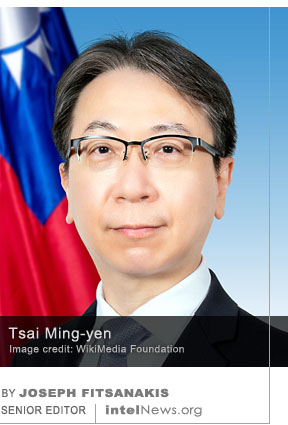
Tsai Ming-yenIN A SERIES OF rare public comments, the director of Taiwan’s primary intelligence agency has singled out 2027 as a year of paramount significance for China’s military plans for Taiwan. On Thursday, Tsai Ming-yen (pictured), director-general of Taiwan’s National Security Bureau (NSB) since February, spoke to an audience of graduating students at Taiwan’s National Chung Hsing University in Taichung City. According to reports, it was the first time in a quarter of a century that an NSB director-general had addressed a university audience.
In addition to his speech at the Chung Hsing University, Director-General Tsai, a former deputy foreign minister and diplomat, gave a rare interview to the United States-based Bloomberg news agency. He refused to weigh in on the ongoing discussion about a timeframe for a possible Chinese invasion of Taiwan. But he singled out the year 2027 as a significant one for Chinese Premier Xi Jinping’s plans to modernize the People’s Liberation Army (PLA).

The Chinese leader first introduced his “PLA Modernization 2035” plan in 2017, describing it as a whole-of-government effort to significantly improve the PLA’s combat capabilities as a step toward achieving China’s long-term goal of becoming a major global military power. Tsai pointed out that the year 2027 will be the 10-year mark into President Xi’s 18-year program of military reforms. Additionally, Xi will most likely be campaigning for a fourth presidential term that year, Tsai said.

In his interview with Bloomberg, Tsai said that President Xi “doesn’t allow any kind of different voice in the Chinese political system”. In essence, therefore, the Chinese leader has been surrounding himself with “a coterie of like-minded officials”. This resulting ‘groupthink’ means that “the risk of making a wrong decision” on pressing issues like Taiwan “will become much higher” in the coming years, he warned. To counter that threat, and to monitor China’s military intentions, Tsai said Taiwan is systematically deepening its real-time cooperation with its “international friends”, especially with the so-called “Five Eyes” alliance, an intelligence-sharing coalition comprising of the United States, United Kingdom, Canada, Australia, and New Zealand.

In a separate development, the United States Director of National Intelligence Avril Haines said on Thursday that the Taiwan Semiconductor Manufacturing Company Ltd (TSMC) would be a major cause for concern in a possible Chinese invasion of Taiwan. The United States and other countries rely overwhelmingly on the TSMC’s production output for the use of semiconductors in civilian and military hardware. Should a Chinese military invasion of Taiwan prevent the TSMC from producing those semiconductors, the resulting impact on the global economy would be “enormous”, possibly in the neighborhood of “between $600 billion to $1 trillion on an annual basis for the first few years”, Haines said.

Author: Joseph Fitsanakis | Date: 05 May 2023 | Permalink

US arrests two over alleged clandestine Chinese police station in New York City

Chinese Ministry of State SecurityTHE UNITED STATES HAS arrested two residents of New York City for allegedly conspiring to create and operate a clandestine police station run by the Chinese government in the borough of Manhattan. The arrests come a month after authorities in Canada launched an investigation into allegations that the Chinese government was running at least two clandestine police stations in Montreal and four more in Toronto.

The allegations first surfaced in a 2022 report by Safeguard Defenders, a Spanish-based non-government organization that focuses on the state of human rights in China. The report, titled “110 Overseas: Chinese Transnational Policing Gone Wild”, claimed that China’s Ministry of Public Security, in association with Chinese diplomatic facilities around the world, operated dozens of clandestine police stations in over 50 countries. Their official mission, according to the report, was to service the needs of Chinese citizens living abroad, as well as visitors from China. However, these clandestine police stations were “actively […] engaging in covert and illegal policing operations” targeting Chinese citizens and expatriates, according to Safeguard Defenders.

On Monday, two New York City residents, Chen Jinping, 59, and Lu Jianwang, 61, were arrested and charged with conspiring to operate as unregistered agents of the People’s Republic of China. They were also charged with obstruction of justice in connection with the Department of Justice’s investigation into their activities. United States government prosecutors allege that Chen and Lu were behind the establishment of a clandestine police station in Manhattan. According to the indictment, the Manhattan police station —the first of its kind in the United States— was operated by China’s Ministry of State Security (MSS). It is reported that the station was shut down by the MSS in late 2022, soon after Chinese officials became aware of an investigation into the activities of the station by the United States Federal Bureau of Investigation.

A representative of the United States prosecutor accused the Chinese government of engaging in a “flagrant violation” of American sovereignty with “actions that go far beyond the bounds of acceptable nation-state conduct”. Meanwhile, Chen and Lu appeared before a federal judge in Brooklyn on Monday. They face up to 25 years in prison if convicted.

Author: Joseph Fitsanakis | Date: 18 April 2023 | Permalink

Canada investigating claims of secret Chinese police stations in Montreal

Chinese embassy of China in CanadaAUTHORITIES IN CANADA ARE reportedly probing claims that the Chinese government is operating at least two “clandestine police stations” in Montreal, which allegedly monitor the activities of Chinese citizens and Canadians of Chinese origin. The announcement comes less than four months after a similar investigation took place into the alleged existence of four illegal Chinese police stations operating in the Toronto area.
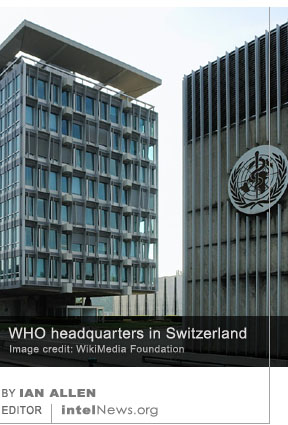
The investigations were sparked by a report issued in 2022 by Safeguard Defenders, a Spanish-based non-government organization that focuses on the state of human rights in China. The report, titled “110 Overseas: Chinese Transnational Policing Gone Wild”, claimed that China’s Ministry of Public Security, in association with Chinese diplomatic facilities, operated dozens of clandestine police stations around the world. Their official mission, according to the report, was to service the needs of Chinese citizens living abroad, as well as visitors from China. At the same time, however, these clandestine police stations were “actively […] engaging in covert and illegal policing operations” against Chinese citizens and expatriates, according to Safeguard Defenders.

Last Thursday, the Royal Canadian Mounted Police (RCMP) field office in Quebec said it was “carrying out police actions aimed at detecting and disrupting […] foreign state-backed criminal activities” in the Montreal area. On the same day, Canadian Prime Minister Justin Trudeau pledged during a Parliamentary session that his administration would “take every measure to protect Canadians from unacceptable actions by hostile authoritarian regimes”.

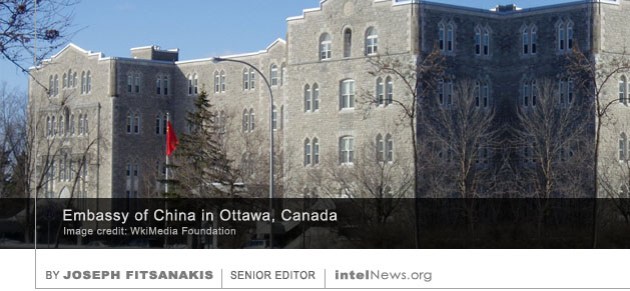
The Chinese embassy in Ottawa did not respond to media requests for comment. Last year, in response to the RCMP’s investigation in Toronto, the embassy had said that the alleged clandestine police stations were service centers run by volunteers and not by Chinese diplomatic or law enforcement staff. It also argued that the mission of these centers were to provide consular services to Chinese citizens in the midst of the disruptions that were caused by the COVID-19 pandemic. In a statement issued last Friday, Chinese Foreign Affairs Ministry spokesperson Mao Ning accused Canada of “sensationalizing and hyping the matter [in order to] attack and smear China”.

Author: Joseph Fitsanakis | Date: 15 March 2023 | Permalink

WHO calls on US and China to release intelligence about origins of COVID-19

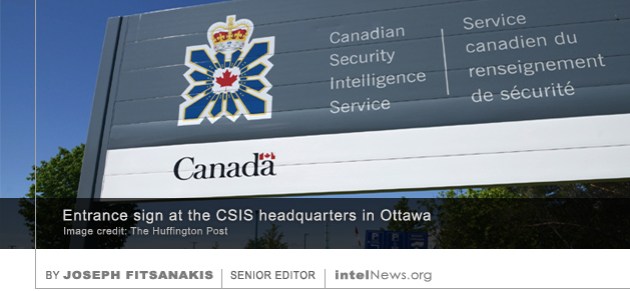
World Health OrganisationTHE WORLD HEALTH ORGANIZATION has called on the United States and China to share what they know about the source of the COVID-19 pandemic. The call, made by WHO’s Director-General Dr. Tedros Adhanom Ghebreyesus and others, came days after United States Federal Bureau of Investigation Director Christopher Wray said in a television interview that COVID-19 “most likely” originated from a Chinese government laboratory.
Wray made the statement last week in a televised interview with Fox News, in response to a question about the origins of the COVID-19 virus. Wray said that, “for quite some time now”, the FBI has “assessed that the origins of the pandemic are most likely a potential lab incident in Wuhan”, a city in central China. Wuhan hosts the Wuhan Institute of Virology, which includes laboratories that specialize on biosecurity and the study of newly emerging infectious diseases. Wray added that Beijing has “been doing its best to try to thwart and obfuscate the work” of the United States in trying to determine the precise origins of the virus.

Late last week, Dr. Maria Van Kerkhove, an infectious disease epidemiologist and the WHO’s technical lead on COVID-19, said the WHO had contacted the United States’ mission to the United Nations in Geneva, Switzerland, to inquire about the information that informs the FBI’s assessment. On Friday, meanwhile, Dr. Tedros called for “any country [with] information about the origins of the pandemic” to come forward. The WHO Director-General went on to say that “it’s essential for that information to be shared with WHO and the international scientific community”.

The WHO also called on China “to be transparent in sharing data and to conduct the necessary investigations and share the results” with the global scientific community, “not so as to apportion blame, but to advance our understanding of how this pandemic started, so we can prevent, prepare for and respond to future epidemics and pandemics”. When asked about the WHO’s own investigation into the origins of COVID-19, Dr. Tedros responded that “all hypotheses on the origins of the virus remain on the table”.

In the meantime, China responded angrily to the FBI director’s comments. Beijing has previously dismissed claims that COVID-19 may have emerged as a result of an accident at a Chinese government-funded lab as a disinformation campaign designed to smear its image and reputation around the world. Last week, Mao Ning, a spokeswoman for China’s Ministry of Foreign Affairs, reacted angrily to allegations that the government of China is responsible for the COVID-19 pandemic. Mao called on the United States to “look to its own biological laboratories scattered across the world when searching for the virus’s source”.

Author: Ian Allen | Date: 08 March 2023 | Permalink

Canadian parliament pressures government to investigate Chinese election meddling

CSIS canadaA KEY COMMITTEE IN the Parliament of Canada passed a motion late last week that calls on the government to investigate allegations of foreign interference in the country’s general elections. Last Thursday’s vote by the Standing Committee on Procedure and House Affairs came soon after its members attended closed-door testimony by senior intelligence officials, which touched on various topics relating to the national security of Canada.

The motion specifically mentioned recent testimony by David Vigneault, Director of the Canadian Security Intelligence Service (CSIS), which is Canada’s primary national intelligence agency. Vigneault told the Procedure and House Affairs Committee that there had been no major efforts by foreign powers to interfere in Canadian elections in 2019 and 2021. As a result, the integrity of the election processes and results had not been compromised, Vigneault said.

However, the CSIS director added that an investigation had been launched into allegations that China carried out concerted efforts to meddle in these elections. Vigneault was referring to a series of media reports in the past year, which have alleged that China employed its embassy in Ottawa, as well as its network of consulates across China, to carry out a campaign of interference into Canadian political life, and election campaigns in particular. Much of the momentum behind these allegations comes from the opposition Conservative Party of Canada. Some senior Conservative officials have explained their electoral defeat by the ruling Liberal Party as a result of Chinese interference.

All five Liberal Party lawmakers in the Procedure and House Affairs Committee voted against the motion to launch a broad public inquiry into alleged Chinese electoral interference. However, they were outnumbered by the six opposition lawmakers, who united in voting for the motion. The motion is not binding. However, as a report in the Reuters news agency notes, it places pressure on the government of Prime Minister Justin Trudeau to address these concerns. Trudeau has acknowledged that China did try to interfere in the Canadian general elections, but has insisted that the election results were not affected by these efforts.

Author: Joseph Fitsanakis | Date: 06 March 2023 | Permalink

New paper sheds light on Russian and Chinese influence in Italy

Russia Italy Putin ConteA NEW PAPER, PUBLISHED by the United Kingdom’s Royal United Services Institute (RUSI) for Defence and Security Studies, sheds light the complex relationship between Italy and the West’s two principal adversaries, Russia and China. Italy is a major global economic power. It is a prominent member of the Group of Seven (G7), which collectively account for more than 50 percent of global net wealth. It is also a member of the North Atlantic Treaty Organization (NATO) and the European Union (EU).
Despite —or perhaps because of— its central place in the Western alliance, Italy has long been a leading advocate for cooperation and dialogue between the West and Russia. In 2019, it became the first G7 member and the first major European Union power to sign a Memorandum of Understanding with China on Beijing’s Belt and Road Initiative. Additionally, the Italian private sector has been far more hesitant than those of other Western countries to abandon Russia following its invasion of Ukraine, with only a single Italian company having completely exited the Russian market since February of this year.

According to two Italian researchers, RUSI Senior Associate Fellow Raffaello Pantucci, and Eleonora Tafuro Ambrosetti, of the Italian Institute for International Political Studies (ISPI), Italy’s cooperative attitude toward China and Russia has led some to accuse Rome of being a “Trojan horse in Europe”. But in their research paper published by RUSI earlier this week, Pantucci and Ambrosetti argue that the reality is far more complex, especially in the case of Italian-Russian relations. They point out that Italy has, in fact, been a leading voice in favor of the imposition of harsh sanctions on Moscow in response to its invasion of Ukraine. Currently the Italian state is actively seeking to disengage its energy-import sector from Russia.

Strategy of Engagement

The research paper, entitled “Russian and Chinese Influence in Italy”, argues that Italy’s tendency to “hedge between its close transatlantic ties and its longstanding connections with Moscow and Beijing” is not new. In fact it reflects a longstanding Italian strategy, which tends to remain relatively constant and “does not change according to the political color of the government in charge” in Rome. As a result, Italy’s relations with Russia and China “show a roughly consistent pattern” in the post-Cold War era, as Rome is largely oriented “toward engagement” with both Moscow and Beijing. Read more of this post

Gathering intelligence on the world’s largest secret society: the Chinese government

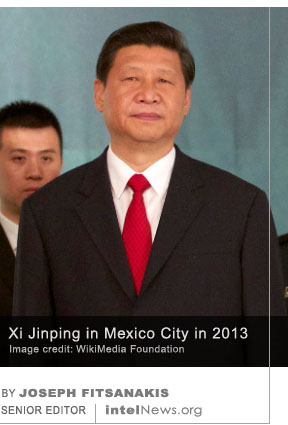
Xi JinpingINTELLIGENCE OBSERVERS OFTEN REFER to the Communist Party of China (CPC) as “the world’s largest secret society”. Barring brief periods of relative openness in the late 1990s and early 2000s, the closed decision-making system of the CPC has presented Western intelligence analysts with cascading intractable enigmas for over half a century. This problem has become even more pressing under the decade-long leadership of Xi Jinping, during which the imposition of rigorous counterintelligence measures have turned China into a text-book hard intelligence target.
How does one manage to monitor developments in the inner sanctum of the Chinese state in the face of such formidable obstacles? According to two intelligence experts, it is still possible to gather and analyze actionable intelligence on China, by adopting the right approach. In their article “Beijingology 2.0: Bridging the ‘Art’ and ‘Science’ of China Watching in Xi Jinping’s New Era”, published on Monday in the International Journal of Intelligence and CounterIntelligence, Bjørnar Sverdrup-Thygeson and Stig Stenslie outline the main contours of such an approach. China specialist Sverdrup-Thygeson is Senior Research Fellow at the Norwegian Institute of International Affairs. Stenslie is Research Director and Head of the Centre for Intelligence Studies at the Norwegian Defense Intelligence School.

From Beijingology to Beijingology 2.0

The two authors explain that the Chinese intelligence riddle is not new. In fact, China-focused intelligence practitioners have long referred to their work as “Beijingology”. The term refers to the art (as opposed to science) of studying the Chinese closed political system, based on widely divergent sources of intelligence. These range from “rumor mills among Beijing diplomats” and speculations on social media, to social-science-based quantitative studies. Sverdrup-Thygeson and Stenslie explain that the two extremes of Beijingology are invariably disconnected from what is actually happening on the ground in China, and are thus of limited value.
The key, they argue, is a well-balanced mixture of approaches, which they term “Beijingology 2.0”. This approach combines traditional Beijingology methods with a host of advanced and innovative tools in social science research, such as discourse analysis and textual analysis of official Chinese government documents. The latter “offer one of very few windows into Chinese elite-level political dynamics” and thus cannot be ignored. Like all bureaucratic regimes, the Chinese political system produces copious amounts of official information in the form of public documents, speeches, and CPC-authorized statements. Such sources include daily editions of the People’s Daily (the CPC’s official media organ) and the People’s Liberation Army Daily. Read more of this post

In rare speech, Australian intelligence chief stresses urgent need to recruit more spies

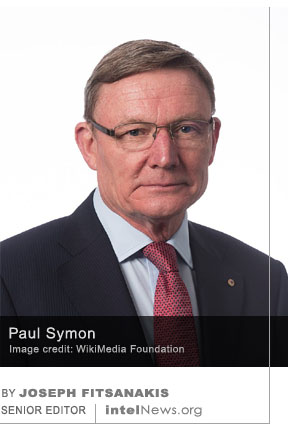
Paul SymonAUSTRALIAN INTELLIGENCE MUST recruit foreign spies with more urgency than at any time since the opening years of the Cold War, according to the head of Australia’s main foreign intelligence agency. Paul Symon, director of the Australian Secret Intelligence Service (ASIS), was speaking at a public event to mark the 70th anniversary of the organization’s history. It was a rare public speech by the head of Australia’s secretive main foreign intelligence service.

Symon’s talk was hosted in Sydney by the Lowy Institute, an independent Australian think-tank that focuses on international affairs. During his talk, which was made available afterwards on the Lowy Institute’s website, Symon spoke about a range of issues relating to Australia’s geopolitical priorities and their connection to intelligence operations. He told the audience that the primary task of ASIS, which is to recruit foreign subjects to spy on behalf of Australia, remained as crucial as ever.

He added, however, that a growing number of pressing concerns made “the need to recruit new spies” more essential than ever before. According to Symon, ASIS needs to “recruit and work with even more vigor and urgency than at any other point in our 70-year history”. In this task, China remains a strategic focus for ASIS, given its role in the region. Symon claimed there were signs that increasing numbers of Chinese state “officials [and] individuals” were “interested in a relationship” with ASIS. This was because many Chinese are becoming concerned about what he described as the rise of “an enforced monoculture” in China, and wish to stop it, said Symon.

Later in his speech, the ASIS director touched in broad terms on the challenge posed by technology on human intelligence (HUMINT) operations, in which ASIS specializes. He described these challenges as “extraordinary”, and said they resulted from an interaction between “a complex strategic environment [and] intensified counter-intelligence efforts” by Australia’s adversaries, as well as a host of “emergent and emerging technologies”. These technologies are in many ways posing “a near-existential” risk to the types of HUMINT operations carried out by ASIS, as the organization’s collection activities run the risk of becoming “increasingly discoverable”, said Symon.

Author: Joseph Fitsanakis | Date: 10 May 2022 | Permalink

Australian spies helped expose secret pact between China and Solomon Islands

Honiara Solomon IslandsAUSTRALIAN INTELLIGENCE HAD A role in the mysterious disclosure of a secret memorandum about a controversial defense pact between China and the Solomon Islands, which is causing consternation in the West. Western leaders claim that the pact will turn the tiny Melanesian nation into a logistical hub for Chinese warships in a strategic region of the Pacific Ocean. The pact also stipulates a training role for Chinese police and military personnel, who are called to “assist […] in maintaining social order” in the island nation.

The Solomon Islands is an archipelago consisting of nearly 1,000 islands of various sizes in an area northwest of Vanuatu and east of Papua New Guinea. It gained its independence from Britain in the mid-1970s. Australia has historically provided security for this island nation of 700,000 inhabitants, which has no standing military. However, China has become a dominant player in Solomon Islands politics in recent years. In 2019, the government of the island nation abruptly withdrew its diplomatic recognition of Taiwan and aligned itself with Beijing.

The move sparked concerns in Malaita, the Solomons’ largest island, which is home to a sizeable Chinese community. There were demonstrations against Prime Minister Manasseh Sogavare in the capital of the Solomon Islands, Honiara (pictured). Eventually, the demonstrators attempted to storm the Parliament and depose Sogavare’s administration by force. There were also attacks on Chinese-owned businesses in the capital, as well as on a number of police stations, which were set on fire. Eventually, Australian, New Zealander, Papuan and Fijian troops restored order in downtown Honiara.

In late March, the text of a defense pact between the Solomon Islands and China appeared online. The pact centers on law enforcement and military cooperation, involving training programs and joint exercises between the two nations. Some Western nations, including New Zealand, Australia and the United States, are concerned about the possibility that China could use the agreement to build a military base in the Solomon Islands. The island nation is strategically located near Australia and New Zealand, as well as near the island of Guam, which hosts a large American military base.

On Sunday, several Australian newspapers, including The Sydney Morning Herald and The Age reported that intelligence agencies in Australia were aware of plans by the governments of China and the Solomon Islands to sign the pact. According to “[m]ultiple government and security sources”, Australian spies had known about the pact “for months”. In March, they decided to “encourage a leak from within the Solomons” in an effort to sabotage the planned deal. According to reports, the hope was that the revelation would “build domestic and international pressure to get the Solomons to change course”.

It appears, however, that the leak of the secret document was not sufficient to dissuade the government of the Solomon Islands to back away from the agreement. Solomons Prime Minister Manasseh Sogavare eventually signed the agreement with China, arguing that it would “improve the quality of lives” of his people and would “address soft and hard security threats facing the country”.

Author: Joseph Fitsanakis | Date: 25 April 2022 | Permalink

China steps up ‘people’s war’ against alleged Western espionage offensive

Supreme People’s ProcuratorateCHINESE STATE-OWNED MEDIA has stepped up warnings of an alleged Western espionage offensive, to mark China’s annual “national security education day”, a new initiative promoted by the Chinese Communist Party (CPC). The decision to designate April 15 “national security education day” was adopted by the CPC in 2015, during its 12th National People’s Congress. Since then, the Chinese government has promoted the day as an effort to create a “positive atmosphere of national security” across the nation.


In recent months, Beijing has called on the country’s citizens to combat an alleged espionage offensive against China. According to Chinese officials, the alleged offensive is being led by the United States. Chinese citizens are being called to “wage a people’s war” against foreign espionage, by reporting suspicious activities by foreigners and locals alike to the authorities.

The call to war against alleged espionage follows a resolution by the CPC in November of last year, which critiqued the country’s inability to maintain a high level of national security. The resolution called on various elements of the government and general population to address the nation’s “ability to respond to various major risks […] and the coordination mechanisms for maintaining national security”. Notably, the resolution described these efforts as “currently not strong”.

On Friday, the Supreme People’s Procuratorate (SPP), China’s highest government agency responsible for investigating and prosecuting criminal activity, issued a call to Chinese citizens to be watchful of using “popular social media platforms”. The SPP noted that such platforms had become “a hotbed for the infiltration of foreign hostile forces”. The warning made special mention of employment and dating websites, which prayed on “students, migrant workers and unemployed youth who know little about national security”.

Author: Ian Allen | Date: 18 April 2022 | Permalink

Leaked plan for China-Solomon Islands security alliance raises concerns in the Pacific

Manasseh Sogavare Solomon IslandsA LEAKED PLAN FOR a security alliance between China and the small Melanesian nation of the Solomon Islands has sparked concerns about a large-scale military buildup by regional powers in the South Pacific. The draft agreement, which was leaked online last week, appears to turn the Solomon Islands into a logistical hub for Chinese warships. It also stipulates a training role for Chinese police and military personnel, who are called to “assist […] in maintaining social order” in the island nation.

The Solomon Islands is an archipelago consisting of six major and nearly 1,000 smaller islands in an area northwest of Vanuatu and east of Papua New Guinea. It gained its independence from Britain in the mid-1970s. Australia has historically provided security for this island nation of 700,000 inhabitants, which has no standing military. However, China has become a dominant player in Solomon Islands politics in recent years. In 2019, the government of the island nation abruptly withdrew its diplomatic recognition of Taiwan and aligned itself with Beijing.

The move sparked concerns in Malaita, the Solomon Islands’ largest island, which is home to a sizeable Chinese community. There were demonstrations against Prime Minister Manasseh Sogavare (pictured) in Honiara, the capital of the Solomon Islands. Eventually, the demonstrators attempted to storm the Parliament and depose Sogavare’s administration. There were also attacks on Chinese-owned businesses in Honiara, as well as on a number of police stations, which were set on fire. Eventually, Australian, New Zealander, Papuan and Fijian troops restored order in Honiara.

Tensions have risen again in recent weeks, however, after Sogavare’s government signed a memorandum of understanding (MOU) with China. The memorandum centers on law enforcement and military cooperation, involving training programs and joint exercises between the two nations. The Solomon Islands government described the MOU as “necessary” to allow it to quell “recurring internal violence” in Honiara and elsewhere. China’s Ministry of Foreign Affairs described the MOU as an agreement that “aims to maintain the safety of people’s lives and property”. Read more of this post