US Defense Intelligence Agency responds to claims it was asked to spy on protesters
June 8, 2020 Leave a comment
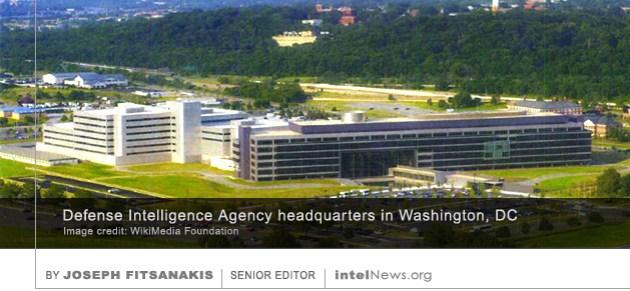 The United States Defense Intelligence Agency, a Pentagon organization tasked with collecting foreign military secrets, has rejected reports that it is spying on protestors inside the country. However, it confirmed that it has set up an “internal coordination group” to respond to “requests for information” by the Department of Defense. This development follows reports that some DIA employees communicated their concerns about being asked to spy domestically to the organization’s director last week.
Several government agencies are reportedly involved in monitoring the waves of protests that have reputed throughout the United States in recent weeks, following the death of George Floyd. Floyd, 46, died on May 25 while in police custody in Minneapolis. His death, which was captured on video by a bystander, has prompted nationwide calls for police accountability and regulation of excessive force by police officers, especially against members of minority groups.
The administration of US President Donald Trump has responded to the demonstrations —some of which have turned violent— with a show of force involving a wide range of federal law enforcement agencies. This is especially true in the nation’s capital, where military personnel have been repeatedly deployed to help police monitor and control the protests. Earlier this month, BuzzFeed News reported that the Trump administration authorized the Drug Enforcement Administration to “conduct covert surveillance” and collect intelligence on individuals and groups participating in the protests.
Now Yahoo News reports that some DIA employees are wondering whether their agency might follow suit. The DIA operates under the US Department of Defense and collects foreign military intelligence. Like the Central Intelligence Agency, the DIA is prevented by law from spying domestically. However, its personnel can support domestic intelligence efforts, providing they are detailed to a domestic law enforcement agency for specific operations or tasks.
According to Yahoo News’s Jenna McLaughlin, the possibility that DIA personnel might be assigned to domestic intelligence tasks relating to the nationwide protests was discussed last week during an agency-forum. The unclassified forum —called a “virtual town hall” was led last Wednesday by DIA Director Lt. Gen. Robert Ashley. McLaughlin cites “two sources” who were “briefed on what happened during the town hall”. They said that Gen. Ashley was asked by a DIA employee about the agency’s position on domestic intelligence operations. “We have been told that DIA is setting up a task force on ‘unrest’ in our country”, said the employee. “Is this true? Is it legal given intelligence oversight? What options will there be for employees who are morally opposed to such an effort?”
According to McLaughlin, the DIA director responded that the agency’s “core mission is foreign intelligence” and that it is “focused on the foreign nexus”. Gen. Ashley’s words were interpreted to mean that the DIA had been asked to investigate possible interference in the protests by foreign intelligence agencies —possibly in a manner similar to the meddling by Russian spies in the 2016 US elections. He added that the DIA’s Office of the General Counsel had “reviewed the issue to ensure that [the agency] was in compliance with the law”. However, Gen. Ashley did not explain whether the DIA had proceeded to carry out such an investigation.
On Saturday, DIA spokesman James M. Kudla told Yahoo News that the agency had set up “an internal coordination group to respond to increased and appropriate Department requests for information”. However, he added that “the mission of the Defense Intelligence Agency is to provide intelligence on foreign militaries to prevent and win wars”. He went on to say that “any claims that DIA has taken on a domestic mission are false”. The “DIA has not established any task force related to the current domestic situation”, he said.
► Author: Joseph Fitsanakis | Date: 08 June 2020 | Permalink
 The former president of Argentina, Mauricio Macri, has been indicted as part of a widening investigation into a domestic spying program, which allegedly targeted opposition politicians, journalists and other public figures. The alleged espionage took place between 2015 and 2019, when Macri occupied the country’s highest office.
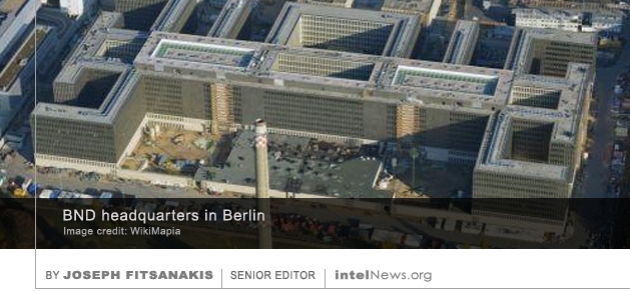 Germany’s Federal Court of Justice has ruled that the country’s intelligence agencies are not entitled to spy en masse on the telecommunications exchanges of foreign citizens. The ruling comes in response to a lawsuit filed by several journalist groups, including the German chapter of Reporters Without Borders. The groups partnered with the German-based Society for Civil Rights and argued in their lawsuit that existing law did not prevent German spy agencies from spying at will on the communications of journalists. This could potentially allow the intelligence agencies to identify trusted sources that journalists use in their work, and even share that information with intelligence agencies of other countries, they argued.
 Foreign spies are known to pose as journalists, which is why journalists should not be exempted from national security investigations, according to testimony by a senior Australian counterintelligence official. The testimony was given on Wednesday at a public hearing held in the Australian parliament to address a
 For the past year, the Netherlands has had a new law governing its two secret services, the AIVD and the MIVD. The new Intelligence and Security Services Act (Wet op de inlichtingen- en veiligheidsdiensten or Wiv) was and still is heavily criticized, especially because it allows untargeted access to cable-bound telephone and internet traffic. Under the previous law, which dates from 2002, the intelligence services were only allowed to conduct bulk interception of wireless transmissions, like satellite and radio communications —besides of course the traditional targeted telephone and internet taps aimed at individual targets.
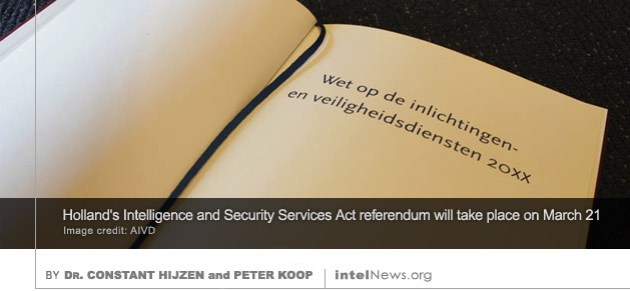 On March 21, the Dutch public cast their vote about the new Intelligence and Security Services Act, in Dutch
 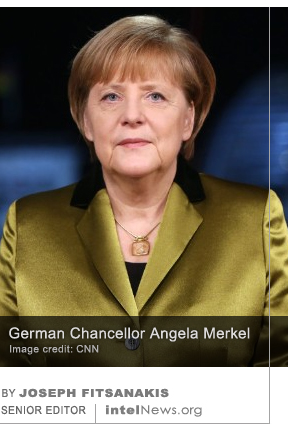 A lengthy parliamentary report on American intelligence activities in Germany was presented last week in Berlin, but was condemned by opposition parties as insufficient and incomplete, prompting calls for a new investigation. The parliamentary probe was initiated in 2013, following a series of
 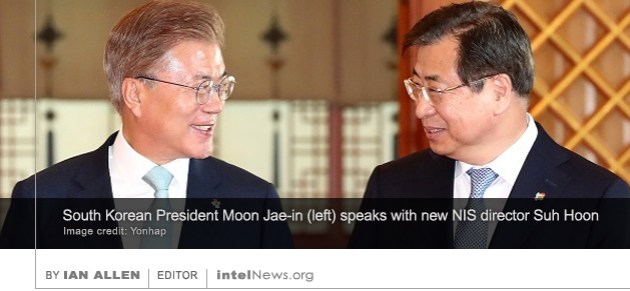 The new president of South Korea has officially banned the country’s spy agency from engaging in domestic intelligence gathering, in a move that some say signals an era of sweeping security reforms in the country. South Korea’s intelligence agency, the National Intelligence Service (NIS) fell into disrepute in recent years, after many of its officers were found to have secretly sided with conservative political candidates for public office. In 2015, the NIS’ former director, Won Sei-hoon, was
 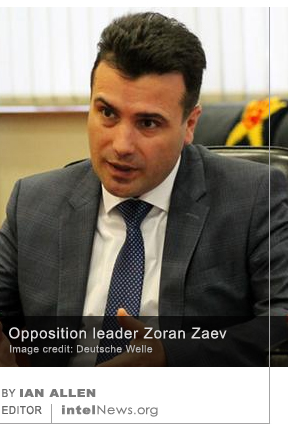 Several former and current intelligence officers, including a former director of the national spy service, have appeared in court in Macedonia, accused of illegally wiretapping thousands of people on orders of the government. The wiretap scandal has sparked the deepest political crisis in the impoverished Balkan country, which has existed since declaring independence from Yugoslavia in 1991.
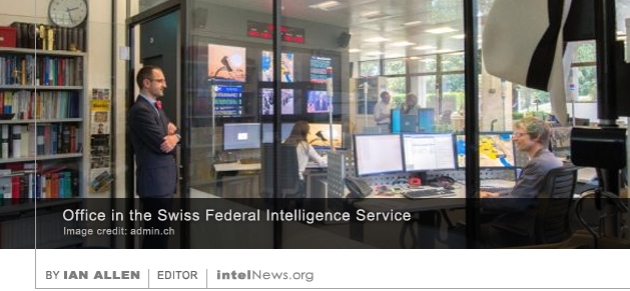 Voters in Switzerland have strongly approved a proposed law that aims to expand the surveillance powers of Swiss intelligence agencies. The move is uncharacteristic of the Swiss, who have historically been skeptical of giving far-reaching surveillance powers to their government. In the late 1980s, Swiss public opinion was shocked by the revelation that the country’s Federal Military Department had spied without permission on tens of thousands of Swiss citizens for many decades under a top-secret project codenamed P-27. In response to the revelations, P-27 was ended, the Swiss intelligence agencies were reorganized, and stricter parliamentary controls were imposed on their activities. Today, even CCTV cameras are rarely used in Switzerland, while Google has not been given permission to incorporate the country’s streets into its Streetview application due to strict local privacy laws.
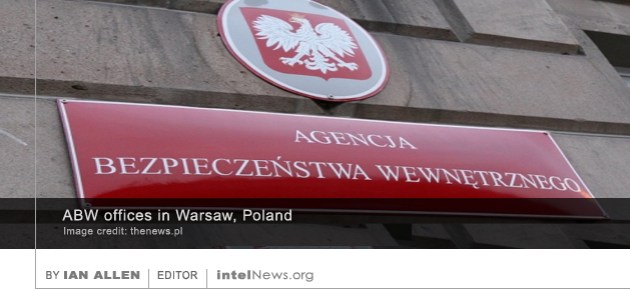 Over 50 journalists and their contacts were systematically spied on by the Polish intelligence services between 2007 and 2015, according to the former director of an anti-corruption watchdog. Until 2009, Mariusz Kamiński led the Central Anti-Corruption Bureau, which was set up by the office of the Polish Prime Minister in 2006 to address corruption in the country. The body is also responsible for monitoring the operations of Poland’s intelligence services, including the Internal Security Agency (ABW).
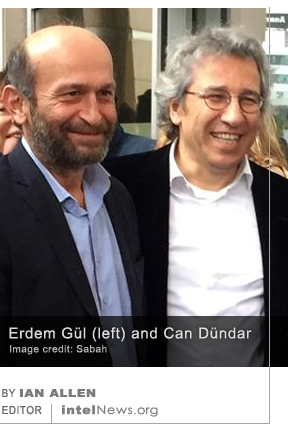 Two leading Turkish journalists, who claimed in a series of articles that Ankara has been arming militant Islamists in Syria, are facing espionage charges for “airing Turkish state secrets”. The two, Can Dündar and Erdem Gül, work for Cumhuriyet, (The Republic), Turkey’s oldest newspaper, which typically voices staunchly secularist views representing the center-left of the political spectrum. Last year Dündar, who is the paper’s editor, and Gül, who serves as the paper’s bureau chief in Ankara, published a series of articles claiming that the Turkish government was secretly supporting Salafi Jihadist groups in Syria.
 A government watchdog in Canada is preparing to hold a series of closed-door hearings to weigh accusations that the country’s intelligence services illegally spied on law-abiding activists opposing the construction of oil pipelines. The British Columbia Civil Liberties Association (BCCLA) sued the Royal Canadian Mounted Police (RCMP) and the Canadian Security Intelligence Service (CSIS) in February 2014,






 intelNews.org
Cell phones of leading Polish opposition figures hacked by government, group claims
December 27, 2021 by Joseph Fitsanakis 3 Comments
The PiS is a populist pro-Russian party that opposes many of the core policies of the European Union, of which Poland is a member. In contrast, the Civil Coalition is pro-Western and supports Poland’s integration into the European Union. In 2019, while the two parties were competing in a feverish electoral campaign, Poland’s state-owned television aired a number of texts acquired from Brejza’s phone, in what the opposition decried as a “smear campaign”. Eventually, the PiS won the election with a narrow majority.
The information about Brejza’s cell phone hack was revealed last week by Citizen Lab, a research unit of the University of Toronto’s Munk School of Global Affairs and Public Policy, which focuses on information technology, international security and human rights. According to the report, at least three senior figures in the Civil Coalition were under telephonic surveillance throughout the election campaign. Brejza’s cell phone was breached over 30 times between April and October of 2019, according to Citizen Lab. The other two victims of the surveillance operation were Ewa Wrzosek, a public prosecutor and leading critic of the PiS, as well as Roman Giertych, an attorney who represents leading members of the Civic Coalition.
The report claims that the surveillance against the Civil Coalition members was facilitated by Pegasus, a controversial spyware that is sold to governments around the world by NSO Group Technologies, an Israeli digital surveillance company based near Tel Aviv. Earlier this year, the United States government blacklisted NSO Group Technologies, in a move that surprised many in Israel and beyond. Meanwhile, on December 24, the Polish government denied it had any role in the phone hacking affair. Poland’s Prime Minister, Mateusz Morawiecki, dismissed the Citizen Lab revelations as “fake news”.
► Author: Joseph Fitsanakis | Date: 27 December 2021 | Permalink
Filed under Expert news and commentary on intelligence, espionage, spies and spying Tagged with cellular telephony, Civic Coalition (Poland), civil liberties, espionage, Ewa Wrzosek, Israel, Krzysztof Brejza, Law and Justice Party (Poland), News, NSO Group Technologies, Pegasus software, Poland, Roman Giertych