News you may have missed #697: US edition
March 19, 2012 1 Comment
 By IAN ALLEN| intelNews.org |
►►What happens when CIA couples divorce? One retired CIA senior paramilitary officer, who served for more than two decades and lives in Virginia, said he was told several years ago that the divorce rate for the agency’s operations division was astonishingly high. But unlike the Pentagon, which studies how often service members split up, and knows, for instance, that 29,456 of 798,921 military couples divorced last year, the CIA does not keep official tabs on its employees’ divorce rates.
►►Spies exchange tips in the cloud. While some US federal agencies shy away from cloud computing for fear of losing control over their data, the intelligence community and military increasingly are turning to networked services expressly to exert tighter security restraints, according to Jim Heath, Senior Science Adviser for the National Security Agency.
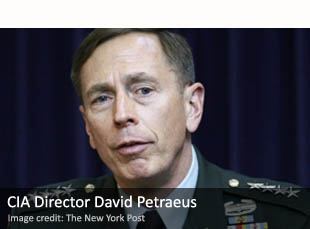
►►CIA Chief: We’ll spy on you through your dishwasher. More and more personal and household devices are connecting to the internet, from your television to your car navigation systems to your light switches. CIA Director David Petraeus cannot wait to spy on you through them. Earlier this month, Petraeus mused about the emergence of an “Internet of things” —that is, wired devices— at a summit for In-Q-Tel, the CIA’s venture capital firm. “‘Transformational’ is an overused word, but I do believe it properly applies to these technologies”, Petraeus enthused, “particularly to their effect on clandestine tradecraft”.









 intelNews.org
News you may have missed #819 (UKUSA edition)
December 25, 2012 by Ian Allen Leave a comment
►►Aussie spies’ exemption from Freedom of Information laws to end? Currently, all Australian intelligence agencies are exempt from the operation of federal Freedom of Information (FOI) legislation that allows the public and journalists to seek access to government records. But now Australian Information Commissioner John McMillan has called for the intelligence agencies to no longer be exempted from FOI laws. Professor McMillan and FOI Commissioner James Popple have made the recommendation in a 97-page submission to the review of FOI laws by former Defence Department secretary and diplomat Allan Hawke.
►►US spy agencies move towards single super-cloud. The US intelligence community is developing a single cloud computing network to allow all its analysts to access and rapidly sift through massive volumes of data. Now in its eighth month, the goal of the effort is to connect the Central Intelligence Agency’s existing cloud to a new cloud run by the National Security Agency. This NSA-run network consists of five other intelligence agencies and the FBI. Both of these clouds can interoperate, but the CIA has its own unique needs because it must work with human intelligence, which necessitates keeping its cloud slightly separate, according to Charles Allen, formerly Undersecretary of Homeland Security for intelligence and analysis.
►►Canadian Army struggles with intelligence-gathering. The Canadian Army is trying to hold on to its intelligence-gathering capability and its ability to disrupt spying in the face of budget strain, according to documents from the Canadian Department of National Defence. The Canadian Press, which obtained the documents, says the Army is “anxious to protect HUMINT network and to better resource its counterintelligence abilities”, but is worried that its shrinking budget in the post-Afghanistan War era will cause “degradation” in those disciplines.
Filed under Expert news and commentary on intelligence, espionage, spies and spying Tagged with 0 Aussie spies' exemption from Freedom of Information laws to end, 0 Canadian Army struggles with intelligence-gathering, 0 US spy agencies move towards single super-cloud, Allan Hawke, Australia, Canada, Charles E. Allen, CIA, cloud computing, Department of National Defence (Canada), Freedom of Information (Australia), government secrecy, intelligence funding, intelligence legislation, James Popple, John McMillan, military intelligence, News, news you may have missed, NSA, Office of the Information Commissioner (Australia), United States