Lebanon claims arrests of five Israeli spies holding third country passports

GDGS LebanonThe security services of Lebanon announced on Wednesday that they had arrested five foreign nationals who were allegedly spying of Israel. A brief statement issued by Lebanon’s General Directorate of General Security (GDGS, also known as the General Security Directorate) said the five individuals were members of a “spy ring” set up by the Mossad, Israel’s external intelligence agency. The five —three men and two women— are accused of contacting Israeli embassies in countries in the Middle East, Europe and Asia, with the aim of passing information about domestic Lebanese affairs.

The statement from the GDGS said the alleged spy ring consisted of two male holders of Lebanese passports, a Palestinian Arab man (passport not specified), and two women with Nepalese passports. It said that the five foreigners were interrogated and “confessed to the charges”, which include “spying for Israeli embassies abroad”. According to articles in the Lebanese media, the members of the alleged spy ring admitted that they had dialed telephone numbers that were operated by the embassies of Israel in: Amman, Jordan; Ankara, Turkey; London, United Kingdom; and Kathmandu, Nepal. The reports state that the five foreigners said the reason they contacted the Israeli embassies was to “pass on information”, but no specifics were offered.

According to An Nahar, Lebanon’s leading daily newspaper, the two Nepalese women had been tasked with recruiting other Nepalese women working in Israel as maids or nannies. The recruits were allegedly instructed to call telephone numbers belonging to Israel’s embassy in Nepal and share information about their employers’ activities. No information has been given about the identity and occupation of those who employed the domestic workers. The GDGS statement said that the agency was seeking to arrest “the rest of the culprits”, but did not specify whether these were members of the same alleged spy ring.

Author: Ian Allen | Date: 26 January 2017 | Permalink

Russian official accuses US of trying to blackmail Russian diplomat

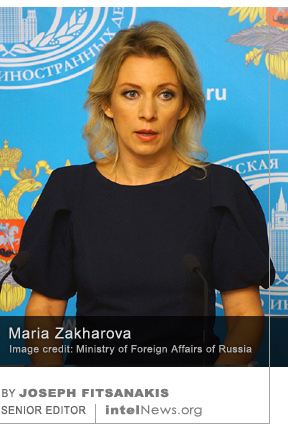
first-post-vA senior Russian official has accused the United States Federal Bureau of Investigation of trying to blackmail a Russian diplomat who was attempting to purchase anti-cancer drugs in an American pharmacy. The allegation was made Sunday on live Russian television by Maria Zakharova, spokeswoman for Russia’s Ministry of Foreign Affairs. She was being interviewed on Sunday Night with Vladimir Solovey, a popular politics roundtable show on Russia’s state-owned Rossiya 1 television channel. Zakharova told Solovey that, a few years ago, the Russian government authorized one of its diplomats in the United States to purchase several thousand dollars’ worth of anti-cancer drugs. The drugs were to be used by Yevgeny Primakov, Russia’s prime minister in the late 1990s, who was battling liver cancer.

According to Zakharova, the Russian diplomat was supplied with funds through an official money transfer from Moscow. Meanwhile, Primakov’s “health certificates and medical prescriptions” were supplied to a pharmacy in Washington, DC, where the Russian diplomat purchased the medicine. However, shortly after the Russia diplomat completed his purchase, he was accosted by American intelligence officers —presumably from the Federal Bureau of Investigation— who demanded to speak with him. The diplomat was then allegedly taken to the basement of the pharmacy, where, according to Zakharova, there was no cellular reception. The Russian diplomat was thus unable to contact his superiors at the Russian embassy. Zakharova claims that the two American officers kept the diplomat in the basement “for an hour” and attempted to turn him into a double agent, by accusing him of “illicit drug trafficking” and threatening to expel him from the country.

Zakharova said the Russian diplomat refused to cooperate and was allowed to return to the Russian embassy. However, the drugs were confiscated and the money paid by the diplomat to the pharmacy has not been “returned to this day”, she said. Eventually, according to Zakharova, the diplomat was deported from the United States, despite the intervention of Secretary of State John Kerry, who stepped in to try to resolve the episode. Primakov died in 2015 of liver cancer. The United States government and the Russian embassy in Washington, DC, did not comment on Zakharova’s allegations.

Author: Joseph Fitsanakis | Date: 17 January 2017 | Permalink
Pakistani man sought out assassination targets for Iran, says Germany

Reinhold RobbeAuthorities in Germany have pressed espionage charges against a Pakistani man who allegedly spied for Iran and even compiled lists of potential targets for assassination. The man, who has been identified in media reports only as “Syed Mustafa H.”, is a 31-year-old worker at the German Aerospace Center in the northern German city of Bremen. He is also reportedly a graduate of the Materials Science and Production Engineering department of the Universität Bremen. According to court documents, he is believed to have been spying for Iranian intelligence since the summer of 2015. It appears that the Federal Office for the Protection of the Constitution (BfV), Germany’s domestic intelligence agency, had been aware of the man’s espionage activities for at least a year prior to his arrest.
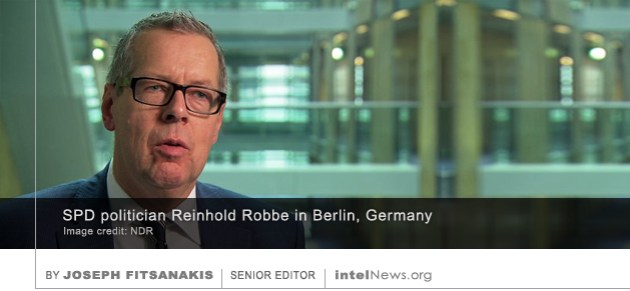
German media, including the newspapers Süddeutsche Zeitung and Die Zeit, as well as public broadcasters Taggesschau, WDR and NDR, report that Syed Mustafa H.’s main task was to compile lists of potential assassination targets. These included prominent Jews or German-Israelis living in northern Germany. Among them was Reinhold Robbe, a politician with the center-left Social Democratic Party (SPD), who served for a number of years as president of the German-Israeli Congress (DIG). According to reports, the Pakistani spy had compiled detailed maps of Robbe’s daily movements, which outlined his travel routines and the routes he took from his home to the DIG headquarters in Berlin. German officials believe that the type of surveillance that Syed Mustafa H. carried out against Robbe indisputably leads to the conclusion that the politician’s assassination was being planned.

Reports in the German media suggest that Syed Mustafa H.’s work was a small part of a much broader operation by Iranian intelligence. The operation aims to identify prominent individuals throughout Europe, who have Israeli connections. These individuals can be targeted during a future conflagration between Israel and Iran, or in retaliation to an Israeli intelligence operation against Tehran. If Syed Mustafa H. is found guilty of targeting Robbe, it will mark the first proven case of a German political figure who has been targeted for possible assassination by an Iranian intelligence agency.

Author: Joseph Fitsanakis | Date: 10 January 2017 | Permalink

Greece jails member of alleged network of German retirees spying for Turkey

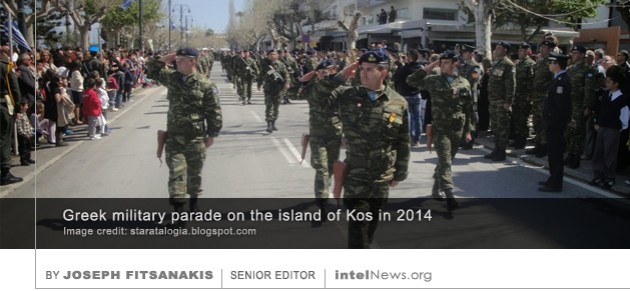
Kos GreeceA German retiree living in Greece, who admitted in court that he was part of a network of German and other Western European residents of Greece recruited as spies by Turkish intelligence, has been jailed for 14 years. The 65-year-old man, who has not been named, was arrested two years ago in the southeastern Aegean island of Kos. He was born in Cold-War-era East Germany and worked as a locksmith before serving for 15 years in the East German National People’s Army. From 2009 to 2012, he lived in Turkey before moving permanently to Greece.
On the morning of October 15, 2014, the German national was arrested by Greek police, who said they spotted him taking pictures of a Greek military outpost while sitting in his parked car. The police officers confiscated his camera and searched his vehicle, finding a pair of binoculars, various camera lenses and several memory sticks. His camera contained photographs of Greek military installations and government buildings on the island, which is located less than 3 miles off the Turkish coast. More photographs of Greek defense installations, military vehicles and communications facilities were found in the man’s house on the island. Police also found there documents in the Turkish language and notepads bearing coordinates of Greek military bases, public buildings and bridges located on Kos. The prosecution claimed that the German man was also monitoring the activities of Frontex, the European Border and Coast Guard Agency that maintains a base on the Greek island.

During the trial, the accused said he was recruited by Turkey’s intelligence service, known as MİT, in 2011, when he was living in Turkey. He also told the court that he was one of many German and other Western European retirees living in Greece, who have been recruited by Turkish intelligence to spy on Greek military and civilian government facilities. He added that, in return for his services, his Turkish handlers deposited €2,000 every month to his bank account in Germany. He had also been instructed to meet his handlers in Germany, not in Greece or Turkey. A court in the Greek island of Rhodes convicted the German man to 14 years in prison, one year less than the 15-year sentence requested by the prosecution.

Author: Joseph Fitsanakis | Date: 09 Dec 2016 | Research credit: Strategy Reports | Permalink

Czech spy service accuses Russia of waging ‘information war’

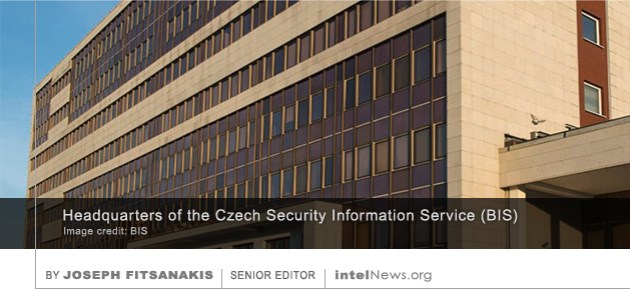
Czech Security Information ServiceThe intelligence agency of the Czech Republic has accused Russian spy services of waging a “war of information” aimed at destabilizing the eastern European country. The agency has also warned that Russia continues to maintain a large intelligence presence in the Czech Republic, 25 years after the country, which was formerly known as Czechoslovakia, exited the Soviet sphere of influence and joined the European Union (EU) and the North Atlantic Treaty Organization (NATO).
These claims are included in the annual report of the Security Information Service of the Czech Republic, known as BIS. The report, which was published on Thursday, singles out Russia and China for allegedly operating the two most active intelligence apparatuses in the Czech Republic today. It also claims that Russia’s embassy in Prague, which exceeds in size that of any other country in the Czech capital, serves as a base for dozens of spies. The latter are among the 140 diplomatic personnel stationed at the Russian embassy, operating under diplomatic cover, according to BIS.

In addition to collecting intelligence and recruiting spies, Russia’s undercover efforts in the Czech Republic focus on “creating or promoting inter-societal and inter-political tensions” in the country, said the report. That is allegedly one in many ways, including covert support for domestic extremist and populist organizations –both rightwing and leftwing, according to BIS. There are also organizations in the country, described by the Czech intelligence agency as parts of a network of “puppet” groups, which tend to hold consistently pro-Russian stances on domestic and international issues. They are also highly critical of NATO and the EU, and promote the view that, like Britain, the Czech Republic should seek to exit the EU.

The report suggests that the main focus of the current phase of the alleged “information war” is to advertise the Russian viewpoint on the civil wars in Ukraine and Syria. However, “the infrastructure created for achieving these goals will not disappear with the end of the two conflicts” and “can be used to destabilize or manipulate Czech society […] at any time, if Russia wishes to do so”, the report states.

Author: Joseph Fitsanakis | Date: 02 September 2016 | Permalink

Turkey has more spies in Germany than Stasi had during Cold War: expert

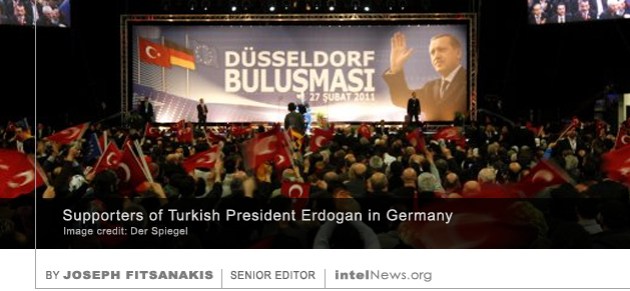
Turks in GermanyThe Turkish intelligence service currently employs more operatives in Germany than the East German spy agency did at the height of the Cold War, according to a German expert on espionage. The comment was made following the disclosure that Turkey maintains close to 6,000 informants and other intelligence operatives in Germany. An unnamed German security official told German newspaper Die Welt on Monday that the informants are operational throughout Germany and are handled by Turkey’s National Intelligence Organization, known as MİT.
According to Die Welt, many of these informants are tasked with keeping tabs on Germany’s large Kurdish community, which Ankara views as domestic threats to Turkish national security. More recently, however, MİT operatives in Germany have been instructed to infiltrate groups of supporters of the charismatic Muslim cleric Fethullah Gülen who lives in the United States. A former ally of Turkish President Recep Tayyip Erdoğan, Gülen and his millions of supporters around the world now oppose the Turkish government and are described as terrorists by Ankara. President Erdoğan has personally accused “Gülenists” of orchestrating the failed July 15 coup in Turkey. In addition to infiltration, MİT informants in Germany are allegedly engaged in psychological operations against perceived opponents of the Turkish government, and sometimes engage in blackmail and intimidation of targeted individuals or groups, according to Die Welt.

Erich Schmidt-Eenboom, one of Germany’s best known independent researchers on intelligence, and a widely published author, said he was surprised that the number of alleged MİT operatives in Germany is this high. If the number of 6,000 operatives is accurate, said Schmidt-Eenboom, it would place the MİT above the level of the Stasi during the Cold War. He was referring to the Ministry for State Security, the intelligence agency of communist-era East Germany, which was known for its extensive networks of informants during the Cold War. Schmidt-Eenboom said that, according to Stasi records, the agency handled approximately 10,000 operatives in West Germany, a country that at the time had a population of 60 million. In contrast, the 6,000 MİT operatives in Germany are primarily tasked with monitoring the Turkish and Kurdish immigrant community there, which numbers no more than 3 million. Consequently, said Schmidt-Eenboom, there are 500 potential human targets for each present-day MİT operative, whereas there were 6,000 West German citizens for every Stasi operative during the Cold War.

The article in Die Welt did not specify whether the alleged MİT informants are paid agents or simply supporters of the Turkish government who have volunteered their services. As intelNews reported earlier this week, some members of the German Bundestag’s Committee on Parliamentary Oversight, including its chairman, Clemens Binninger, plan to launch an official investigation into the activities of Turkish intelligence in Germany. Of particular interest to the committee is the alleged cooperation between German and Turkish intelligence agencies following the failed coup in Turkey this past July.

Author: Joseph Fitsanakis | Date: 26 August 2016 | Permalink

Senior Russian intelligence defector to the US is allegedly dead

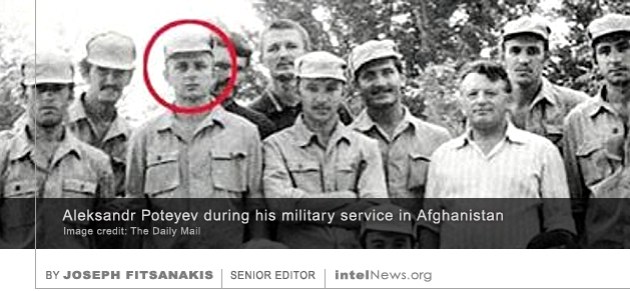
Aleksandr PoteyevA Russian former senior intelligence officer, who reportedly defected to the United States after helping the Federal Bureau of Investigation arrest 10 Russian spies in 2010, is believed to have died. The arrests, which revealed the so-called “Russian illegals program” in the US, were part of a counterintelligence operation codenamed GHOST STORIES by the FBI. The operation culminated in June 2010 with the dramatic arrests of 10 Russian ‘illegals’ in several US states. The Russian illegals, deep-cover intelligence operatives with no official connection to the country that employs them, had been operating in the US for over a decade prior to their arrest, using passports from third countries, including Britain, Canada and Uruguay. They were eventually exchanged with spies for the West that had been imprisoned in Russia.
Moscow blamed the arrests of the illegals on Colonel Aleksandr Poteyev, a veteran of the Soviet war in Afghanistan, who rose through the ranks of the KGB and its successor agency, the SVR, to become second-in-command in the so-called Department S. The senior leaders of Department S are believed to be appointed directly by the president of Russia, and are tasked with directing the activities of all Russian illegals operating abroad. According to the Russian government, which tried Poteyev in absentia in 2011, he began working for the US Central Intelligence Agency in 1999, shortly before entering the senior echelons of Department S.

A panel of judges was told during Poteyev’s Moscow trial that he left Russia without permission on June 24, 2010, just days before the FBI arrested the 10 Russian illegals in the US. He initially went to Belarus, from where he notified his unsuspecting wife via a text sent from a mobile phone that he was leaving Russia for good. He then traveled to Ukraine and from there to Germany, where he was allegedly picked up by his American CIA handler. It is believed that was provided with a new identity and passport, which he used to enter the US. By the time the Russians sentenced him to 25 years in prison for treason, Poteyev was adjusting to his new life in America.

But on July 7, the Moscow-based Interfax news agency reported that Poteyev, had died in the US, aged 64. The brief report did not specify the cause of Poteyev’s alleged death, nor did it state how Interfax acquired the information. Since the report was issued, no confirmation of Poteyev’s purported death has appeared from any other news source, or from government agencies. Russia’s Sputnik News contacted the SVR last week, but the agency declined to comment. It is believed that Poteyev’s two children were working in the US at the time of his defection, and that they are still living in the country.

Author: Joseph Fitsanakis | Date: 11 July 2016 | Permalink

Portuguese, Russian spies arrested in Rome may have accomplices

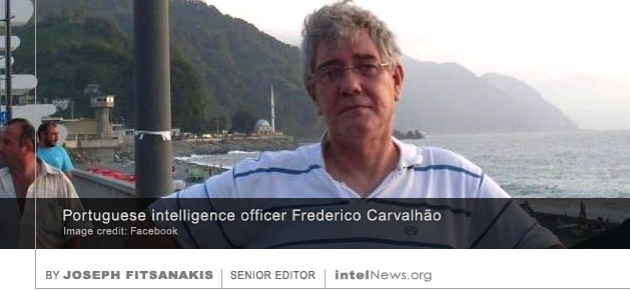
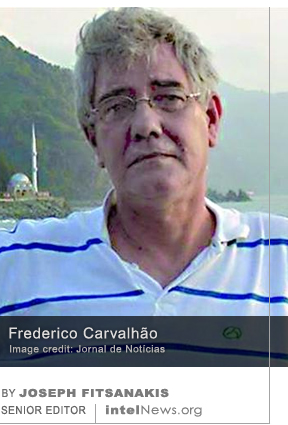
Frederico Carvalhão,A Portuguese intelligence officer arrested a week ago in Rome, allegedly while passing classified documents to his Russian handler, may have accomplices with access to North Atlantic Treaty Organization (NATO) secrets. IntelNews reported last week on the capture of Frederico Carvalhão, a section chief for Portugal’s Security Information Service (SIS), which is tasked with domestic security and counterintelligence. Carvalhão was arrested on May 23 at a café in the Trastevere district of Rome while passing a folder with six classified documents to a Russian man. The man is believed to be an employee of Russia’s Foreign Intelligence Service, known as SVR, though notably he does not have diplomatic status or immunity, and was therefore arrested. As we noted last week, this is atypical for an intelligence officer, as most of them operate as registered diplomats.
According to Portuguese media reports, the classified information that Carvalhão appears to have been sharing with the SVR since at least 2014 relate to NATO and the European Union (EU), of which Portugal is a member. However, the London-based newspaper Daily Telegraph reports that there are suspicions in Lisbon that Carvalhão was not working alone for the Russians. In other words, Portuguese investigators are looking into the possibility that the arrested spy was what is known as a ‘principal agent’. The latter signifies a mole that acts as a middle person between his foreign handlers and a cell of other agents working for him or her. The possibility that Carvalhão may not have been working alone was commented on by Portugal’s Minister of Foreign Affairs, Augusto Santos Silva, who said last week that the judicial investigation into the spy case was “ongoing”.

It appears that Carvalhão somehow managed to access NATO- and EU-related documents from the SIS’ Ameixoeira Fort headquarters in the Portuguese capital, to which he had no need-to-know access. Moreover, SIS computers do not accept flash drives, while all printed documents contain a secret watermark that identifies them as having been printed on an SIS printer. But Carvalhão appears to have somehow managed to acquire non-watermarked documents without having extracted them from an SIS computer with the use of a flash drive. Does that mean that someone else from inside SIS provided him with the documents? The EU and NATO are eagerly waiting for an answer.

Author: Joseph Fitsanakis | Date: 30 May 2016 | Permalink

Russian deep-cover spy sentenced in New York court

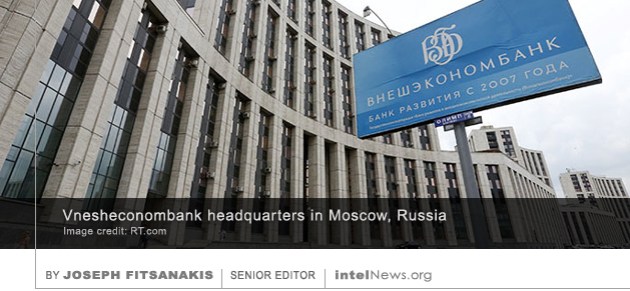
VnesheconombankA Russian intelligence officer, who posed as a banker in the United States, has been handed a prison sentence by a court in New York. Evgeny Buryakov, 41, posed as an employee of the New York branch of Vnesheconombank, a Russian state-owned bank headquartered in Moscow. However, in January 2015, the Federal Bureau of Investigation arrested Buryakov along with Igor Sporyshev, 40, and Victor Podobnyy, 27, who were employees of the trade office of the Russian permanent mission to the United Nations in New York. According to their indictment, Sporyshev and Podobnyy were in fact employees of the SVR, Russia’s Foreign Intelligence Service, one of the direct institutional descendants of the Soviet-era KGB. The FBI said the two were employed by the SVR’s ‘ER’ Directorate, which focuses on economics and finance. Operating under diplomatic guise, they regularly met with Buryakov, who the FBI said was the third member of the alleged spy ring.
However, unlike Sporyshev and Podobnyy, Buryakov was operating under non-official cover, posing as a bank employee. Non-official-cover operatives, or NOCs, as they are typically referred to in the US Intelligence Community, are usually high-level principal agents or officers of an intelligence agency, who operate without official connection to the diplomatic authorities of the country that employs them. They typically pose as business executives, students, academics, journalists, or non-profit agency workers, among other covers. Unlike official-cover officers, who are protected by diplomatic immunity, NOCs have no such protection. If arrested by authorities of their host country, they can be tried and convicted for conducting espionage.

The court documents also reveal that Sporyshev and Podobnyy broke basic rules of intelligence tradecraft by contacting Buryakov using an unencrypted telephone line and addressing him by his real name, rather than his cover name. These conversations, which occurred in April 2013, turned out to be monitored by the FBI’s counterintelligence division, which promptly recorded them. The three SVR officers were arrested following a successful FBI sting operation, which involved an undercover FBI agent posing as an American investor offering to provide Buryakov with classified documents from the US Treasury. In March of this year, Buryakov pleaded guilty to working in the US as unregistered agent of Russia’s SVR. He has been sentenced to 2 ½ years in prison and ordered to pay a $10,000. Sporyshev and Podobnyy, who held diplomatic immunity, were expelled from the US following their arrest.

Author: Joseph Fitsanakis | Date: 27 May 2016 | Permalink

Russian, Portuguese intelligence officers arrested in Rome on espionage charges

Frederico CarvalhãoTwo intelligence officers, one Russian and one Portuguese, have been arrested by Italian authorities on charges of espionage. The arrests took place in Rome on Monday by Italian police, who were reportedly accompanied by Portuguese counterintelligence officers. It is suggested in Portuguese media that the two men were arrested in the act of exchanging classified documents and money. The Portuguese intelligence officer has been identified in news reports as Frederico Carvalhão, a section chief for Portugal’s Security Information Service, which is tasked with domestic security and counterintelligence. The Russian intelligence officer has not been identified, but is believed to be an employee of Russia’s Foreign Intelligence Service, known as SVR. Interestingly, the Russian officer does not have diplomatic status and was therefore arrested, since he holds no diplomatic immunity.
A press release by the Portuguese government prosecutor said that Carvalhão had been arrested “along with a foreign subject linked to an intelligence organization” after a lengthy investigation into “concerns that [classified] information was being exchanged for money”. It is believed that Portuguese authorities began investigating Carvalhão in 2015, and now believe that he frequently traveled abroad to meet his Russian handler. He is thought to have been recruited by the Russians in 2014. According to Portuguese media reports, the documents that Carvalhão appears to have been giving the SVR contain information about the European Union and the North Atlantic Treaty Organization, of which Portugal is a member.

Carvalhão is said to have flown from Lisbon to Rome on Friday of last week in order to meet his SVR handler. The two men were meeting in a café on Saturday when they were arrested. The Portuguese government prosecutor said that Saturday’s arrests resulted from “rigorous collaboration between Portuguese and Italian authorities”. He also thanked Eurojust, a European Union agency based in the Netherlands, which focuses on cross-national judicial cooperation between European Union member-states. Security officers also raided Carvalhão’s home in Portugal, where they allegedly seized “documents and cash”. Both he and his alleged Russian hander remain in detention in Rome, while Italy is preparing to extradite them to Portugal.

Author: Joseph Fitsanakis | Date: 26 May 2016 | Permalink | News tip: C.W.

Further arrests in Edward Lin spy case ‘possible’, says US official

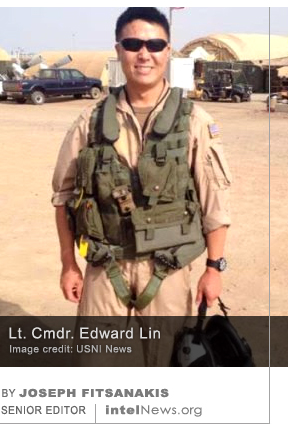
Edward LinAn American official has told Newsweek magazine that the possibility of further arrests in the espionage case of United States Navy flight officer Edward Lin should not be ruled out. Last Sunday, the US Navy reported the arrest Lt. Cmdr. Lin, who faces two counts of espionage and three counts of attempted espionage, among other charges. Aside from a three-page, heavily redacted charge sheet released by the Navy, almost nothing is known about this case. However, as intelNews opined earlier this week, there are several clues that point to the seriousness of the charges against Lin, and their potential ramifications for US national security, which are likely to be extensive.
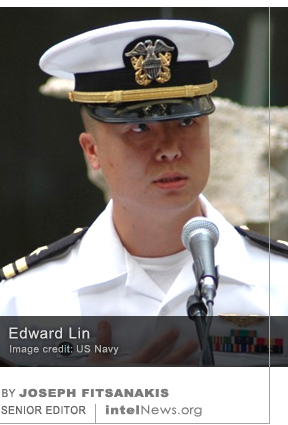
On Thursday, longtime intelligence and security correspondent Jeff Stein wrote in Newsweek magazine that Lin appeared to have “scores of friends in sensitive places” in the US and Taiwan. That is not surprising, given that Lin served as the Congressional Liaison for the Assistant Secretary of the Navy, Financial Management and Comptroller, between 2012 and 2014. A cursory survey of Lin’s LinkedIn page, said Stein, shows endorsements by a senior commander at the US Naval Air Station at Guantanamo, Cuba, as well as the US Pacific Fleet’s senior intelligence analyst on Southeast Asia. Other endorsers include Congressional liaison officers for the US Navy, a Taiwanese military attaché, and a former official in Taiwan’s Ministry of Defense.

It is believed that Lin was arrested over eight months ago, but Stein says the investigation, which is being conducted jointly by the Naval Criminal Investigative Service and the Federal Bureau of Investigation is still underway. He quotes an unnamed “US official who asked for anonymity in exchange for discussing some details of the case” as saying that, given Lin’s extensive contacts in the US intelligence establishment, the possibility of further arrests in the case should not be ruled out. Lin is currently being held in the Naval Consolidated Brig in Chesapeake, Virginia.

Author: Joseph Fitsanakis | Date: 15 April 2016 | Permalink

Analysis: How serious is the Edward Lin spy case?

Edward LinFor the first time since 1985, when the Federal Bureau of Investigation broke the John Walker spy ring, an active United States Navy officer has been charged with espionage. On Sunday, the US Navy reported the arrest Lt. Cmdr. Edward C. Lin, who faces two counts of espionage and three counts of attempted espionage, among other charges. Aside from a three-page, heavily redacted charge sheet released by the US Navy, almost nothing is known about this case. However, there are several clues that point to the seriousness of the charges against Lin, and their potential ramifications for US national security, which are likely to be extensive.

Lin was a signals intelligence (SIGINT) specialist with the Navy, focusing on the airborne collection of maritime intelligence, mostly in the Pacific Ocean. Given that he is a naturalized citizen from Taiwan and speaks fluent Mandarin, it is almost certain that he was tasked with collecting SIGINT from targets in China and Taiwan. If that is so, then the prospect that Lin may have given classified information to Chinese or Taiwanese intelligence officers will be especially unsettling for Washington. Moreover, Lin is believed to have worked with some of the most advanced airborne intelligence-gathering platforms in the Pentagon’s arsenal, including the MQ-4C Triton, the P-3C Orion, the P-8A Poseidon, and the EP-3 Aries II, which is arguably the most advanced maritime surveillance aircraft ever used by the US Navy.

It also appears that Lin had a relatively senior position in the US Navy’s chain of command. He was a departmental head in the Navy’s Patrol and Reconnaissance Group, overseeing the work of over 7,000 sailors. Prior to that post, he served as the Congressional Liaison for the Assistant Secretary of the Navy, Financial Management and Comptroller. Lin’s critical positions in the chain of command may explain why US authorities arrested him nearly eight months ago in absolute secrecy and been holding him in pre-trial confinement without releasing any information to the media until last weekend. This level of secrecy in a national security investigation is rare and possibly points to the extent of damage assessment that needed to be completed following Lin’s arrest. Read more of this post

Russia claims arrest of alleged CIA-trained spy

Lubyanka SquareThe Russian government says it has arrested a senior Ukrainian intelligence officer, who was allegedly trained by the United States Central Intelligence Agency and tasked with infiltrating the Russian secret services. In a statement published on Thursday, Russia’s Federal Security Service, known as FSB, said the alleged infiltrator is a “senior level employee” of the SBU, the Security Service of Ukraine. The SBU is Ukraine’s primary counterterrorism and counterintelligence agency, with much of its output focused on the Russian Federation.
The FSB statement identified the Ukrainian man as Lieutenant Colonel Yuriy Ivanchenko, but did not release further information about his background and identity, nor did it specify the details of his activities in Russia. According to the Russians, Ivanchenko allegedly entered the country in recent weeks, ostensibly in order to visit family members who live in Russia. But his real goal, according to the FSB, was to make contact with Russian intelligence and infiltrate the country’s security structure. Moscow says that Ivanchenko had planned to pose as a willing spy, namely an employee of Ukrainian intelligence who was offering to provide information to Russia. He was not a genuine spy, however, but rather a ‘dangle’ —namely someone posing as a genuine spy, but who is in fact attempting to deceive a rival intelligence agency by knowingly giving it misleading or inaccurate information.

Moreover, the Russians claim that Ivanchenko was being jointly run by the SBU and the CIA, and that the American intelligence agency had trained him to pose as a ‘dangle’ in order to collect information about FSB activities in Ukraine. The goal of the CIA, said Moscow, was to “lure an FSB employee and capture him with incriminating information”. However, the FSB statement said that Ivanchenko’s SBU connection and CIA affiliation were known to Russia prior to his arrival in the country, as he had previously tried to offer his services to Moscow. He was therefore arrested and will be deported in the coming days with a persona non grata (unwelcome person) designation. The CIA and SBU have not commented on Russia’s allegations.

Author: Joseph Fitsanakis | Date: 01 April 2016 | Permalink

Marcus Klingberg, highest-ranking Soviet spy ever caught in Israel, dies

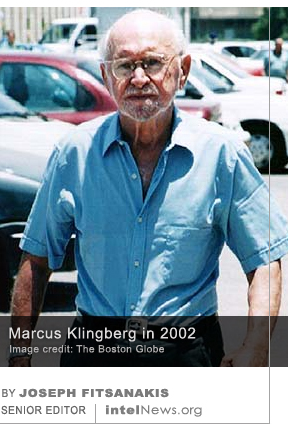
Marcus KlingbergMarcus Klingberg, who is believed to be the highest-ranking Soviet spy ever caught in Israel, and whose arrest in 1983 prompted one of the largest espionage scandals in the Jewish state’s history, has died in Paris. Born Avraham Marek Klingberg in 1918, Klingberg left his native Poland following the joint German-Soviet invasion of 1939. Fearing persecution by the Germans due to his Jewish background, and being a committed communist, he joined the Soviet Red Army and served in the eastern front until 1941, when he was injured. He then received a degree in epidemiology from the Belarusian State University in Minsk, before returning to Poland at the end of World War II, where he met and married Adjia Eisman, a survivor of the Warsaw Ghetto uprising. Together they moved to Sweden, from where they emigrated to Israeli in 1948. It is believed that Klingberg was recruited by the Soviet KGB while in Sweden, and that he moved to Israel after being asked to do so by his Soviet handlers –though he himself always denied it.
Soon after arriving to Israel, Klingberg joined the Israel Defense Force, where he advanced to the rank of Lieutenant Colonel. In 1957, he joined the Israel Institute for Biological Research (IIBR), a government outfit that conducted classified research for Israel’s biological and chemical weapons program. Klingberg worked at Ness Ziona, a top-secret government facility that conducted research on some of the most advanced chemical and biological weapons in the world. Eventually, he rose to the position deputy scientific director at IIBR, a post that he held until 1972. Additionally, Klingberg enhanced his international profile as a leading epidemiologist and conducted research in universities in Europe and the United States. Throughout that time, he was regularly passing classified information to the KGB at meetings with his handlers in Europe.

The Soviets had painstakingly trained Klingberg in espionage tradecraft, a set of skills that came in handy in the early 1960s, when the Shin Bet, Israel’s counterintelligence agency, began suspecting him of spying for a foreign intelligence service. The Shin Bet began systematically monitoring Klingberg. After failing to get results, the agency gave Klingberg a lie detector test, which he passed on the first try. Meanwhile, the Soviet government secretly awarded Klingberg the Order of the Red Banner of Labor, in recognition of the quality of the information he had passed on to the KGB. In 1982, a Soviet defector to Israel confirmed that Klingberg was indeed a KGB spy. Shortly afterwards, the Shin Bet approached Klingberg and asked him to accompany a top-secret team of Israeli technical experts to Malaysia, where a chemical plant had exploded. But instead of taking the scientist to the airport en route to Malaysia, the government car that picked him up from his house drove him to a Shin Bet safe house. After being interrogated there for nearly two weeks, Klingberg confessed to being a Soviet spy, saying he had decided to join the KGB for ideological reasons. However, in a 2014 interview with British newspaper The Observer, Klingberg claimed that he felt morally indebted to the USSR “for saving the world from the Nazis”.

Klingberg was tried in secret and sentenced to 20 years in prison. He then disappeared inside Israel’s prison system, having been given a false name and occupation by the Israeli authorities. He spent the first 10 years of his prison sentence in solitary confinement. In 1998, following pressure from human-rights groups, the Israeli government agreed to place Klingberg under house arrest, providing he was able to cover the financial cost of his detention. In 2003, having served his 20-year sentence, Klingberg was allowed to leave Israel and settle in France, where his daughter and son-in-law were living. He spent the last years of his life in Paris, where he died on November 30. He was 97.

Author: Joseph Fitsanakis | Date: 3 October 2015 | Permalink

Dutch crime investigator charged with spying for organized criminals

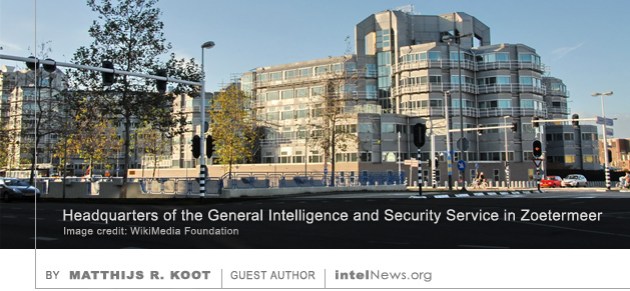
AIVD HollandA 28-year-old criminal investigator of the Dutch National Crime Squad was arrested by Dutch police on September 29 over allegations of corruption, neglect of duty, and money laundering. The man, named as Mark M., applied for a job at the Dutch police in 2009. According to an online résumé, M. dropped out of professional college in journalism after several years of being self-employed as a freelance reporter covering crime issues.


According to Dutch media, M. did not pass the security screening carried out by the General Intelligence and Security Service (AIVD) as part of the job application. But he was hired nonetheless as trainee in a less sensitive position that is not subject to security screening by the AIVD. The reported reason for M.’s failure to pass the screening process is that he is married to a Ukrainian woman. The AIVD has no intelligence-sharing relationship with its Ukrainian counterpart agency concerning security screenings.

M. is reported to have access to the files “of all large national criminal investigations”, and allegedly sold information on a large scale to drug organizations and criminal biker gangs. He is reported to have close ties with leaders of the biker gangs Satudarah and No Surrender.

Newspaper NRC Handelsblad, which first reported about M., states that the screening involved an investigation into M.’s social environment and personal finances. Television news service RTL Nieuws, which was the first to publicly name the man, reports that M. stood out for his luxurious lifestyle: driving a Porsche Cayenne, frequenting Curaçao and the Dominican Republic for holidays, and wearing expensive watches. During a search of his residence, the police found €235.000 ($266,266), as well as confidential police information that M. allegedly intended to sell.

The police is investigating the extent of the damage caused by M., as well as the precise investigations that he may have compromised. The question of why M. was hired despite not having passed the security screening is part of the investigation. It is, so far, believed that M. acted alone.

Addendum, Nov. 4, 2015: Pending a security clearance from the AIVD, M. was granted access to BlueView, a confidential police data search engine. When the AIVD refused to issue a security clearance, M. was transferred to the traffic department, but superiors failed to revoke his access to BlueView. In 2007, BlueView contained 55 million documents containing data about suspects, transcripts of interrogations and police reports. M.’s authorization level included access to information from the Criminal Intelligence Unit (CIE), that works with informants. M. was able to access BlueView for close to four years.

Author: Matthijs Koot | Date: 20 October 2015 | Permalink