November 1, 2017
by Joseph Fitsanakis
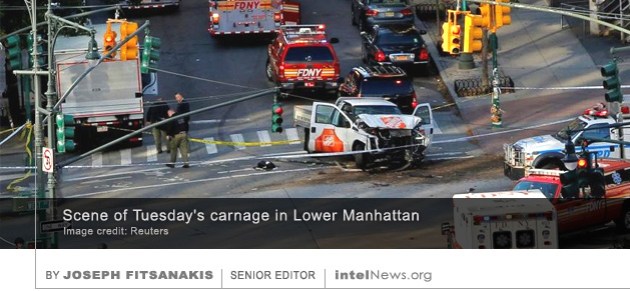 News reports hastened to describe Tuesday’s atrocity in Lower Manhattan as “the worst terror attack in New York since September 11, 2001”. The comparison may be numerically accurate. Moreover, the deaths caused by the attack are nothing short of tragic. But if the Islamic State’s deadliest response to its retreat in the Middle East is a clumsy truck driver armed with a pellet gun, then Americans have little to fear from the terrorist group.
For months now, Western counter-terrorism experts have been bracing for a change of tactics by the Sunni group, which in 2014 controlled territory in Iraq and Syria equal to the size of England. The prevailing theory in security circles is that, as the Islamic State is forced to retreat in the Middle East, it will unleash waves of sleeper cells against Western targets abroad. This concern is logical, given the militant group’s obsession with its public image. At every turn since its dramatic rise in 2013, the Islamic State has consciously tried to project an appearance of strength that is far greater than its actual capabilities. In its public statements, the group has consistently extolled its ability to strike at distant targets regardless of its territorial strength in the Middle East. This applies especially to attacks by the Islamic State in Europe, which have tended to come in response to intense media speculation that the group’s territorial hold may be weakening.
One presumes that a terrorist attack in New York, a symbolic site in the ‘war on terrorism’, would aim to do just that: namely project an image of continuing strength and convince global audiences that the group remains potent. Yet, despite the tragic loss of eight lives, Tuesday’s attack in Manhattan did nothing of the sort.
To begin with, an attack on cyclists with a rented utility vehicle is hardly ground-breaking at this point. In the past 18 months, we have seen similar types of attacks in London (on two separate occasions), in Barcelona’s Las Ramblas mall, in downtown Berlin, and in Nice, where a 19-ton cargo truck was used to kill 86 people. Terrorist groups are by nature conservative in their operations, preferring to use low-tech, time-tested methods to dispense  violence, rather than risk failure by breaking new ground. But at a time like this, when the very existence of the Islamic State hangs in the balance, one would think that the group would consciously try to intimidate its opponents by showing off some kind of revolutionary new weapon. That did not happen on Tuesday.
Additionally, the perpetrator of the attack, Uzbek immigrant Sayfullo Saipov, is hardly an inspiring figure for Islamic State supporters. After running over a group of unsuspecting cyclists, the 29-year-old Florida resident clumsily smashed his rented truck head-on into a vehicle that was far larger and heavier than his own, thus completely destroying his vehicle’s engine and effectively disabling his only weapon. He then jumped out of the truck, apparently wielding a pellet gun and a paintball gun. Mobile phone footage captured from a nearby building shows Saipov walking in a disoriented manner through Manhattan traffic before being shot by police officers. If —as it seems— the Islamic State was behind that attack, it would mean that modern history’s most formidable terrorist group failed to get a pistol in a country where firearms are in some cases easier to secure than nasal decongestant.
Choice of weapon aside, one does not need to be a counter-terrorism expert to conclude that Saipov lacked basic operational and planning skills. His attack behavior shows that he had failed to carry out even rudimentary prior reconnaissance of the area where he launched his attack. He even appears to have failed to read Tuesday’s New York Post. Had he done so, he would have known that  the heavily attended annual Village Halloween Parade was scheduled to take place on the very same street, just two hours after he launched his deranged attack.
Once again, the question is: if the Islamic State does not utilize its deadliest and most capable operatives now, when its very existence in its Middle Eastern stronghold is being directly challenged, then when will it do so? By all accounts, the militant group’s leaders are well-read on recent history. They are therefore fully aware that, in the post-9/11 age, clumsy, low-tech, limited terrorist strikes by lone-wolf operatives lack the capacity to intimidate civilian populations, especially in New York.
Western counter-terrorism agencies and citizens alike should remain vigilant; but early evidence shows that the Islamic State is simply too weak to launch sophisticated, large-scale strikes against Western targets abroad. As I have argued before, the threat level would change if the militant group acquires chemical weapons or other tools of mass terrorism. For now, however, it is safe to state that the Islamic State’s capabilities do not pose anything close to an existential threat to the West.
► About the author: Dr. Joseph Fitsanakis is Associate Professor in the Intelligence and National Security Studies program at Coastal Carolina University. Before joining Coastal, Dr. Fitsanakis built the Security and Intelligence Studies program at King University, where he also directed the King Institute for Security and Intelligence Studies. He is also deputy director of the European Intelligence Academy and senior editor at intelNews.org.
 Holland’s chief counterterrorism agency has warned that, despite losing its territories in the Middle East, the Islamic State continues to recruit operatives and is ready to launch attacks in the West “at a moment’s notice”. The warning is contained in a report published last week by the Dutch National Coordinator of Counterterrorism and Security (NCTV). Established in 2005 as the Dutch National Coordinator for Counterterrorism, and renamed in 2012, the NCTV works under Holland’s Justice and Security Minister. It is responsible for analyzing terrorism threats and assessing the country’s domestic terrorism threat level.
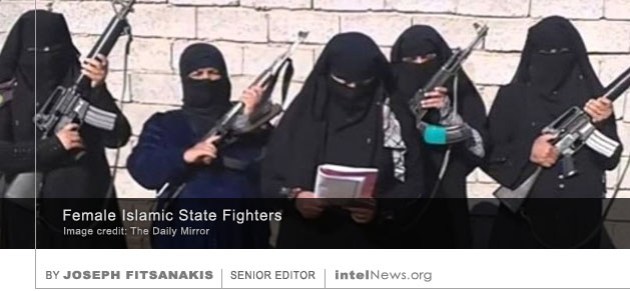 The role of women inside the Islamic State is growing, as the Sunni militant group is transmuting into an underground organization, according to a Harvard University terrorism expert. Since its meteoric rise in Iraq and Syria, the Islamic State has been known for advocating for strict segregation between men and women. In the early stages of the group’s emergence, combat roles were exclusively performed by men, while women’s roles were limited to childbearing and housework. But according to Vera Mironova, Visiting Scholar in the Economics Department at Harvard University, and former Associate of the International Security Program at Harvard’s Belfer Center, the Islamic State’s policy on gender roles is shifting rapidly.
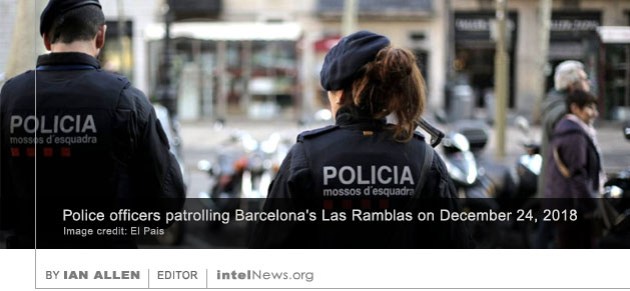 Police in Barcelona have intensified security checks in some of the Spanish city’s most recognizable landmarks, following a security warning from the United States Department of State. The surprise warning came in the form of a post on the popular social networking site Twitter on Sunday, December 23. In the
 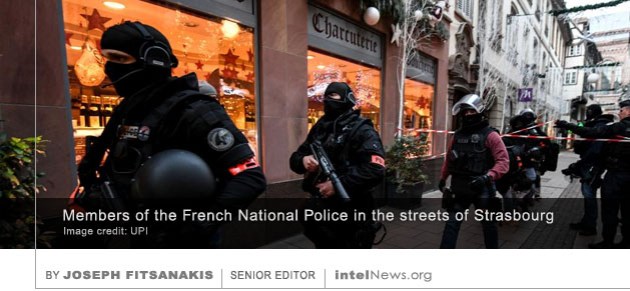 The terrorist attack in the French city of Strasbourg on December 11 raises important security concerns for Europe’s ability to defend itself against a
 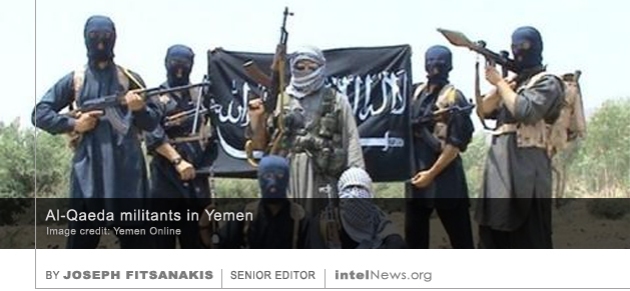 There are four times as many Sunni Islamist militants today in the world than on September 11, 2001, despite an almost 20 year-long war campaign by the United States and its allies, according to a new report. Washington launched the ‘global war on terrorism’ in the aftermath of the 9/11 attacks that were perpetrated by al-Qaeda. In the ensuing years, American and other Western troops have engaged militarily in over a dozen countries, including Afghanistan, Iraq, Pakistan, Syria, Libya, Yemen, Somalia, Sudan, and the Philippines. But a
  Islamic State cells are using Turkey as a strategic base in which to recuperate, rebuild, and plan an underground war in Europe, according to a new report by Dutch intelligence. This assessment is featured in a
 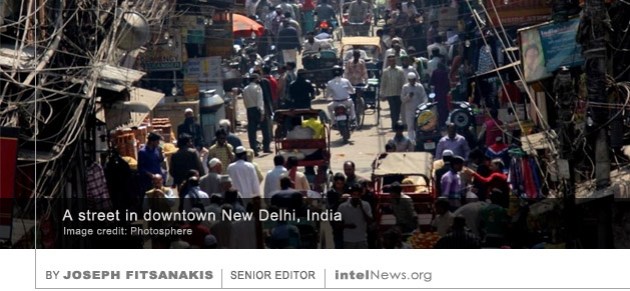 A joint Indian-American counterintelligence operation, described as “unprecedented in its scale and scope”, reportedly foiled a major suicide attack by the Islamic State in New Delhi and helped achieve “a string of victories” against the group in Afghanistan and Pakistan.
 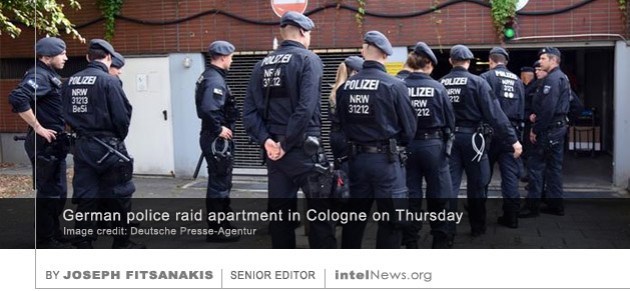 German authorities have charged a Tunisian citizen with building a biological weapon, after finding significant quantities of the highly toxic substance ricin in his apartment. The 29-year-old man is referred to in public reports only as “Sief Allah H.”, in compliance with German law that forbids the naming of suspects until they are found guilty in court. German officials said last Thursday that the man remains in custody and has been charged with violating Germany’s War Weapons Control Act (known as Kriegswaffenkontrollgesetz) and “preparing a serious act of violence against the state”.
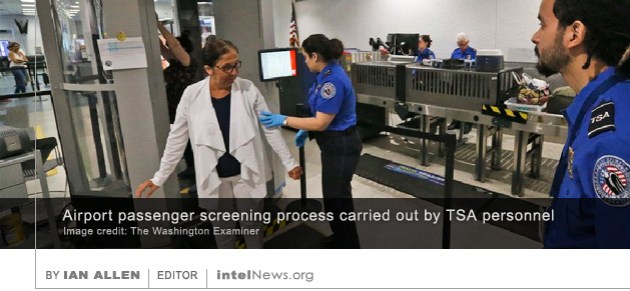 Attempts by undercover investigators to smuggle weapons, explosives and contraband aboard American passenger flights were successful between 70 and 80 percent of the time in the past year, according to reports. The results of the investigations were revealed in Congress behind closed doors on Wednesday of last week, prompting lawmakers to severely criticize the United States Transportation Security Administration (TSA). The TSA was founded in November 2001 in direct response to the tragic events of September 11 of that year. It is primarily concerned with air travel and is responsible for ensuring the safety of the traveling public across the US.
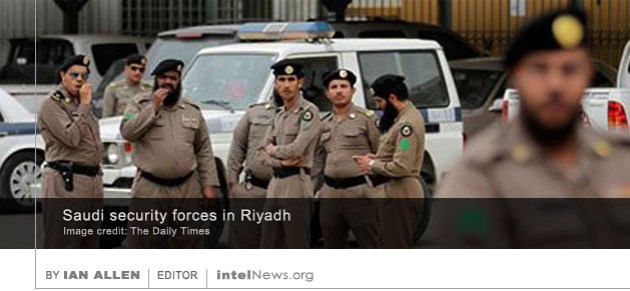 Officials in Saudi Arabia said on Tuesday that they foiled an elaborate suicide attack on the country’s defense ministry headquarters and infiltrated a foreign spy ring in the Kingdom, arresting its members. The near-simultaneous announcements were made by a member of the Presidency of State Security, an intelligence body founded only in July of this year, which is directly accountable to the county’s prime minister.
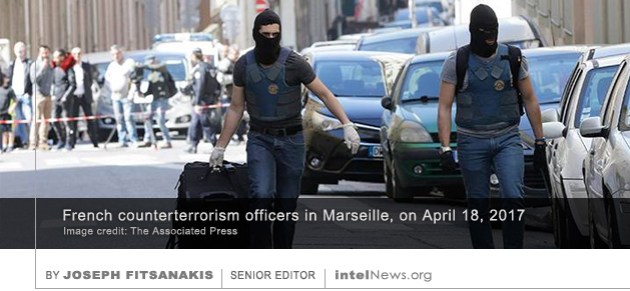 A tip from British intelligence helped French counterterrorist officials arrest two men who are thought to have been in the final stages of planning a large-scale terrorist attack, according to French media. Government sources in Paris say officers from the country’s domestic intelligence agency, DGSE,
 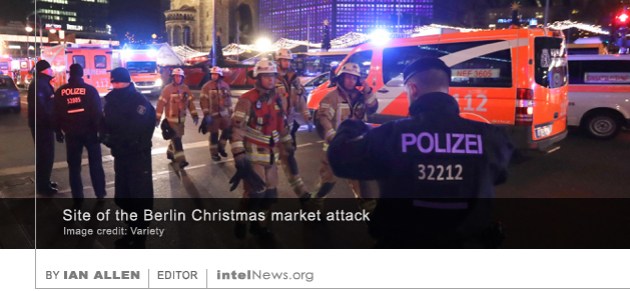 The central suspect in the Berlin Christmas market attack had been on the radar of German security agencies since January of this year, because he had links with radical Islamists and sought to buy guns for a terrorist attack. Anis Amiri, 23, left his native Tunisia in 2011, soon after the outbreak of the so-called Arab Spring there. He lived in Italy for three years before arriving in Germany in July 2015. In April of this year, he applied for an asylum in Germany. According to German authorities, Amiri was arrested multiple times in Tunisia for drug-related offenses. He is also believed to have used at least six different aliases since moving to Europe, and to have claimed to be a citizen of Lebanon and Egypt at different times.
 The man who masterminded November’s Islamist attacks in Paris was based in Athens, and last January managed to escape arrest during a joint Greek-Belgian police operation aimed at capturing him. Moroccan-born Abdelhamid Abaaoud, who had lived in Brussels for years, died in a gun battle with French police on November 18, just days after the multiple attacks in Paris that killed 130 people and injured hundreds. It is believed that the perpetrators of the attacks, who were based in Belgium, were guided and directed by Abaaoud. He, however, was not based in Belgium, but in Athens, Greece. It was from there that he directed the Islamist cells, mostly by phone, according to the BBC.






 intelNews.org
Documents show ISIS plans sleeper cell attacks in Middle East, Europe
March 25, 2019 by Ian Allen Leave a comment
Among them, said The Times, are several memoranda authored by an ISIS leader and operations planner known as Abu Taher al-Tajiki. In his memoranda, al-Tajiki informs the group’s senior leadership that he commands numerous fighters who are willing and able to carry out strikes “far away” from the Islamic State’s strongholds in the Middle East and Africa. He states that he is in regular communication with them and that they are awaiting instructions to “undertake the operations”. Al-Tajiki then calls for the creation of a Foreign Relations Office under the Islamic State’s Department of Operations, which would be tasked with launching attacks throughout Europe. He adds that the new Office can also count on the assistance of computer hackers and other technically literate Islamic State members. In another memorandum, al-Tajiki suggests the creation of what he calls “crocodile cells” in Syria and Iraq. These cells will “lurk beneath the surface” and “attack at the right moment to assassinate the enemies of Allah”, says al-Tajiki.
The Times report comes as experts warn that the Islamic State retains significant financial power, despite the loss of its territories in the Middle East. In a well-informed article in The Atlantic, David Kenner reports from Beirut that the Islamic State without its territories is a double-edged sword. On the one hand, the group cannot rely on taxation and oil revenues that used to enrich its coffers by $1 million per day during the height of its power. On the other hand, argues Kenner, the loss of its territory has freed the Islamic State from the costs associated with state-running and allows it to devote its financial resources “exclusively to terrorist activity”. These resources —cash and other assets— are formidable, says Kenner. In the words of Howard Shatz, senior economist at the Rand Corporation and an expert on ISIS’ finances, we “don’t know where it all went” after ISIS lost its territory. We do know that much of it has been invested in “legitimate commercial enterprises”, says Shatz, with the help of profit-oriented middlemen with access to markets that are as far away as Southeast Asia and the Caribbean. A lot of it is hidden in suitcases and boxes throughout Iraq, Syria and Turkey. All of it is intended to be used to fund terrorist attacks, warns Kenner.
► Author: Ian Allen | Date: 25 March 2019 | Permalink
Filed under Expert news and commentary on intelligence, espionage, spies and spying Tagged with Abu Taher al-Tajiki, counterterrorism, Islamic State, News, terrorism