Israel reportedly behind discovery of Russian antivirus company’s spy links

Computer hackingIsraeli spy services were reportedly behind the United States government’s recent decision to purge Kaspersky Lab antivirus software from its computers, citing possible collusion with Russian intelligence. Last month, the US Department of Homeland Security issued a directive ordering that all government computers should be free of software products designed by Kaspersky Lab. Formed in the late 1990s by Russian cybersecurity expert Eugene Kaspersky, the multinational antivirus software provider operates out of Moscow but is technically based in the United Kingdom. Its antivirus and cybersecurity products are installed on tens of millions of computers around the world, including computers belonging to government agencies in the US and elsewhere. But last month’s memorandum by the US government’s domestic security arm alarmed the cybersecurity community by alleging direct operational links between the antivirus company and the Kremlin.

On Tuesday, The New York Times reported that the initial piece of intelligence that alerted the US government to the alleged links between Kaspersky Lab and Moscow was provided by Israel. The American paper said that Israeli cyber spies managed to hack into Kaspersky’s systems and confirm the heavy presence of Russian government operatives there. The Times’ report stated that the Israelis documented real-time cyber espionage operations by the Russians, which targeted the government computer systems of foreign governments, including the United States’. The Israeli spies then reportedly approached their American counterparts and told them that Kaspersky Lab software was being used by Russian intelligence services as a backdoor to millions of computers worldwide. The Israelis also concluded that Kaspersky’s antivirus software was used to illegally steal files from these computers, which were essentially infected by spy software operated by the Russian government.

It was following the tip by the Israelis that he Department of Homeland Security issued its memorandum saying that it was “concerned about the ties between certain Kaspersky [Lab] officials and Russian intelligence and other government agencies”. The memorandum resulted in a decision by the US government —overwhelmingly supported by Congress— to scrap all Kaspersky software from its computer systems. Kaspersky Lab has rejected allegations that it works with Russian intelligence. In a statement issued in May of this year, the company said it had “never helped, nor will help, any government in the world with its cyberespionage efforts”.

Author: Joseph Fitsanakis | Date: 11 October 2017 | Pemalink

Iranian state-backed cyber spies becoming increasingly skilled, says report

Computer hackingA group of cyber spies with close links to the Iranian government is becoming increasingly competent and adept, and could soon bring down entire computer networks, according to a leading cyber security firm. The California-based cyber security company FireEye said that it has been monitoring the operations of the mysterious group of cyber spies since 2013. The company, whose clients include Sony Pictures, JP Morgan Chase and Target, said that the Iranian group appears to be especially interested in gathering secrets from aviation, aerospace and petrochemical companies.

In a detailed report published on Wednesday, FireEye said that the Iranian group has a very narrow target focus. Moreover, it attacks its targets —which are typically companies— in highly customizable ways. The latter includes the use of cleverly designed phishing tools that are designed to attract the attention of the company’s unsuspecting employees. So far, companies that have been targeted include Saudi petrochemical conglomerates, American aviation firms, as well as South Korean and other Southeast Asian companies that have aviation or energy holdings, said FireEye. The security company said it had codenamed the group “APT33”, which stands for “Advanced Persistent Threat #33”. It also said that APT33 was clearly distinct from other known Iranian hacker groups, because of the sophistication of its operations and the quality of its cyber weapons. The cyber security firm said that APT33 was the first Iranian hacker group to be included on a select list of the most capable cyber spy groups from around the world.

Some experts believe that APT33 is run by Iran’s Revolutionary Guard Corps, an irregular branch of the Iranian military, which is seen by many as a state within a state in post-1979 Iran. The FireEye report does not appear conclusive on this point. However, it notes that APT33 has built an offensive cyber arsenal “with potential destructive capabilities”, but that it currently appears to focus solely on intelligence collection, not sabotage or warfare.

Author: Joseph Fitsanakis | Date: 21 September 2017 | Permalink
North Korean state now uses cyber attacks to steal cash, says report

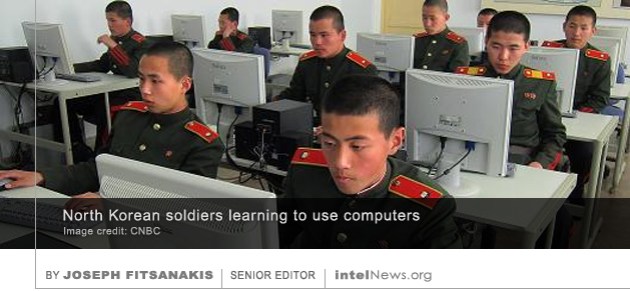
North KoreaNorth Korea’s intelligence establishment has shifted its attention from spying for political gain to spying for commercial advantage –primarily to secure funds for the cash-strapped country, according to a new report. Since the 1990s, the Democratic People’s Republic of Korea (DPRK) has used computer hacking in order to steal political and military secrets from its rivals. But there is increasing evidence that Pyongyang is now deploying armies of computer hackers in order to steal cash from foreign financial institutions and internet-based firms. This is the conclusion of a new report by the Financial Security Institute of South Korea, an agency that was set up by Seoul to safeguard the stability of the country’s financial sector.

The report, published last week, analyzed patterns of cyber attacks against South Korean state-owned and private financial institutions that took place between 2015 and 2017. It identified two separate computer hacking groups, which it named Lazarus and Andariel. According to the report, both groups’ activities, which are complementary, appear to be directed by the government of North Korea. An analysis of the groups’ targets suggests that Pyongyang has been directing its computer spies to find ways to secure hard currency for use by the government. Foreign currency has been increasingly hard to come by in North Korea in recent years, due to a host of international sanctions that were imposed on the country as a form of pressure against its nuclear weapons program.

Several cyber security experts and firms have claimed in recent months that North Korea has been behind recent cyber attacks against international banking institutions. The DPRK has also been blamed for a 2014 attack against the Hollywood studios of the Japanese multinational conglomerate Sony. Regular readers of intelNews will recall our story in March of this year about comments made on the subject of North Korea by Rick Ledgett, a 30-year veteran of the United States National Security Agency. Speaking at a public event hosted by the Aspen Institute in Washington, Ledgett expressed certainty that the government of North Korea was behind an attempt to steal nearly $1 billion from Bangladesh Bank —the state-owned central bank of Bangladesh—in 2016. Eventually the bank recovered most of the money, which were made through transactions using the SWIFT network. But the hackers managed to get away with approximately $81 million.

More recently, cyber security experts have claimed that the government of North Korea has been behind attempts to hack into automated teller machines, as well as behind efforts to steal cash from online gambling sites. In April of this year, the Russian-based cyber security firm Kaspersky Lab identified a third North Korean hacker group, which it named Bluenoroff. The Russian experts said Bluenoroff directed the majority of its attacks against foreign financial firms. There are rumors that Pyongyang was behind the wave of WannaCry ransomware attacks that infected hundreds of thousands of computers in over 150 countries in May. But no concrete evidence of North Korean complicity in the attacks has been presented.

Author: Joseph Fitsanakis | Date: 31 July 2017 | Permalink

CopyKittens cyber espionage group linked to Iranian state, says report

CopyKittensA cyber espionage group that has alarmed security researchers by its careful targeting of government agencies has links to the Iranian state, according to a new report. The existence of the group calling itself CopyKittens was first confirmed publicly in November of 2015. Since that time, forensic analyses of cyber attacks against various targets have indicated that the group has been active since at least early 2013. During that time, CopyKittens has carefully targeted agencies or officials working for Jordan, Saudi Arabia, Turkey, Israel, the United States, and Germany, among other countries. It has also targeted specific offices and officials working for the United Nations.

Throughout its existence, CopyKittens has alarmed cyber security researchers by its strategic focus on political targets belonging to governments. The group’s methods of operation do not resemble those of most other hacker groups, which are usually crude by comparison. Now a new report by two leading cyber security groups claims that CopyKittens is linked to the Iranian state. The report was published on Tuesday as a joint effort by Japan’s Trend Micro and Israel’s ClearSky firms. The report analyzes several operations by CopyKittens, some conducted as recently as last April. It concludes that CopyKittens is “an active cyber espionage actor whose primary focus [is] foreign espionage on strategic targets”. Additionally, the report suggests that the group operates using “Iranian government infrastructure”.

According to the Trend Micro/ClearSky report, CopyKittens tends to use relatively simple hacking techniques, such as fake social media profiles, attacks on websites, or emails that contain attachments that are infected with malicious codes. However, its members appear to be “very persistent” and usually achieve their goal “despite lacking technological sophistication”. The security report did not directly address the political ramifications of implicating the Iranian government in the CopyKittens’ hacking operations. The Reuters news agency contacted Iranian officials at the United Nations about the CopyKittens report, but they nobody was available for comment.

Author: Ian Allen| Date: 26 July 2017 | Permalink

Same hacker group is targeting French and German elections, says report

Konrad Adenauer FoundationThe same group cyber-spies that attacked the campaign of French presidential candidate Emmanuel Macron is now attacking German institutions that are connected to the country’s ruling coalition parties, according to a report by a leading cyber-security firm. The Tokyo-based security software company Trend Micro published a 41-page report on Tuesday, in which it tracks and traces the attacks against French and German political targets over the past two years. The report, entitled From Espionage to Cyber Propaganda: Pawn Storm’s Activities over the Past Two Years, concludes that the hackers are seeking to influence the results of the national elections in the European Union’s two most powerful nations, France and Germany.
The Trend Micro report focuses on a mysterious group that cyber-security experts have dubbed Pawn Storm —otherwise known as Sednit, Fancy Bear, APT28, Sofacy, and STRONTIUM. It says that the group has launched an aggressive phishing campaign against German political institutions, which has intensified in the past two months. The group allegedly set up fake computer servers in Germany and the Ukraine, and used them to try to infiltrate the computer networks of two elite German think-tanks, the Konrad Adenauer Foundation (KAF) and the Friedrich Ebert Foundation (FEF). The KAF is connected with the Christian Democratic Union party, which is led by Germany’s Chancellor, Angela Merkel. The FEF has strong ties with the centrist Social Democratic Party, which is part of Germany’s governing alliance.

The report’s leading author, cyber-security expert Feike Hacquebord, told the Reuters news agency that the hackers were possibly seeking to infiltrate the two think-tanks as a means of gaining access to the two political parties that are connected with them. Some cyber-security experts in Europe and the United States have said that the Russian Main Intelligence Directorate, the country’s military intelligence agency, known as GRU, is behind the cyber-attacks on France, Germany and the United States. But the Trend Micro report did not attempt to place blame on Moscow or any other country for the cyber-attacks. The Kremlin has denied involvement with the alleged hacking operations.

Author: Ian Allen | Date: 26 April 2017 | Permalink

North Korea is now robbing banks, says US intelligence official

North KoreaComments made by a senior American intelligence official on Tuesday appeared to suggest that the North Korean government was behind an attempt to steal nearly $1 billion from a Bangladeshi bank last year. The heist took place in February of 2016, when a computer malware was used to issue several requests to transfer funds from Bangladesh Bank —the state-owned central bank of Bangladesh— using the SWIFT network. The hackers were able to transfer five separate sums of $101 million each to a linked Bangladesh Bank account at New York’s Federal Reserve Bank. However, when further requests were issued, Federal Reserve Bank employees contacted Bangladesh Bank and blocked further transactions. Eventually, most of the transferred funds, which neared $1 billion, were recovered; but the hackers managed to get away with approximately $81 million worth of funds.

Forensic investigators described the heist as technically advanced. The antivirus company Symantec said it identified a piece of code in the malware that is known to have been used by North Korean government hackers in the past. Not everyone agreed with the claim that Pyongyang was behind the bank heist. But those who did, said that it was unprecedented in scope and aggressiveness. Some even said that the heist showed that North Korea’s cyber capabilities were among the most sophisticated and powerful in the world.

Meanwhile the United States government did not comment on the matter. However, this past Tuesday the deputy director of the National Security Agency appeared to confirm reports that North Korea was behind the Bangladesh Bank heist. Rick Ledgett, a 30-year veteran of the NSA, who is due to retire in 2018, was speaking at a public event hosted by the Aspen Institute in Washington, DC. He reminded the audience that private researchers had connected the malware code used in the Bangladesh Bank heist with that used in previous hacking attempts launched by North Korea. “If that linkage […] is accurate”, said Ledgett, it “means that a nation state is robbing banks”. When asked by the moderator whether he believes that to be the case, Ledgett responded “I do. And that’s a big deal”. Foreign Policy magazine reached out to Ledgett following his talk and asked him for clarification about his comments regarding the Bangladesh Bank heist. But the NSA official simply said that “the public case [about the heist] was well-made”. Foreign Policy also contacted the NSA, but the agency said it preferred not to comment on the matter.

Author: Joseph Fitsanakis | Date: 23 March 2017 | Permalink

Russia says it foiled major foreign cyber attack on its financial system

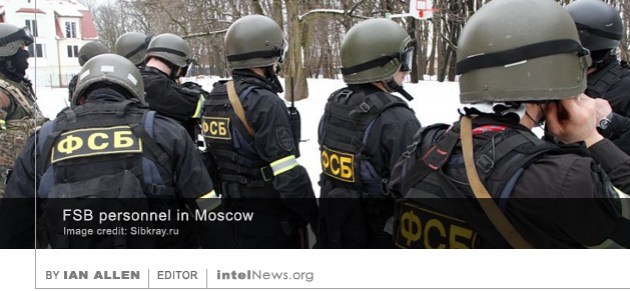
FSB - IARussian authorities say they prevented a large-scale cyber attack by “a foreign intelligence service”, which had been designed to destabilize the country’s financial system and subvert its economy. In an official statement published on its website last week, Russia’s Federal Security Service (FSB) said the perpetrators of the foiled attack had planned to carry it out on December 5. The spy agency, which stems from the Soviet-era KGB, said that the cyber attack had been designed to bring down computer systems belonging to some of Russia’s largest banking institutions.

Text to the statement by the FSB, the planned attack consisted of several components. One component included the use of social media and text messages to be spread through the mobile phone system. The goal was to spread rumors claiming that Russia’s financial system was facing imminent collapse and create panic in the Russian stock exchange. The FSB alleged that several large cities throughout Russia were to be targeted under the foiled plan. The spy agency claimed that the attack originated from a “foreign intelligence service”, but did not identify any countries as culprits of the operation. However, it said that a Ukrainian web hosting company had been used as a base from which to launch the attack through servers located in the Netherlands. On Friday, the Ukrainian web host, BlazingFast, denied that its systems had been used to prepare an attack on the Russian financial sector. In a statement published on Facebook, the company said it had not been contacted by Russian authorities, and assumed that the FSB had “been able to handle the situation without the need of BlazingFast’s cooperation”. It added that it was willing “to cooperate with any legal entity” to investigate Russia’s accusations.

In August of this year, the FSB disclosed that “a meticulously coded and sophisticated virus” had been found on the computer networks of at least 20 major Russian agencies and organizations. As intelNews reported at the time, the targets appeared to have been carefully selected by the malware’s authors. They included government bodies, weapons laboratories and defense contractors located throughout Russia.

Author: Ian Allen | Date: 06 December | Permalink

Sophisticated spy malware found on Russian government computers

FSB - IAAccording to the predominant media narrative, the United States is constantly defending itself against cyber-attacks from countries like China and Russia. But, as intelNews has argued for years, this narrative is misleading. Recent intelligence disclosures clearly show that the US cyber-security posture is as offensive as that of its major adversaries. Additionally, China and Russia have to defend their computer networks as much as America does. Last weekend’s report from Moscow helps restore some of the balance that is missing from media reporting on cyber-security. According to the Russian Federal Security Service (FSB), a meticulously coded and sophisticated virus has been found on the computer networks of at least 20 major Russian agencies and organizations. The targets appear to have been carefully selected by the malware’s authors. They include government bodies, weapons laboratories and defense contractors located throughout Russia.

The FSB said that once installed, the virus gave its handler control of the infected computer system. It permitted an outside hacker to turn on a computer’s microphone or camera, and capture screenshots. It also stealthily installed keylogging software, thus allowing an outside party to monitor keyboard strokes on an infected system. Based on its functions, the malicious software seems to be designed to conduct deep surveillance on infected computers and their physical surroundings. The FSB would not attribute the malware to a specific hacking group or nation. But it said it believed that the malware attack was “coordinated”, “planned and planned professionally”. It also said that the coding of the virus “required considerable expertise”. In a brief statement released Saturday, the FSB said that aspects of the coding of the virus, as well as other identifying information, resembled those detected in preceding hacking attacks on computer servers in Russia and other countries. The statement did not elaborate, however.

The news about hacked Russian computers comes less than two weeks after it was claimed that Russian government-backed hackers stole electronic data belonging to the Democratic National Convention (DNC) in the United States. The Democratic Party’s presidential candidate, Hillary Clinton, publicly accused the Russian government of orchestrating the hacking of the DNC computer systems in an attempt to damage her campaign.

Author: Ian Allen | Date: 01 August 2016 | Permalink

German nuclear power plant found to be infected with computer viruses

Gundremmingen nuclear power plantThe computers of a nuclear power plant in southern Germany have been found to be infected with computer viruses that are designed to steal files and provide attackers with remote control of the system. The power plant, known as Gundremmingen, is located in Germany’s southern district of Günzburg, about 75 miles northwest of the city of Munich. The facility is owned and operated by RWE AG, Germany’s second-largest electricity producer, which is based in Essen, North Rhine-Westphalia. The company provides energy to over 30 million customers throughout Europe.
On Tuesday, a RWE AG spokesperson said cybersecurity experts had discovered a number of computer viruses in a part of the operating system that determines the position of nuclear rods in the power plant. The software on the system was installed in 2008 and has been designed specifically for this task, said the company. The viruses found on it include two programs known as “Conficker” and “W32.Ramnit”. Both are responsible for infecting millions of computers around the world, which run on the Microsoft Windows operating system. The malware seem to be specifically designed to target Microsoft Windows and tend to infect computer systems through the use of memory sticks. Once they infect a computer, they siphon stored files and give attackers remote access to the system when the latter is connected to the Internet. According to RWE AG, viruses were also found on nearly 20 removable data drives, including memory sticks, which were in use by employees at the power plant. However, these data drives were allegedly not connected to the plant’s main operating system.

RWE AG spokespersons insisted this week that “Conficker”, “W32.Ramnit”, and other such malware, did not pose a threat to the nuclear power plant’s computer systems, because the facility is not connected to the Internet. Consequently, it would be impossible for an attacker associated with the viruses to acquire remote access to Gundremmingen’s computer systems. The company did not clarify whether it believed that the viruses had specifically targeted at the power plant. But they insisted that cyber security measures had been strengthened following the discovery of the malware, and said that they had notified Germany’s Federal Office for Information Security (BSI), which is now looking into the incident.

Author: Ian Allen | Date: 29 April 2016 | Permalink

Senior South Korean officials’ cell phones hacked by North: report

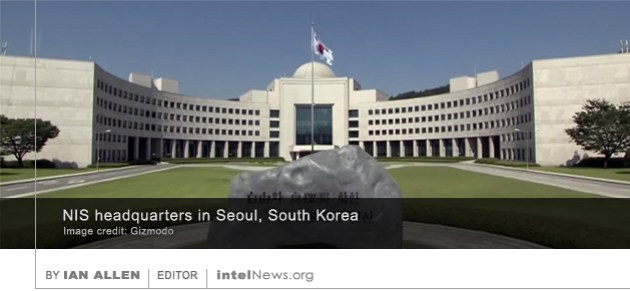
NIS South KoreaDozens of cell phones belonging to senior government officials in South Korea were compromised by North Korean hackers who systematically targeted them with texts containing malicious codes, according to reports. The National Intelligence Service (NIS), South Korea’s primary intelligence agency, said the cell phone penetrations were part of a concerted campaign by North Korea to target smart phones belonging to South Korean senior government officials. Once they managed to compromise a cell phone, the hackers were able to access the call history stored on the device, the content of text messages exchanged with other users and, in some cases, the content of telephone calls placed on the compromised device. Moreover, according to the NIS, the hackers were able to access the contact lists stored on compromised cell phones, which means that more attacks may be taking place against cell phones belonging to South Korean government officials.
The breach was considered critical enough for the NIS to host an emergency executive meeting with the security heads of 14 government ministries on Tuesday, in order to update them on the situation and to discuss ways of responding to the crisis. According to Korean media, the emergency meeting took place on Tuesday and lasted for over three hours. During the meeting the NIS told ministry representatives that the North Korean operation was launched in late February and was ongoing as of early this week. It specifically targeted government officials and appeared to concentrate on their cell phones, instead of their office phones –probably because the latter are known to be equipped with advanced anti-hacking features. The government employees’ cell phones were reportedly attacked using text messages and emails containing links to web sites that downloaded malicious codes on the users’ phones.

The NIS did not specify the precise purpose of the hacking operation, nor did it explain whether the attacks were informed by an overarching strategic goal. The officials targeted work for a variety of government ministries, but there is no clarification as to whether any operational or administrative links between them exist. The NIS did say, however, that approximately a fifth of all attacks against cell phones were successful in compromising the targeted devices.

Author: Joseph Fitsanakis | Date: 10 March 2016 | Permalink

America’s most senior intelligence official has his phone, email hacked

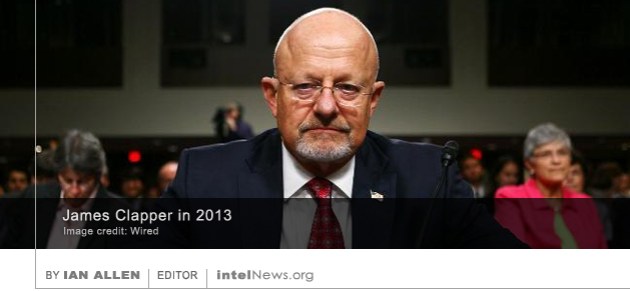
James ClapperA member of a hacker group that took responsibility for breaking into the personal email account of the director of the Central Intelligence Agency last year has now hacked the email of the most senior intelligence official in the United States. In October 2015, the hacker group referred to by its members as “Crackas With Attitude” —CWA for short— claimed it was behind the hacking of an AOL personal email account belonging to John Brennan, who heads the CIA. Less than a month later, the CWA assumed responsibility for breaking into an online portal used by US law enforcement to read arrest records and share sensitive information about crimes involving shootings. Shortly after the second CWA hack, the Federal Bureau of Investigation issued an alert to all government employees advising them to change their passwords and be cautious about suspicious emails and other phishing attempts.
On Monday, an alleged member of CWA contacted Motherboard, an online media outlet belonging to Vice Media, and alleged that the group had managed to hack into the personal email account of James Clapper, Director of National Intelligence (DNI). Clapper’s job is to help synchronize the operations of US intelligence agencies and to mediate between the US Intelligence Community and the Executive. According to CWA, clapper’s personal telephone and Internet service had also been compromised, as had his spouse’s personal email, which is hosted by Yahoo! services. The alleged CWA member told Motherboard that the forwarding settings of Clapper’s home telephone had been changed. As a result, calls made to the DNI were being forwarded to the headquarters of the Free Palestine Movement in California. Shortly afterwards, Free Palestine Movement executives confirmed that they had received a number of phone calls for Clapper. Last year, when they hacked the email of the director of the CIA, the CWA dedicated their action to the Free Palestine Movement.

Motherboard said that a spokesman at the Office of the DNI, Brian Hale, confirmed that Clapper’s personal email and telephone service had indeed been hacked. He told Motherboard’s Lorenzo Franceschi-Bicchierai that Office of the DNI was “aware of the matter” and had “reported it to the appropriate authorities”. The FBI was contacted as well but did not respond.

Author: Ian Allen | Date: 14 January 2016 | Permalink

US defense contractors allegedly hired Russian computer programmers

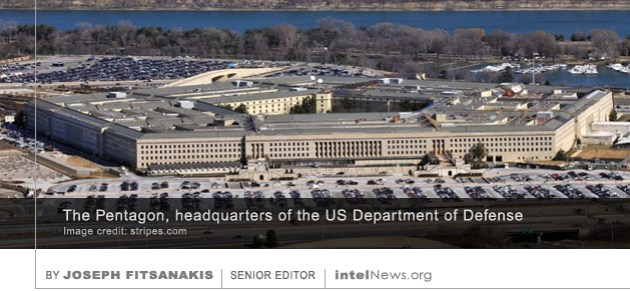
PentagonTwo American firms contracted by the Department of Defense have settled a lawsuit accusing them of having hired Russian programmers based in Moscow to write computer code for classified systems. The hires allegedly occurred as part of a $613 million contract, which was awarded by the US Pentagon to Massachusetts-based Netcracker Technology Corporation and Virginia-based Computer Systems Corporation (CSC). The two companies were hired to write software for the US Defense Information Systems Agency (DISA), a Pentagon outfit that provides the US armed forces with secure real-time combat communications. But in 2011, contractor John C. Kingsley, who had a supervisory role in the project, notified the US government that the two companies had farmed out part of the contract’s coding duties to programmers in Moscow and other Russian cities.

If true, Kingsley’s allegations would mean that Netcracker and CSC were in violation of federal regulations, which specify that only American citizens with the appropriate security clearances should be employed to work on classified communications systems. A subsequent government investigation, which lasted four years, gave rise to a lawsuit against the two companies. The court was told that the code written by the Russian programmers had allowed the installation of “numerous viruses” on the communications systems of the Pentagon “on at least one occasion”. Witnesses also accused Netcracker and CSC of being guided mainly by greed, since it was able to save over 60% of wage costs by employing the Russian programmers.

Last week, the two companies chose to settle the case, by paying the government a combined fee of nearly $13 million in civil penalties. It is important to note, however, that they both deny the government’s accusations that they violated the terms of their federal contract. In statement issued last week, the companies stated that their decision reflected their belief that it was “in the best interest of all stakeholders to settle the matter”. A spokeswoman for the DISA told The Daily Beast that she could not comment on the case, because doing so would “compromise the Agency’s national security posture”. According to The Daily Beast, last week’s settlement does not prevent the Department of Justice from filing criminal charges against Netcracker and CSC.

Author: Joseph Fitsanakis | Date: 12 November 2015 | Permalink | News tip: C.H.

Security firm says it shut down extensive Iranian cyber spy program

IRGC IranA security firm with headquarters in Israel and the United States says it detected and neutralized an extensive cyber espionage program with direct ties to the government of Iran. The firm, called Check Point Software, which has offices in Tel Aviv and California, says it dubbed the cyber espionage program ROCKET KITTEN. In a media statement published on its website on Monday, Check Point claims that the hacker group maintained a high-profile target list of 1,600 individuals. The list reportedly includes members of the Saudi royal family and government, American and European officials, North Atlantic Treaty Organization officers and nuclear scientists working for the government of Israel. The list is said to include even the names of spouses of senior military officials from numerous nations.
News agency Reuters quoted Check Point Software’s research group manager Shahar Tal, who said that his team was able to compromise the ROCKET KITTEN databases and acquire the list of espionage targets maintained by the group. Most targets were from Saudi Arabia, Israel, and the United States, he said, although countries like Turkey and Venezuela were also on the list. Tal told Reuters that the hackers had compromised servers in the United Kingdom, Germany and the Netherlands, and that they were using these and other facilities in Europe to launch attacks on their unsuspecting targets. According to Check Point, the hacker group was under the command of Iran’s Islamic Revolutionary Guards Corps, a branch of the Iranian military that is ideologically committed to the defense of the 1979 Islamic Revolution.

Reuters said it contacted the US Federal Bureau of Investigation and Europol, but that both agencies refused comment, as did the Iranian Ministry of Foreign Affairs. However, an unnamed official representing the Shin Bet, Israel’s domestic security agency, said that ROCKET KITTEN “is familiar to us and is being attended to”. The official declined to provide further details. Meanwhile, Check Point said it would issue a detailed report on the subject late on Monday.

Author: Joseph Fitsanakis | Date: 10 November 2015 | Permalink

CIA pulled officers from Beijing embassy following OPM database hack

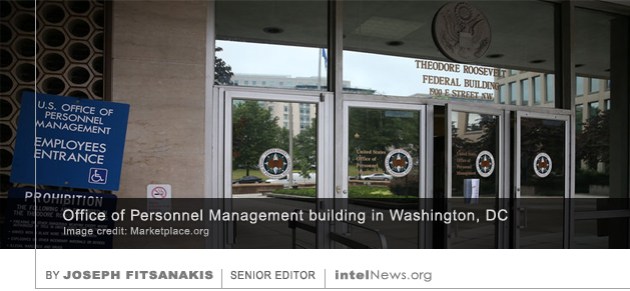
Office of Personnel ManagementThe Central Intelligence Agency (CIA) pulled a number of officers from the United States embassy in Chinese capital Beijing, after a massive cyber hacking incident compromised an American federal database containing millions of personnel records. Up to 21 million individual files were stolen in June of this year, when hackers broke into the computer system of the US Office of Personnel Management (OPM), which handles applications for security clearances for agencies of the federal government. The breach gave the unidentified hackers access to the names and sensitive personal records of millions of Americans who have filed applications for security clearances —including intelligence officers.
According to sources in the US government, the records of CIA employees were not included in the compromised OPM database. However, that is precisely the problem, according to The Washington Post. The paper said on Wednesday that the compromised OPM records contain the background checks of employees in the US State Department, including those stationed at US embassies or consulates around the world. It follows that US diplomatic personnel stationed abroad whose names do not appear on the compromised OPM list “could be CIA officers”, according to The Post. The majority of CIA officers stationed abroad work under diplomatic cover; they are attached to an embassy or consulate and enjoy diplomatic protection, which is typically invoked if their official cover is blown. However, they still have to present their credentials and be authorized by their host country before they assume their diplomatic post. The CIA hopes that foreign counterintelligence agencies will not be able to distinguish intelligence personnel from actual diplomats.

Although the US has not officially pointed the finger at a particular country or group as being behind the OPM hack, anonymous sources in Washington have identified China as the culprit. If true, The Post’s claim that the CIA pulled several of its officers from the US embassy in Beijing would add more weight to the view that the Chinese intelligence services were behind the cyber theft. The paper quoted anonymous US officials who said that the CIA’s decision to remove its officers from Beijing was directly related to the OPM hack, and it was meant to safeguard their personal security, as well as to protect CIA programs currently underway in China.

Author: Joseph Fitsanakis | Date: 1 October 2015 | Permalink

Hackers stole 5.6 million US government employee fingerprints

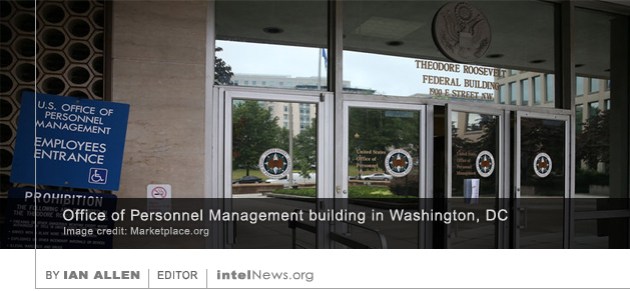
Office of Personnel Management 2A massive cyber hacking incident that compromised a United States federal database containing millions of personnel records also resulted in the theft of 5.6 million fingerprint records, American officials have said. Up to 21 million individual files were stolen in June of this year, when hackers broke into the computer system of the US Office of Personnel Management (OPM), which handles applications for security clearances for all agencies of the federal government. The breach gave the unidentified hackers access to the names and sensitive personal records of millions of Americans who have filed applications for security clearances —including intelligence officers.

Back in July, OPM officials told reporters that just over 1 million fingerprint records had been compromised by the cyber hack. However, a new statement issued by the White House last week said that the actual number of stolen fingerprints from the OPM database was closer to 5.6 million. In a subsequent statement, the OPM said there was little that the hackers could do with the fingerprint records, and that the potential for exploitation was “currently limited”. But it added that, as technology continued to be developed, the risk of abuse of the stolen fingerprint records could increase. Therefore, an interagency working group would be put together to “review the potential ways adversaries could misuse fingerprint data now and in the future”, the OPM statement said. It added that the group would be staffed with fingerprint specialists for the Federal Bureau of Investigation, the Department of Defense and the Department of Homeland Security.

External American intelligence agencies, which typically send their officers abroad posing as diplomats, and sometimes under cover identities, are reportedly concerned that certain foreign counterintelligence agencies will be able to use the stolen fingerprints to identify the true identities or professional background of US government employees stationed abroad.

Author: Ian Allen | Date: 29 September 2015 | Permalink