News you may have missed #817 (assassinations edition)
December 19, 2012 1 Comment
 By IAN ALLEN | intelNews.org |
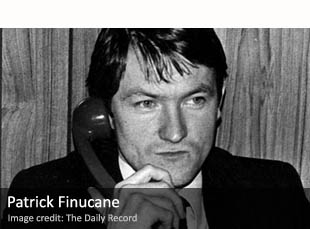
►►British PM apologizes in killing of IRA lawyer. The Prime Minister of the United Kingdom, David Cameron, has apologized after a government report found that British intelligence officials had colluded with loyalist paramilitaries in the 1989 killing of lawyer Patrick Finucane in Belfast, Northern Ireland. Finucane, who had represented members of the Irish Republic Army in court, was shot dead by two gunmen from a Protestant paramilitary group while having a Sunday dinner at his home with his wife and three children.
►►Behind the plot to kill Afghanistan’s spy chief. On December 11, we reported that the Afghan government accused Pakistani intelligence of having played a role in the assassination of Assadullah Khaled, who heads Afghanistan’s National Directorate for Security. But how was the attempt on Khaled’s life carried out, and how did the aspiring assassins get so close to the controversial intelligence chief? Time magazine reports that it was Khaled’s self-confidence “bordering on recklessness” that almost got him killed. Sources say that, even after taking over the NDS, Khalid frequently drove around without bodyguards.
►►How Mossad bid to kill Hamas leader ended in fiasco. Khaled Mashal’s recent presence in the Gaza Strip will have rudely reminded Benjamin Netanyahu, the Israeli Prime Minister, of one of the greatest fiascos in the history of special operations, writes The Daily Telegraph‘s David Blair. Fifteen years ago, Netanyahu authorized a risky attempt to assassinate Mashal in the Jordanian capital, Amman. Everything went wrong. The Jordanian security forces responded to this brazen daylight attack, arresting two of the Israeli operatives and forcing three to hide in their country’s embassy, which was promptly surrounded by troops.








 intelNews.org
News you may have missed #887 (Anglosphere edition)
January 13, 2015 by Ian Allen Leave a comment
►►Canadian military deploys spies during Arctic exercise. The Canadian military has been routinely deploying a counter-intelligence team to guard against possible spying, terrorism and sabotage during its annual Arctic exercise, according to internal documents. In the view of intelligence experts, the move is unusual because Operation NANOOK is conducted on Canadian soil in remote locations of the Far North.
►►Sudden resignation of NZ spy chief raises questions. Opposition parties in New Zealand have raised questions over the sudden resignation of Government Communications Security Bureau (GCSB), Ian Fletcher, who is stepping down after three years in the role. Chris Finlayson, the minister responsible for the spy agency, said Fletcher was making the move for family reasons. Fletcher will finish in the role on 27 February and an acting director will be appointed from that date.
►►British government argues for more powers for spy agencies. Britain’s spying agencies need more powers to read the contents of communications in the wake of the Paris terror attacks, British Prime Minister David Cameron has said. Speaking in Nottingham, he said the intelligence agencies need more access to both communications data –records of phone calls and online exchanges between individuals– and the contents of communications. This is compatible with a “modern, liberal democracy”, he said.
Filed under Expert news and commentary on intelligence, espionage, spies and spying Tagged with 0 British government argues for more powers for spy agencies, 0 Canadian military deploys spies during Arctic exercise, 0 Sudden resignation of NZ spy chief raises questions, Arctic circle, Canada, Chris Finlayson, civil liberties, David Cameron, Government Communications Security Bureau (New Zealand), Ian Fletcher, New Zealand, News, news you may have missed, Operation NANOOK, UK