Cold-War-era Soviet spy George Blake issues rare statement from Moscow

George BlakeOne of the Cold War’s most recognizable spy figures, George Blake, who escaped to the Soviet Union after betraying British intelligence, issued a rare statement last week, praising the successor agency to Soviet-era KGB. Blake was born George Behar in Rotterdam, Holland, to a Dutch mother and a British father. Having fought with the Dutch resistance against the Nazis, he escaped to Britain, where he joined the Secret Intelligence Service, known as MI6, in 1944. He was serving in a British diplomatic post in Korea in 1950, when he was captured by advancing North Korean troops and spent time in a prisoner of war camp. He was eventually freed, but, unbeknownst to MI6, had become a communist and come in contact with the Soviet KGB while in captivity. Blake remained in the service of the KGB as a defector-in-place until 1961, when he was arrested and tried for espionage.

After a mostly closed-door trial, Blake was sentenced to 42 years in prison, which at that time was the longest prison sentence ever imposed in Britain. However, he managed to escape in 1966, with the help of Irish republican prisoners in London’s Wormwood Scrubs prison, where he was serving his sentence. With the help of Soviet intelligence, Blake made his way to France and from there to Germany and East Berlin, hiding inside a wooden box in the back of a delivery van. He eventually resurfaced in Moscow, where he has lived ever since, in a small, government-provided dacha (Russian cottage) located on the outskirts of the Russian capital.

Last Friday, Blake issued a statement on the eve of his 95th birthday. The statement was posted on the SVR’s official website and published by several Russian news agencies. The convicted spy said that he placed his hopes for the peace of mankind on the “men and women” of Russia’s Foreign Intelligence Service —the main institutional descendant of the Soviet KGB. Blake praised the SVR’s officers as “heroes” who are engaged in “a true battle between good and evil” at a time when “the danger of nuclear war and the resulting self-destruction of humankind” is a real threat. The spy added that the prospect of nuclear annihilation has been “put on the agenda by irresponsible politicians”, in what Russian news agencies interpreted as a comment that was directed against United States President Donald Trump.

The end of Blake’s statement is followed by a second statement, written by the Director of the SVR, Sergei Naryshkin. Naryshkin, who was appointed to his current post by Russian President Vladimir Putin a year ago, congratulates Blake on his 95th birthday and calls him a “reliable old comrade” and “a man of great wisdom”. Blake is “a proficient teacher”, says  Naryshkin, who has been a longtime role model for the officers of the SVR.

Author: Joseph Fitsanakis | Date: 15 November 2017 | Permalink

Kim Jong-un lacks confidence, will not start war, says senior N. Korean defector

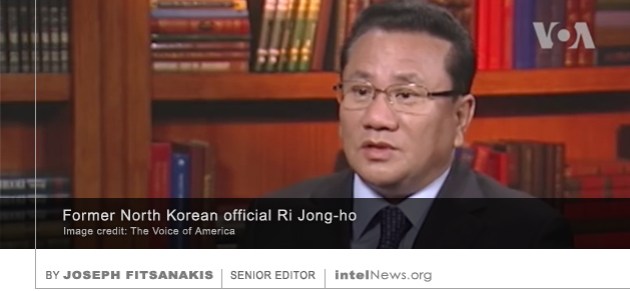
https://intelnews.org/wp-content/uploads/2017/06/first-post-h6.jpgNorth Korean Supreme Leader Kim Jong-un has consolidated his position by killing hundreds of domestic critics in recent years, but he lacks confidence and will not go to war against outside powers, according to a senior North Korean defector. Ri Jong-ho was a senior official in North Korea under its previous leader, the late Kim Jong-il. He rose through the ranks of the Workers’ Party of Korea and was directly mentored by Kim, who personally appointed him to a post in Bureau 39. The powerful body is in charge of securing much-needed foreign currency for Pyongyang —often through illegal activities— and partly funds the personal accounts of the ruling Kim dynasty.

But Ri’s mentor, Kim Jong-il, died in 2011. Distrustful of his son and successor, Kim Jong-un, Ri defected with his family to South Korea in October 2014; fifteen months later, in March 2016, he arrived in the United States. Speaking at an event hosted by the Asia Society in New York earlier this week, Ri said he decided to defect after Kim Jong-un issued orders for the execution of his uncle, Jang Song-thaek, who was vice chairman of the National Defense Commission of North Korea. Along with Jang, said Ri, hundreds of military officers who were faithful to him were also executed. In many cases, their families were also killed or sent to concentration camps. It was through these purges, said Ri, that Kim consolidated his power in North Korea after 2013.

Commenting on the heightened rhetoric between Pyongyang and Washington, Ri insisted that North Korea’s decision to develop a nuclear arsenal was not a direct threat, but rather a clear sign of Pyongyang’s weakness. North Korea has always felt directly threatened by South Korea and its Western ally, the United States, said Ri, and resorts to “tough rhetoric” in order to compensate for its social and economic weakness. Pyongyang’s rhetoric, therefore, “does not guarantee escalation”, said Ri, adding that Kim Jong-un lacks confidence. The high-profile defector added that the North Korean regime has grown increasingly isolated, even for China, which adds to its vulnerability. Kim Jong-un does not trust China, said Ri, and often refers to the Chinese President, Xi Jinping, as “a dog”. Ri concluded his remarks in New York by stating that the heightened rhetoric from North Korea was a distraction aimed at concealing the regime’s crumbling economy and fear of the economic might of its southern neighbor.

Author: Joseph Fitsanakis | Date: 19 October 2017 | Permalink
Secret documents passed to the KGB by Kim Philby displayed in Moscow

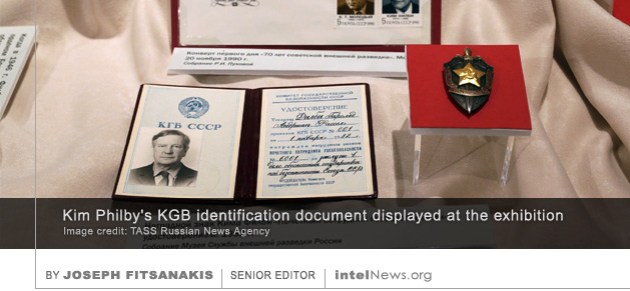
Kim PhilbyThe life of Kim Philby, one of the Cold War’s most recognizable espionage figures, is the subject of a new exhibition that opened last week in Moscow. Items displayed at the exhibition include secret documents stolen by Philby and passed to his Soviet handlers during his three decades in the service of Soviet intelligence. While working as a senior member of British intelligence, Harold Adrian Russell Philby, known as ‘Kim’ to his friends, spied on behalf of the Soviet NKVD and KGB. His espionage lasted from about 1933 until 1963, when he secretly defected to the USSR from his home in Beirut, Lebanon. Philby’s defection sent ripples of shock across Western intelligence and is often seen as one of the most dramatic incidents of the Cold War.
Now a new exhibition in Moscow has put on display some of Philby’s personal belongings, as well as a fraction of the many classified documents he passed on to his Soviet handlers during his 30 years of espionage. Entitled “Kim Philby: His Intelligence Work and Personal Life”, the exhibition is organized by the Russian Historical Society. The majority of the new documents appear to date from 1944, by which time Philby had been working for the NKVD for over a decade. Some of the documents are cables sent by Italian, Japanese or German diplomats prior to and during World War II, which were intercepted by British intelligence. Copies of some of these intercepts, which Philby passed to Moscow, are displayed in the exhibition. One document clearly bears the English-language warning: “Top Secret. To be kept under lock and key: never to be removed from this office”. Another document appears to be part of a report that Philby produced after teaching a seminar for KGB intelligence officers about how to operate in the West. It is dated 1982, by which time Philby had been living in Russia for nearly two decades.

Philby died in the Soviet capital in 1988, aged 76, and was survived by his fourth wife, Rufina Ivanovna Pukhova, whom he met after he defected to the USSR. Pukhova attended the opening of the exhibition in Moscow last week, as did over a dozen of Philby’s students at the former KGB. Russian media reported that the director and several officials of the Foreign Intelligence Service (SVR), one of the KGB’s successor agencies, were also present during the official opening of the exhibition.

Author: Joseph Fitsanakis | Date: 26 September 2017 | Permalink

North Korea secretly imports Russian oil through Singapore, says defector

Ri Jong-hoThe government of North Korea uses intermediary firms in Singapore to import thousands of tons of Russian oil each year, according to a senior North Korean defector who has spoken publicly for the first time since his defection. Ri Jong-ho was a senior official in the Democratic People’s Republic of Korea under its previous leader, the late Kim Jong-il. He rose through the ranks of the Workers’ Party of Korea and was directly mentored by Kim, who personally appointed him to a post in Bureau 39. The powerful body is in charge of securing much-needed foreign currency for Pyongyang —often through illegal activities— and partly funds the personal accounts of the ruling Kim dynasty.

From the mid-1990s until his 2014 defection, Ri spent nearly three decades in senior positions inside the DPRK. These included the chairmanship of the board of the Korea Kumgang Group, a state-managed firm that oversees large-scale economic activity in North Korea, such as constructing energy networks and commissioning oil and natural-gas exploration. Between 1998 and 2004, Ri lived in the Chinese city of Dalian, where he headed the local branch of the Korea Daesong Trading Corporation. The Pyongyang-based company facilitates North Korea’s exports to China in exchange for Chinese goods and products.

But Ri’s mentor, Kim Jong-il, died in 2011. His son and successor, Kim Jong-un, engaged in a brutal campaign to remove his father’s advisers and replace them with his own people. During that time, said Ri, thousands of senior and mid-level officials were purged, some physically. Frightened and disillusioned, Ri defected with his family to South Korea in October 2014; fifteen months later, in March 2016, he arrived in the United States. On Tuesday, the Voice of America published Ri’s first public interview since his defection.

Among other things, the former Bureau 39 official said that the North Korean regime sustains itself with the help of oil it imports from nearby countries. One of the regime’s main sources of energy is Russia, which supplies Pyongyang with between 200,000 and 300,000 tons of oil every year. But the trade does not occur directly, said Ri. Moscow sells the oil to energy-trading companies in Singapore. These mediators then sell the oil to the DPRK through separately agreed contracts, so that Russia does not appear to be providing Pyongyang with desperately needed oil. The so-called “Singapore line” was established by North Korea in the 1990s, said Ri, and appears to still be active. In addition to Russian oil, the DPRK imports approximately 500,000 tons of oil per year from China, through pipelines, according to Ri.

Author: Joseph Fitsanakis | Date: 29 June 2017 | Permalink

Werner Stiller, one of the Cold War’s most notable defectors, dies

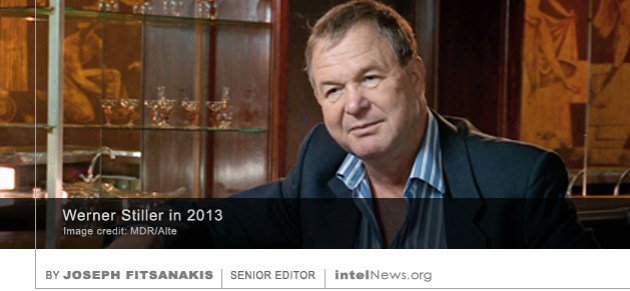
Werner StillerWerner Stiller, also known as Klaus-Peter Fischer, whose spectacular defection to the West in 1979 inflicted one of the Cold War’s most serious blows to the intelligence agency of East Germany, has died in Hungary. Stiller, 69, is believed to have died on December 20 of last year, but his death was not reported in the German media until last week. Born in 1947 in the German Democratic Republic, Stiller excelled in the sciences from an early age and eventually studied physics at the University of Leipzig, which was known at the time as Karl Marx Universitat. Shortly after graduating, he joined the GDR’s Ministry of State Security, commonly known as the Stasi. Within a few years, he was working as a case officer for the Main Directorate for Reconnaissance, the Stasi’s foreign intelligence division, where he was in charge of scientific espionage in the West. By the late 1970s, Stiller was handling nearly 30 spies —most of them abroad— who were regularly providing him with intelligence relating to nuclear research, weapons technologies, and biomedical research.
However, the Stasi vehemently disapproved of Stiller’s promiscuous lifestyle —he was married five times in his life and was reputed to have had many more affairs— which was one of the reasons why he decided to seek a new life in the West. In January of 1979, with the help of a waitress he was having an affair with, Stiller defected to West Germany along with a packet of microfiche containing hundreds of classified Stasi documents. He later helped the waitress escape to the West with her young son and an estimated 20,000 more pages of classified documents. The West German Federal Intelligence Service (BND) eventually shared the information from Stiller’s defection with the United States Central Intelligence Agency. It led to the dramatic arrests of 17 Stasi agents and officers in Europe and the US, while at least 15 others escaped arrest at the last minute, after being urgently recalled back to East Germany. The Stasi is believed to have recalled an additional 40 operatives from several Western countries as a precaution in response to Stiller’s defection. The information that Stiller gave to the BND also helped visually identify the longtime director of the Stasi’s Main Directorate for Reconnaissance, Markus Wolf. Previously, Western intelligence services had no photographs of Wolf, who was known as ‘the man without a face’, due to the many decades he spent as an undercover officer.

In 1981, Stiller moved to the US, where the CIA provided him with a new identity, using the fake name Klaus-Peter Fischer, a Hungarian émigré. He studied economics at Washington University in St. Louis, Missouri, before working as an investment banker for Goldman Sachs in the US and eventually an exchange broker for Lehman Brothers in Germany. It is believed that the Stasi kept looking for Stiller until the dissolution of the GDR in 1990, with the intent of abducting him or killing him. In 1999, Stiller moved to Hungary, where he stayed until the end of his life. He is survived by a son and a daughter.

Author: Joseph Fitsanakis | Date: 04 April 2017 | Permalink

Chinese diplomat who defected to Australia breaks silence to warn of spies

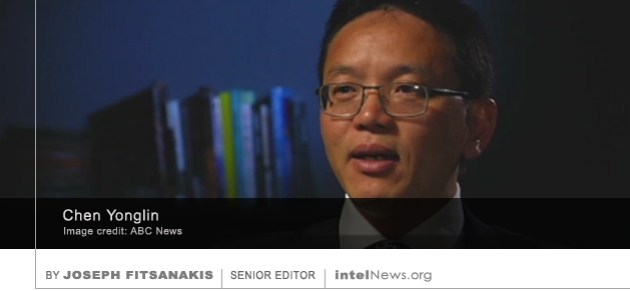
Chen YonglinA Chinese diplomat, who made international news headlines in 2005 when he defected to Australia, has ended a decade of silence to warn about an alleged increase in Chinese espionage operations against his adopted country. Chen Yonglin was a seasoned member of the Chinese diplomatic corps in 2001, when he was posted as a political affairs consul at the Chinese consulate in Sydney, Australia. His job was to keep tabs on the Chinese expatriate community in Australia, with an emphasis on individuals and organizations deemed subversive by Beijing. He later revealed that his main preoccupation was targeting members of the Falun Gong spiritual movement, which is illegal in China. He also targeted supporters of Taiwanese independence, as well as Tibetan and East Turkestan nationalists who were active on Australian soil.
But in 2005, Chen contacted the Australian government and said that he wanted to defect, along with his spouse and six-year-old daughter. He was eventually granted political asylum by Canberra, making his the highest-profile defection of a Chinese government employee to Australia in over half a century. During a subsequent testimony given to the Parliament of Australia, Chen said that he was in contact with Australian intelligence and was giving them information about alleged Chinese espionage activities. He said at the time that China operated a network of over 1,000 “secret agents and informants” in Australia. Chen distinguished agents and informants from Chinese intelligence officers, most of whom were stationed in Chinese diplomatic facilities.

Chen, who now works as a businessman, disappeared from the public limelight after his defection. But last weekend, he reappeared after a decade of obscurity and gave an interview to ABC, Australia’s national broadcaster. The ABC journalist reminded Chen that in 2005 he had estimated the number of Chinese agents and informants operating in Australia at 1,000, and asked him how many he thought were active today. Chen responded that an increase in the number is certain, given that “China is now the wealthiest government in the world”. That meant, said Chen, that Beijing has the funds that are necessary to maintain “a huge number of spies” in Australia. However, the former diplomat said that most Chinese agents are “casual informants”, not trained spies, and that they are dormant for long periods of time in between operations.

Author: Joseph Fitsanakis | Date: 24 November 2016 | Permalink

Russian defectors claim US intelligence agencies failed to protect them

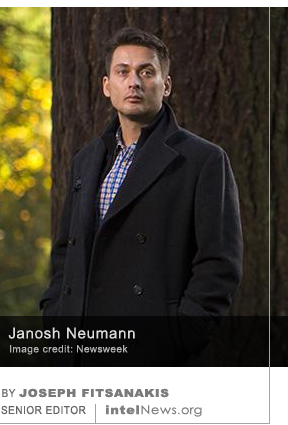
Janosh NeumannTwo Russian intelligence officers, who defected to the United States in 2008, claim that they had to fend for themselves after American spy agencies failed to protect them despite promises to the contrary. Janosh Neumann (born Alexey Yurievich Artamonov) and his wife Victorya were employees of Russia’s Federal Security Service (FSB) specializing in investigations of money laundering and corruption. But in 2008 they traveled from Russia to Germany and from there to the Dominican Republic. Once in the Caribbean island, they entered the US embassy and offered to work for the Central Intelligence Agency (CIA).
The couple claim that they provided “a trove of secrets” to the CIA, including information on FSB officials who engaged in corrupt practices such as bribing, money-laundering and large-scale tax evasion. In return, the CIA transported the Neumanns to America, where they were granted permission to settle temporarily based on humanitarian grounds. The two Russian defectors claim that they were promised green cards and, eventually, American citizenship. For several months following their entry into the US, the Neumanns were kept in a government safe house, where they were debriefed, given polygraph tests, and met regularly with officials from the Departments of Justice and Treasury, as well as with employees of the Federal Bureau of Investigation (FBI) and the CIA. They say they gave information to the CIA about the methods used by Russian intelligence operatives to infiltrate American corporations. But when the CIA tried to convince them to move back to Russia and work there for the US government as agents-in-place, the Neumanns refused and chose instead to work for the FBI.

The two Russians say the worked for the Bureau for five years, during which time they were paid approximately $1 million. But in 2013 when their employment contracts expired, the FBI did not renew them. Later that year, the Neumanns’ temporary visa to remain in the US expired. Meanwhile, US immigration authorities denied Janosh’s application for a green card because he allegedly hinted that he tortured people for the FSB during his interview with a US immigration official. Eventually, the Russian defectors convinced the FBI to send immigration officials a letter stating that there was no reason to assume that Janosh had tortured or persecuted people in Russia. Earlier this year, the Newmanns, who recently had a baby here in the US, were allowed to stay and have now applied for green cards again. But they say they reserve the right to sue the US government for having previously denied them protection and citizenship.

Author: Ian Allen | Date: 17 November 2016 | Permalink

More on senior North Korean diplomat who defected in London

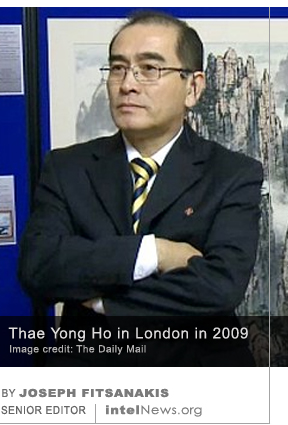
Thae Yong-HoA high-ranking North Korean diplomat, who defected with his wife and children in London, and is now in South Korea, is from a privileged family with a long revolutionary pedigree in North Korean politics. South Korea’s Ministry of Unification confirmed on Wednesday that Thae Yong-Ho, the second-in-command at the North Korean embassy in the United Kingdom, had defected with his wife and children and had been given political asylum in South Korea. As intelNews reported earlier this week, Thae, a senior career diplomat believed to be one of North Korea’s foremost experts on Western Europe, had disappeared with his family and was presumed to have defected “to a third country”.
New information has since emerged on Thae and his family, confirming that both he and his wife are members of North Korea’s privileged elite, with decades-old connections to the ruling Workers’ Party of Korea. According to the Seoul-based JoongAng Daily, Thae’s wife, O Hye-Son, is a niece of the late O Peak-Ryong, a decorated communist guerrilla who fought Korea’s Japanese colonialists in the 1930s. O, who died in the 1980s, joined the Korean anti-Japanese struggle alongside Kim Il-Sung, founder of the Workers’ Party of Korea and first leader of North Korea. This means that O Hye-Son is also the cousin of O Peak-Ryong’s son, General O Kum-Chol, who is currently vice chairman of the General Staff of the Korean People’s Army. Thae himself is the son of Thae Pyong-Ryol, a four-star general who also fought against the Japanese in the 1930s, alongside Kim Il-Sung. In the postwar period, General Thae became a senior member of the Workers’ Party of Korea and was appointed to the Party’s powerful Central Committee. He died in 1997.

JoongAng Daily quoted an unnamed “source familiar with the matter” of Thae’s defection, who said that the diplomat’s loyalty to the North Korean leadership had been unquestioned prior to his surprise defection. Most North Korean diplomats are posted at an embassy abroad for a maximum of three years before being moved elsewhere in the world. The fact that Thae had been allowed to remain in the United Kingdom for 10 years shows his privileged status within the Workers’ Party of Korea, said the source. Additionally, the children or most North Korean diplomats are required to return to their native country after completing high school. But this did not seem to apply to Thae, whose three children were living with him in Britain even after graduating from university. This and many other clues reflect Thae’s “impeccable credentials”, said the source, which made him one of the most trusted government officials in the regime’s bureaucratic arsenal.

It is believed that Thae defected because he had been told that his tenure in London was coming to an end after a decade, and he would have to relocate to a less desirable location, or possibly recalled back to Pyongyang. Defections among North Korea’s privileged elite are rare, but have been happening increasingly frequently in the past few years. This makes some observers believe that disillusionment among Supreme Leader Kim Jong-Un’ inner circle is growing and that the North Korean regime is becoming weaker.

Author: Joseph Fitsanakis | Date: 19 August 2016 | Permalink

Senior North Korean diplomat reportedly defects in London (updated)

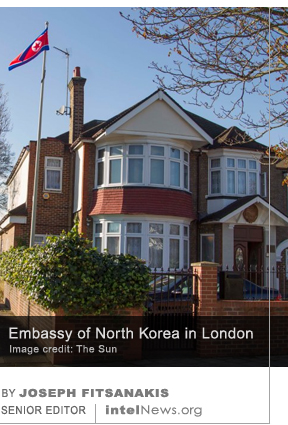
DPRK Embassy in LondonA senior member of North Korea’s diplomatic representation in the United Kingdom, who is considered one of his country’s leading specialists in Western European affairs, has reportedly defected “to a third country” with his family. The alleged defection was first reported on Tuesday by South Korean newspaper JoongAng Ilbo. Citing “a source with in-depth knowledge of North Korea”, the Seoul-based paper said that the diplomat had disappeared several weeks ago, and that staff at the embassy of North Korea in London had failed in attempts to find him. Later on the same day, the British state-owned broadcaster BBC identified the missing diplomat as Thae Yong-Ho.

In a brief report, the BBC said that the diplomat had lived with his wife and children in London for a decade, and that the family —especially its younger members— were very integrated in British culture and way of life. Further updates in South Korean media said Thae was serving as deputy consul at the embassy, essentially as second-in-command after Ambassador Hak Bong Hyon. It is also believed that Thae was tasked with promoting a positive image of North Korea to British audiences, and was also in charge of cultivating the embassy’s relations with the UK Korean Friendship Association, an organized group of North Korean ideological sympathizers in Britain. But some reports indicate that the alleged defector also performed intelligence tasks, such as monitoring the activities of North Korean defectors living in London.

Thae is believed to be a senior member of North Korea’s diplomatic community. He grew up in China and is fluent in Chinese and English, in addition to his native Korean. He joined North Korea’s diplomatic ranks soon after graduating from university and is said to be one of the country’s foremost experts on Western Europe. If confirmed, his defection will deliver a serious blow to North Korea’s prestige and arguably hurt its intelligence capabilities in the West. This development will also have a major impact on the operations of the Asian country’s embassy in London, which is run by only five diplomats, including the ambassador. No comments have been made on this story by the UK Foreign and Commonwealth Office, the embassy of North Korea in London, or the government of South Korea. According to JoongAng Ilbo, Thae is currently “going through procedures to seek asylum in a third country” with his family.

Update 17 Aug. 2016, 5:00 p.m. GMT: The BBC now reports that Thae has defected to South Korea and that he and his family are “under the [South Korean] government’s protection”, according to officials in Seoul. He is believed to be the most senior North Korean official to have ever defected in the history of the communist state.

Author: Joseph Fitsanakis | Date: 17 August 2016 | Permalink

Iran executes nuclear scientist who claimed he was kidnapped by CIA

Shahram AmiriAuthorities in Iran have admitted that they executed a former scientist for the country’s nuclear program, who claimed that he was abducted by the United States after disappearing from Iran for a year. Shahram Amiri worked for the Atomic Energy Organization of Iran, the government body that is responsible for operating and regulating the country’s nuclear installations. But in the summer of 2009, while on a religious pilgrimage to the Saudi Arabian city of Mecca, Amiri disappeared. Iranian authorities alleged at the time that Amiri had been kidnapped and possibly killed by Saudi, Israeli or American intelligence operatives.
Remarkably, the Iranian scientist reappeared almost a year later in Washington, DC. He entered the embassy of Pakistan in the American capital and asked to speak to the official in charge of the embassy’s Iranian interests section (since America and the Islamic Public have no official diplomatic relations, Pakistan’s embassy serves as an intermediary). He told officials at the embassy that he had been abducted by the Central Intelligence Agency after being drugged in Saudi Arabia. He also claimed that he was secretly transported to the US, where he was “subjected to intense psychological pressure” involving psychotropic drugs, interrogated and forced to reveal secrets about Iran’s nuclear program. But US officials denied Amiri’s claims and said the Iranian scientist had defected on his own accord and was free to return to Iran, if he wanted. Unconfirmed reports suggested that Amiri had changed his mind after defecting to the US, because he feared that Iranian authorities would harm his family. Some anonymous sources in Washington also claimed that Amiri had been offered $5 million for the information he gave the CIA, but that he had chosen to return to Iran instead of accepting the money.

On July 15, 2010, just three days after contacting the Pakistani embassy in DC, Amiri returned to a hero’s welcome in Iran, which was televised live. Meanwhile, Iranian officials accused the US and Israel of employing dirty tactics against the Islamic Republic. However, in May 2011 Amiri was suddenly arrested at his family home in Tehran and charged with treason. He underwent a secret trial, was convicted and was never again seen in public. On Saturday, Amiri’s family said they had received his body from the government, and that it appeared that he had died from hanging, judging by rope marks around his neck. On Sunday, Iran’s first deputy chief justice and former intelligence minister, Gholam-Hossein Mohseni-Eje’i, told reporters that Amir had indeed been executed by hanging. During his brief announcement, Mohseni-Eje’i said Amiri had endangered the Islamic Republic by giving “vital intelligence about the country to the enemy”, by which he said he meant the United States.

Author: Joseph Fitsanakis | Date: 07 August 2016 | Permalink

Senior Russian intelligence defector to the US is allegedly dead

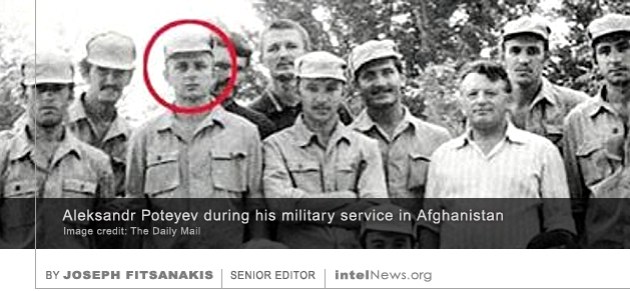
Aleksandr PoteyevA Russian former senior intelligence officer, who reportedly defected to the United States after helping the Federal Bureau of Investigation arrest 10 Russian spies in 2010, is believed to have died. The arrests, which revealed the so-called “Russian illegals program” in the US, were part of a counterintelligence operation codenamed GHOST STORIES by the FBI. The operation culminated in June 2010 with the dramatic arrests of 10 Russian ‘illegals’ in several US states. The Russian illegals, deep-cover intelligence operatives with no official connection to the country that employs them, had been operating in the US for over a decade prior to their arrest, using passports from third countries, including Britain, Canada and Uruguay. They were eventually exchanged with spies for the West that had been imprisoned in Russia.

Moscow blamed the arrests of the illegals on Colonel Aleksandr Poteyev, a veteran of the Soviet war in Afghanistan, who rose through the ranks of the KGB and its successor agency, the SVR, to become second-in-command in the so-called Department S. The senior leaders of Department S are believed to be appointed directly by the president of Russia, and are tasked with directing the activities of all Russian illegals operating abroad. According to the Russian government, which tried Poteyev in absentia in 2011, he began working for the US Central Intelligence Agency in 1999, shortly before entering the senior echelons of Department S.

A panel of judges was told during Poteyev’s Moscow trial that he left Russia without permission on June 24, 2010, just days before the FBI arrested the 10 Russian illegals in the US. He initially went to Belarus, from where he notified his unsuspecting wife via a text sent from a mobile phone that he was leaving Russia for good. He then traveled to Ukraine and from there to Germany, where he was allegedly picked up by his American CIA handler. It is believed that was provided with a new identity and passport, which he used to enter the US. By the time the Russians sentenced him to 25 years in prison for treason, Poteyev was adjusting to his new life in America.

But on July 7, the Moscow-based Interfax news agency reported that Poteyev, had died in the US, aged 64. The brief report did not specify the cause of Poteyev’s alleged death, nor did it state how Interfax acquired the information. Since the report was issued, no confirmation of Poteyev’s purported death has appeared from any other news source, or from government agencies. Russia’s Sputnik News contacted the SVR last week, but the agency declined to comment. It is believed that Poteyev’s two children were working in the US at the time of his defection, and that they are still living in the country.

Author: Joseph Fitsanakis | Date: 11 July 2016 | Permalink

Elite Hamas military commander reportedly defects to Israel

Kerem Shalom border crossingA senior member of the military wing of Hamas, the Palestinian militant group that governs the Gaza Strip, is believed to have defected to Israel. News of the rumored defection first appeared on the website of Al-Hayat al-Jadida, the official newspaper of the Palestinian Authority, which is based in the West Bank. On Tuesday, Al-Hayat said that the man, a member of the Izz ad-Din al-Qassam Brigades, Hamas’ military wing, had not been seen for several days.
The alleged defector was later named as Bassam Mahmoud Baraka, and reportedly comes from a well-known family in Kahn Younis, on the southern sector of the Gaza Strip. Baraka’s father is believed to be a religious judge that serves in Gaza under Hamas’ jurisdiction. According to Al-Hayat, the missing man is an elite member of the al-Qassam Brigades and specializes in operating inside the numerous underground tunnels that are said to span the entirety of the Palestinian enclave. The tunnels are of strategic importance to Hamas, as they secretly connect it with the outside world, despite Israeli efforts to prevent the trafficking of goods and people to and from the Gaza Strip. Some Israeli military officials believe that Hamas operatives are able to travel from one end of the Strip to the other without having to emerge from the ground. Since the 2014 Israeli invasion of Gaza, Tel Aviv has said that it views the elimination of Hamas’ vast underground tunnel network as a national security priority.

According to Palestinian websites, Baraka told members of his family that he was stepping out for a brief hike but never returned. He is believed to have voluntarily approached the border fence that separates Gaza from Israel and surrendered himself to a group of Israeli soldiers. Al-Hayat reports that Baraka’s family has already been informed from representatives of the Red Cross that he is in Israeli hands. Palestinian sources suggest that the Israeli soldiers that took in Baraka were aware of his pending defection and were waiting for him at the border. He was also reportedly carrying a laptop computer with him.

Israel is known to aggressively recruit informants in the Gaza Strip, many of them affiliated with Hamas. In 2010 it was revealed that Mosab Hassan Yousef, whose father is a senior Hamas official, was a secret informant for Shin Bet, Israel’s domestic security agency. Yousef defected to Israel and is now believed to be living in the United States.

Author: Ian Allen | Date: 15 June 2016 | Permalink

Jail for man involved in planned assassination of senior North Korean defector

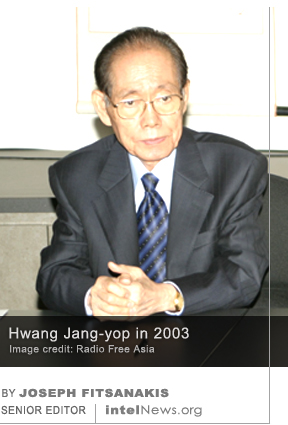
Hwang Jang-yopAn appeals court in Seoul has upheld the conviction of a South Korean member of a spy cell that planned to assassinate the most senior North Korean defector to the South. The man, identified in media reports only by his last name, Park, is a South Korean citizen who allegedly helped a North Korean spy cell “based in China” plan the assassination of Hwang Jang-yop. In 1997, Hwang caused a sensation on both sides of the border when he defected to the South. A former secretary of the Korean Workers’ Party, Hwang was Pyongyang’s primary theorist and the ideological architect of juche, the philosophy of self-reliance, which is North Korea’s officially sanctioned state dogma. He was also believed to have ideologically mentored North Korean Supreme Leader Kim Jong-il, the father of the country’s current Supreme Leader, Kim Jong-un. Until his death from heart failure in April 2010, Hwang, had been living in the South with around-the-clock security protection.
In October 2010, a few months before Hwang’s death, South Korean authorities revealed that two self-confessed North Korean spies, Tong Myong Kwan and Kim Myung Ho, had allegedly admitted to posing as defectors. Seoul said that Tong and Kim, who were both 36 at the time, were on an assassination mission assigned to them by the intelligence unit of the North Korean Ministry of Defense. The two reportedly stated under interrogation that they were selected for the mission in 2004 and were trained for six years in spy trade craft, as well as techniques of assimilating in life in South Korea, which apparently included “watching South Korean soap operas to gain a better understanding of South Korean society”.

At the time of Tong and Kim’s arrest, South Korean authorities had stated that the two alleged North Korean spies had been assisted by at least two South Korean citizens. One has never been named. The other, Park, was indicted last year of providing logistical support to foreign spies who were plotting to kill Hwang, in return for ₩25 million ($21,000). His legal team appealed the sentence, saying he had been framed by the North Koreans. But on Tuesday, the Seoul High Court rejected the Park’s appeal and upheld his original 3-year jail sentence.

Author: Joseph Fitsanakis | Date: 18 May 2016 | Permalink

South Korea announces most high-profile defection from North since Korean War

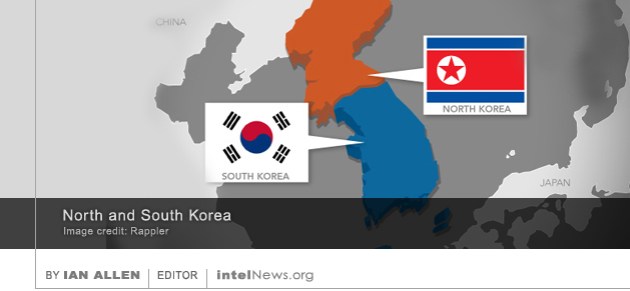
North and South KoreaA North Korean intelligence official who sought refuge in South Korea last year is the most high profile defector to the South since the end of the Korean War in 1953, according to authorities in Seoul. An announcement issued by the South Korean government last week said the defector is a colonel in the Korean People’s Army who worked for the Reconnaissance General Bureau, a military-intelligence agency that resembles the United States Central Intelligence Agency’s Special Activities Division.

The initial announcement was made by a spokesman representing South Korea’s Ministry of Unification, which is the department of the government that is responsible for working towards the reunification of Korea. He said that the agency could not find any records of defectors that were of a more senior rank since the end of all-out hostilities in the Korean War. However, he declined to provide further details about the identity of the colonel and the details of his defection. Another spokesman, from South Korea’s Ministry of National Defense, confirmed the high-profile defection but said he had not been authorized to release further information on the case. But he said that the Reconnaissance General Bureau had defected to the South “last year”, without giving a precise timeline. He added that the North Korean colonel was providing South Korea with details about Pyongyang’s intelligence operations against the South.

Prior to this latest case, the most high-profile defection to the South of a North Korean government figure was that of Hwang Jang-yop, a senior Pyongyang official who was seen as the architect of ‘juche’, the official state ideology of North Korea. During a visit to Beijing, China, in 1997, Hwang entered the embassy of South Korea and asked for political asylum. He died in South Korea in 2010.

It is extremely rare for Seoul to acknowledge defections from North Korea; the South Korean government typically cites privacy and security concerns in response to questions about defectors. The unusual step of announcing the defection of the North Korean colonel several months after the fact led some opposition liberal figures in South Korea to accuse the conservative government of trying to use the case in order to win votes in last Wednesday’s legislative elections. The election was an upset victory for the liberal Minjoo party, which managed to deny the conservative Saenuri Party a majority in the parliament.

Author: Ian Allen | Date: 17 April 2016 | Permalink

Extraordinary lecture by Soviet spy Kim Philby surfaces on videotape

Kim PhilbyA videotaped lecture by Kim Philby, one of the Cold War’s most recognizable espionage figures, has been unearthed in the archives of the Stasi, the Ministry of State Security of the former East Germany. During the one-hour lecture, filmed in 1981, Philby addresses a select audience of Stasi operations officers and offers them advice on espionage, drawn from his own career. While working as a senior member of British intelligence, Harold Adrian Russell Philby, known as ‘Kim’ to his friends, spied on behalf of the Soviet NKVD and KGB from the early 1930s until 1963, when he secretly defected to the USSR from his home in Beirut, Lebanon. Philby’s defection sent ripples of shock across Western intelligence and is often seen as one of the most dramatic moments of the Cold War.


The videotaped lecture, which was never intended for public consumption, was found recently by the BBC in the archives of the BStU, the Federal Commissioner for Stasi Records in Berlin, Germany. Excerpts can now be viewed publicly for the first time.

The recording begins with an introduction by Markus Wolf, one of the most high-profile intelligence operatives of the Cold War, who was head of East Germany’s Main Directorate for Reconnaissance, the foreign intelligence division of the Stasi. Then Philby takes the stand and for about 15 minutes recounts his recruitment by the Soviet NKVD, the forerunner of the KGB. He tells his audience that the Soviets recruited him despite his extremely young age and joblessness, seeing him as “a long range project”. They did so, he says, because they knew he was part of “the ruling class of the British Empire” and was thus bound to end up in a position of power. His NKVD handler was clear as to his agent’s task, says Philby: his mission was to join the Secret Intelligence Service, known as MI6, Britain’s external intelligence agency. The young Philby then spent years trying to work his way into the intelligence agency, and did so successfully.

With extreme candidness, Philby proceeds to tell his East German audience about his mission, given to him by his NKVD handler in the late 1940s. It was to unseat Felix Cowgill, his boss in MI6’s Soviet counterespionage division, and take his place. He achieved that, he says, even though Cowgill was a man he “rather liked and admired. It was a very dirty story”, admits Philby, “but after all our work does imply getting dirty hands form time to time, but we do it for a cause that is not dirty in a way”.

Of particular interest to intelligence observers is Philby’s justification of his role in Operation VALUABLE/FIEND, in which the Central Intelligence Agency, in association with MI6 and other Western European intelligence agencies, secretly sent Western-trained Albanian agents into communist-controlled Albania. The agents were tasked with organizing an armed popular revolt against Albania’s communist rulers. But Philby, who had been given the job of overseeing the operation on behalf of MI6, betrayed the entire program to the Soviets, thus ensuring its complete failure. In his lecture, he justifies his betrayal by arguing that it helped prevent World War III. Had VALUABLE/FIEND succeeded, claims Philby, it would have been expanded to Bulgaria, at which point the USSR would have intervened, causing World War III.

Following the end of his prepared remarks, Philby takes a series of questions from his audience, including one about how he managed to “stay ideologically pure” while living in a capitalist society. In responding, the British defector praises his Soviet handler, who looked after his “political as well as physical health”, and advised his audience, which presumably included dozens of Stasi case officers, to do the same. A summary report of the recently unearthed videotape can be read on the BBC’s website, here. There is also an audio podcast on Philby’s lecture, which includes commentary from Professor Christopher Andrew, of Cambridge University, and Hayden B. Peake, most recently curator of the CIA’s Historical Intelligence Collection.

Author: Ian Allen and Joseph Fitsanakis | Date: 05 April 2016 | Permalink