News you may have missed #0052

  • Expert says US Army’s spying on activists was illegal. Eugene R. Fidell, a military law expert at Yale Law School, says the spying by the US Army against two activist groups in Washington state, which was revealed earlier this week, appears to violate the Posse Comitatus Act, a federal law that prohibits the use of the US Army for conventional law enforcement activities against civilians.
  • German court rules spy services withheld information –again. Germany’s highest court has concluded that the government illegally withheld information from investigators probing into alleged spying on parliamentarians by Germany’s intelligence services (BND). Last week the BND was found to have withheld information from a parliamentary inquiry into the BND’s role in the detention of two Muslims from Germany at a US prison in Afghanistan.
  • Nearly 2.5 million have US government security clearances. The US Government Accountability Office estimates that 2.4 persons currently hold security clearances for authorized access to classified information. This number does not include those “with clearances who work in areas of national intelligence”.

Bookmark and Share

News you may have missed #0051

  • Instigator of Church committee hearings speaks about domestic intelligence. Christopher Pyle, the American whistleblower who in the 1970s sparked the Church Committee hearings on intelligence activities, has spoken about the recent revelations of US Army personnel spying on activist groups in Washington state. Pyle provided interesting historical context linking domestic espionage in the 1960s and 1970s with current developments in the so-called “war on terrorism”.
  • Declassified US President’s Daily Brief is reclassified. The CIA says that extracts of the President’s Daily Briefing (PDB) that were declassified in 2006, during the prosecution of former vice presidential aide Scooter Libby, are “currently and properly classified”. PDB declassifications occur extremely rarely.
  • Australian intelligence to focus on cybersecurity. David Irvine, the recently appointed director of the Australian Security Intelligence Organisation, has identified cyberespionage as “a growing national security risk”.


Bookmark and Share

News you may have missed #0048

Bookmark and Share

FOIA request reveals US Army spying on activists

Eileen Clancy

Eileen Clancy

By JOSEPH FITSANAKIS | intelNews.org |
US government documents released through a Freedom of Information Act (FOIA) request filed by activists in Washington state have helped unmask a US Army informant operating amidst their ranks. John Towery, a member of the US Army’s Force Protection Service at Fort Lewis in Washington, claimed to be an anarchist named “John Jacob” in order to join Students for a Democratic Society and Port Militarization Resistance. He then spied on the groups on behalf of several regional and federal government agencies, including Immigration Customs Enforcement, Joint Terrorism Task Force, FBI, Department of Homeland Security, and the US Army. This is the latest in a long line of similar incidents, which inevitably point to a systematic campaign of domestic intelligence gathering against antiwar groups. Read more of this post

NSA spying more aggressive than ever, says Bamford

James Bamford

James Bamford

By JOSEPH FITSANAKIS | intelNews.org |
The US National Security Agency (NSA) has for the first time in its history appointed a “director of compliance”, whose office will supervise the lawfulness of NSA’s communications surveillance and other spy activities. The Agency, America’s largest intelligence organization, which is tasked with worldwide communications surveillance as well as communications security, has appointed John DeLong to the new post. But in a new column for Salon magazine, James Bamford argues that the gigantic agency is still overstepping its legal framework in both domestic and international spying. Read more of this post

Could Order 65 signify the end of communications privacy in Russia?

FSB agent

FSB agent

By IAN ALLEN | intelNews.org |
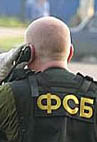
As of July 21, Russian postal services and Internet providers are required by law to provide Russian intelligence agents with on demand access to the dispatch information and content of private correspondence. This is stipulated in Order 65, which the Russian government and the Russian Ministry of Communications made public on July 6.  Apart from granting automatic communications inspection rights to officers of the Federal Security Service (FSB) and seven other intelligence and security organizations of the Russian state, the new law requires all Russian post office sorting facilities to set up “special rooms where security officers will be able to open and inspect private mail”. Additionally, all Internet service providers are now required to grant the FSB and other intelligence and security agencies complete access to their electronic databases. Read more of this post

News you may have missed #0032

Bookmark and Share

News you may have missed #0029

  • Iranians revolting against Nokia for alleged spying complicity. Consumer sales of Nokia handsets in Iran have allegedly fallen by up to 50%, reportedly because of the company’s membership in the Nokia Siemens Networks (NSN) partnership. As intelNews has been pointing out since last month, NSN allegedly helped supply the Iranian government with some of the world’s most sophisticated communications surveillance systems.
  • Analysis: Why NSA’s Einstein 3 project is dangerous. This editorial argues that US President Barack Obama’s decision to proceed with a Bush administration plan to task the National Security Agency with protecting government computer traffic on private-sector networks is “antithetical to basic civil liberties and privacy protections” in the United States.
  • New US government report says Bush secrecy hampered intelligence effectiveness. A new report from the Offices of Inspectors General of the Department of Defense, Department of Justice, CIA, NSA, and Office of the Director of National Intelligence, says that the Bush administration’s decision to keep NSA’s domestic wiretap program secret seriously hampered the broader intelligence community’s ability to use the program’s output.

Bookmark and Share

Private companies to help NSA monitor US government networks

NSA HQ

NSA HQ

By IAN ALLEN | intelNews.org |
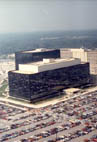
We have already mentioned on this blog that US President Barack Obama has decided to proceed with a Bush administration plan to use National Security Agency (NSA) assistance in screening government computer traffic on private-sector networks. NSA is America’s largest intelligence agency, which is tasked with worldwide communications surveillance, as well as communications security. Critics of the program suspect it may include EINSTEIN 3, a rumored joint project between the NSA and US telecommunication service providers, which requires the latter to route government data carried through their networks to the NSA, via secret rooms installed in exchange sites. Read more of this post

Analysis: Al-Qaeda dumps phones, making interception impossible

Secret Sentry

Secret Sentry

By JOSEPH FITSANAKIS | intelNews.org |
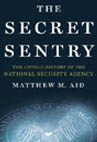
In his brief but perceptive review of Matthew M. Aid’s new book, The Secret Sentry: The Untold Story of the National Security Agency, Craig Seligman, critic for Bloomberg News, refers to an argument made in the book, which in my opinion deserves attention. Namely, in discussing the NSA’s activities in the so-called “war on terrorism”, Aid points out that, not only are Iran and North Korea increasingly converting their analog communications networks into fiber-optic cables, thus making their internal communications virtually impossible to intercept, but al-Qaeda and other militant groups are now “practically cut[ing] out the use of telephones and radios”. All of this is gradually turning the NSA, an agency that receives over $9 billion a year in US taxpayers’ money, into a gargantuan organization whose daily tasks are becoming “maddeningly difficult” –indeed, almost irrelevant. Read more of this post

More US Muslim groups allege FBI harassment

By JOSEPH FITSANAKIS | intelNews.org |
Less than a month after Californian Muslim groups accused the FBI of planting informants in mosques and Islamic centers, the Council of Islamic Organizations of Michigan said it has asked the US Attorney General to look into complaints of FBI infiltration of Islamic centers. The group, which represents one America’s largest Muslim populations, accuses the Bureau of engaging in a “fishing expedition” by approaching Islamic center worshippers and asking them to report on activities, including donations, taking place in mosques. In its letter to US Attorney General Erik Holder, the group said the FBI appears to be specifically targeting Muslim immigrants “with pending immigration issues”, asking them to work as informers in return for assistance with their immigration petitions. Read more of this post

NSA tried to spy on US Congress member

Thomas Tamm

Thomas Tamm

By JOSEPH FITSANAKIS | intelNews.org |
An anonymous intelligence official has told The New York Times that the National Security Agency (NSA) attempted to wiretap the personal communications of a US Congressman without court approval. The gigantic US government agency, which is tasked with worldwide communications surveillance, as well as communications security, believed that the Congressman “was in contact […] with an extremist who had possible terrorist ties and was already under surveillance”, said the paper. NSA agents tried therefore to set in motion a warrantless communications interception operation against the Congressman, while he participated in a “Congressional delegation to the Middle East”, either in 2005 or 2006. Read more of this post

Are New Zealand secret services spying on elected parliamentarians?

Keith Locke

Keith Locke

By IAN ALLEN | intelNews.org |
The Green Party of New Zealand is a sizeable political coalition representing around 150,000 voters in the country’s parliament. A few days ago, it was revealed that the New Zealand Security Intelligence Service (NZSIS) has been keeping a file on an elected Green Party Parliament Member since he was 11 years old. The Parliamentarian, Keith Locke, first entered Parliament on the Green Party ticket in 1999. The reported reason for the spying is that Mr. Locke’s parents, Elsie and Jack Locke, both prominent environmentalists, were members of the Communist Party of New Zealand in the 1950s and 1960s. Interestingly, NZSIS continued to spy on Mr. Locke even after he was elected to Parliament, even as recently as 2006. His NZSIS file reportedly contains covert photographs of him and notes on “his private work with constituents”. Read more of this post

South Korea military intelligence caught spying on citizens

Yongsan

Yongsan

By IAN ALLEN | intelNews.org |
Since last December, a residential building scheduled for redevelopment in the Yongsan district of South Korean capital Seoul had been the site of a mass occupation campaign. Dozens of protesters, all building residents, were refusing to leave unless they were offered improved compensation and relocation packages. On January 20, however, Seoul’s riot police and SWAT units stormed the building using tear gas and water cannons. During the operation, parts of the building were engulfed in a huge blaze, which caused the deaths of five protestors and one police officer, and injured 23 people, one of whom is reportedly in a coma. On the evening of Saturday, January 31, protestors who had gathered in and around Seoul’s Myeongdong Cathedral for a candlelight memorial service for the victims of the fire spotted a group of plainclothes military intelligence officers with South Korea’s Capital Defense Command (CDC) clandestinely observing the vigil. The six-member group appeared to be directed by a number of commanding officers who were also in the proximity of the vigil, though detached from the crowd. Organizers of the vigil isolated the six intelligence officers and proceeded to search them, but discovered no surveillance equipment. Witnesses said, however, that one of the intelligence officers appeared to be reporting on the movements of vigil participants on his cell phone. Read more of this post

NSA whistleblower reveals routine spying on American media

Russell Tice

Russell Tice

By JOSEPH FITSANAKIS | intelNews.org |
Russell Tice, an analyst with the National Security Agency (NSA) until 2005, was among several inside sources who in 2005 helped The New York Times reveal NSA’s warrantless spying program. A few months earlier, Tice had been fired by the NSA after he started to investigate a suspicious communications-monitoring program he was involved in. The last time Mr. Tice spoke publicly about his experience at the NSA was in 2006. He then waited until the Bush Administration was out of the White House before he made any more revelations. Hours after Barack Obama’s inauguration, Tice surfaced again, this time giving an interview to MSNBC’s Keith Olberman. Read more of this post