 In the early hours of Thursday, May 19, EgyptAir, Egypt’s national airline carrier, announced via Twitter that flight MS804 had vanished from the radar. The regularly scheduled flight had departed Paris, France, on time at 11:09 p.m. and had been scheduled to arrive in Egyptian capital Cairo at 3:05 local time. The airplane, an Airbus A320-232, was carrying 59 passengers and 10 crew. According to reports, the airplane disappeared over the eastern Mediterranean, southeast of the island of Crete.
Was this a terrorist attack? It will be several hours before this question can be conclusively answered. However, there are some early indicators that can help shed some light on the incident.
1. What has happened to the plane? The plane has almost certainly crashed into the sea. It has now been five hours since it disappeared from the radar. The eastern Mediterranean is not like the vast Indian Ocean, where Malaysia Airlines Flight 370 literally disappeared in March 2014, never to be found. In the case of EgyptAir MS804, if the plane had landed at a regional airport, the sighting would have been reported immediately —even if it was in rebel-held Syrian regions, or Islamic State-controlled territory in Iraq.
2. If the plane has indeed crashed, what brought it down? The possibility of a mechanical failure cannot be excluded. However, the plane is relatively new; it was built in France in 2003 and is less than 13 years old, which may mean that a serious mechanical failure is relatively unlikely. Additionally, weather conditions over the eastern Mediterranean were reportedly “clear and calm” at the time when the plane vanished from the radar. Last but not least, it must be stressed that there was reportedly no distress call made by the pilots or crew before the flight disappeared from radar screens. Which brings us to the next question, namely:
3. Was this a terrorist attack? American and European intelligence agencies, including France’s own DGSE, have warned repeatedly in previous weeks that the Islamic State was “planning new attacks […] and that France [was] clearly targeted”. The Islamic State is currently one of very few terrorist organizations that have the technical expertise and momentum to compromise security measures at a European airport. Moreover, the Islamic State has declared war on France, has attacked the country numerous times, and has stated repeatedly that it intends to continue and even intensify its efforts. The group has remained silent since early this morning, when EgyptAir announced the disappearance of flight MS804. However, it typically waits for several hours, and sometimes days, before assuming responsibility for high-profile attacks.
4. If it was a terrorist attack, how was the plane brought down? It is important to note that the plane is believed to have been flying at 37,000 feet when it vanished from radar screens. This means that, assuming that a non-state actor caused the aircraft’s disappearance, the attack must have been perpetrated from inside the plane. At least three of the 10-member crew are believed to be armed security guards. If that is the case, a team of hijackers would have to have been sizeable enough and sufficiently armed to overpower three armed security guards. What is more likely is that a bomb may have been planted on the plane, either in Paris or Cairo (the plane was returning to Cairo, having left from there for Paris earlier on Wednesday). The last time that the Islamic State assumed responsibility for downing an airliner, it did so by planting a bomb aboard the plane with the help of a ground worker in Egypt who had secretly joined the militant group.
5. If it was a terrorist attack, what does it mean? Should the Islamic State assume responsibility for this attack, it will make it increasingly difficult for France —and possibly other Western European nations— to resist putting boots on the ground in Iraq and Syria. Moreover, if a bomb was planted on the plane at Paris’ Charles De Gaulle airport, it will mean that the Islamic State, or possibly another militant group, has found a way to beat what are perhaps the most stringent airline travel security measures in all of Europe. It could be that the group behind this possible terrorist attack has found a unique and thus far unforeseen way to defeat the latest technological measures used to secure airline travel. Such a possibility could spell even more massive changes for the world’s airline industry, which is already reeling from all sorts of financial and administrative pressures in the post 9/11 era.
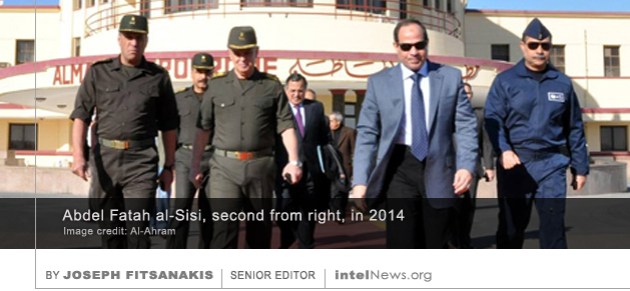
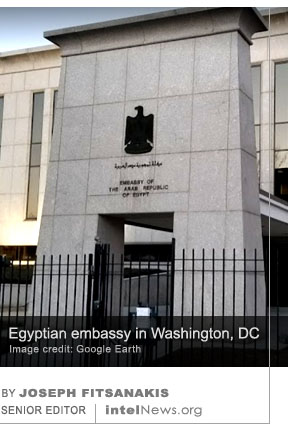 A RESIDENT OF NEW York has been charged by the United States Federal Bureau of Investigation with engaging in espionage operations on behalf of the government of Egypt, according to court documents unsealed on Thursday. The FBI claims that the spy “tracked and obtained information regarding political opponents” of Egypt’s ultra-authoritarian president, retired General Abdel Fattah el-Sisi. El-Sisi took power in Egypt in a military coup d’etat in 2013, which was followed by heavily staged election in 2014. With most of the opposition refusing to participate, the election resulted in a victory for the Egyptian strongman with 97% of the vote.
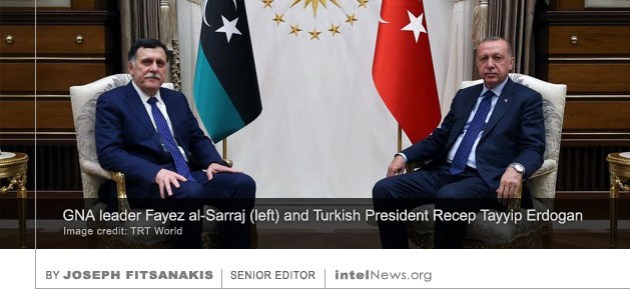 Turkish President Recep Tayyip Erdoğan has said his country is prepared to deploy troops to Libya, just days after Ankara surprised analysts by announcing an agreement with the embattled Libyan government in Tripoli. The Turkish-Libyan agreement has spurred angry reactions from Israel, Greece and Egypt, all of which are
  The seizure earlier this year of a North Korean ship secretly carrying thousands of weapons for use by the Egyptian military has revealed the scale of one of Pyongyang’s most profitable money-making ventures: global arms sales. Experts say that the North Korean state continues to supply thousands of tons of Cold-War-era conventional weapons to countries such as Eritrea, Cuba, Burma and Iran, as well as to some American allies, including as Egypt. There is also evidence that at least two non-state militant organizations, including the Lebanon-based group Hezbollah, are among Pyongyang’s customers. The latter take advantage of North Korea’s vast arsenal of weapons produced in the 1960s and 1970s, which are being sold on the international arms market at very low prices.
 Seventeen senior Egyptian intelligence officials were summarily removed from their posts hours after the government’s human-rights monitoring body issued a damning report of violations by security agencies. The removal of the officers was
 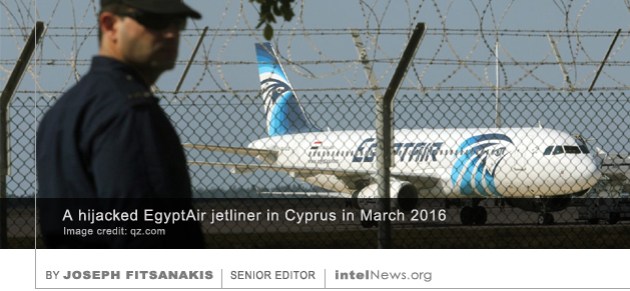 Egypt’s aviation minister has joined the head of Russia’s domestic security service, unnamed US intelligence sources, as well as a host of aviation security experts, in seeing terrorism as the most likely cause behind the EgyptAir MS804 air disaster. That is despite the absence of a clear ‘smoking gun’ and silence from the Islamic State, which leads many to still caution that the possibility of an accident should not be ruled out. The regularly scheduled flight departed Paris, France, late on Wednesday, heading for Cairo, Egypt. But it disappeared from radar screens just minutes after entering Egyptian airspace and is now believed to have crashed into the Mediterranean Sea.
 An appeals court in Portugal has ruled that a former officer of the Central Intelligence Agency is to be extradited to Italy, where she faces charges of helping kidnap a man as part of a secret operation sponsored by the United States government. Sabrina De Sousa, 59, was an accredited diplomat stationed at the US consulate in Milan, Italy, in 2003, when a CIA team kidnapped Hassan Mustafa Osama Nasr from a Milan street in broad daylight. Nasr, who goes by the nickname Abu Omar, is a former member of Egyptian militant group al-Gama’a al-Islamiyya, and was believed by the CIA to have links to al-Qaeda. Soon after his abduction, Nasr was renditioned to Egypt, where he says he was brutally tortured, raped, and held illegally for years before being released without charge.
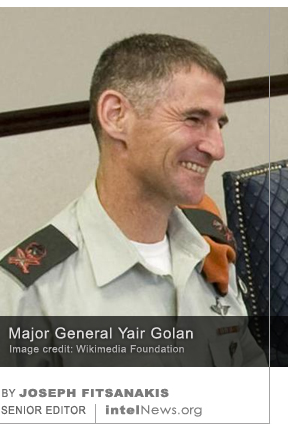 The governments of Israel, Egypt and Jordan have entered an intelligence-sharing agreement aimed at joining forces against the Islamic State, which a senior Israeli military commander has described as “unprecedented”. The comment was made on Wednesday by Major General Yair Golan at a press conference hosted by Israel’s Foreign Press Association. General Golan has been serving as Deputy Chief of the General Staff of the Israel Defense Forces since late 2014.
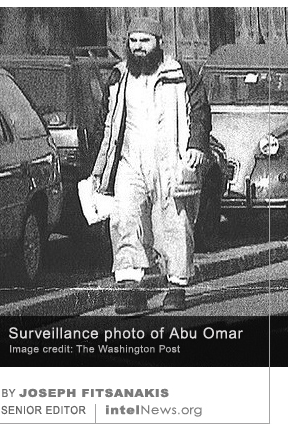 Europe’s highest human rights court has ruled against Italy in the case of an Egyptian man who was abducted from Milan in 2003 by the United States Central Intelligence Agency. Hassan Mustafa Osama Nasr, known as Abu Omar, is a former member of al-Gama’a al-Islamiyya, an Islamist group founded in the 1970s, which aimed to overthrow the Egyptian government and replace it with an Islamic regime. Members of the group have been implicated in the assassination of Egyptian President Anwar Sadat in 1981, as well as in numerous attacks on tourist facilities in Egypt in the 1990s. Once al-Gama’a al-Islamiyya was declared illegal in Egypt, Italian authorities offered Nasr political asylum, after he successfully argued that he would be subject to torture if arrested in Egypt.
 Information gathered by British and American intelligence agencies raises the possibility that a bomb may have brought down the Russian civilian airliner that crashed in Egypt last week. The Metrojet Airbus 321 left the Egyptian resort of Sharm el-Sheikh on Saturday, heading for St. Petersburg, Russia. But it crashed in the Sinai Peninsula less than 30 minutes after it took off, killing all 224 passengers and crew onboard, the vast majority of whom were Russian citizens.








 intelNews.org
Ashraf Marwan: Israel’s ‘Angel’ or Egypt’s Double Agent?
October 13, 2025 by intelNews 3 Comments
However, a comprehensive investigation by two Israeli journalists, Ronen Bergman and Yuval Robovitz, published in the popular Israeli newspaper Yedioth Ahronoth under the title “The Angel of Lies”, presents a different picture. Based on thousands of secret documents not yet revealed and rare conversations with people involved in the operation, their report claims that ‘the Angel’ was actually the spearhead of Egypt’s deception plan before and during the war—and that he succeeded beyond all expectations.
A Spy or Double Agent?
Bergman and Robovitz examined whether Ashraf Marwan—advisor to Egyptian President Anwar Sadat and a Mossad agent who died in 2007—was truly the best agent Israel had before the Yom Kippur War. Their findings indicate that a series of serious operational failures, combined with arrogance within the Israeli intelligence community, made Marwan one of the most dangerous spies ever to act against Israel.
They also investigated whether he was genuinely an Israeli agent who contributed meaningfully to Israel’s national security, as claimed by Mossad and by scholar Professor Uri Bar-Joseph, who wrote extensively about the Yom Kippur War intelligence failure and authored the well-known book The Angel: The Egyptian Spy Who Saved Israel. Netflix later produced a film, The Angel, based on Bar-Joseph’s book.
Or, was Marwan, as the journalists argue, a double agent working for Egypt from the beginning—since volunteering for Israeli intelligence in 1970—and who managed to deceive Israel for years, particularly by delaying his warning about Egypt’s impending attack until roughly 12 hours before it began? According to Bergman and Robovitz, Marwan knew about Egypt’s plans weeks earlier but withheld that information, allowing Egypt to launch a surprise attack.
A Public Debate
Following the article’s publication, a public debate erupted between Bergman and Robovitz on one side and Professor Uri Bar-Joseph on the other, over Marwan’s true motives. Whether he was a double agent or a loyal Israeli operative, all agree he played a key role in the intelligence drama preceding the Yom Kippur War. Read more of this post
Filed under Expert news and commentary on intelligence, espionage, spies and spying Tagged with 1973 Yom Kippur War, Ashraf Marwan, Avner Barnea, double agents, Egypt, espionage, HUMINT, Israel, Mossad