Former deep-cover spy leads Kremlin’s efforts to woo Indian high-tech sector

Andrei Bezrukov A FORMER DEEP COVER Russian intelligence officer, whose cover was blown in 2010 when he was arrested in the United States, is spearheading efforts by the Kremlin to secure investments by India’s technology sector. The spy, Andrei Bezrukov, was recruited by the Soviet Committee for State Security (KGB) in the late 1970s or early 1980s—most likely alongside his wife, Elena Vavilova. For several years, the married couple lived in several countries, including Canada and France, before arriving in the United States in 1999 using fraudulently obtained Canadian passports.

Posing as Donald Heathfield and Tracey Foley, Bezrukov and Vavilova were among 10 Russian non-official-cover intelligence officers arrested by the Federal Bureau of Investigation (FBI) in June 2010. They were eventually swapped with Moscow for several Western spies held in Russian prisons. After returning to Russia, Bezrukov and Vavilova received the Order “For Merit to the Fatherland” 4th Class, which is Russia’s second-highest state decoration. They also entered state-sponsored employment, with Bezrukov advising the Rosneft Oil Company—Russia’s second-largest corporation—and teaching at the Moscow State Institute of International Relations.

In June 2025, Bezrukov apparently represented the Russian state at the 28th Saint Petersburg International Economic Forum (SPIEF)—often referred to as “Putin’s Davos”. According to the Washington Post, Bezrukov’s apparent role at SPIEF was to network with Forum representatives from India’s advanced technology sector, allegedly on direct orders by the administration of Russian President Vladimir Putin.

The event, which went under the tagline “Shared Values as a Foundation for Growth in a Multipolar World”, gathered nearly 20,000 delegates from 140 countries. The Kremlin touted it as evidence of the West’s failure to isolate Russia following its invasion of Ukraine. It also served as part of a set of broader efforts by the Kremlin to prevent the Russian economy from sliding into a recession by seeking to develop alternative energy markets and strengthening economic and political ties to the Global South.

India is by far the largest of a group of countries seen as “friendly” by Russia, which could potentially help revitalize the Russian economy, largely through the International North–South Transport Corridor (INSTC). The 14-year-old agreement aims to interconnect a transnational transportation network connecting Russia and India with import-export routes in Central Asia the Middle East, and Europe. Experts claim that the INSTC is the logistical backbone of Russia’s efforts to salvage its economy from the growing pressures of the war in Ukraine.

The Post reported that Bezrukov denied that he is still an employee of Russian intelligence agencies when approached and asked about his past by Western journalists.

Author: Joseph Fitsanakis | Date: 08 December 2025 | Permalink

France arrests members of humanitarian charity accused of being a Russian front

SOS DonbassFRENCH AUTHORITIES HAVE ARRESTED three individuals and placed a fourth person under supervision after scrutinizing the operations of a humanitarian organization suspected of being a front for Russian intelligence. The arrests were announced on Tuesday by the General Directorate for Internal Security (DGSI), France’s domestic security agency.

The organization in question was registered at the Pyrénées-Atlantiques prefecture of southwestern France in 2022 under the name “Sud Ouest Solidarité Donbass” (“Solidarity for South-West Donbass). This was abbreviated in the organization’s marketing material as “SOS Donbass”. Its expressed mission is to raise funds in support of civilians in Ukraine’s war-torn region of Donbass, most of which is currently under Russian military control.

The DGSI said it began monitoring the activities of SOS Donbass in early 2025. It claims that members of the organization used the cover of humanitarian work in order to spread Russian propaganda in France on the orders of Moscow. It also claims that they attempted to collect “economic information” from executives of French firms. At least one member of the group participated in a concerted campaign of putting up posters in downtown Paris, bearing the slogan “Russia is not my enemy” (pictured), according to the DGSI.

The director of SOS Donbass, identified in French media reports as “Anna N.”, 40, who was born in Russia but lives in France, was arrested by DGSI on November 17. Another Russian-born member of SOS Donbass, “Vyacheslav B.”, also 40, was arrested on the same day. A third individual, “Vensan B.”, 63, who is French-born and lives in Paris’ northern Seine-Saint-Denis suburb, was arrested the following day. A fourth individual, identified as “Bernard F.”, 58, has been placed under strict supervision and is required to report to the police weekly.

According to France’s Le Parisien newspaper, Anna N. and Vyacheslav B. have been formally charged with “colluding with a foreign power”, “conducting activities to gather information on the interests of the nation for a foreign power” and “actions likely to harm the fundamental interests of the nation”, which carry sentences of up to 10 years.

Author: Ian Allen | Date: 26 November 2025 | Permalink

Ashraf Marwan: Israel’s ‘Angel’ or Egypt’s Double Agent?

Ashraf MarwanASHRAF MARWAN, POPULARLY KNOWN “the Angel,” is regarded as one of the greatest spies in Israeli intelligence history—the man on whom the entire Israeli government relied, and the informant who warned of the Yom Kippur War. Long-standing suspicions that he was actually a double agent have been strongly dismissed.

However, a comprehensive investigation by two Israeli journalists, Ronen Bergman and Yuval Robovitz, published in the popular Israeli newspaper Yedioth Ahronoth under the title “The Angel of Lies”, presents a different picture. Based on thousands of secret documents not yet revealed and rare conversations with people involved in the operation, their report claims that ‘the Angel’ was actually the spearhead of Egypt’s deception plan before and during the war—and that he succeeded beyond all expectations.

A Spy or Double Agent?

Bergman and Robovitz examined whether Ashraf Marwan—advisor to Egyptian President Anwar Sadat and a Mossad agent who died in 2007—was truly the best agent Israel had before the Yom Kippur War. Their findings indicate that a series of serious operational failures, combined with arrogance within the Israeli intelligence community, made Marwan one of the most dangerous spies ever to act against Israel.

They also investigated whether he was genuinely an Israeli agent who contributed meaningfully to Israel’s national security, as claimed by Mossad and by scholar Professor Uri Bar-Joseph, who wrote extensively about the Yom Kippur War intelligence failure and authored the well-known book The Angel: The Egyptian Spy Who Saved Israel. Netflix later produced a film, The Angel, based on Bar-Joseph’s book.

Or, was Marwan, as the journalists argue, a double agent working for Egypt from the beginning—since volunteering for Israeli intelligence in 1970—and who managed to deceive Israel for years, particularly by delaying his warning about Egypt’s impending attack until roughly 12 hours before it began? According to Bergman and Robovitz, Marwan knew about Egypt’s plans weeks earlier but withheld that information, allowing Egypt to launch a surprise attack.

A Public Debate

Following the article’s publication, a public debate erupted between Bergman and Robovitz on one side and Professor Uri Bar-Joseph on the other, over Marwan’s true motives. Whether he was a double agent or a loyal Israeli operative, all agree he played a key role in the intelligence drama preceding the Yom Kippur War. Read more of this post

Austrian prosecutors charge ex-intelligence officer accused of spying for Russia

Landesgericht für Strafsachen Wien Vienna Regional Court for Criminal MattersPROSECUTORS IN VIENNA HAVE charged a former intelligence officer with spying for Russia in a high-profile case that has had broad political ramifications in Austria and abroad. The criminal case centers on Egisto Ott, a former employee of Austria’s Federal Office for the Protection of the Constitution and Counterterrorism (BVT). The BVT operated as Austria’s primary domestic intelligence agency from 2002 until its dissolution in 2021.

Ott was first arrested in March 2021, but was soon released after Vienna’s state court ruled that the accused no longer had access to classified information, and was thus not a persistent threat to the state. Ott was arrested again in March 2024 on suspicion of having maintained contact with Russian intelligence officers even following his 2021 arrest and release, and of trying to sell classified information after his release. As intelNews reported a year ago, Ott was released again from pre-trial detention in June 2024, in a decision that raised eyebrows.

Now Ott is facing charges of colluding with an unidentified police officer to “support an intelligence agency” of a foreign country “to the detriment of Austria”, according to the public prosecutor. Ott is also accused of having engaged in bribery, misuse of his office, and of having broken Austria’s Official Secrets Act. Among several instances of engaging in espionage, Ott is accused of having given Russian intelligence an encrypted SINA-workstation laptop of the type used by government employees to access classified information remotely.

Ott and his lawyers have denied he was involved in espionage and have vowed to confront all charges against him in court.

Author: Joseph Fitsanakis | Date: 02 September 2025 | Permalink

Soldier with far-right links becomes first convicted spy in New Zealand history

New Zealand ChristchurchA DISAFFECTED SOLDIER, WHO tried to commit espionage against New Zealand for a foreign government, has become the first convicted spy in the Pacific Island nation’s history. The only other time New Zealand prosecuted an individual for espionage was in 1974, when the government accused Bill Sutch, a prominent, English-born civil servant, of spying for the Soviet Union. Sutch was acquitted in 1975 and died soon afterwards.

According to reports, a member of the New Zealand Defence Force, who has not been named, drew the attention of the authorities in the aftermath of the 2019 Christchurch shooting. The attack was carried out by Australian white supremacist Brenton Tarrant, who stormed a mosque with an automatic weapon, killing 51 and injuring nearly 100 people. The terrorist attack sparked a widespread investigation into far-right militancy in the Australian and New Zealand armed forces, which continues to this day.

The soldier was found to have contacts with a number of local far-right groups, including the Dominion Movement and Action Zealandia. Government prosecutors said that, while observing the soldier’s activities, government agents found out that he had “made contact with a third party, indicating that he was a soldier” and signaling his desire to defect to a foreign country. They eventually approached the soldier using an undercover officer who pretended to be a representative of the country whose officials the soldier had previously contacted. The soldier told the undercover officer that he was prepared to “get a covert device into army headquarters” and offered to provide “mapping and photographs” of classified government facilities.

During his trial, the soldier pled guilty, admitting that he had tied to spy for a foreign government, and adding that his ultimate goal was to “leave New Zealand and get to what I thought was safety”. Following the soldier’s conviction, the three-judge military panel said it would announce the sentence later this week. The country for which the convicted soldier offered to spy has not been named.

Author: Joseph Fitsanakis | Date: 18 August 2025 | Permalink

Senior Mossad veteran discusses recruitment of Iranian assets in rare interview

Mossad - ABTHE MOSSAD, ISRAEL’S PRIMARY foreign-intelligence agency, played a crucial role in Israel’s most recent attack on Iran. It is clear that, without unique intelligence on key Iranian figures and nuclear sites, much of it gathered by the Mossad, the Israeli Air Force could not have been so precise and deadly against Iranian targets.

It is a rare occasion to hear directly from a senior veteran of the Mossad. Oded Eilam (or Ailam), now 71, served in the Mossad for 24 years. In an interview with the German newspaper Bild, Eilam described the strategy that allowed the Israeli intelligence agency to successfully recruit and maintain an “extensive network” of spies inside Iran.

According to Eilam, the key to the Mossad’s success lies in Iran’s complex social structure. “Only 40% of [Iran’s] population of 90 million are Persians,” Eilam said, explaining that the ethnic divide makes it difficult for the Iranian government to control the population. “The [Iranian government’s] surveillance system has huge gaps; you can’t compare it to what the Stasi did in East Germany,” he added.

The former Mossad official explained that various ethnic groups inside Iran, such as Kurds, Turkmen, Baluchis, and Azeris, make up a potential pool for recruiting agents. According to Eilam, the motivation for cooperating with the Mossad is not necessarily support for Israel or financial reward, but often stems from dissatisfaction with the Iranian regime.

“Many people in Iran are unhappy. Large parts of society live in poverty,” explained Eilam. “While Iran has significant gas reserves, instead of investing this money in their country, the clerics have funneled billions into terrorist organizations like Hezbollah,” he added. Another factor that helps Mossad’s activities, according to Eilam, is Iran’s long territorial borders and the difficulty of monitoring them thoroughly. “This makes it possible to smuggle everything into the country,” he noted.

Eilam also emphasized the Mossad’s commitment to safeguarding its assets. “When someone works for us, we take care not only of them but also of their family,” he said, clarifying that the Mossad is dedicated to bringing its spies and their families to safety if needed. Although there are many opportunities to recruit agents in Iran, the Mossad is not in a rush. Eilam highlighted that the organization spends a significant amount of time on the process of selecting and screening candidates. “When we are looking for agents, we don’t just choose someone; we take a lot of time to ensure that the person is suitable.”

“When someone works for us,” the former officer noted, “the importance the Mossad attaches to verifying information. For a target, we do not use information from just one agent, but always multiple sources to be sure that the right person is hit,” said Eilam, also hinting at the extensive vetting processes the organization conducts before operational actions.

Eilam’s interview is a unique source of insight into the espionage operations of the Mossad. It is unclear why it was published—possibly to warn the Iranians to think twice before taking any offensive actions against Israel.

Author: Dr. Avner Barnea* | Date: 22 July 2025 | Permalink

Dr. Avner Barnea is a research fellow at the National Security Studies Center of the University of Haifa in Israel. He served as a senior officer in the Israel Security Agency (ISA). He is the author of We Never Expected That: A Comparative Study of Failures in National and Business Intelligence (Lexington Books, 2021).

Russian spies operated in Portugal using forged Brazilian papers, report claims

Porto PortugalTWO RUSSIAN SPIES USED forged documents acquired in Brazil in order to live in Portugal for years and use it as a base from where to conduct espionage, according to an investigation by Portuguese counterintelligence. The spies were husband-and-wife team Vladimir Aleksandrovich Danilov and Yekaterina Leonidovna Danilova, both in their 30s. According to The New York Times, they appeared in Portugal in 2018 using the names Manuel Francisco Steinbruck Pereira and Adriana Carolina Costa Silva Pereira.

Portuguese weekly newspaper Sol said on Saturday that Danilov used a Brazilian passport and supplied authorities with documentation showing his father was a Portuguese national. This allowed Danilov to eventually obtain Portuguese citizenship. Although Danilova did not apply for Portuguese citizenship, she was granted permanent residency by the European Union country. These credentials enabled the spies to move freely in the European Union’s 27 member-states without restriction.

In 2022 the Brazilian Federal Police, with the assistance of United States intelligence agencies, launched a lengthy investigation into the activities of several Russian spies who operated in Brazil in recent years. The spies appear to have used concocted Brazilian identities in order to operate around the world undetected. The investigation eventually incorporated counterintelligence services from as many as eight countries, including Portugal, according to Sol.

So far the Portuguese investigation has revealed that the Danilovs conducted a variety of espionage operations in the coastal city of Porto, which is Portugal’s second-largest urban center following the capital Lisbon. Using Porto as an operational base, the couple traveled extensively around the world using their Brazilian and Portuguese passports. Each time they were able to return to their home in Porto “without encountering any issues”, Sol reports. The two spies have vanished and their current whereabouts are unknown.

Author: Joseph Fitsanakis | Date: 26 May 2025 | Permalink

British civil servants warned of listening devices in pubs near government buildings

Parliament StreetBRITAIN’S SECURITY AGENCIES HAVE reportedly warned civil servants and parliamentarians that public places located near government buildings may be bugged by foreign intelligence agencies. The warning covers the SW1 postcode district of southwest London, which encompasses the City of Westminster and includes the Houses of Parliament, the Office of the Prime Minister at 10 Downing Steet, and Whitehall. The latter is home to several ministries and departments, including the Foreign and Commonwealth Office, the Cabinet office, and the Ministry of Defense.
The historic London borough is littered with historic public houses (commonly referred to as ‘pubs’) and restaurants, where thousands of parliamentarians and civil servants, as well as their aides, gather for lunch or drinks on weekdays. The area is also home to numerous parks, where many government workers eat their lunch during breaks—weather permitting. Among them is St. James’ Park, which is adjacent to Downing Street and within a short walking distance from the Treasury and the Foreign Office.

It is for these reasons, according to Britain’s Daily Mail newspaper, that foreign intelligence agencies consider these gathering hotspots as targets. The paper reports that “Chinese and other spies, including the Russians and Iranians” consider these prime SW1 locations as “the soft underbelly of Whitehall”. Accordingly, government officials holding sensitive positions, as well as junior staff working for them, have been warned to refrain from work-related discussions when frequenting these locations for lunch of drinks after work.

One source reportedly told the paper that St. James’ Park is “full of Chinese agents”, and went on to say: “we have been told the Chinese literally have the park bugged, with devices in the bushes and under park benches”.

Author: Joseph Fitsanakis | Date: 21 April 2025 | Permalink

Taiwan jails soldiers guarding president’s office for spying for China

China and TaiwanFOUR TAIWANESE SOLDIERS WITH access to “extremely sensitive” secrets have received jail sentences for spying for Chinese intelligence, as Taiwanese authorities have warned of a sharp rise in Chinese espionage cases. Three of the soldiers had been detailed to the security of the Office of the President, while the fourth soldier was a member of staff at the Taiwanese Ministry of National Defense’s Information and Telecommunications Command.
According to the prosecution, the soldiers made use of their personal mobile phones to photograph “internal military information” they had access to. They then shared the photographs with their Chinese intelligence handlers. In return for their services, their handlers compensated the soldiers by paying them between $7,000 and $20,000 each. The espionage arrangement between the soldiers and their handlers lasted between 2002 to 2024, the court heard.

No information was shared during the open-door portion of the court case about the type of information that the four soldiers were accused of having shared with their Chinese handlers. But the prosecution alleged that the digital photographs given to the Chinese contained information that the four alleged spies had acquired while working in “extremely sensitive and important units” of the Taiwanese military. At the conclusion of the court case, the court sentenced the soldiers to between 70 and 84 months in prison for violating Taiwan’s national security law. In sentencing the accused, the judge said they had engaged in acts that “betrayed the country and endangered national security”.

Meanwhile, the Taiwanese National Security Bureau announced late last week that the number of people who were prosecuted for involvement in Chinese espionage in 2024 broke all recent records for the second year in a row. Specifically, there were 10 prosecutions for Chinese espionage in 2022, 48 in 2023, and 64 in 2024. Many of those caught spying for China were either active or former members of the Taiwanese military. These individuals were deliberately targeted by Chinese intelligence officers because they had knowledge of Taiwanese military secrets, the National Security Bureau said.

Author: Joseph Fitsanakis | Date: 31 March 2025 | Permalink

Review of “Chinese Espionage Operations and Tactics” (Second Edition)

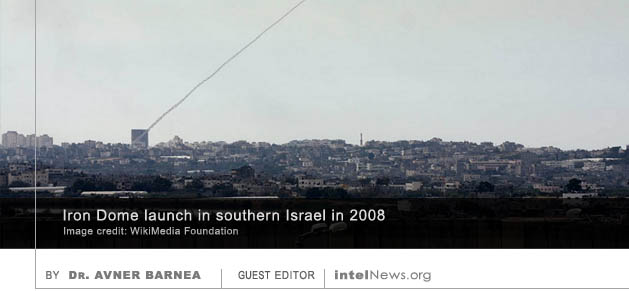
Chinese Espionage Operations and TacticsMUCH HAS HAPPENED IN the West and in China since Nick Eftimiades first published Chinese Espionage Operations in 1994. It was the first in-depth study of Chinese espionage operations, which for decades had been overshadowed by Soviet intelligence and their espionage operations.
Throughout much of the latter part of the 20th  century, United States and other Western security services viewed Chinese intelligence and security services as being focused on their own internal security matters. They were not nearly as well-known or recognized as other adversarial intelligence and security services.  Nick was one of first experts to shine a light on Chinese intelligence operations. Since that time, he has dedicated his career and untold time and efforts to better understand Chinese intelligence tactics and techniques.

In the second edition of the book, Nick provides a comprehensive analysis and assessment on how the espionage and intelligence threat from China has grown significantly over the past three decades. He explains this in very clear and unambiguous terms to anyone who seeks a better understanding of these threats. This book is a culmination of more 30 years of dedicated research and the analysis of hundreds of cases that involve China. It focuses, not only on traditional espionage cases and operations, but examines motives, techniques and tactics relating to economic espionage, the theft of trade secrets and the theft of academic research and development.

There are a number of detailed case studies and real-life examples in the book, which show it is not only Chinese government organizations that pose a significant threat to United States and Western interests, but also a multitude of actors —e.g., academia, business people and researchers, with access to universities, commercial entities and think tanks. Chinese intelligence operatives conduct activities in all these areas in order to help China fulfill its strategic information and technology requirements and objectives. Nick examines China’s Whole of Society approach to a number of recent traditional and non-traditional collection efforts.

Chinese Espionage Operations and Tactics is an absolute must-read for individuals who handle national security matters; for state and local officials who are engaged in discussions with Chinese officials; for American and other Western businesses who are, or who will be, doing business with Chinese counterparts; for those in academia and research institutes involved with technology research and development, and finally for those who seek a better understanding of the threats posed by China’s growing and expanding worldwide presence and intelligence apparatus.

Author: John N. Wanat* | Date: 19 February 2025 | Permalink

  • John N. Wanat retired as Assistant Director for Investigations, Office of Export Enforcement, Bureau of Industry and Security, Department of Commerce.

Israeli soldiers working for Iranian intelligence spied on the Iron Dome

Iron Dome IsraelLAST MONTH, ISRAEL ARRESTED two reservists following an investigation that lasted several months and centered on uncovering espionage for an Iranian state entity during wartime. The two reservists had completed their regular military service before joining the reserves.

The two soldiers, identified as Yuri Eliasfov and Georgi Andreyev, held sensitive positions, and a least one was serving as a member of staff in Israel’s Iron Dome air defense system. The soldier serving in the Iron Dome is accused by the police, the Israel Security Agency (ISA), and the Israel Defense Forces (IDF), of aiding the enemy during wartime, for which the penalty is life imprisonment or death without the discretion of the court. A prosecutor’s statement has been filed against the two soldiers.

According to the investigation, the espionage affair began when one of the suspects, who served in a classified security system, sought to make contact with Iranian intelligence on social media. During his search, he contacted an Iranian operator, who asked him to complete various tasks in exchange for payments. The investigation revealed that the two soldiers were recruited by Iranian intelligence through the Internet to carry out missions in exchange for payments.

They two men were initially required to spray anti-government graffiti in Tel Aviv and in Israel’s the northern region. Giorgi Andreyev, fearing the consequences of such actions, withdrew from the operation. “We are working for Iran and doing something dangerous,” he told Eliasfov. Despite this, however, Eliasfov, who is reportedly the main suspect in the case, continued his activities.

The undercover investigation revealed that Eliasfov, who serves in the Iron Dome system, filmed a video while participating in a classified information, which he then sent to his Iranian handler. He received $3,500 from the same Iranian official, while his at-times accomplice received $70. During his interrogation, Eliasfov claimed that he committed the acts due to being in a difficult financial situation and because he sought to obtain money easily.

One of the interesting findings that emerged from the investigation of the suspects was that other soldiers and family members were aware of Eliasfov’s initial actions and warned him that he was connecting himself with Iranian elements. Despite that, Eliasfov continued his espionage activities, which included filming a video from inside an Iron Dome facility. The footage reportedly contained classified material that could significantly endanger the security of the State of Israel. Read more of this post

Germany charges three dual German-Russian nationals with espionage

Grafenwoehr Training Area GermanyTHE OFFICE OF THE Federal Prosecutor in Germany has charged three dual German-Russian citizens with acts of espionage on behalf of Russia, with the intent of harming the national security of the German state. In compliance with German privacy laws, the three espionage suspects have been publicly identified only by their first names and last name initials. They are: Dieter S.,  Alex D., and Alexander J.

Dieter S. appears to be the central suspect in this case. Following his arrest by the German Federal Criminal Police Office, he was found to have participated in military operations of the secessionist Donetsk People’s Republic in Ukraine. By that time, German authorities had already charged him with being in contact with an individual known to be a member of Russian intelligence, who operated as his handler.

According to the indictment, throughout his interactions with his Russian handler, Dieter S. repeatedly made it known that he was willing and able to carry out acts of sabotage against security-related installations in Germany, on behalf of the Russian Federation. He also offered to carry out arson attacks and use explosives against transportation facilities and infrastructure, such as railway lines, which were used by the German state to transport military supplies to Ukraine.

Subsequently, Dieter S. was instructed by his Russian handler to collect intelligence about potential targets in southeastern Germany. He thus engaged in systematic surveillance activities targeting the Grafenwoehr Training Area, a United States Army military training base located near Grafenwöhr, in eastern Bavaria. Grafenwöhr is the largest training facility maintained by the United States in Europe. Since 2022, it has been used to instruct Ukrainian troops on how to operate American-built tanks.

Dieter S. is also believed to have conducted surveillance at several loading stations used by the German and American militaries, as well as the facilities of private-sector contractors to the German military. In his surveillance operations, Dieter S. was assisted by Alex D. and Alexander J. All three men took photographs and videos of the targeted facilities. The collected material was eventually passed on to Dieter S.’s Russian handler.

Official charges against the three suspects were filed before the State Security Senate of the Munich Higher Regional Court on December 9. They were publicized by the office of the Federal Public Prosecutor General on December 30. A trial date is now pending.

Author: Joseph Fitsanakis | Date: 06 January 2025 | Permalink

Russia using nontraditional means to gather intelligence, Finland warns

SUPO FinlandRUSSIA’S NEED TO GATHER intelligence from Scandinavian targets has increased considerably since Finland and Sweden joined the North Atlantic Treaty Organization (NATO), prompting Moscow to seek nontraditional means of collecting intelligence, according to Finland’s spy agency. A new report by the Finnish Broadcasting Company (Yle) relays a warning by the Finnish Security and Intelligence Service (SUPO) that Russian spies are increasingly operating in Scandinavia without relying on diplomatic protection.

Human intelligence (HUMINT) operations are typically carried out of diplomatic facilities by intelligence officers who enjoy various degrees of diplomatic immunity. Such protections are seen as crucial for the safety of intelligence personnel, who tend to engage in illegal activities while stationed abroad. However, the number of Russian intelligence officers who are based in diplomatic facilities in Finland and elsewhere in Scandinavia has “significantly decreased” in recent years, according to the Yle report.

The reason for the decline in numbers rests with the numerous expulsions of Russian diplomatic personnel —which include intelligence officers— that took place throughout Europe in the months following Russia’s February 2022 invasion of Ukraine. Since then, Finland is one of dozens of European countries that have repeatedly denied Russia’s requests for the issuance of diplomatic visas. As a result, Russian embassies and consulates in Finland remain understaffed and mostly devoid of intelligence personnel.

In response to this new reality, the Kremlin has been experimenting with using nontraditional HUMINT collectors. The latter are not based in diplomatic facilities and are not protected by diplomatic immunity. Such nontraditional intelligence collectors operate as “journalists or researchers”, according to SUPO. At the same time, Russian intelligence agencies increasingly target for recruitment Finns who life in Russia, or try to recruit them while they are traveling elsewhere in Europe.

Lastly, Russian intelligence agencies are systematically hiring criminals to carry out specific tasks on behalf of the Kremlin, in return for money. Such criminals include computer hackers, who are attracted by the Russian state. Indeed, the Russian government is systematically “providing favorable conditions” for computer hackers to operate out of Russian territory. They receive money and protection in return for letting the Russian state use them as a cover for cyber espionage, sabotage, and influence operations.

Author: Joseph Fitsanakis | Date: 18 November 2024 | Permalink

Israeli couple who spied for Iran made ample use of digital applications

Israel and IranTHE ISRAEL SECURITY AGENCY (ISA) recently announced the arrests of an Israeli couple of Azeri origin on suspicion of spying for Iran. The couple, both 32 years old, were allegedly recruited by an Iranian handler of Azeri origin named Elshan Agheev. As part of their activities, and for about two years, the couple gathered intelligence on critical infrastructure and security sites in Israel, and even conducted surveillance on an academic working for the Institute for National Security Studies, allegedly in order to kill her.

The case demonstrates how software that is easily accessible on the Internet makes it possible to encrypt information communicated between a handler and an agent, as well as how money is transferred to the agent. The official indictment reveals details about the couple’s modus operandi, including the identity of the particular software the spies used to communicate with their Iranian handler.

One of the applications the couple used is Zangi, which facilitates the exchange of encrypted instant messages. According to the company’s website, Zangi offers voice and video calling, text messaging, and file transfer services “without registration and without data collection”. In fact, according to Zangi, the data is saved on the user’s device only. In addition to using the Zangi application, the couple also appear to have used the Zolotaya Korona money-transfer platform. The couple allegedly used the platform in order to receive payments by their Iranian handlers, and to transfer funds to other parties involved in Iranian-led espionage activities inside Israel.

Another application allegedly used by the couple is Ecos Dos, a digital wallet for storing and transferring digital currencies. Ecos Dos is a software wallet that can be installed on a computer or mobile phone. It supports a wide variety of crypto-currencies and is used to store and transfer cryptocurrencies. It is known for its simplicity of use and friendly interface. It is popular among users who wish to maintain anonymity when transacting in digital currencies. It does not require identifying a user’s details when operating, so anyone can create an account and receive funds anonymously.

The suspects are also believed to have used a software called Encryptor in order to encrypt information. This software allows files and folders to be encrypted so that only those who have the encryption key can open them. The couple allegedly used Encryptor to encrypt the information they collected before passing it on to their Iranian handlers, thus making it difficult for Israeli authorities to decipher the information.

The use of these applications attests to the sophistication of the Iranian spy network that was recently busted in Israel, and its efforts to hide its activities inside the Jewish state. The recent indictment against the couple details a collection of serious security offenses, including aiding the enemy in war and providing information to the enemy to harm the security of the state. Iran is clearly stepping up its efforts to recruit Israeli citizens for espionage and terrorist activities.

Author: Avner Barnea | Date: 11 November 2024 | Permalink

Dr. Avner Barnea is research fellow at the National Security Studies Center of the University of Haifa in Israel. He served as a senior officer in the Israel Security Agency (ISA). He is the author of We Never Expected That: A Comparative Study of Failures in National and Business Intelligence (Lexington Books, 2021).

US government wants to ban Chinese-made smart cars over espionage, sabotage fears

Chinese car industryTHE UNITED STATES DEPARTMENT of Commerce is proposing new regulations that seek to ban the sale of Chinese-made cars in the United States, over concerns that they could be used for espionage or sabotage. Several reports on the proposal noted that it was hurriedly introduced last week as a “national security action,” rather than a trade-related dispute between the US and China.

American government officials said that the new proposals come out of lengthy investigations into the software and technical specifications of Chinese cars. The investigations raised concern about “[c]ertain technologies originating from the [People’s Republic of China] or Russia” that are often found in Chinese-made cars. Such technologies include vehicle cameras, microphones, tracking devices, and several software packages that connect the cars to the world wide web.

Washington is concerned that these devices, and the software that runs them, could be used to collect the personal data of users, or to facilitate espionage activities on a large scale. Concerns have also been raised by US officials that Chinese-made smart cars could be remotely manipulated and used for sabotage during wartime. According to the US Department of Commerce, a central source could potentially “take control of all [the Chinese-made] vehicles operating in the US all at the same time, causing crashes, block[ed] roads, etc.”

When asked by reporters to justify the proposed regulations, Jake Sullivan, White House national security adviser, replied that the US had “already seen ample evidence of the [People’s Republic of China] pre-positioning malware on our critical infrastructure for the purpose of disruption and sabotage. And with potentially millions of vehicles on the road, each with 10- to 15-year lifespans, the risk of disruption and sabotage increases dramatically”.

Author: Ian Allen | Date: 23 September 2024 | Permalink