News you may have missed #441

  • US officials admit terrorist suspect was DEA informant. US government officials have told The Washington Post what the world’s media has been saying for almost a year, namely that Pakistani-American David Coleman Headley, who was arrested by the FBI in October for plotting an attack on a Danish newspaper, was working as a Drug Enforcement Administration informant while training with Islamist insurgents in Pakistan.
  • Ex-CIA officer decries Israeli policies. Philip Giraldi, a former counter-terrorism specialist and military intelligence officer at the CIA, has said in an interview that Israel’s policies in Palestine “are manifestly evil”.
  • Bomber who killed seven at CIA base was not vetted. Humam Khalil Abu-Mulal al-Balawi, a Jordanian al-Qaeda sympathiser who killed himself and seven CIA agents at a remote base in eastern Afghanistan in January had not been properly vetted, the CIA has said.

News you may have missed #432

  • French spy agency chief warns of high terror risk. Bernard Squarcini, director of France’s Direction de la Surveillance du Territoire (DST) counterintelligence agency, has warned that the country’s military presence in Afghanistan is among the reasons that have made France a prime target for radical Islamist groups.
  • Iran frees one of three Americans held on spy charges. American Sarah Shourd, who has been held in Iran for more than a year on suspicion of spying, has been released by authorities in the Islamic Republic.
  • American civil rights photographer was FBI informant. New information shows that celebrated civil rights-era photographer Ernest Withers had been a paid informant for the FBI, reporting on the whereabouts and activities of the movement’s leaders, many of whom considered him a personal friend.
News you may have missed #425 (US edition)

  • US Pentagon considering pre-emptive cyber-strikes? This is what The Washington Post is reporting, noting that military officials are “still wrestling with how to pursue the strategy legally”. If anyone in the DoD discovers a legal method of launching pre-emptive aggression, we’d sure like to know.
  • More changes in US FISA court. After a recent change of leadership, the US Foreign Intelligence Surveillance Act (FISA) court is considering new compliance rules for handling surveillance requests by US counterspy agencies. The court authorizes requests by agencies for surveillance of foreign suspects operating inside the US.
  • Why do US officials want to deport Chinese defector? Washington wants to deport Li Fengzhi, a Chinese ex-intelligence agent who defected to the US in 2004, back to China, where he could be executed for treason. There are rumors that Li may have “oversold” himself to the FBI and the CIA.

‘Lord of War’ weapons smuggler enjoys Russian protection

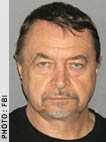
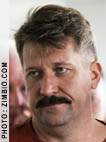
Viktor Bout

Viktor Bout

By JOSEPH FITSANAKIS | intelNews.org |
The case of notorious arms smuggler Viktor Bout is well known. Born in Dushanbe, Soviet Tajikistan, in 1967, Bout served in the GRU (Soviet military intelligence) until the collapse of the USSR, at which point he began supplying weapons to shady groups, ranging from Congolese rebels and Angolan paramilitaries to the Taliban and al-Qaeda. In March of 2008, Bout, known as ‘Lord of War’, was finally arrested by the Royal Thai Police, after a tip by US Drug Enforcement Administration (DEA) officers. The latter had managed to lure Bout to Thailand by pretending to be Colombian FARC arms procurers. Recently, Washington scored a second victory by convincing Thai authorities to extradite Bout to the United States on terrorism charges. Presumably, Bout will be tried as an arms smuggler acting on his own accord. But is this right? Read more of this post

News you may have missed #414

Bookmark and Share

Swapped spy says he is not Russian, wants to move to Peru

Mikhail Vasenkov

Mikhail Vasenkov

By IAN ALLEN | intelNews.org |
One of the 11 Russian spies arrested in the US in June, and later swapped with CIA assets held in Russian prisons, claims he is not Russian, speaks no Russian, and wants to move to Peru, where he lived in the 1970s. Juan Lazaro was arrested by the FBI on June 27, along with 9 other (and later one more) Russian deep-cover operatives, who had lived in the United States under false identities for up to three decades. Lazaro, who lived in Yonkers, New York, had a doctorate in Political Science, worked as an adjunct professor, and was married to Peruvian-born journalist Vicky Pelaez. But FBI investigators unmasked Lazaro’s real name, which is Mikhail Vasenkov, before deporting him and his wife, who is also accused of working for the Russian secret services, to Moscow. According to FBI records, Vasenkov assumed the Juan Lazaro identity and ‘legend’ (biographical narrative and supporting documentation for intelligence purposes) while living in Latin America in the 1970s, using the papers of the real Juan Lazaro, an Uruguayan child who died at age 3. But now Vasenkov’s American lawyer, Genesis Peduto, claims her client is not from Russia, speaks no Russian, but is in fact the real Juan Lazaro, and wishes to leave Russia for Peru. Read more of this post

News you may have missed #407

Bookmark and Share

News you may have missed #403

Bookmark and Share

Did fugitive spy Metsos lead to Russian spy arrests?

Christopher Metsos

C.R. Metsos

By JOSEPH FITSANAKIS | intelNews.org |
Soon after the June 27 arrests of 10 Russian non-official-cover (NOC) spies in several US cities, one name came to the attention of intelligence observers: Sergei Tretyakov. Tretyakov was a senior Russian Foreign Intelligence Service (SVR) officer who defected to the US in 2000, while second-in-command at the SVR station in Russia’s United Nations mission in New York –the same outfit that run the deep-cover operatives arrested in June by the FBI. The Bureau’s own admission that it began monitoring the operatives around 2001, has caused many to believe that Tretyakov, who died suddenly on June 13, at age 53, may have tipped off the FBI about the NOCs. But Russian investigative journalist Yulia Latynina has raised a second possibility, no less intriguing than the first. Namely that it was not Tretyakov who betrayed the deep-cover operatives to the FBI, but rather the mysterious so-called 11th spy, Christopher R. Metsos, a seasoned SVR operative who is said to have acted as a go-between and financier for all 10 Russian spies. Read more of this post

News you may have missed #396 (Russian spy ring edition V)

  • 12th Russian spy network member deported from US. Alexey Karetnikov, a 23-year-old Russian citizen living in Seattle, has been deported to his home country, apparently in connection with the Russian illegals spy network uncovered by the FBI last month. A photograph of Karetnikov is available here.
  • Returned spies look to changed identities. Several of the Russian agents detained in the United States in June and handed over to Russia last week will change their identities under a witness protection program, a Russian intelligence official said last week. All but three of the agents were using false names when they were arrested by the FBI on June 27.
  • Russian spy Chapman stripped of UK citizenship. Anna Chapman, also known as Anya Kushchenko, one of the Russian spies deported from the United States, has been deprived of her British citizenship, and exclusion is expected to follow, meaning she cannot travel to the UK. She has a UK passport through a previous marriage.

Bookmark and Share

Fate of 11th Russian spy suspect remains a mystery

Christopher Metsos

C.R. Metsos

By IAN ALLEN | intelNews.org |
As the world’s media attention is focused firmly on last week’s 14-member spy swap between Russia and the United States, the fate of the 11th member of the Russian deep-cover intelligence network remains unknown. The operative, known as Christopher R. Metsos, was listed as “defendant No. 1” in the FBI criminal complaint against the now infamous Russian illegals network. Like his co-defendants, he was not charged with espionage, but with “acting as an unregistered agent of a foreign government”. He was also charged with money laundering, and was described as the main financier of his ten co-defendants. However, Metsos escaped arrest in the US, because during the FBI raids he was in Cyprus, where he had arrived on June 17. He was arrested on June 29 at the island’s Larnaca International Airport, while trying to board a flight for Budapest, Hungary. A much younger woman traveling with him was allowed to leave on the flight, according to Cypriot media. Read more of this post

News you may have missed #395 (Russia-US spy swap edition IV)

  • All children of Russian spies repatriated. All the children of the 10 Russian spies freed by the US in a dramatic swap with Moscow have been sent to Russia to rejoin their parents, US attorney general Eric Holder has said.
  • Moscow relieved that spy scandal is over. A sense of relief seemed to pervade the halls of the Russian government over the weekend that a potentially embarrassing spy scandal with the United States was over. But few Russian officials showed any enthusiasm about discussing the two-week affair.
  • Russia ‘gave spies hundreds of thousands of dollars’. US Attorney General Eric Holder says 10 Russian secret agents deported by US authorities as part of a spy swap had received hundreds of thousands of dollars from Moscow.

Bookmark and Share

News you may have missed #394 (Russia-US spy swap edition III)

  • Russian spy’s call to father triggered arrests. A telephone call from Russian spy Anna Chapman to her father in Moscow led US counterintelligence services to hasten the arrests of her and nine Russian agents in the United States, claims The Washington Post.
  • Non-Russian spy Pelaez to return to Peru in month. Vicky Pelaez, a journalist with dual US-Peruvian citizenship, who was deported from the United States to Russia on a spy swap, will return to Peru no sooner than in a month, Pelaez’s lawyer, Carlos Moreno, said on Monday.
  • Alleged CIA spy Sutyagin may return to Russia. Igor Sutyagin, a Russian arms expert convicted of espionage in 2004, may return home after he was deported to England in a spy swap with the US, according to his former colleague Pavel Podvig. “He has Russian citizenship, his wife and daughters are in Russia and he has been pardoned by the President”, said Podvig.

Bookmark and Share

News you may have missed #391 (Russia-US spy swap edition II)

  • Expelled spies to experience life in changed Russia. Like those before them, the sleeper spies who were deported to Russia last week in one of the biggest espionage exchanges in decades will probably miss the United States, picket fences and all. But what perhaps most distinguishes this affair from its cold war precursors is what awaits these Russians in their motherland.
  • Past Russian spies have found post-swap life gets a bit sticky. While life in Moscow may be duller than New York, Boston, New Jersey, Seattle and Washington, DC, where the 11 Russians charged last week allegedly lived as long-term, deep-penetration agents, it won’t be too bad, either, if their predecessors’ experience is any guide.
  • Life a nightmare for spies returning to Russia, says Soviet dissident. Vladimir Bukovsky, 67, a Soviet dissident exiled to Europe in a 1976 prisoner swap, says the Russian spies expelled from America to Russia last week “will go from living affluent lives with real freedom, to living under constant surveillance by the Russian secret services”.

Bookmark and Share

Russia-US spy swap plan was almost shelved, say Russian media

Igor Sutyagin

Igor Sutyagin

By IAN ALLEN | intelNews.org |
The unprecedented spy exchange between Russia and the United States nearly failed, after American and Russian planners came across several unforeseen problems during the run-up to the swap. Moscow-based daily newspaper Moskovsky Komzomolez cited a confidential source in Russian intelligence, who said that Washington almost cancelled the exchange deal in the early hours of July 9. This was after Russian media published the names of the four jailed Russian citizens who were to be given up by Moscow, in exchange for the ten Russian deep-cover spies arrested by the FBI in several US cities in June. The agreement almost came to a standstill again a few hours later, after Russian nuclear weapons expert Igor Sutyagin refused to officially admit guilt, a step that was required for the planned exchange to take place. The Russian scientist, who chaired a division in the Russian Academy of Sciences’ USA and Canada Institute, was serving a 15-year sentence for allegedly passing state secrets to a foreign company that was a front for the CIA. Read more of this post