German spy services had foreknowledge of Wagner mutiny, report claims
July 11, 2023 1 Comment
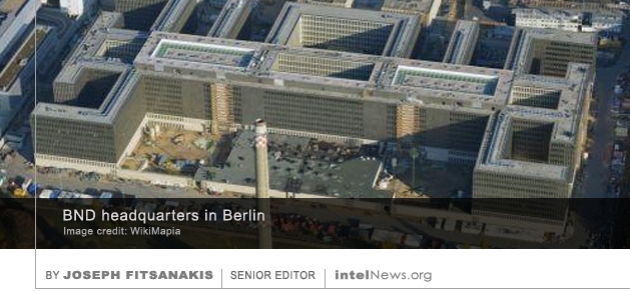 CONTRARY TO EARLIER CLAIMS that the German intelligence agencies failed to anticipate last month’s showdown between PMC Wagner and the Kremlin, German intelligence did in fact have foreknowledge of the mercenary group’s uprising, a new investigative report has concluded. The report further claims that German intelligence had unique and real-time insights into the negotiations between Wagner PMC leader Yevgeny Prigozhin and Belarussian President Aleksandr Lukashenko, who intervened in the dispute.
In the days following the June 23 mutiny by soldiers of the Russian private military firm Wagner Group, German intelligence agencies were publicly criticized for allegedly failing to warn Berlin about the unprecedented incident. Specifically, it was claimed that Germany’s primary foreign intelligence agency, the Federal Intelligence Service (BND), did not issue an actual warning about the mutiny until Saturday —a full 12 hours after the first clashes had erupted between Wagner mercenaries and forces loyal to the Russian Ministry of Defense.
Much of the criticism came from the ranks of the center-left German Social Democratic Party (SPD), which is the primary political party behind the government of German Chancellor Olaf Scholz. However, criticism also came from the Green Party, which supports Scholz’s administration, and the liberal center-right Free Democratic Party (FDP), which also supports Scholz’s government. The criticism intensified after June 28, when, during a live television interview, Chancellor Scholz appeared to confirm speculation that the BND had left his administration in the dark about the Wagner mutiny until it was too late.
Late last week, however, a joint investigation by two of Germany’s most respected public television broadcasters, the Hamburg-based NDR and the Cologne-based WDR, concluded that the BND had been far more informed about the Wagner mutiny than its critics have claimed. The investigation concluded that, not only did the BND have foreknowledge of the mutiny nearly a week before it materialized, but that it was able to listen-in to the frantic telephone conversations between Prigozhin and Belarussian President Lukashenko, as the latter tried to dissuade the Wagner leader from storming the Russian capital with his heavily armed band of mercenaries.
According to the NDR-WDR report, the BND had been able to hack into Wagner’s internal communications system up for over a year. However, its operation was betrayed by “Carsten L.”, a German intelligence officer who was arrested late last year for spying for Russia. However, the German spy service was able to continue to monitor the internal affairs of Wagner through other sources and had access to channels of information within Wagner in the months leading up to the mutiny. Thus, according to the report, the BND had “vague indications of an imminent uprising by Wagner” about a week prior to June 23.
However, the agency was unsuccessful in verifying these indications through other sources, including its foreign counterpart agencies. For this reason, it chose not to notify the German Chancellery in concrete terms.
Nevertheless, the BND did issue a warning on Friday evening, a few hours before the Wagner mutiny began. The warning was issued a full day prior to the takeover of Wagner’s armed takeover of the Russian armed forces’ operational headquarters in Rostov, which occurred on Saturday. The two state broadcasters reportedly reached out to the BND for confirmation of the report’s findings. However, a BND spokesperson declined to comment on the matter, saying simply that the BND “generally does not comment publicly on matters relating to intelligence findings or operations”.
► Author: Joseph Fitsanakis | Date: 11 July 2023 | Permalink
 THE CONSENSUS VIEW OF British intelligence in the weeks leading to the fall of Kabul to the Taliban was that the Afghan government would be challenged, but that the rebels were unlikely to take over the country in 2021. This was revealed on Wednesday in the House of Commons by Britain’s Foreign Secretary, Dominic Raab.








 intelNews.org
Classified US intelligence report suggests Iran regime unlikely to fall or change
March 9, 2026 by Joseph Fitsanakis 11 Comments
Composed of senior and highly respected intelligence analysts from across the U.S. Intelligence Community (IC), the NIC is tasked with producing classified strategic assessments on critical issues of concern to American decision-makers. Technically NIC reports represent the collective voice of all 18 intelligence agencies that make up the U.S. IC, and come as close as possible to the IC’s consensus view on pressing national security concerns.
According to The Washington Post, the NIC report outlines several scenarios for leadership succession in Iran, resulting from either a surgical “decapitation” campaign against specific elements of regime, or from a large-scale military assault against the entirety of the Iranian security state. It concludes that in both cases the Iranian regime is too entrenched and powerful to fall. Moreover, even in the event of “decapitation”, the regime has substantial human resources to keep replenishing its fallen military and civilian leaders, including the Supreme Leader.
Lastly, the NIC report concludes that the Iranian opposition within Iran and around the world is too disjointed, fragmented and disorganized to pose a credible alternative to the Iranian security state. While discussing a number of different potential scenarios for the takeover of power by the Iranian opposition, the NIC report concludes that such an eventuality remains “unlikely”, The Post reports.
The Post’s report appears to confirm earlier accounts by The New York Times and the Reuters news agency, which suggested that the consensus view among the U.S. IC is that, if killed, Supreme Leader Ayatollah Khamenei would almost certainly be replaced by another hardliner, who would be ideologically opposed to both Israel and the West.
Notably, The Washington Post notes that the NIC report does not consider the possibility that the U.S. and Israel might decide to engage in a protracted ground war against Iran. Additionally, the report does not entertain the possibility that ethnic separatist forces within Iran—such as the Kurds, the Azeris or the Balochis—might revolt against Tehran, thus sparking a nationwide armed conflict.
► Author: Joseph Fitsanakis | Date: 09 March 2026 | Permalink
Filed under Expert news and commentary on intelligence, espionage, spies and spying Tagged with 2026 Iran conflict, forecasting, Iran, News, US National Intelligence Council