News you may have missed #870
February 27, 2014 1 Comment
 By IAN ALLEN | intelNews.org
►►Documents show NZ spies taught ‘honey trap’ tricks. Members of New Zealand’s Government Communications Security Bureau were briefed by counterparts from the ultra-secret Joint Threat Research Intelligence Group, a unit of the British Signals intelligence agency GCHQ, on setting honey traps and Internet “dirty tricks” to “control, infiltrate, manipulate, and warp” online discourse, documents leaked by Edward Snowden reveal. According to the slides, JTRIG conducted “honey traps”, sent computer viruses, deleted the online presence of targets and engaged in cyber-attacks on the “hacktivist” collective Anonymous.
►►Ex-CIA analyst tells how data helped catch bin Laden. A central figure in the manhunt for Osama bin Laden, Nada Bakos spoke this week as the keynote speaker at a conference in California, on how data, big and small, led to the capture of al-Qaeda founder Osama bin Laden. “You don’t want to lead the information, you want the information to lead you”, she said, and credited the agency’s innovative gathering process that institutionalized various types of intelligence analysis —opposed to solely relying on general guidelines and best practices.
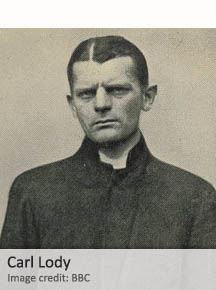
►►The story of WWI German spy Carl Lody. Towards the end of August 1914 a man checked into what is now the Balmoral Hotel in the centre of Edinburgh claiming to be an American tourist. In reality he was a German spy who had been sent to gather intelligence from the British. Carl Lody was a junior naval officer who had been forced to retire for health reasons but was looking for other ways to serve the fatherland. He was especially attractive to German naval intelligence because he had lived for years in the United States and spoke English fluently, although with an American accent.








 intelNews.org
News you may have missed #887 (Anglosphere edition)
January 13, 2015 by Ian Allen Leave a comment
►►Canadian military deploys spies during Arctic exercise. The Canadian military has been routinely deploying a counter-intelligence team to guard against possible spying, terrorism and sabotage during its annual Arctic exercise, according to internal documents. In the view of intelligence experts, the move is unusual because Operation NANOOK is conducted on Canadian soil in remote locations of the Far North.
►►Sudden resignation of NZ spy chief raises questions. Opposition parties in New Zealand have raised questions over the sudden resignation of Government Communications Security Bureau (GCSB), Ian Fletcher, who is stepping down after three years in the role. Chris Finlayson, the minister responsible for the spy agency, said Fletcher was making the move for family reasons. Fletcher will finish in the role on 27 February and an acting director will be appointed from that date.
►►British government argues for more powers for spy agencies. Britain’s spying agencies need more powers to read the contents of communications in the wake of the Paris terror attacks, British Prime Minister David Cameron has said. Speaking in Nottingham, he said the intelligence agencies need more access to both communications data –records of phone calls and online exchanges between individuals– and the contents of communications. This is compatible with a “modern, liberal democracy”, he said.
Filed under Expert news and commentary on intelligence, espionage, spies and spying Tagged with 0 British government argues for more powers for spy agencies, 0 Canadian military deploys spies during Arctic exercise, 0 Sudden resignation of NZ spy chief raises questions, Arctic circle, Canada, Chris Finlayson, civil liberties, David Cameron, Government Communications Security Bureau (New Zealand), Ian Fletcher, New Zealand, News, news you may have missed, Operation NANOOK, UK