Russia using nontraditional means to gather intelligence, Finland warns
November 18, 2024 3 Comments
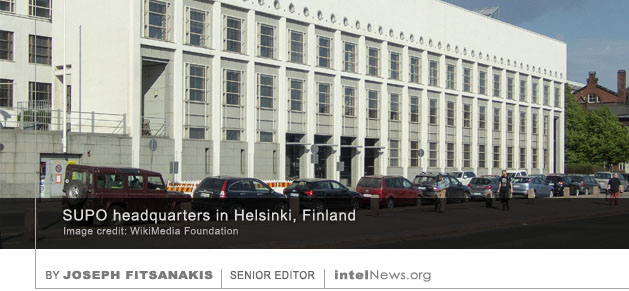 RUSSIA’S NEED TO GATHER intelligence from Scandinavian targets has increased considerably since Finland and Sweden joined the North Atlantic Treaty Organization (NATO), prompting Moscow to seek nontraditional means of collecting intelligence, according to Finland’s spy agency. A new report by the Finnish Broadcasting Company (Yle) relays a warning by the Finnish Security and Intelligence Service (SUPO) that Russian spies are increasingly operating in Scandinavia without relying on diplomatic protection.
Human intelligence (HUMINT) operations are typically carried out of diplomatic facilities by intelligence officers who enjoy various degrees of diplomatic immunity. Such protections are seen as crucial for the safety of intelligence personnel, who tend to engage in illegal activities while stationed abroad. However, the number of Russian intelligence officers who are based in diplomatic facilities in Finland and elsewhere in Scandinavia has “significantly decreased” in recent years, according to the Yle report.
The reason for the decline in numbers rests with the numerous expulsions of Russian diplomatic personnel —which include intelligence officers— that took place throughout Europe in the months following Russia’s February 2022 invasion of Ukraine. Since then, Finland is one of dozens of European countries that have repeatedly denied Russia’s requests for the issuance of diplomatic visas. As a result, Russian embassies and consulates in Finland remain understaffed and mostly devoid of intelligence personnel.
In response to this new reality, the Kremlin has been experimenting with using nontraditional HUMINT collectors. The latter are not based in diplomatic facilities and are not protected by diplomatic immunity. Such nontraditional intelligence collectors operate as “journalists or researchers”, according to SUPO. At the same time, Russian intelligence agencies increasingly target for recruitment Finns who life in Russia, or try to recruit them while they are traveling elsewhere in Europe.
Lastly, Russian intelligence agencies are systematically hiring criminals to carry out specific tasks on behalf of the Kremlin, in return for money. Such criminals include computer hackers, who are attracted by the Russian state. Indeed, the Russian government is systematically “providing favorable conditions” for computer hackers to operate out of Russian territory. They receive money and protection in return for letting the Russian state use them as a cover for cyber espionage, sabotage, and influence operations.
► Author: Joseph Fitsanakis | Date: 18 November 2024 | Permalink
 The United States Central Intelligence Agency will not collect human intelligence on the United Arab Emirates, even though the oil kingdom’s actions often run directly counter to American interests, according to sources. The CIA’s policy, which some sources described as “highly unusual”, fails to recognize the growing distance between American interests and the UAE’s foreign policies, according to Reuters. The news agency cited “three former CIA officials familiar with the matter” who claimed that the CIA’s policy is out of touch and may be endangering US national security.
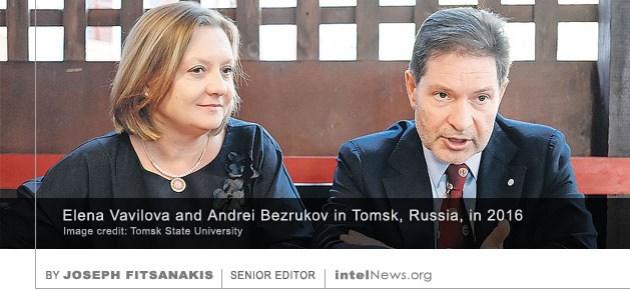 One of the ten Russian deep-cover spies who were arrested in the United States in 2010, and swapped with American- and British-handled spies held by Moscow, has spoken to Western media for the first time. Elena Vavilova was
 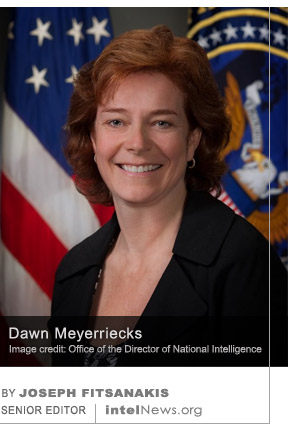 In a rare public appearance on Sunday, a senior member of the United States Central Intelligence Agency discussed ways in which ongoing technological changes pose challenges to concealing the identities of undercover operatives. Dawn Meyerriecks worked in industry for years before









 intelNews.org
France arrests members of humanitarian charity accused of being a Russian front
November 26, 2025 by Ian Allen 5 Comments
The organization in question was registered at the Pyrénées-Atlantiques prefecture of southwestern France in 2022 under the name “Sud Ouest Solidarité Donbass” (“Solidarity for South-West Donbass). This was abbreviated in the organization’s marketing material as “SOS Donbass”. Its expressed mission is to raise funds in support of civilians in Ukraine’s war-torn region of Donbass, most of which is currently under Russian military control.
The DGSI said it began monitoring the activities of SOS Donbass in early 2025. It claims that members of the organization used the cover of humanitarian work in order to spread Russian propaganda in France on the orders of Moscow. It also claims that they attempted to collect “economic information” from executives of French firms. At least one member of the group participated in a concerted campaign of putting up posters in downtown Paris, bearing the slogan “Russia is not my enemy” (pictured), according to the DGSI.
The director of SOS Donbass, identified in French media reports as “Anna N.”, 40, who was born in Russia but lives in France, was arrested by DGSI on November 17. Another Russian-born member of SOS Donbass, “Vyacheslav B.”, also 40, was arrested on the same day. A third individual, “Vensan B.”, 63, who is French-born and lives in Paris’ northern Seine-Saint-Denis suburb, was arrested the following day. A fourth individual, identified as “Bernard F.”, 58, has been placed under strict supervision and is required to report to the police weekly.
According to France’s Le Parisien newspaper, Anna N. and Vyacheslav B. have been formally charged with “colluding with a foreign power”, “conducting activities to gather information on the interests of the nation for a foreign power” and “actions likely to harm the fundamental interests of the nation”, which carry sentences of up to 10 years.
► Author: Ian Allen | Date: 26 November 2025 | Permalink
Filed under Expert news and commentary on intelligence, espionage, spies and spying Tagged with espionage, France, human intelligence, News, psyops, Russia, SOS Donbass