Analysis: British report into Russian meddling leads to uncomfortable conclusions
July 22, 2020 4 Comments
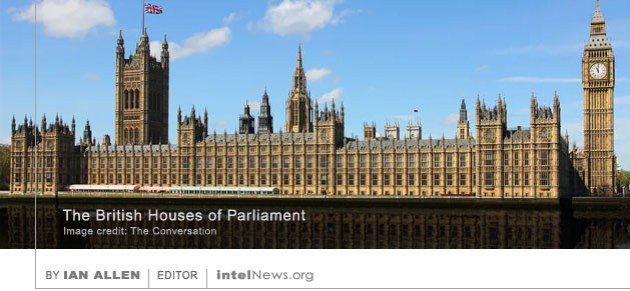 Britain is abuzz today with news of the long-awaited release of the Parliament’s report [.pdf] into Russian meddling in British politics. The report is the work of the Parliament’s Intelligence and Security Committee. Since 2013, the Committee has been appointed to oversee the work of Britain’s intelligence agencies. Almost all of its meetings are conducted behind closed doors, and its reports are vetted by the spy agencies prior to release. By law, the Committee cannot make its reports public without previously submitting them for approval to the Office of the Prime Minister.
In the past it has taken no more than 10 days for the Committee’s reports to be approved by the prime minister. This particular report, however, which concerns —among other things— Russian meddling into British politics, took  considerably longer. It was given to the prime minister on October 17. But by November 6, when parliament was dissolved in preparation for the election that brought Boris Johnson to power, it had not been approved. It finally came out yesterday, after numerous and inexplicable delays. Many speculated that the government did not want to deal with the uncomfortable conclusions in the report.
Like all reports of its kind, this one will be politicized and used by Britain’s major parties against their rivals. But behind the politicking, the report makes for uncomfortable reading indeed. It shows that, not just British, but Western intelligence agencies as a whole, remain incapable of combating online psychological operations from foreign state actors —primarily Russia— aiming to influence Western politics on a mass scale.
This is ironic, because Western spy agencies used to be really good on Russia. In fact, during the Cold War that is all they did. Many years have passed since then, and many leading Western experts on Russia have either retired or died. Additionally, the attacks of September 11, 2001, turned the attention of Western spy agencies to terrorism by groups like al-Qaeda, and away from Russia. Meanwhile, back in Moscow, President Vladimir Putin, a former KGB officer, rebuilt the state and sought to reclaim Russia’s lost international prestige. This plan includes a page from the old KGB playbook: destabilizing Western nations through psychological operations that accentuate existing extremist tendencies from the left or right. Read more of this post
 Turkish security and counterterrorism officials are blaming the Islamic State of Iraq and Syria for Tuesday’s bloody attack at Istanbul’s Atatürk airport, which left at least 41 people dead and nearly 300 injured. But will ISIS claim responsibility for the attack? And if not, why not? ISIS is indeed the
  Out of the myriad of questions emerging from Sunday morning’s massacre in Orlando, two are perhaps most pressing. One concerns internal security in the United States; the other relates to the broad strategy of the Islamic State, the militant Sunni Muslim group that claimed responsibility for the bloody attack. The two topics are closely related.
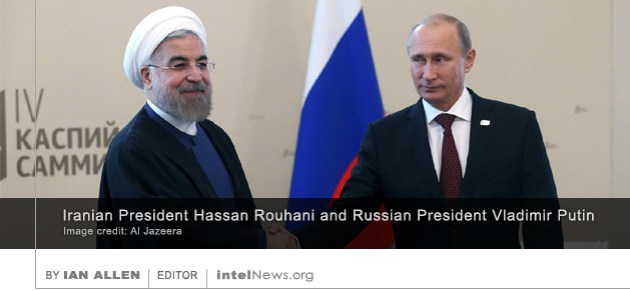 The governments of Russia and the Islamic Republic of Iran are arguably the two most important allies of Syrian President Bashar al-Assad. But the Russian-Iranian alliance over Syria is not as solid —and may not be as durable— as some believe. On Monday, Iranian news agency ISNA reported that Iran’s minister for intelligence condemned Russia’s increased military involvement in Syria and said it would weaken Iran’s security. The minister, Mahmoud Alavi,
  n in Syria and Iraq, the continuing crises in Ukraine and in Libya, as well as the financial meltdown in Greece. So there is a recognition that their intelligence agencies must continue to work together on several pressing issues.
 routine practice. However, I do believe that this regimen can easily be changed to address particular needs, through what is called a “presidential finding”, basically a direct order issued by the president of the United States to target an individual foreign leader.













 intelNews.org
Mutual distrust of China heightens US-Indian intelligence cooperation to historic levels
December 23, 2020 by Ian Allen Leave a comment
The deepening intelligence cooperation between India has its roots in 2002, when the military forces of the two nations formalized intelligence-sharing systems on matters of regional security. In 2016, a new bilateral logistics agreement enabled them to share each other’s facilities in order to repair or resupply vehicles, vessels and aircraft. Two years later, the US gave India access to secure communications equipment that is also used by the US Navy and Air Force.
These military- and intelligence-sharing agreements were reinforced in recent months, after India and China were involved in a bloody border dispute in the Himalayan region. The heated dispute lasted for over a month, resulting in the death of nearly 30 Indian and Chinese military officers. The incidents alarmed observers, as they marked the first violent clashes between Indian and Chinese troops in several decades. Since that time, India has deliberately deepened its intelligence-sharing relationship with the US, led by its growing rift with China.
The most recent demonstration of the deepening relationship between India and the US is the Basic Exchange and Cooperation Agreement (BECA), which was signed by Washington and New Delhi in October of this year. It allows US intelligence agencies, such as the Defense Intelligence Agency and the National Geospatial-Intelligence Agency, to provide India with archival and real-time geospatial data. The latter includes aeronautical, nautical and topographical intelligence, much of which concerns China or the activities of Chinese vessels and aircraft in Southeast Asia and the Pacific. BECA is said to be instrumental in allowing India to advance its understanding of Chinese military targets, as well as detect the pattern of Chinese military activity in the wider region. However, the agreement has raised concerns among officials in India’s regional foe, Pakistan, as well as in Russia, which has historically been one of India’s closest regional allies.
► Author: Ian Allen | Date: 23 December 2020 | Permalink
Filed under Expert news and commentary on intelligence, espionage, spies and spying Tagged with Analysis, Basic Exchange and Cooperation Agreement, Ian Allen, India, intelligence cooperation, Pakistan, United States