Profile of Tang Yuanjun, alleged asset for Chinese intelligence 2018-2023

Yuanjun TangTANG YUANJUN WAS ARRESTED by the United States Federal Bureau of Investigation (FBI) in August 2024. He allegedly worked as a Chinese Ministry of State Security (MSS) asset between 2018 and 2023. He reported on the following categories of information that were of interest to the MSS:

  • Prominent U.S.-based Chinese democracy activists and dissidents.
  • US Chinese-American Member of Congress Xiong Yan, from New York.
  • Immigration claims from dissidents wanting to leave China for the US.

According to the US Department of Justice (DoJ), Tang expressed his desire to see his aging family in China. A prominent dissident such as Tang would not be able to travel to China without being arrested, unless his travel had been approved by authorities. An acquaintance helped him establish secure online contact with the MSS. After being recruited, Tang reported to the MSS using an email account, encrypted chats, text messages and audio and video calls. Tang helped the MSS infiltrate a group chat on WhatsApp; used by numerous People’s Republic of China (PRC) dissidents and pro-democracy activists to communicate about pro-democracy issues and express criticism of the PRC government. In fact, this was what users called a “super group”. It is a group that consists of many other groups. Members could not even identify who was the sponsor of the group chats [1].

In addition, Tang reportedly video-recorded a June 2020 Zoom discussion commemorating the anniversary of the Tiananmen Square massacre in the PRC. The Zoom online discussion was led by Zhou Fengsuo, Director of the June 4th Memorial Museum in New York City and a leading advocate for democracy in China. The Ministry of Public Security also infiltrated these discussions with the assistance of Zoom China and US based employees [2].

Tang was Secretary General of the overseas headquarters of the China Democratic Party United Headquarters in New York City. This non-profit organization assists mainland Chinese dissidents in immigration and asylum applications for the US. Tang allegedly provided information on these individuals to the MSS [3]. Tang also allegedly identified ten immigration attorneys to support MSS efforts to place assets in the US. Other dissident organizations in New York and Los Angeles provide similar visa application services to generate income.

In 2022, reportedly Tang met with the MSS in Changchun City, Jilin Province, China, where an officer installed a software on Tang’s phone which Tang believed to be a “bug” that caused all photographs and videos captured on the phone to be transmitted to the MSS. In his role as leading democracy advocate Tang encouraged dissidents to attend protests in Manhattan and Washington DC. He used the compromised phone to take photographs of the events. The Chinese Communist Party (CCP) then used the photographs as evidence against overseas dissidents. Read more of this post

US arrests two over alleged clandestine Chinese police station in New York City

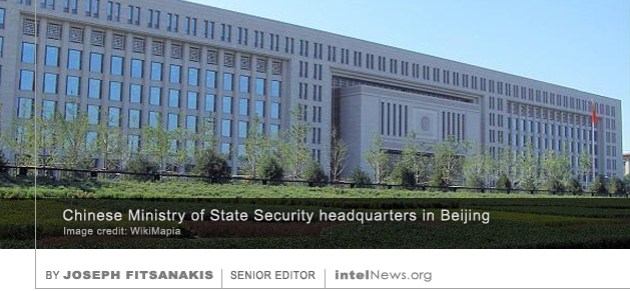
Chinese Ministry of State SecurityTHE UNITED STATES HAS arrested two residents of New York City for allegedly conspiring to create and operate a clandestine police station run by the Chinese government in the borough of Manhattan. The arrests come a month after authorities in Canada launched an investigation into allegations that the Chinese government was running at least two clandestine police stations in Montreal and four more in Toronto.

The allegations first surfaced in a 2022 report by Safeguard Defenders, a Spanish-based non-government organization that focuses on the state of human rights in China. The report, titled “110 Overseas: Chinese Transnational Policing Gone Wild”, claimed that China’s Ministry of Public Security, in association with Chinese diplomatic facilities around the world, operated dozens of clandestine police stations in over 50 countries. Their official mission, according to the report, was to service the needs of Chinese citizens living abroad, as well as visitors from China. However, these clandestine police stations were “actively […] engaging in covert and illegal policing operations” targeting Chinese citizens and expatriates, according to Safeguard Defenders.

On Monday, two New York City residents, Chen Jinping, 59, and Lu Jianwang, 61, were arrested and charged with conspiring to operate as unregistered agents of the People’s Republic of China. They were also charged with obstruction of justice in connection with the Department of Justice’s investigation into their activities. United States government prosecutors allege that Chen and Lu were behind the establishment of a clandestine police station in Manhattan. According to the indictment, the Manhattan police station —the first of its kind in the United States— was operated by China’s Ministry of State Security (MSS). It is reported that the station was shut down by the MSS in late 2022, soon after Chinese officials became aware of an investigation into the activities of the station by the United States Federal Bureau of Investigation.

A representative of the United States prosecutor accused the Chinese government of engaging in a “flagrant violation” of American sovereignty with “actions that go far beyond the bounds of acceptable nation-state conduct”. Meanwhile, Chen and Lu appeared before a federal judge in Brooklyn on Monday. They face up to 25 years in prison if convicted.

Author: Joseph Fitsanakis | Date: 18 April 2023 | Permalink
Canada investigating claims of secret Chinese police stations in Montreal

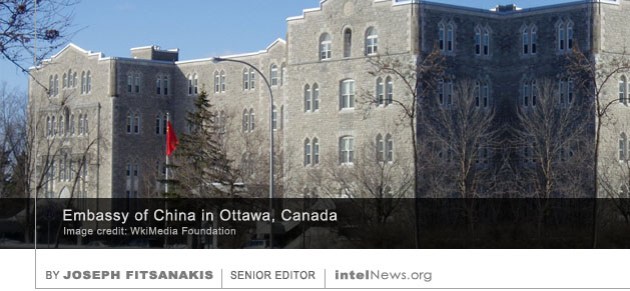
Chinese embassy of China in CanadaAUTHORITIES IN CANADA ARE reportedly probing claims that the Chinese government is operating at least two “clandestine police stations” in Montreal, which allegedly monitor the activities of Chinese citizens and Canadians of Chinese origin. The announcement comes less than four months after a similar investigation took place into the alleged existence of four illegal Chinese police stations operating in the Toronto area.
The investigations were sparked by a report issued in 2022 by Safeguard Defenders, a Spanish-based non-government organization that focuses on the state of human rights in China. The report, titled “110 Overseas: Chinese Transnational Policing Gone Wild”, claimed that China’s Ministry of Public Security, in association with Chinese diplomatic facilities, operated dozens of clandestine police stations around the world. Their official mission, according to the report, was to service the needs of Chinese citizens living abroad, as well as visitors from China. At the same time, however, these clandestine police stations were “actively […] engaging in covert and illegal policing operations” against Chinese citizens and expatriates, according to Safeguard Defenders.

Last Thursday, the Royal Canadian Mounted Police (RCMP) field office in Quebec said it was “carrying out police actions aimed at detecting and disrupting […] foreign state-backed criminal activities” in the Montreal area. On the same day, Canadian Prime Minister Justin Trudeau pledged during a Parliamentary session that his administration would “take every measure to protect Canadians from unacceptable actions by hostile authoritarian regimes”.

The Chinese embassy in Ottawa did not respond to media requests for comment. Last year, in response to the RCMP’s investigation in Toronto, the embassy had said that the alleged clandestine police stations were service centers run by volunteers and not by Chinese diplomatic or law enforcement staff. It also argued that the mission of these centers were to provide consular services to Chinese citizens in the midst of the disruptions that were caused by the COVID-19 pandemic. In a statement issued last Friday, Chinese Foreign Affairs Ministry spokesperson Mao Ning accused Canada of “sensationalizing and hyping the matter [in order to] attack and smear China”.

Author: Joseph Fitsanakis | Date: 15 March 2023 | Permalink

US indicts five members of Chinese spy ring, handler remains at large

Chinese Ministry of State SecurityAUTHORITIES IN THE UNITED States have indicted five members of an alleged spy ring for the Chinese Ministry for State Security (MSS), who engaged in sabotage, bribing, harassment, intimidation and entrapment operations. The Federal Bureau of Investigation (FBI) alleges [PDF]  that the five men, Qiming Lin, 59, Shujun Wang, 73, Quiang ‘Jason’ Sun, 40, Matthew Ziburis, 49, and Fan ‘Frank’ Liu, 62, operated at the behest of the government of China, conducting several operations on US soil, with an “unlimited budget”.

Lin, Wang, Liu and Ziburis have been arrested. They each face between 10 and 20 years in prison, if convicted. Sun, who is the alleged handler of the spy ring, remains at large. The FBI claims Sun is an MSS officer and is currently in China. The FBI alleges that the five men were tasked with destroying the personal lives and careers of Chinese dissidents living in the United States. Their victims included a Chinese-born American citizen, who is running for Congress. The dissident is not identified in the FBI indictment. However, according to the Business Insider, he is believed to be Yan Xiong, a Long Island resident who escaped to the US after participating in the 1989 Tiananmen Square demonstrations.

Members of the Chinese spy ring allegedly tried to thwart Yan’s Congressional election campaign. Specifically, they are accused of conspiring to extort Yan, by luring him in a ‘honey trap’ operation involving prostitutes. They also conspired to plant child pornography in Yan’s personal computer, and even using physical beatings and intimidation in order to subvert his political career. The spy ring is also believed to have targeted Weiming Chen, a Chinese-born, California-based artist, who has produced sculptures and other artwork critical of the Chinese government.

In most cases, members of the spy ring tried to acquire personal data belonging to their victims, including their US social security numbers, as well as copies of their passports. In several cases, members of the spy ring installed covert surveillance equipment in the cars, residences and work places of their targets. These allowed them to monitor their victims’ personal lives and whereabouts. In announcing the indictments on Wednesday, US Department of Justice representatives said efforts by Chinese spies to intimidate and silence expatriate dissidents living in the US had risen at an “alarming rate” in the past year.

Author: Joseph Fitsanakis | Date: 17 March 2022 | Permalink

United States charges New York man with spying for Egyptian government

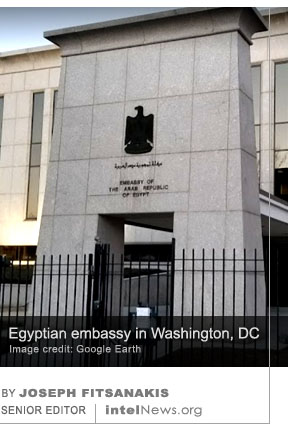
Egyptian embassy in WashingtonA RESIDENT OF NEW York has been charged by the United States Federal Bureau of Investigation with engaging in espionage operations on behalf of the government of Egypt, according to court documents unsealed on Thursday. The FBI claims that the spy “tracked and obtained information regarding political opponents” of Egypt’s ultra-authoritarian president, retired General Abdel Fattah el-Sisi. El-Sisi took power in Egypt in a military coup d’etat in 2013, which was followed by heavily staged election in 2014. With most of the opposition refusing to participate, the election resulted in a victory for the Egyptian strongman with 97% of the vote.

The alleged spy is 39-year-old Pierre Girgis. He is charged with conspiracy and acting as an agent of a foreign state without notifying the government of the United States —which is standard legal terminology used to convey acts of espionage. According to the FBI, Girgis’s Egyptian handlers tasked him with spying on US-based critics of President el-Sisi. The documents suggest that Girgis attempted to “covertly gather non-public intelligence” about Egyptian expatriates, and sought to secure access to law enforcement-only training sessions in Manhattan for Egyptian government officials.

In doing the above, Girgis operated “at the direction and control of multiple employees of the Egyptian government”, according to the FBI. One of those employees is alleged to have sent Girgis an encrypted message in 2018, praising him for doing “a lot of good things” and for having “become an important source [of] information collection” for the Egyptian government. The method by which the FBI was able to gain access to the contents of this encrypted communication exchange is not known.

Girgis reportedly surrendered to US authorities on the morning of Thursday, and appeared before a Manhattan federal court later on the same day. The embassy of Egypt in Washington, DC, declined to comment on the case. A spokesperson for the US Department of State said simply that Girgis’ case was “an active law enforcement matter”, which prevented the Department from commenting on it.

Author: Joseph Fitsanakis | Date: 07 January 2022 | Permalink

Man caught with pistol and ammunition is Turkish spy, German prosecutor says

MIT Turkey

GERMAN AUTHORITIES ARE TREATING the arrest of a Turkish citizen, who was found with a pistol and 200 rounds of ammunition, “as a case of suspected espionage on behalf of the Turkish state” according to reports. The case was revealed late last week by Germany’s Federal Prosecutor General, Peter Frank, who said that the suspected spy was arrested at a hotel in the western German city of Düsseldorf during a raid that took place on September 17.

Local reports said the hotel raid was carried out by members of the Spezialeinsatzkommando (SEK), a police tactical unit, who stormed the building and used an armored vehicle to barricade its front door. They emerged from the hotel with the suspect, who has been identified in German media reports only as “Ali D.”, a Turkish citizen. He is now under investigation for collecting information on alleged supporters of the so-called Gülen movement. The Gülen movement consists of supporters of Muslim cleric Fethullah Gülen, who runs a global network of schools, charities and businesses from his home in the United States. The government of Turkey has designated Gülen’s group a terrorist organization and claims it was behind the failed 2016 coup against Turkey’s President, Recep Tayyip Erdoğan.

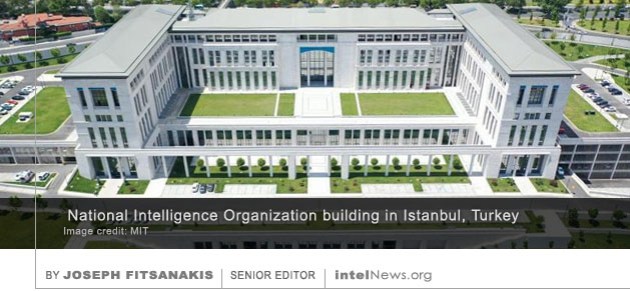
The Federal Prosecutor General’s office has said that Ali D. was acting “on behalf of and under the guidance” of the National Intelligence Organization (MİT), which is the state intelligence agency of Turkey. It also claims that “sufficient evidence” has emerged to establish this case as a “counterintelligence matter”. In his statement to the press, Frank said Ali D. was found in possession of a pistol, 200 rounds of ammunition and documents containing names and other personal information of alleged supporters of the Gülen movement. Some reports suggest that the police has linked this case with a suspected planned attack against Gülen supporters in Düsseldorf and Cologne.

The investigation of Ali D. has now officially been moved from the Düsseldorf Prosecutor’s office to the office of the Federal Prosecutor General.

Author: Joseph Fitsanakis | Date: 04 October 2021 | Permalink

More evidence uncovered of Chinese spy programs that target expatriates

Chinese Ministry of State Security

AN INVESTIGATION INTO THE activities of China’s state security apparatus has uncovered more evidence of the existence of a worldwide spy operation aimed at forcibly repatriating fugitives and dissidents living abroad, including many who reside in Western countries. The operation, code-named FOXHUNT (first reported in 2015), and a sister-project, code-named SKYHUNT, were launched in 2014. They reportedly constitute a major pillar of the nationwide campaign against corruption, which was initiated in 2012 by Chinese Premier Xi Jinping. This extensive campaign is so far believed to have led to the indictment of over 100,000 people for financial crimes, though critics say it is also being used by Xi to neutralize political opponents and dissidents across China.

The investigative group ProPublica, which carried out the study of FOXHUNT and SKYHUNT, said on Thursday that the same techniques used to capture international fugitives wanted for financial crimes, are also employed against expatriates who criticize the Chinese state’s politics. Most of the targets of these operations live in countries that are located near China —such as Vietnam, Laos, or Malaysia. Thousands of others, however, live in Western Europe, Australia and the United States, where “hundreds of people, including US citizens”, have been targeted by the Chinese state, according to ProPublica.

Operations FOXHUNT and SKYHUNT are carried out by “undercover repatriation teams” of Chinese government agents, who allegedly enter foreign countries “under false pretenses”, according to ProPublica. At the same time, Chinese intelligence officers enlist expatriates as assets and use them as “intermediaries to shield Chinese officers”, said the report. These intermediaries are coached to “relentlessly hound their targets”, or surveil their activities and report about them to their handlers.

In several countries, including Vietnam and Australia, Chinese “undercover repatriation teams” have at times abducted their targets, “defying with impunity [local] laws” and international borders, the ProPublica report claims. But in countries like the United States, the Chinese tread more lightly, relying mainly on coercion aimed at compelling their targets to voluntarily return to China. In many cases, according to the report, authorities in China have subjected their targets’ family members to “harassment, jail [or] torture”. Allegedly, they have even recorded “hostage-like videos” that were shown to the targets of the repatriation operations, in an effort to force them to return to China.

Alongside wealthy Chinese tycoons with oversized offshore bank accounts, repatriation targets have reportedly included political dissidents and whistleblowers who had managed to escape abroad. Other victims were members of the Tibetan or Uighur communities in exile, as well as followers of religious sects, such as the Falun Gong. The Chinese government denies that operations FOXHUNT and SKYHUNT exist. But critics claim that Beijing’s forced repatriation program is real, and reflects “the authoritarian nature of the Chinese government and their use of government power to enforce conformity and repress dissent”, ProPublica reports.

Author: Joseph Fitsanakis | Date: 23 July 2021 | Permalink

Austria expels alleged assassin accused of working for Turkish government

Berivan AslanAUSTRIAN AUTHORITIES HAVE REPORTEDLY expelled from the country an Italian citizen of Turkish origin, who was allegedly hired by the Turkish government as an assassin. The man, Feyyaz Öztürk, 53, reportedly turned himself in to Austrian intelligence last year. According to the British press, Öztürk claimed he had been hired by the Turkish government to assassinate Berivan Aslan (pictured). Aslan, who is of Kurdish heritage, is a Viennese parliamentarian and a leading critic of Turkey’s treatment of its minority Kurdish population.
News reports claimed Öztürk’s mission was to terrorize members of the Kurdish expatriate community in Austria and elsewhere in Europe, who tend to be vocal critics of the Turkish government’s human rights record. British newspaper The Telegraph claimed that Öztürk had been tasked by Ankara to “ensure [Aslan] was hurt or died”, so that “other politicians get the message”. Öztürk also claimed that Turkish intelligence officials had blackmailed him in order to force him to carry out Alsan’s assassination. Moreover, he had been asked to kill two more Austrian public figures who are of Kurdish origin.

However, Öztürk reportedly aborted the assassination operation in March of last year, after he broke his leg in an accident during a trip to the northern Italian city of Rimini. Austrian prosecutors confirmed that an official investigation on Öztürk had concluded. It found that he had carried out “military espionage on behalf of a foreign state”, but did it not identify the state. Turkey has strongly denied that its intelligence agencies have any connection with Öztürk.

Öztürk’s espionage trial has been scheduled for February 4. However, according to Austrian law, he cannot be held in pre-trial detention and must be freed prior to his day in court. Rather than allow him freedom of movement inside Austria, the authorities decided to expel him to Italy. Öztürk’s lawyer said yesterday that her client had been designated “an imminent danger to public security” and taken to the Italian border shortly before Christmas.

The lawyer added that Öztürk wishes to return to Austria to attend his trial in February. There are suspicions among intelligence observers that the Austrian state would prefer Öztürk not to return to Austria, so as to avoid exposing espionage methods and sources in court. Meanwhile, Aslan said she remains under police protection, which was initially extended to her last year, when the alleged assassination plot against her became known.

Author: Ian Allen | Date: 13 January 2021 | Permalink

Austria to press charges on man caught spying for Turkish intelligence service

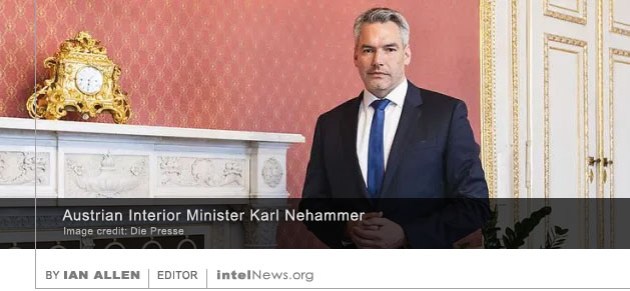
Karl NehammerThere were angry exchanges between Austrian and Turkish officials on Tuesday, after the Austrian government announced it would press charges against an individual allegedly caught spying for Turkish intelligence. The charges were announced on Tuesday morning local time by Austria’s Interior Minister Karl Nehammer (pictured), during a press conference in the Austrian capital Vienna.

During the press conference, Nehammer said the Austrian government wished to send “a clear message to the Turkish Republic: Turkish espionage and interference by Turkey in the civil liberties [of Austrian citizens] have no place in Austria”. Additionally, the Austrian official said his government would “work at the European level to make sure that Turkey does not interfere in the internal affairs of European Union states”. Vienna had already notified Horst Seehofer, president of the European Council, of the espionage case, said Nehammer.

It is believed that the alleged Turkish spy was uncovered by Austrian authorities after a large political protest that took place in Vienna last June, which resulted in violent clashes between pro-Kurdish and pro-Turkish demonstrators. The protesters were members of pro-Kurdish organizations in Vienna, but were confronted by pro-Turkish demonstrators, which resulted in the whole rally descending into violent street clashes. An investigation by Austrian police determined that many of the pro-Turkish demonstrators were affiliated with a far-right Turkish group known as the Grey Wolves.

According to the Austrian Interior Ministry, however, it was also found that Turkey’s National Intelligence Organization, known as MİT, helped organize the Grey Wolves group that confronted the pro-Kurdish rally. Among the Grey Wolves rioters, say Austrian officials, was a man who had been “recruited” by the MİT to spy on pro-Kurdish activists or critics of Turkish President Recep Tayyip Erdoğan. Nehammer said the alleged spy already confessed to working for Turkish intelligence.

In response to Nehammer’s statements, the Turkish government accused Austria’s national leadership of harboring an “anti-Turkey obsession”. Turkish Foreign Ministry spokesman Hami Aksoy told reporters in Ankara that the Austrian government should “top chasing artificial agenda with shallow and domestic political calculations over Turkey, and act with […] seriousness, common sense, and sincere cooperation”.

Author: Ian Allen | Date: 02 September 2020 | Permalink

Denmark arrests three Iranian separatists for spying for Saudi Arabia

Finn Borch AndersenAuthorities in Denmark have announced the arrests of three Iranian Arab separatists, who are charged with carrying out espionage on behalf of the intelligence services of Saudi Arabia. The arrests were announced on Monday by the Danish Security and Intelligence Service, known as PET.
According to the PET, the three Iranians are members of a group calling itself the Arab Struggle Movement for the Liberation of Ahvaz (ASMLA). Known also as Al-Ahwaziya, the group was established in 1980. It calls for a separate state for ethnic Arabs who live the oil-rich province of Khuzestan, in Iran’s southwest.

PET director Finn Borch Andersen told reporters on Monday that the three Iranians were recruited in 2012 by the General Intelligence Presidency (GIP), Saudi Arabia’s primary intelligence agency. They allegedly spied on pro-Iranian groups and individuals in Denmark and other countries northern Europe on behalf of the GID. They reported regularly to their handler, who was an undercover intelligence officer at the Saudi embassy in Copenhagen, according to the PET.

In October 2018, one of the three Iranian men was targeted for assassination by Iranian intelligence, but Danish authorities managed to prevent it with an elaborate security operation. A Norwegian man of Iranian background was arrested during the operation and remains in detention in Denmark. Throughout that time, the PET continued to monitor the three Iranian separatists, and proceeded to arrest them this week.

Late on Monday, the Danish Ministry of Foreign Affairs summoned the Saudi ambassador to Copenhagen in order to file an official complaint about Saudi espionage activities on Danish soil. According to the Danish media, the ambassador of Denmark to Saudi Arabia contacted the oil kingdom’s government to protest about the incident.

Author: Joseph Fitsanakis | Date: 05 February 2020 | Permalink

Analysis: Are US border security officials ignoring terrorism threat from Canada?

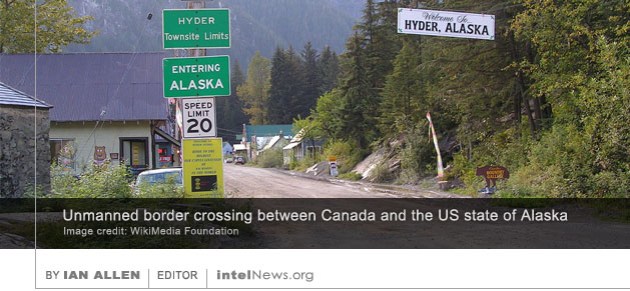
Canada borderSince the election of President Donald Trump, the issue of border security between the United States and Mexico has been a major topic of national debate. But is the incessant focus on America’s southern border by the news media and politicians ignoring security concerns emanating from the country’s northern neighbor, Canada? In a thought-provoking editorial in the English-language Emirati newspaper The National, Stephen Starr employs statistics to argue that the flow of extremism from Canada into the US may represent a greater security concern for Washington than immigration flows from Mexico.
According to US government sources, six foreigners whose names featured on the Terrorist Screening Database (TSDB) —the central terrorist watchlist maintained by the Federal Bureau of Investigation’s Terrorist Screening Center— attempted to enter the US from Mexico in the first half of 2018. Starr points out that during that same period no fewer than 41 foreigners who were on the TSDB tried to enter the US from Canada. In the past three and a half years, four Canadian residents have been charged with carrying out or conspiring to carry out terrorist attacks on US soil. They include a Palestinian living in Toronto and a Tunisian living in Montreal, who planned to derail a passenger train making the journey from Ontario to New York. Both were jailed for life. Another resident of Canada, Abdulrahman el-Bahnasawy, was sentenced to 40 years in prison for trying to plant bombs in New York’s Times Square and on a New York subway train. El-Bahnasawy, who was 20 when he was sentenced, was directly guided by Islamic State handlers in the Philippines and Pakistan. Starr notes that nearly 200 Canadian citizens and residents are thought to have traveled abroad to fight for the Islamic State, and that around 60 of those are now back in Canada.

While all this is happening, the US Customs and Border Protection (CBP) agency, America’s main border control organization, which operates under the Department of Homeland Security, appears to be ignoring the country’s northern border. It is worth noting that the 5,525 mile-long border is the longest in the world, but is monitored by no more than about 2,000 CBP agents. In contrast, over 16,000 CBP agents keep tabs on America’s border with Mexico. Responding to political pressure from the White House, the CBP keeps stationing more agents to the southern border. In the meantime, requests by CBP supervisors along the Canadian border to increase their force by 200 agents remain unfulfilled. This is despite the fact that the number of people detained while trying to enter the US illegally from the Canadian province of Quebec has nearly trebled since 2015, notes Starr.

Author: Ian Allen | Date: 22 July 2019 | Permalink

Turkish spy agency develops phone app to help ex-pats inform on dissidents

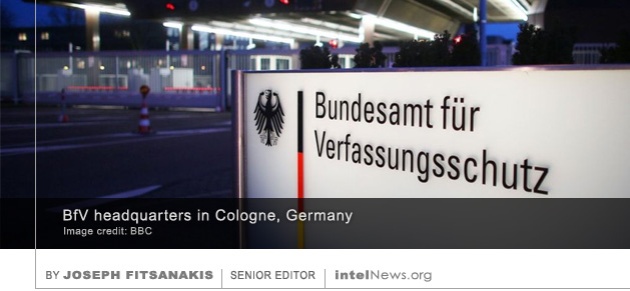
BfV GermanyTurkey’s spy agency has developed a smart phone application to enable pro-government Turks living in Germany inform on their compatriots who speak out against the ruling Justice and Development Party (AKP). The existence of the phone application was revealed in the annual report of the Federal Office for the Protection of the Constitution (BfV), Germany’s primary counterintelligence agency. The report covers terrorist and foreign intelligence activity that took place in 2018 in Baden-Württemberg, a state in southwest Germany that borders Switzerland and France. Deutsche Welle, Germany’s state broadcaster, which cited the BfV report, said that 2018 saw a significant increase in intelligence activities by several countries, including China, Russia, Iran and Turkey. Much of the intelligence activity by Turkish spy agencies concentrated on the Turkish expatriate community in Baden-Württemberg. The federal state is home to approximately 15 percent of Germany’s 3-million-strong Turkish population.

According to the BfV report, Turkish intelligence operations in Baden-Württemberg have focused primarily on two groups since 2015. One group consists of supporters of the Kurdistan Workers’ Party (PKK), an armed separatist group that fights for the independence of Turkey’s Kurdish population. A ceasefire between the PKK and the Turkish government collapsed in 2015, leading to the outbreak of a low-intensity war in Turkey’s southeastern regions, which is ongoing. The other group consists of sympathizers of Fethullah Gülen, a Turkish Islamic scholar who is seen by the government of Turkey as the primary instigator of a coup that unsuccessfully tried to unseat the AKP in July 2016. The BfV report also states that pro-government Turks living in Germany are known to use a smart phone application developed by Turkey’s police force, the General Directorate of Security (EGM). The application allegedly enables supporters of the AKP to inform on suspected members of the PKK or followers of Gülen who live in Germany. These individuals are then questioned or even apprehended when they travel to Turkey to visit family members and friends.

The report also names several Turkish pro-AKP organizations that allegedly operate as intelligence collectors for a host of Turkish spy agencies. Among them are civic groups like the Union of International Democrats, or religious organizations like the Turkish-Islamic Union for Religious Affairs. Known as DİTİB, the organization administers the activities of several hundred Turkish Muslim organizations and mosques throughout Germany and is believed to be closely associated with the AKP and Turkish President Recep Tayyip Erdoğan. Several German intelligence officials and reports have claimed in recent years that the DİTİB operates as an intelligence collection arm of the Turkish state in Germany.

Author: Joseph Fitsanakis | Date: 10 June 2019 | Permalink

US government plans background checks on Chinese students over espionage fears

Chinese students in USAThe United States government plan to impose tighter visa restrictions and wider background checks on Chinese nationals studying at American universities, over espionage concerns. The news follows reports earlier this year that the administration of US President Donald Trump considered banning all Chinese nationals from studying at American universities. In October of this year, The Financial Times reported that the White House came close to imposing the ban, after it was allegedly proposed by Stephen Miller, speechwriter and senior advisor to Trump. Miller became known as the main architect of Executive Order 13769 —the travel ban imposed on citizens of several countries, most of them predominantly Muslim. According to The Financial Times, Trump was eventually dissuaded from imposing the Chinese student ban by Terry Branstad, US ambassador to China.
Now, however, the Trump administration is reportedly considering the possibility of imposing deeper background checks and additional vetting on all Chinese nationals wishing to study in the US. Citing “a US official and three congressional and university sources”, Reuters said on Thursday that the measures would apply to all Chinese students wishing to register in undergraduate and graduate academic programs in the US. The news agency quoted a “senior US official” as saying that “no Chinese student who’s coming [to the US] is untethered from the state […. They all have] to go through a party and government approval process”. Reuters reported that the proposed plan includes a comprehensive examination of the applicants’ phone records and their presence on social media platforms. The goal would be to verify that the applicants are not connected with Chinese government agencies. As part of the proposed plan, US law enforcement and intelligence agencies would provide counterintelligence training to university officials.

However, the plan has many American universities —including elite Ivy League schools— worried that they may be losing up to $14 billion in tuition and other fees spent annually by more than 350,000 Chinese nationals studying in the US. The fear is that the latter may be looking to study elsewhere, in countries such as Canada, Australia and the United Kingdom. Reuters said that many of America’s top universities are “regularly sharing strategies to thwart” plans by the Trump administration to make it more difficult for Chinese nationals to study in the US. The news agency said it contacted the Chinese ambassador to Washington, who called the White House’s fears of espionage by Chinese students “groundless” and “very indecent”.

Author: Joseph Fitsanakis | Date: 30 November 2018 | Permalink

French police officer charged in complex spy case involving Morocco, Algeria

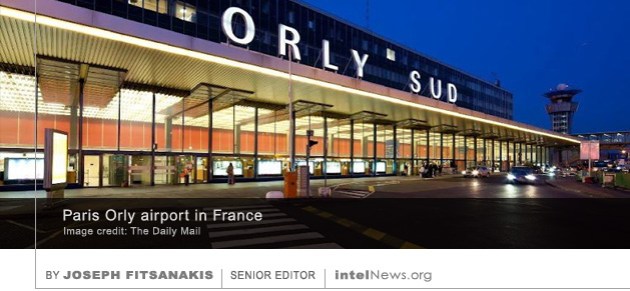
Paris Orly AirportA French police officer has been charged with illegally sharing secret government documents in an espionage case involving France’s border police and diplomats from Morocco and Algeria. According to information published by the French daily Libération, the police officer supplied Moroccan intelligence with classified information about France’s border-control policies and procedures. He also gave the Moroccans information about the movements in France of Moroccan nationals and senior Algerian government officials.
According to the report by Libération, the police officer, identified only as “Charles D.”, was charged on May 31 of this year with corruption and violating secrecy rules. Court documents state that Charles D. gave away classified documents belonging to the Direction centrale de la police aux frontières (DCPAF), a directorate of the French National Police that is in charge of immigration control and border protection across France. He reportedly gave the documents to another man, identified in court documents as “Driss A.”, who worked at Paris’ Orly Airport. It is believed that Driss A. worked as director of the Orly branch of ICTS International, a Dutch-based company that provides security services in several European airports. It is also believed that Driss A. —a Moroccan-born French citizen— was secretly employed by the Deuxième Bureau, Morocco’s military intelligence service. It appears that the Moroccans compensated Charles D with free holidays in Morocco in exchange for his services.

Interestingly, when French counterintelligence officers raided Driss A.’s home in Paris, they found documents detailing the activities of senior Algerian government ministers during their official trips to France. The officials are identified in the documents as Algeria’s former Deputy Prime Minister Noureddine Yazid Zerhouni, Higher Education Minister Tahar Hadjar, and Telecommunications Minister Hamid Grine. The documents appear to have been produced by Algerian intelligence and given initially to the embassy of Algeria in France. No explanation has been given about how these documents fell in Driss A.’s possession. Some observers assume that Driss A., acting as a Moroccan intelligence operative, must have acquired them from a source inside the Algerian embassy in Paris.

Author: Joseph Fitsanakis | Date: 07 September 2017 | Permalink

Analysis: Unease in Europe as Turkey intensifies espionage abroad

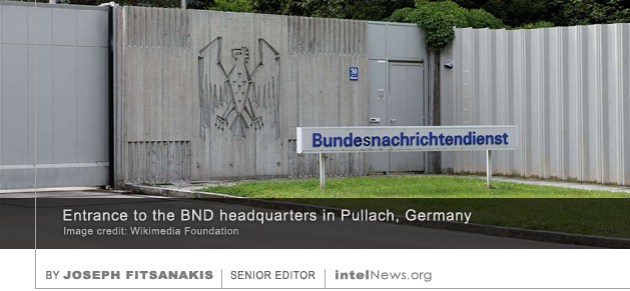
BND GermanyEarlier this week, it was revealed that the German government rejected a request by the head of Turkish intelligence to spy on Turks living in Germany. The rejection was an important moment in German-Turkish relations and highlights the growing unease in high-level exchanges between Turkey and the European Union.

On Monday, Germany’s Süddeutsche Zeitung newspaper alleged that the head of Turkey’s National Intelligence Organization (MİT), gave his German counterpart a list containing the names hundreds of Turks living in Germany, and asked him to spy on them. According to the newspaper, the list was given by MİT chief Hakan Fidan to Bruno Kahl, head of the Bundesnachrichtendienst, Germany’s Federal Intelligence Service, known as BND. The two men reportedly met at a security conference held in Munich last February. The Süddeutsche Zeitung claims that the list given to Kahl included 300 individuals and approximately 200 groups and organizations that the MİT wanted the BND to monitor.

It is extremely uncommon for information of this kind to be communicated informally between directors of intelligence organizations. Typically the exchange of information between cooperating intelligence agencies happens in a very formal and prescribed environment, not circumstantially during a conference. The episode described by the Süddeutsche Zeitung demonstrates a degree of amateurism on behalf of Turkey’s MİT. It is also symptomatic of the pressure that the agency is under by the Turkish government, following last July’s failed military coup in Ankara and Istanbul.

The government of Turkish President Recep Tayyip Erdoğan accuses members of the so-called Gülen movement of orchestrating the failed coup, which included an armed attack on the country’s parliament and the murder of over 200 people across Turkey. The Gülen movement consists of supporters of Muslim cleric Fethullah Gülen, who runs a global network of schools, charities and businesses from his home in the United States. The government of Turkey has designated Gülen’s group a terrorist organization and claims that its members have stealthily infiltrated state institutions since the 1980s. In responding to the post-coup security pressures, MİT has been stretched to its limit. Asking the BND for assistance illustrates the Turkish agency’s limitations, especially when it comes to spying abroad. Read more of this post