CIA veteran reveals agency’s operations in Tibet
March 14, 2009 1 Comment
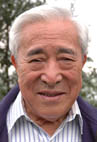
Gyalo Thondup
By JOSEPH FITSANAKIS| intelNews.org |
A former CIA officer, who supervised the Agency’s covert operations in the Chinese region of Tibet, says he is working on a new book on the subject. John Kenneth Klaus, who, while stationed in India in the 1960s, directed the CIA’s support of Tibetan independence paramilitaries, has given a rare interview to Canadian newspaper The Toronto Star. In it, he admits that the CIA supplied weapons to Tibetan monks, who are widely known for their non-violent philosophy. According to 85-year-old Klaus, the origins of the CIA’s covert assistance to Tibetan monks date back to at least 1957, when Gyalo Thondup, older brother of the 14th (and current) Dalai Lama, sent the CIA five Tibetan recruits, whom the Agency trained in paramilitary tactics on the island of Saipan, in the Northern Marianas. Shortly afterwards the five men were covertly returned to Tibet “to assess and organize the resistance”. In the process, they recruited another 300 Tibetans who were secretly transported to Colorado and trained by Klaus and other US intelligence and military officers. Read more of this post

















 intelNews.org
Researchers discover gigantic cyberespionage operation
March 31, 2009 by intelNews 1 Comment
Ronald Deibert
By IAN ALLEN | intelNews.org |
A team of Canadian researchers claims to have discovered a large cyberespionage ring located mainly in China. The researchers say the ring has managed to infiltrate nearly 1,300 mainly government and corporate computers in at least 103 countries around the world. The report, entitled Tracking GhostNet: Investigating a Cyber Espionage Network, was compiled after a ten-month collaboration between Ottawa’s SecDev group and the University of Toronto’s Munk Centre for International Studies. Although the report concludes that the cyberespionage ring is located mainly in China, it specifically rejects claims that GhostNet is inevitably a Chinese government operation, saying that there is no evidence that Beijing is behind the operation. University of Toronto associate professor Ronald Deibert suggested that the operation could potentially be the work of non-state pro-Chinese actors, or could be conducted by a profit-oriented group that sells the acquired information to whoever offers it the highest monetary compensation. “It’s a murky realm that we’re lifting the lid on”, said Dr. Deibert: “This could well be the CIA or the Russians”. Read more of this post
Filed under Expert news and commentary on intelligence, espionage, spies and spying Tagged with Bangladesh, Bhutan, Canada, China, computer hacking, cyberespionage, Cyprus, Germany, GhostNet, India, Indonesia, Iran, Latvia, Munk Centre for International Studies, News, Pakistan, Philippines, Romania, Ronald J. Deibert, SecDev Group, Tibet, Tibetan government in exile, University of Toronto