London accused of hiding report about Russian meddling in Brexit referendum
November 4, 2019 1 Comment
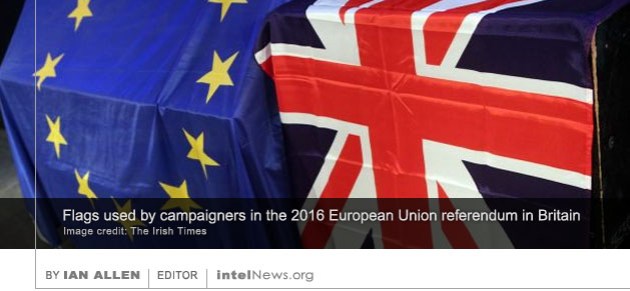 The British government has been accused by opposition parties, and by pro-remain conservative figures, of trying to conceal a report documenting Russian meddling in British politics. The report documents the results of an investigation into Russia’s alleged attempts to influence the outcome of the 2017 general election in the United Kingdom, as well as the result of the 2016 European Union referendum, which ended in victory for the pro-Brexit campaign.
The investigation was carried out by the British Parliament’s Intelligence and Security Committee and is largely based on closed-door testimony by senior officials from Britain’s intelligence community. It reportedly contains evidence from Russia experts in agencies such as the Security Service (MI5), the Secret Intelligence Service (MI6) and the Government Communications Headquarters (GCHQ).
According to media reports the probe was completed in March of this year and underwent a redaction process to safeguard intelligence methods and sources. On October 15 it was submitted to Downing Street and on October 17 it reportedly landed on the desk of British Prime Minister Boris Johnson. British opposition politicians allege that even sensitive reports are usually made public no later than 10 days after they are submitted to Downing Street, which means that the document should have been released prior to October 28.
Some fear that, with Parliament about to suspend operations on Tuesday, in anticipation for December’s general election, the report will effectively remain hidden from public view until the spring of 2020. On Friday, Labour Party leader Jeremy Corbyn publicly urged the government to release the report and claimed that the prime minster may have “something to hide”. But cabinet minister Andrea Leadsom argued that it is not unusual for parliamentary committee reports to remain in the government’s hands until they are properly evaluated. “The government has to respond properly, it cannot respond in haste”, said Leadsom.
► Author: Ian Allen | Date: 04 November 2019 | Permalink
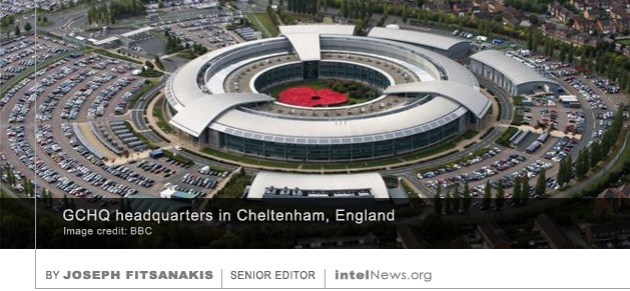 The Government Communications Headquarters (GCHQ), one of Britain’s most powerful intelligence agencies, says it plans to accelerate its vetting process because it is losing top recruits to the private sector. Founded in 1919 and headquartered in Cheltenham, England, the GCHQ is tasked with communications interception. It also provides information assurance to both civilian and military components of the British state. It primarily hires people with technical expertise in communications hardware and software. But in the past fiscal year, the agency fell notably short of its recruitment target, according to a new government report published this week.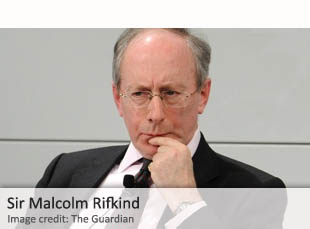











 intelNews.org
Russian diplomat offered to fund British Conservative Party, complaint alleges
January 23, 2023 by Joseph Fitsanakis 2 Comments
The source of the complaint is Sergei Cristo, a former reporter with the World Service of the British Broadcasting Corporation (BBC) and longtime Conservative Party organizer. Cristo’s allegations center on the Conservative Friends of Russia (CFoR), a high-profile lobby group founded by prominent Conservative Party parliamentarians, including Nigel Evans, Andrew Rosindell, John Whittingdale and Robert Buckland. The CFoR’s first honorary president was Sir Malcolm Rifkind, who served as Foreign Secretary under Conservative Prime Minister John Major.
The founding of CFoR in 2012 was celebrated at a lavish outdoor reception hosted by the Russian Ambassador to London, Alexander Yakovenko. It was followed by an all-expenses-paid trip to Russia, organized by the Russian embassy, for a group of select CFR members. Among them were prominent Euroskeptics, who later became leading figures in the campaign that resulted in Britain’s exit from the European Union. A few years later, the group was renamed the Westminster Russia Forum (WRF). In 2022, following the Russian invasion of Ukraine, the WRF disbanded altogether.
During the CFoR’s early days,In December 2010, nearly two years before CFoR was founded, Cristo says he was approached by Sergey Nalobin, first secretary of the Russian embassy’s political section. According to Cristo, Nalobin was interested in Cristo’s role as a volunteer in the finance department of the Conservative Campaign Headquarters (CCHQ). Known also as the Conservative Central Office, the CCHQ operates as the head office of the British Conservative Party. Cristo claims that Nalobin told him of his intention to introduce CCHQ officials to “Russian companies who would donate money to the Conservative party” —a proposition that was illegal under British law. Read more of this postFiled under Expert news and commentary on intelligence, espionage, spies and spying Tagged with Conservative Friends of Russia (UK), Intelligence and Security Committee (UK), Investigatory Powers Tribunal (UK), MI5, News, Russia, Sergei Cristo, Sergey Nalobin, UK, Westminster Russia Forum (UK)