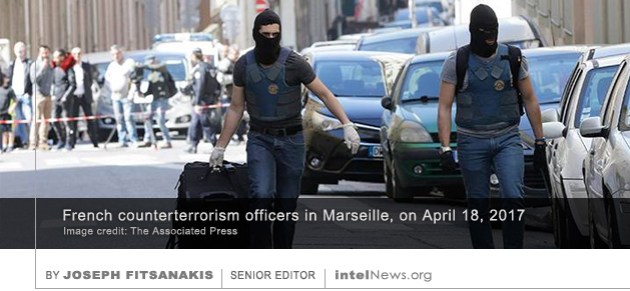
British tip helped French police foil ‘imminent’ terrorist attack

DGSEA tip from British intelligence helped French counterterrorist officials arrest two men who are thought to have been in the final stages of planning a large-scale terrorist attack, according to French media. Government sources in Paris say officers from the country’s domestic intelligence agency, DGSE, arrested two men on Monday. Both men are reportedly French citizens from France’s northern regions. They were residing in the southern port city of Marseilles, where they were arrested by the DGSE. They were later named as Merabet Mahiedine, 29, and Clement Baur, 23. It is alleged that Mahiedine has North African roots, but that Baur is a Caucasian convert to Islam. Both were allegedly known to French police for having repeatedly stated views in support of radical Islamist policies.

According to France’s Minister of the Interior, Matthias Fekl, the two men were planning to carry out a large-scale armed attack in Marseilles this week, which is the last before the long-awaited presidential election in the country. Some sources in the French intelligence community claim that the two men planned to kill one of the major candidates in the election. A number of reports suggest that their target was François Fillon, a conservative presidential candidate who served as Prime Minister from 2007 to 2012 under President Nicolas Sarkozy. It is not known why Fillon may have been targeted, though some observers speculate that radical Islamists seek to promote the aspirations of Fillon’s main rival, the far-right candidate Marine LePen, whom they see as someone whose policies would further-radicalize Muslims in France and North Africa.

Reports in the French media state that DGSE officers confiscated several guns and significant quantities of bomb-making material that were found in an apartment belonging to one of the two men. Meanwhile, an aide to Mr. Fillon told the Paris-based newspaper Le Figaro that the primary tip that led to the arrest of the two men in Marseilles came from British intelligence. The subsequent capture of the two men prevented an attack that would have almost certainly taken place “in the next couple of days”, according to sources in Paris.

Author: Joseph Fitsanakis | Date: 19 April 2017 | Permalink
UK may stop intelligence sharing with the US if Trump brings back torture

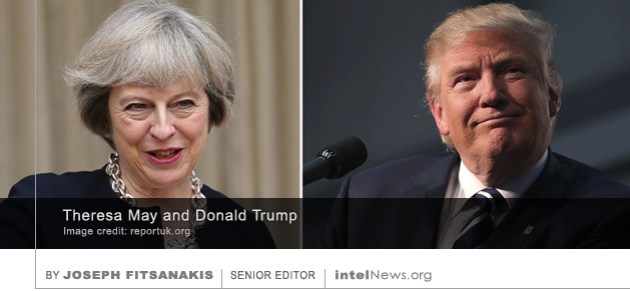
Theresa May Donald TrumpThe British government may limit or end intelligence cooperation with the United States, if Washington revives its post-9/11 torture program, according to reports. On Wednesday, US President Donald Trump said he had asked “people at the highest level of intelligence […], does torture work?” and had received the answer “yes, absolutely”. He added that he was considering reviving some of the torture techniques that were used in the “war on terrorism”, including waterboarding and, in his words, “a hell of a lot worse”.
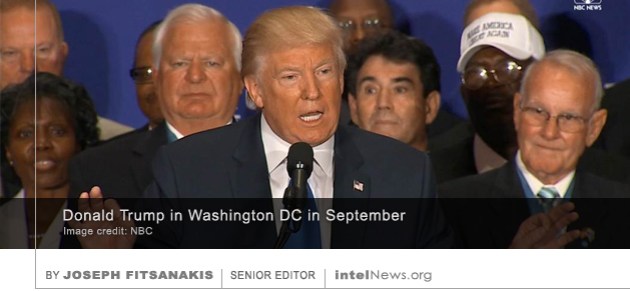
But on Thursday, the British Prime Minister Theresa May warned that her government might be forced to reexamine its intelligence-sharing relationship with Washington, if the US reinstituted torture as a method of interrogation. Speaking to journalists during a flight to the US to meet President Trump, the British prime minister stressed that the United Kingdom “absolutely condemn[ed] the use of torture” and that she would deliver that message to her American counterpart. According to British law, government officials and intelligence personnel are forbidden from sharing intelligence with countries that are known to employ torture against detainees. They are also not allowed to use intelligence gathered by other countries through the use of torture.

Thursday’s comments by Theresa May point to a potentially serious rift between American and British, as well as European intelligence agencies, whose attitudes toward so-called ‘enhanced interrogation’ differ widely from those of President Trump. British newspaper The Daily Mail quoted Matt Tait, a former information security specialist for Government Communications Headquarters, Britain’s signals intelligence agency, who warned of a potential split between British and American spy agencies. If Trump reinstituted torture as a form of interrogation, it would mean that the United States Intelligence Community would “intentionally engage in war crimes”, said Tait. That would “make it impossible” for the UK to cooperate with the US “across a range of intelligence programs”, he added.

Author: Joseph Fitsanakis | Date: 27 January 2017 | Permalink

Israeli officials were advised not to share intelligence with Trump’s White House

Donald TrumpAmerican intelligence officials allegedly warned their Israeli counterparts not to share intelligence with Washington once Donald Trump becomes president of the United States. The reason was that, according to the US officials, there was no guarantee that the intelligence would not be leaked to Russia. There was also the danger, they claimed, that the compromised intelligence would end up in the hands of Russia’s ally Iran, a regional adversary of Israel. The claim was made on Thursday by Ronen Bergman, senior political and military analyst for Israel’s largest-circulation daily newspaper, Yedioth Ahronoth.
According to Bergman, the American intelligence officials spoke in depth with their Israeli counterparts during a recent meeting between the two sides. He did not give details about the time and location of the meeting, so as “to protect the sources of the report”, he said. During the meeting, the US officials allegedly “voiced despair” over Trump’s electoral victory and his apparently poor relationship with the US Intelligence Community. They also suggested that Israeli intelligence officials should “be careful” when sharing intelligence with the White House or the US National Security Council, which is chaired by the president. The reason was that the intelligence —including sources and methods— might end up in the hands of the Kremlin, they said, and from there to Israel’s regional adversaries, such as Iran —and presumably Syria, though Bergman does not mention that.

The American officials further recommended that the Israelis wait until a clearer picture emerges of the alleged connections between Russia and the Trump campaign. It was also implied during the meeting that Trump may be subject to blackmail by Moscow and forced to reveal sensitive information relating to America and its allies, including Israel. According to Bergman, the Israelis are concerned about the Trump-Russia controversy and there are even some in Tel Aviv who raise fears of exposure of information given to the US by the Israeli intelligence community “over the past 15 years”. There has been no comment on the subject from Israel or Trump’s transition team.

Author: Joseph Fitsanakis | Date: 13 January 2017 | Permalink

British intelligence ‘among the first’ to notify US about Russian hacking

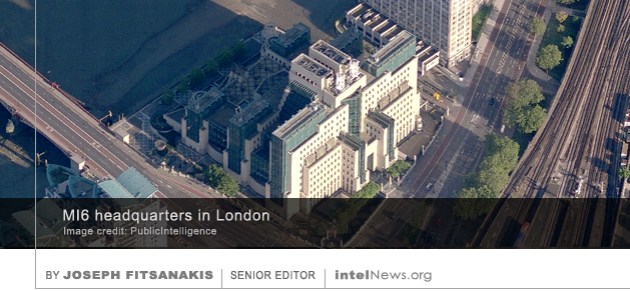
MI6British intelligence agencies gave their United States counterparts an early warning about Russian attempts to influence the outcome of the American presidential election, according to The New York Times. The American newspaper cited “two people familiar with the conclusions” of a US intelligence report, who said that British spies helped “raise the alarm” in Washington about Russian hacking. The Times were referring to a classified US intelligence report that purports to prove that Moscow tried to skew the US election results in favor of Republican Party nominee Donald Trump. The report, parts of which have been released to the public, was shared with Trump in a secret meeting with US intelligence officials last week.
Interestingly, media reports suggest that US intelligence agencies were not aware of the severity of Russian hacking operations until they were notified by allied intelligence agencies. British spy agencies were “among the first” to tell their transatlantic partners that Moscow was engaged in an allegedly large-scale operation against American political parties and institutions. According to The Times, British intelligence reports mentioned Russian hacking operations against the Democratic National Committee in Washington, DC, as well as against senior officials in the Democratic Party. There is no mention in the report about how the British acquired the information. The London-based newspaper The Guardian speculates that British intelligence agencies picked up clues by monitoring Russian government communications (voice intercepts and computer traffic). However, the possibility that the information was acquired through an agent should not be ruled out.

According to the British newspaper, government officials in London were “alarmed” by the close contacts between Moscow and the inner circle of Donald Trump’s campaign. They even contacted the Federal Bureau of Investigation and passed information about what The Guardian describes as “the depth and nature of contacts” between the Russian government and the Trump campaign. There is no information, however, about whether the FBI did anything with that information. Meanwhile, the British government is eager to cultivate good relations with the US president-elect, despite concerns in Whitehall about the close Russian connections of the incoming American administration. London needs Washington’s support as it is disengaging from the European Union, says The Guardian.

Author: Joseph Fitsanakis | Date: 9 January 2017 | Permalink

German and British spy services in ‘biggest rift’ since World War II, claim sources

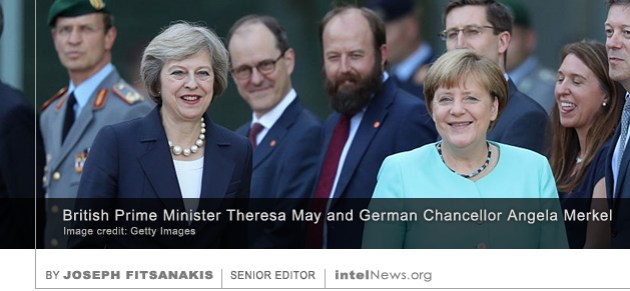
Theresa May Angela MerkelA reported discord between British and German intelligence services, which began in 2014, allegedly persists and now constitutes the “biggest rift between [the] secret services” of the two countries “since World War II”. According to British newspaper The Daily Mail, the Germans accuse Britain of working with the United States to spy on Berlin, while the British government says German intelligence agencies cannot be trusted to safeguard classified information. In an article published on Thursday, The Daily Mail said British and American intelligence agencies have stopped sharing non-critical intelligence with their German counterparts. The lack of cooperation “has now reached the point where there is virtual radio silence” between German and Anglo-American intelligence agencies, said the newspaper, citing “a source familiar” with the ongoing negotiations between the two sides.
In 2014, Germany expelled the most senior American intelligence officer stationed in the country after it confirmed that the United States National Security Agency had spied on German citizens, and had even targeted the personal communications of German Chancellor Angela Merkel. Berlin also caught a German intelligence officer who was spying for the Central Intelligence Agency. It was later alleged that Washington threatened to end all intelligence cooperation with Berlin if the German government offered protection to American defector Edward Snowden. Some German lawmakers had suggested that Berlin should reach out to Snowden, in return for information about US intelligence operations against Germany. In March of last year, the German broadsheet Süddeutsche Zeitung said that officials in Berlin had accused Britain of participating in American spy operations against Germany. The resulting dispute betweem Britain and Germany, said the paper, had turned into a “burgeoning crisis” that threatened intelligence-sharing between London and Berlin.

According to The Daily Mail, British intelligence agencies are now accusing their German counterparts of not properly safeguarding classified information that is shared with them by British security services. Consequently, claim the British, some of that information has found its way to WikiLeaks, the international whistleblower website founded by Australian former computer hacker Julian Assange. The London-based newspaper claims that British and German intelligence officials have met twice since 2014 to discuss ways of resolving the differences between their respective intelligence agencies. But the meetings have failed to mend the division between the parties and the crisis persists, claims The Daily Mail.

Author: Joseph Fitsanakis | Date: 16 December 2016 | Permalink

South Korean cabinet approves closer intelligence cooperation with Japan

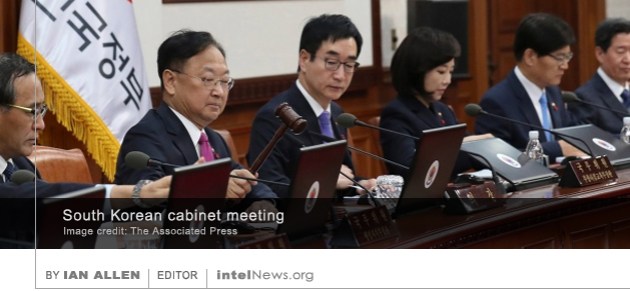
South KoreaIn a move that highlights the thaw in relations between South Korea and Japan, the two nations appear to be closer than ever to entering an intelligence agreement with each other. In 2014, Washington, Seoul and Tokyo signed a trilateral intelligence-sharing agreement on regional security issues, with the United States acting as an intermediary. But a proposed new agreement between South Korea and Japan would remove the US from the equation and would facilitate direct intelligence-sharing between the two East Asian nations for the first time in history.

The proposed treaty is known as the General Security of Military Information Agreement (GSOMIA). Its centerpiece is a proposal to streamline the rapid exchange of intelligence between South Korean and Japanese spy agencies, especially in times of regional crisis involving North Korea. Last week, the South Korean Ministry of National Defense publicly gave GSOMIA its blessing by stating that Seoul’s security would benefit from access to intelligence from Japanese satellite reconnaissance as well as from submarine activity in the South Sea. On Monday, South Korea’s Deputy Prime Minister for Economic Affairs, Yoo Il-ho, announced after a cabinet meeting that GSOMIA had been officially approved by the government.

The agreement is surprising, given the extremely tense history of Korean-Japanese relations. Japan conquered the Korean Peninsula for most of the first half of the 20th century, facing stiff resistance from local guerrilla groups. After the end of World War II and Japan’s capitulation, South Korea has sought reparations from Tokyo. In 2014, after many decades of pressure, Japan struck a formal agreement with South Korea over the plight of the so-called “comfort women”, thousands of South Korean women and girls who were forced into prostitution by the Japanese imperial forces during World War II. Relations between the two regional rivals have improved steadily since that time.

The GSOMIA agreement will now be forwarded to officials in the South Korean Ministry of National Defense. The country’s defense minister is expected to sign it during a meeting with the Japanese ambassador to South Korea in Seoul on Wednesday, local news media reported.

Author: Ian Allen | Date: 22 November 2016 | Permalink

Turkey asks German spies for help in rounding up July coup plotters

Recep Tayyip ErdoğanThe Turkish government has sent an official request to German intelligence for assistance in cracking down on the members of the so-called Gülen movement, which Ankara claims is behind July’s failed coup plot. The movement consists of supporters of Muslim cleric Fethullah Gülen, who runs a global network of schools, charities and businesses from his home in the United States. The government of Turkey has designated Gülen’s group a terrorist organization and claims it has stealthily infiltrated state institutions since the 1980s. The administration of Turkish President Recep Tayyip Erdoğan accuses Gülen’s supporters of orchestrating the July 15 coup that included an armed attack on the country’s parliament and the murder of over 200 people across Turkey.
According to German newsmagazine Der Spiegel, Turkey’s National Intelligence Organization (known by its Turkish initials, MİT) has secretly contacted its German counterpart, the Federal Intelligence Service (BND). The Turks’ request, said Spiegel, involves the provision of assistance to investigate and arrest supporters of the Gülen movement living in Germany, some of whom are German citizens. There are over three million people with Turkish citizenship, or of Turkish descent, currently living in Turkey. Citing “a dossier of classified documents”, Spiegel said that the MİT had asked the BND to investigate a list of 40 individuals for possible links to Gülen, and to extradite to Turkey another three whom Ankara claims have direct ties to the July coup. The documents also allegedly contain a request for MİT officials to pressure German lawmakers to be more critical of Gülen supporters in Germany. Requests for cooperation were also sent by MİT to nearly a dozen state governments in Germany, but all were declined, said Spiegel.

The Turkish government has arrested, fired or demoted tens of thousands of people since July, for alleged links to the Gülen movement. Some European officials, many of them German, have accused President Erdoğan of using the failed coup as an excuse to purge his opponents of all political persuasions in the country. On Sunday, the head of Germany’s Committee on Parliamentary Oversight, Clemens Binninger, said he would launch an investigation into the joint projects between German and Turkish intelligence agencies following the failed July coup. Another member of the Committee, Hans-Christian Ströbele, said he would personally set up a panel to probe any communication between German intelligence agencies and the MİT. By working closely with Turkish intelligence, German spy agencies were risking “becoming complicit in criminal activity”, said Ströbele.

Author: Joseph Fitsanakis | Date: 22 August 2016 | Permalink

Italian spy chief paid secret visit to Syria: news reports

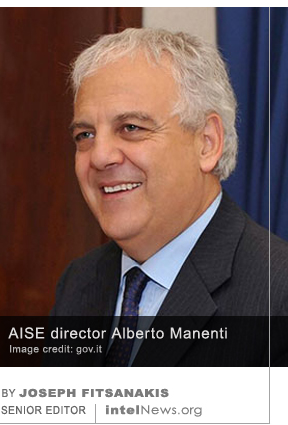
Alberto ManentiThe head of Italian intelligence paid a secret visit to Syria earlier this month, a week after his Syrian counterpart visited Rome, according to reports from the Middle East. The Dubai-based newspaper Gulf News, which first reported the alleged behind-the-scenes exchange, said the visits focused on counter-terrorism cooperation between Syria and the European Union. The paper said that the initial contact was made in late June by Major General Deeb Zeitoun, head of Syria’s General Intelligence Directorate, who paid a secret visit to Rome. General Zeitoun’s visit was allegedly in response to an official invitation issued by the Italian government. The general is believed to have stayed in a secluded private villa, which was provided by the Italian External Intelligence and Security Agency, known as AISE. He subsequently met with several Italian intelligence officials, including AISE Director, General Alberto Manenti.
A week later, Manenti secretly traveled to Syrian capital Damascus, where he stayed for several days. According to Gulf News, General Manenti met with his Syrian counterpart and other senior intelligence officials, as well as with Syrian President Bashar al-Assad. The main purpose of the secret meetings was to explore the potential for enhanced collaboration between Syria and the European Union on counter-terrorism issues. It appears that the Syrian government is willing to share intelligence on citizens of the EU who have traveled to Syria and have joined the ranks of the Islamic State, as well as other al-Qaeda-inspired groups in the country. Damascus is even willing to give EU intelligence personnel access to captured Islamist fighters that are being held in Syrian government facilities.

In return, however, the Syrians are asking that the EU enters negotiations on possibly normalizing diplomatic relations with Damascus. Contacts between the EU and Syria were severely disrupted at the outbreak of the Syrian Civil War and remain officially non-existent to this day. According to Gulf News, the Syrians told General Manenti that full intelligence cooperation in the area of counter-terrorism will ensue as soon as the EU normalizes diplomatic relations with the government in Damascus. The Italian intelligence official is believed to have told the Syrians that Rome will press the EU to move toward re-establishing relations with Damascus, in return for concrete steps taken in Syria toward “political transition” in the war-torn country.

Author: Joseph Fitsanakis | Date: 18 July 2016 | Permalink

Australia, Indonesia exchange intelligence personnel to combat ISIS

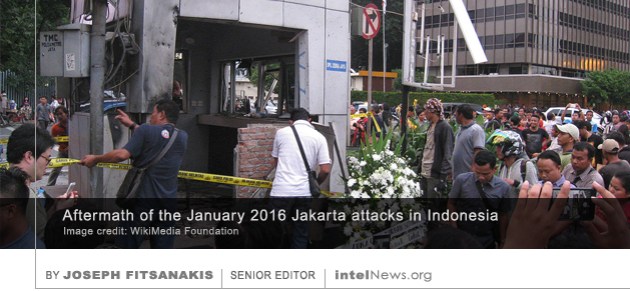
2016 Jakarta attacksAn ambitious new personnel exchange program between intelligence agencies in Australia and Indonesia aims to combat the unprecedented rise of militant Islamism in Southeast Asia, which is fueled by the Islamic State. The program, which is already underway, aims to strengthen intelligence cooperation between two traditionally adversarial regional powers. According to The Australian newspaper, the scheme owes its existence to the growing recognition that the security environment in the region is rapidly deteriorating due to the popularity of the Islamic State. The militant group appears to have replaced al-Qaeda in the minds of many radical Islamists in Indonesia, Malaysia, the Philippines and elsewhere, and is fueling the resurgence of smaller Islamist sects that have laid largely dormant for years.
Relations between militant Islamist sects in Indonesia —the world’s most populous Muslim nation— have traditionally been factional in nature. But some experts fear that the unprecedented growth of the Islamic State is galvanizing and uniting Islamist factions throughout Southeast Asia. Chief among them is the Jemaah Islamiyah, an al-Qaeda-linked terrorist group operating across the region, which was behind the 2002 Bali bombings that killed over 200 people, 88 of them Australians. In January of this year, Jemaah Islamiyah praised a series of attacks in the Indonesian capital Jakarta, which were perpetrated by militants connected to the Islamic State. The attacks killed four people, far fewer than their perpetrators had hoped to harm. But they lasted for several hours and shocked many due to the ease with which the heavily armed terrorists were able to evade security measures. Similar attacks were recently prevented in their planning stages by security agencies in Malaysia and the Philippines.

These developments prompted the rapprochement that is currently taking place between two traditionally rival intelligence agencies, the Australian Security Intelligence Organisation (ASIO) and Indonesia’s State Intelligence Agency, commonly referred to as BIN. The two agencies have reportedly begun posting officers to each other’s headquarters on multi-month assignments. The purpose of these exchanges is to gain a detailed understanding of each other’s counterterrorist planning and operations, and devise areas of actionable cooperation. The plan can be characterized as ambitious, given that relations between ASIO and BIN were severely disrupted in late 2013 and are still damaged, according to some observers. The break in relations was prompted by revelations, made by the American defector Edward Snowden, that Australian intelligence spied on senior Indonesian politicians and their family members, including the wife of the country’s president. Indonesia responded by withdrawing its ambassador from Canberra and terminating all military and intelligence cooperation with Australia. Nine months later, the two countries signed a joint agreement promising to curb their intelligence activities against each other. Some observers suggest that it will take years for Indonesian and Australian intelligence to fully reestablish intelligence cooperation. However, the rapidly deteriorating security situation in Southeast Asia could be significantly accelerating this process.

Author: Joseph Fitsanakis | Date: 13 July 2016 | Permalink

Relations between UK spy agencies “broke down” during war on terrorism

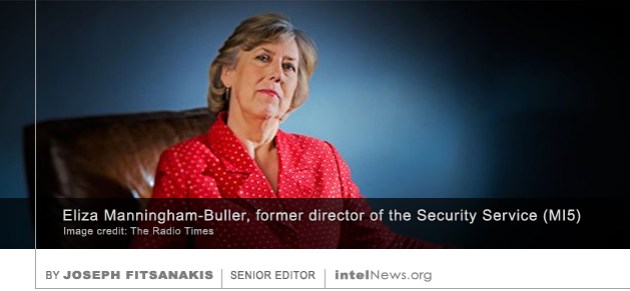
Eliza Manningham-BullerRelations between two of Britain’s most powerful intelligence agencies, MI5 and MI6, suffered a “serious and prolonged breakdown” during the American-led war on terrorism. Citing sources in the British government, the London-based Guardian newspaper said on Tuesday that the two agencies entered an extensive row over Britain’s support for extraordinary rendition. The policy refers to the government-sponsored abduction of individuals and their extrajudicial transfer across national borders. It was widely practiced by the administration of US President George W. Bush, despite its connection to documented cases of torture of terrorism detainees, in countries like Egypt, Libya, and Jordan.
In Britain, the administration of Prime Minister Tony Blair secretly supported Washington’s extraordinary rendition operations. It instructed the Secret Intelligence Service, known as MI6, to assist its American counterpart, the Central Intelligence Agency, in efforts to abduct and rendition terrorism suspects. However, not everyone in Britain’s intelligence establishment was in agreement with government policy. One strong critic was Eliza Manningham-Buller, the then-director of Britain’s Security Service, commonly known as MI5, which she led from 2002 to 2007. According to The Guardian’s sources, Manningham-Buller was “evidently furious” when she discovered that MI6 had secretly colluded with governments like those of Libya and Egypt to rendition terrorism detainees. Believing extraordinary rendition and torture to be “wrong and never justified”, the MI5 director effectively stopped her agency from cooperating with MI6. She even “threw out” of MI5’s Thames House headquarters several MI6 liaison staff who were working there at the time, said The Guardian.

Soon afterwards, Manningham-Buller complained in writing to Prime Minister Blair about the conduct of some MI6 officers, whose actions allegedly “threatened Britain’s intelligence gathering” and “compromised the security and safety of MI5 officers and their informants”. The Guardian does not provide further elaboration of the contents of Manningham-Buller’s letter to the prime minister, but alleges that it contributed to a “serious and prolonged breakdown” in relations between MI5 and MI6. The paper says it contacted the two intelligence agencies, as well as Manningham-Buller, who has since retired, but no one wished to comment on the story. Sources did tell the paper, however, that the relationship between the two agencies “has now been repaired after a difficult period”.

Author: Joseph Fitsanakis | Date: 02 Jun 2016 | Permalink

Israel, Egypt, Jordan, enter ‘unprecedented’ intelligence-sharing agreement

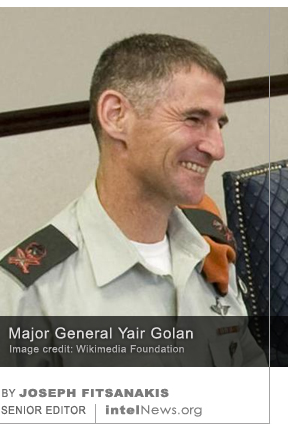
Yair GolanThe governments of Israel, Egypt and Jordan have entered an intelligence-sharing agreement aimed at joining forces against the Islamic State, which a senior Israeli military commander has described as “unprecedented”. The comment was made on Wednesday by Major General Yair Golan at a press conference hosted by Israel’s Foreign Press Association. General Golan has been serving as Deputy Chief of the General Staff of the Israel Defense Forces since late 2014.
Speaking to reporters in Jerusalem, General Golan said that intelligence was “the most important element in the whole system” when fighting an insurgency of the kind that the Islamic State is conducting in the Middle East. He went on to point out that Egypt is currently engaged in a war against Islamic State forces in the Sinai Peninsula, while “Jordan is terrified by the presence of the Islamic State in [its] cities and towns”. At the same time, Israel tries to “work with them in order to contribute something to their security”, he added, referring to Egypt and Jordan.

The two nations represent the only Arab countries that have signed peace treaties with the Jewish state. A peace treaty between Israel and Egypt was signed in 1979, whereas a similar agreement was struck between Israel and Jordan 15 years later, in 1994. General Golan cited the peace treaties between the three nations as the basis for the intelligence-sharing agreement. But he added that he would not describe the latter as “some sort of reconciliation” between Israel and the people of Egypt and Jordan. However, the agreement is “a good starting point”, he said, adding that he is “quite optimistic” about the future of Israel’s relations with Jordan and Egypt.

Author: Joseph Fitsanakis | Date: 21 April 2016 | Permalink

NSA director made secret visit to Israel last week

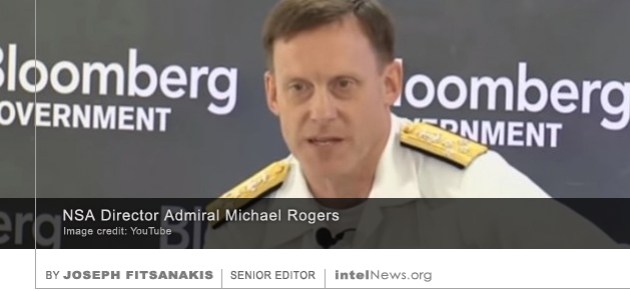
Michael RogersThe head of the United States’ largest intelligence agency secretly visited Israel last week, reportedly in order to explore forging closer ties between American and Israeli cyber intelligence experts. Israeli newspaper Ha’aretz said on Sunday that Admiral Michael Rogers, who directs the United States National Security Agency (NSA), was secretly in Israel last week. The NSA is America’s signals intelligence (SIGINT) agency, which is responsible for electronic collection, as well as protecting US government information and communication systems from foreign penetration and sabotage.
According to Ha’aretz, Rogers was hosted in Israel by the leadership of the Israel Defense Forces’ SIGINT unit, which is known as Intelligence Corps Unit 8200. The secretive group, which is seen as Israel’s equivalent to the NSA, is tasked with collecting SIGINT from Middle Eastern locations and protecting Israel’s electronic information infrastructure from adversaries. According to the Israeli newspaper, Rogers’ visit was aimed at exploring ways in which the NSA and Unit 8200 can enhance their cooperation, especially against regional Middle Eastern powers like Iran or non-state groups like Hezbollah.

IntelNews readers will recall that the IDF’s Unit 8200 is viewed by some Middle East observers as the creator of the Stuxnet virus. Stuxnet is a sophisticated malware that is believed to have been designed as an electronic weapon against Iran’s nuclear program. Among these observers is New York Times correspondent David Sanger; in his 2012 book, Confront and Conceal, Sanger claimed that Stuxnet was designed by NSA and Unit 8200 programmers as part of a joint offensive cyber operation codenamed OLYMPIC GAMES. According to Sanger, the two agencies collaborated very closely between 2008 and 2011 in order to bring about Stuxnet and other carefully engineered malware, including Flame.

Ha’aretz said that Rogers’ visit was meant to solidify US and Israeli cooperation on offensive cyber operations, based on the legacy of Stuxnet and Flame. During his visit to Israel, the US intelligence official also met with the heads of other Israeli intelligence agencies, said Ha’aretz.

Author: Joseph Fitsanakis | Date: 28 March 2016 | Permalink

US, Russian spies often cooperate despite differences, says CIA director

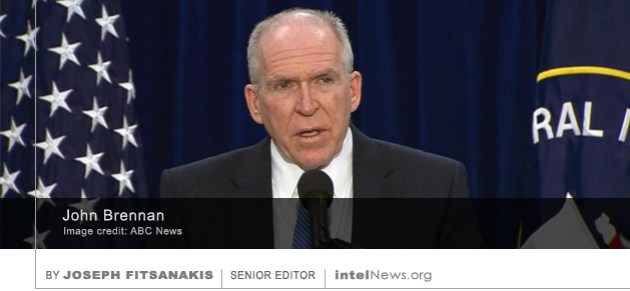
John BrennanRussia is being “very aggressive” toward the United States, but cooperation on counter-terrorism between Moscow and Washington is “highly active” despite the differences between them, according to the director of the United States Central Intelligence Agency. John Brennan, a longtime CIA career officer, who has led the Agency for nearly three years, spoke on National Public Radio on Wednesday about US-Russian relations, Syria and the Islamic State. He told the Washington-based radio station that Russian President Vladimir Putin sees Russia as a superpower that has to assert its influence beyond its immediate region. Thus, said Brennan, Moscow’s actions in Ukraine could be understood in the context of Russia’s regional-power doctrine; but its “very assertive, very aggressive” support for Syrian President Bashar al-Assad is part of a wider strategy of geopolitical domination that includes the Middle East.
Brennan said that Russia is losing ground in Ukraine because its “hybrid war” is “not going as planned” and Putin “has found that he’s in a bit of a quandary” in the former Soviet republic. Not only is Putin “not realizing his objectives” in Ukraine, added the CIA director, but the widening geopolitical confrontation between Russian and the West is “causing a chill […] even in intelligence channels”. He added, however that the CIA continues to work closely with the Russian intelligence community in counter-terrorism operations directed against Islamist militants. Brennan described the CIA’s relationship with Russian intelligence operatives as a “very factual, informative exchange. If we get information about threats to Russian citizens or diplomats, we will share it with the Russians”, said the CIA director, adding: “they do the same with us”.

Brennan, a fluent Arabic speaker who spent many years in Saudi Arabia, used the 2014 Winter Olympics in Sochi, Russia, as an example of a collaborative project between the CIA and its Russian counterparts. “We worked very closely with them” during the Sochi games, said Brennan, in order to “try to prevent terrorist attacks”. “And we did so very successfully”, concluded the CIA director.

Author: Joseph Fitsanakis | Date: 26 February 2016 | Permalink

Canada stops sharing intelligence with Five Eyes partners over data breach

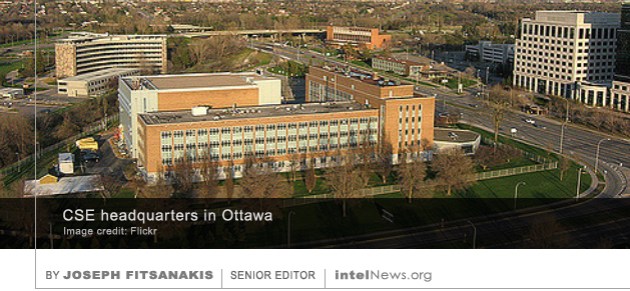
CSE CanadaCanada says it will stop sharing certain types of intelligence with some of its closest international allies until it ensures that Canadian citizens’ information is not included in the data given to foreign spy agencies. The announcement follows an official admission, made earlier this week, that a Canadian intelligence agency failed to remove Canadian citizens’ data from information it shared with member-agencies of the so-called Five Eyes Agreement. The pact, which is sometimes referred to as the UK-USA Security Agreement, has been in existence since World War II. It provides a multilateral framework for cooperation in signals intelligence (SIGINT) between the United Kingdom, the United States, Canada, Australia, and New Zealand.


On Thursday, the Commissioner of the Communications Security Establishment (CSE) of Canada, Jean-Pierre Plouffe, published a report on the activities of the CSE —the country’s primary SIGINT agency. The document, which is published annually by the Commissioner, states that the majority of the CSE’s SIGINT collection activities took place in accordance with Canadian law. However, the report found that some of the data shared by CSE with its Five Eyes partners contained data that could potentially be used to identify the identities of Canadian citizens. According to Canadian law, the CSE is not allowed to specifically target the communications of —or information about— Canadian citizens or Canadian companies. Moreover, information pertaining to those, which may be indirectly collected in the course of legitimate targeting of foreign citizens, is supposed to be immediately purged by CSE collection staff.

However, the Commissioner’s report found that some metadata —namely information pertaining to communications other than their content— that could be used to identify Canadian citizens had been shared by the CSE with Five Eyes spy agencies. Later on Thursday, Harjit Sajjan, Canada’s Minister of Defense, announced that SIGINT intelligence-sharing would be suspended until the metadata breach identified in the Commissioner’s report could be adequately addressed and corrected. Minister Sajjan said the roots of the breach had to do with “technical deficiencies” at the CSE, but added that it was crucial that the privacy of Canadians was protected. Therefore, he said, the spy agency would “not resume sharing this information with our partners” until he was “fully satisfied” that the proper control systems were in place.

Author: Joseph Fitsanakis | Date: 29 January 2016 | Permalink

Moscow is working with Taliban against ISIS, says Russian envoy

Zamir KabulovRussia’s official envoy to Afghanistan has said that Moscow is now working with the Afghan Taliban in order to stop the growth of the Islamic State in the region. Many Taliban fighters are direct descendants of the Afghan and Pakistani Pashtuns who fought the Soviet Red Army in the 1980s, when the USSR invaded Afghanistan and fought a bloody decade-long war there. But the militant group, which today continues to control much of Afghanistan, despite a prolonged American-led military effort to defeat it, is now being challenged by the Islamic State. Known also as the Islamic State in Iraq and Syria (ISIS), the group enjoys growing popularity in Afghanistan, and some tribal warlords have already declared their allegiance to it. In contrast, the leadership of the Taliban has rejected the legitimacy of ISIS and refused to recognize its leader, Abu Bakr al-Baghdadi, as the caliph of all Sunni Muslims. According to Sunni doctrine, a caliph is the recognized political and religious successor to Muhammad, Islam’s prophet, and thus commands the Muslim ummah, or community.

For the past two years, allegations have surfaced in the world’s media that Russia, fearing the continuing growth of ISIS in Central Asia, has reached out to the Taliban in hopes of halting ISIS’ popularity. Last week, however, Zamir Kabulov, Moscow’s special envoy to Afghanistan, openly admitted that Russia is collaborating with the Taliban against ISIS. “The interests of the Taliban completely coincide with ours”, said Kabulov, and added that Moscow maintains “communication channels with the Taliban to exchange intelligence”. It is important to note that Kabulov, who was born in Soviet Uzbekistan, is arguably the most knowledgeable Russian diplomat on matters relating to Afghanistan. Until 2009, he served as Russia’s ambassador to Afghanistan, having also served in Iran and Pakistan. Western observers believe that Kabulov is not simply a “career diplomat”, as he presents himself, but a former officer in the KGB, the USSR’s foremost intelligence agency. He is also believed to have served as the KGB’s chief of station in Kabul during the Soviet occupation of the 1980s, and to have worked closely with Khad, the intelligence agency of Soviet-dominated Afghanistan.

Kim Sengupta, a defense correspondent of British broadsheet The Independent, argues that Kabulov’s announcement reflects the growing ties between the Federal Security Service (FSB), one of the KGB’s successor agencies, and the National Directorate of Security (NDS), Afghanistan’s current intelligence agency. The latter maintains open lines of communication with the Taliban. There is also a question about the extent of Russia’s collaboration with the Taliban in pursuit of common goals. Kabulov implied last week that the collaboration centers on intelligence-sharing. But Sengupta suggests that Moscow may also be supplying weapons and ammunition to the Taliban, through Russian ally Tajikistan. He also notes that other regional powers, including China and Iran, are warming up to the Taliban, which they increasingly view as a more reasonable alternative to ISIS.

Author: Joseph Fitsanakis | Date: 08 January 2016 | Permalink