Security firm says it shut down extensive Iranian cyber spy program
November 10, 2015 Leave a comment
 A security firm with headquarters in Israel and the United States says it detected and neutralized an extensive cyber espionage program with direct ties to the government of Iran. The firm, called Check Point Software, which has offices in Tel Aviv and California, says it dubbed the cyber espionage program ROCKET KITTEN. In a media statement published on its website on Monday, Check Point claims that the hacker group maintained a high-profile target list of 1,600 individuals. The list reportedly includes members of the Saudi royal family and government, American and European officials, North Atlantic Treaty Organization officers and nuclear scientists working for the government of Israel. The list is said to include even the names of spouses of senior military officials from numerous nations.
News agency Reuters quoted Check Point Software’s research group manager Shahar Tal, who said that his team was able to compromise the ROCKET KITTEN databases and acquire the list of espionage targets maintained by the group. Most targets were from Saudi Arabia, Israel, and the United States, he said, although countries like Turkey and Venezuela were also on the list. Tal told Reuters that the hackers had compromised servers in the United Kingdom, Germany and the Netherlands, and that they were using these and other facilities in Europe to launch attacks on their unsuspecting targets. According to Check Point, the hacker group was under the command of Iran’s Islamic Revolutionary Guards Corps, a branch of the Iranian military that is ideologically committed to the defense of the 1979 Islamic Revolution.
Reuters said it contacted the US Federal Bureau of Investigation and Europol, but that both agencies refused comment, as did the Iranian Ministry of Foreign Affairs. However, an unnamed official representing the Shin Bet, Israel’s domestic security agency, said that ROCKET KITTEN “is familiar to us and is being attended to”. The official declined to provide further details. Meanwhile, Check Point said it would issue a detailed report on the subject late on Monday.
► Author: Joseph Fitsanakis | Date: 10 November 2015 | Permalink
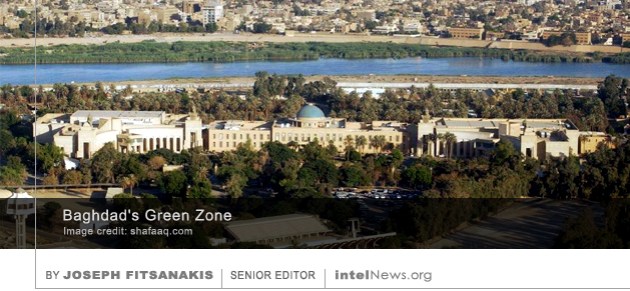 The Iraqi government is now using intelligence supplied by the Russian military in its war against the Islamic State, according to officials in Baghdad. As intelNews
 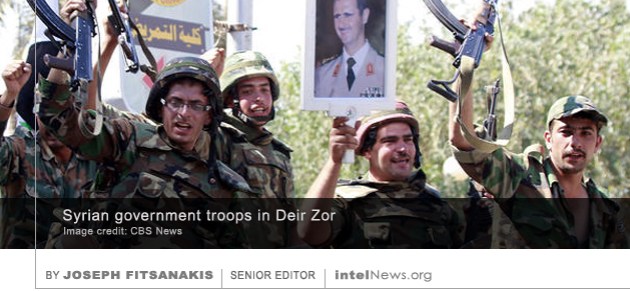 Hundreds of ground troops from Iran and Lebanon have been entering Syria in the past two weeks and are about to launch a large-scale ground attack against rebel groups, according to Reuters. The news agency quoted Lebanese sources “familiar with political and military developments in the conflict”. One source said that the Russian airstrikes in Syria, which began earlier this week, are the first phase of a large-scale military offensive against the Islamic State and other anti-government forces operating on the ground.
 The governments of Russia, Syria and Iran have entered a formal intelligence-sharing agreement with Iraq, in an effort to defeat the Islamic State, it has been announced. Intelligence-sharing has been practiced for a while between Russia, Syria and Iran; but this is the first time that Iraq, an American ally, has entered the alliance. According to the Baghdad-based Iraqi Joint Forces Command, the agreement entails the establishment of a new intelligence-sharing center in the Iraqi capital. It will be staffed with intelligence analysts from all four participating countries, who will be passing on shared information to their respective countries’ militaries.
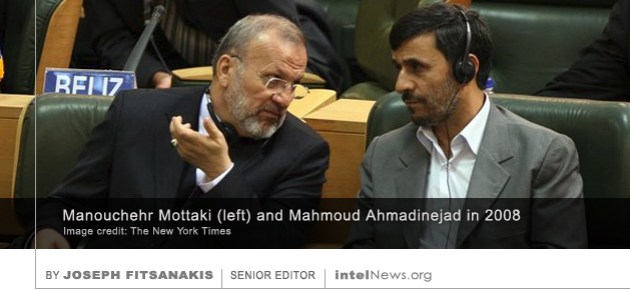 The United States National Security Agency spied on the Iranian president, foreign minister, and over 140 Iranian dignitaries who visited New York in 2007 to participate in the United Nations General Assembly. The allegation was
 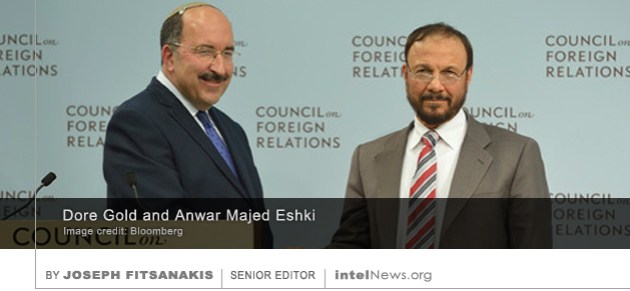 Representatives from Israel and Saudi Arabia have publicly admitted for the first time that they met secretly to discuss their common foe Iran, even though Saudi Arabia does not officially acknowledge Israel’s existence. The admission was made at a symposium held on Thursday at the Council on Foreign Relations, a foreign-policy think tank based in Washington, DC.
 By JOSEPH FITSANAKIS | intelNews.org









Russian-Iranian alliance over Syria is not as strong as some believe
November 18, 2015 by Ian Allen Leave a comment
Alavi’s comments came two weeks after Major General Mohammad Ali Jafari, the head of Iran’s Revolutionary Guards Corps said that Iran cared about the stability of al-Assad’s regime in Syria more than Russia did. Jafari was responding to earlier comments made by Maria Zakharova, spokeswoman for the Russian Ministry of Foreign Affairs, who said that Moscow would not insist in keeping al-Assad in power in Damascus as a matter of principle. When asked to comment on Zakharova’s comments, Jafari said Iran had to accept that Russia “may not care if al-Assad stays in power as we do”. The difference between Tehran and Moscow, said Jafari, was that “we don’t know any better person to replace him”.
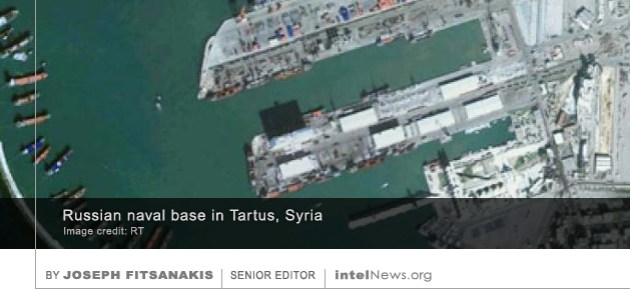
So does that spell changes in the dynamics of the Russian-Iranian alliance over Syria? Such an eventuality should not be discounted, says Sergey Aleksashenko, nonresident senior fellow at the Brookings Institution. He explains that, although both the Russians and the Iranians have aided al-Assad, their reasons for doing so are very different. Russia’s interests in Syria center on maintaining access to its naval base in Tartus, and on retaining a geopolitical presence in the Middle East. Iran’s support for Assad aims to prevent Tehran’s traditional foes, namely Saudi Arabia and the Gulf States, from turning Syria into their protectorate. Additionally, says Aleksashenko, Iran appears much more willing to deploy ground troops in the fight against ISIS than Russia. The Islamic Republic is also much more willing to go against the wishes of other regional powers, like Saudi Arabia and Turkey, which Moscow tends to court.
Ultimately, says Aleksashenko, “although Russia has strategic interests in Syria, it has no intention to keep a military presence in the Middle East forever”. The Iranians, however, have no choice but to dwell in one of the world’s most unstable regions. Al-Assad’s removal would add significantly to that instability, and that is not something that Tehran is willing to permit.
► Author: Ian Allen | Date: 18 November 2015 | Permalink
Filed under Expert news and commentary on intelligence, espionage, spies and spying Tagged with Ali Jafari, Analysis, Ian Allen, Iran, Mahmoud Alavi, Maria Zakharova, Russia, Sergey Aleksashenko, Syria, Syrian Civil War