Russian spy services raid bomb lab in Moscow, foil large-scale suicide plot
August 14, 2017 Leave a comment
 Russian intelligence services say they have foiled a large-scale bomb plot, after raiding an explosives laboratory belonging to the Islamic State and arresting four suspects. The four men were allegedly planning to target the Moscow Metro transit system and a busy shopping center in the Russian capital. In a statement released to the media this morning, the Russian Federal Security Service (FSB) did not specify the intended targets of the plotters. But it said it had arrested four people during an early morning raid at an explosives laboratory located in the Moscow suburbs. The FSB said that its officers confiscated large quantities of peroxide-based explosives that resemble the material used by the Islamic State in the November 2015 attacks in Paris, the March 2016 attacks in Brussels, and last May’s suicide bombing in Manchester.
One of the men arrested has been named by the FSB as Akbarzhon A. Dzhalilov, 22, a Kyrghyz-born Russian citizen. The other three men, who have not yet been named, are all from former Soviet Republics of Central Asia. Russian media reported that the Moscow cell was being commanded and directed by the Islamic State in Syria. Two Russian-speaking men from the Russian Caucasus, who are located in Syria, are thought to have been handling the cell’s activities. Russian intelligence services estimate that at least 2,500 Russian citizens have move to the Middle East to join jihadist groups in the past three years.
Had it been carried out, the attack would have been added to a growing list of terrorist incidents against Russia since 2015, which are related to the Kremlin’s decision to enter the Syrian Civil War. In October of that year, the Islamic State claimed responsibility for the bombing of Metrojet Flight 9268, a chartered commercial flight operated by Russian company Kogalymavia. The chartered airliner went down over Egypt’s Sinai Peninsula, killing all 217 passengers and crew on board —the worst disaster in Russian aviation history. In November of 2016, the FSB reportedly foiled another attack by five members of the Islamic State in Moscow. In February of this year, a seven-member Islamic State cell was busted in Yekaterinburg, Russia’s fourth-largest city, while it was planning attacks in several metropolitan areas, including Moscow and St. Petersburg. In April, the North Caucasus-based Imam Shamil Battalion claimed responsibility for a suicide attack in the St. Petersburg Metro transit system, which killed 15 train passengers. The group, whose existence was unknown before the St. Petersburgh attack, said it supported al-Qaeda and perpetrated the attack in retaliation for Moscow’s involvement in the Syrian Civil War.
► Author: Ian Allen | Date: 14 August 2017 | Permalink
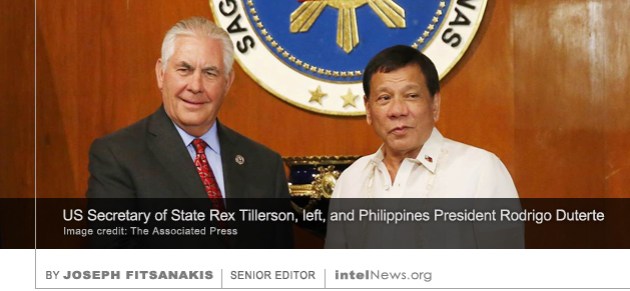 The United States is reportedly weighing plans to launch airstrikes in the Philippines, against militant groups that are affiliated with the Islamic State of Iraq and Syria. However, some American officials are skeptical about reports of possible airstrikes, while Philippine government officials claim no such action is necessary. For more than 40 years, the Philippine army has been fighting a counterinsurgency campaign against secessionist Moros in the country’s southwest. The region is home to most of the Philippines’ Muslim population, which constitutes around 6 percent of the country’s overall population. In recent years, some Muslim secessionist groups, including the most formidable, Abu Sayyaf, have pledged allegiance to the Islamic State of Iraq and Syria, known as ISIS.
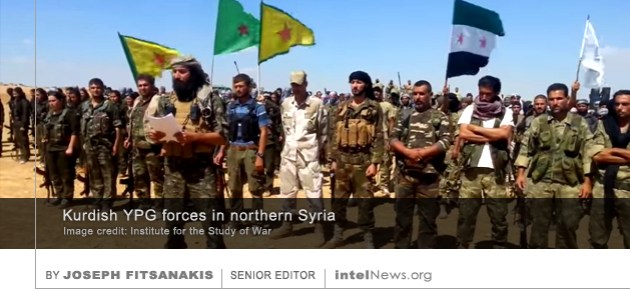 Dozens of Western European and American citizens are participating in the ongoing takeover of Raqqa, the de facto capital of the Islamic State in Syria, despite being prohibited from doing so by their own governments, according to recent news reports. Much has been written about foreign fighters who enter Iraq and Syria in order to join the ranks of the Islamic State, the Sunni militant group that previously went by the name Islamic State of Iraq and Syria (ISIS). But relatively little attention has been paid to the thousands of foreign fighters who have traveled to the region to join the war against ISIS.
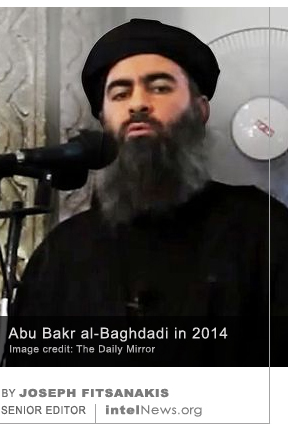 A senior Iraqi intelligence official has rejected assurances given by Russia that Abu Bakr al-Baghdadi, the founder and leader of the Islamic State, is dead, insisting instead that the Iraqi-born cleric is alive in Syria. In mid- June, Russia’s Ministry of Defense said that, according to its sources, al-Baghdadi
  The global reach of the Islamic State through the use of the internet remains “largely intact” despite relentless efforts by some of America’s most advanced cyber warfare experts to neutralize the group’s online presence. It is now over a year since the United States Department of Defense announced that it had launched a cyber war against the Islamic State —the militant Sunni Muslim group that today controls large parts of Syria and Iraq.
 The security map of the Middle East changed within a few hours on Wednesday, when the Islamic State managed to strike Iran for the first time. Six assailants —five men and a woman— stormed the Islamic Consultative Assembly, which serves as the parliament of Iran, and the mausoleum of the founder of the Islamic Republic, Ayatollah Khomeini. By the time they killed themselves, or were killed by security forces, the six had murdered 12 people and injured over 60. The Islamic State, which carried out the attack, had warned for several months that it would launch a direct assault at the heart of
  the world’s largest Shiite state. It tried to do so before, several times, and failed. But
 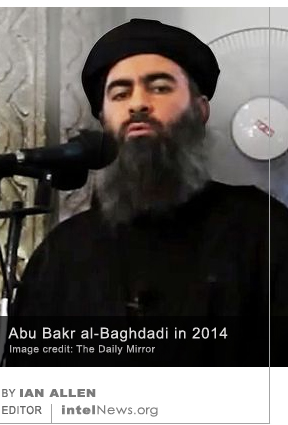 The leader of the Islamic State has abandoned the city of Mosul and is hiding in the desert zone of western Iraq, according to intelligence sources. Meanwhile Mosul, once the most populous city under the Islamic State’s control, is now reportedly being defended by a diminishing cadre of fewer than 3,000 Sunni militants, who are facing a 110,000-strong invading army.
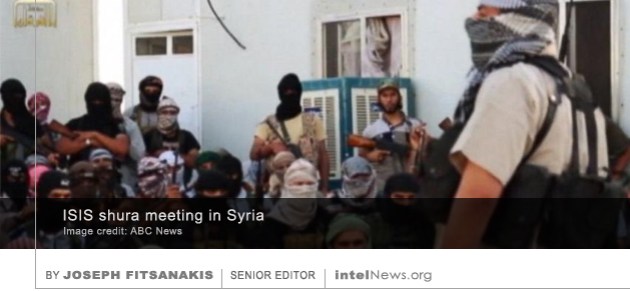 The Islamic State is facing imminent financial collapse, according to a new study conducted by a London-based research group in association with one of the world’s leading international accounting firms. The recently launched report is entitled
 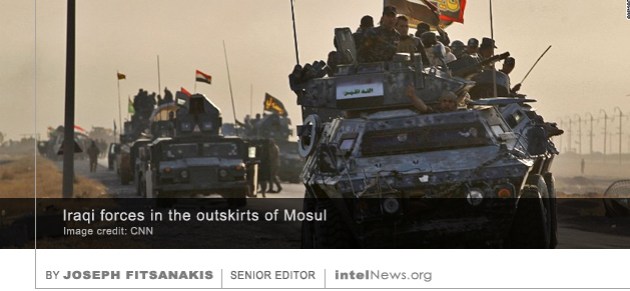 Western military and intelligence agencies are deploying extra analysts to comb through unprecedented amounts of digital data collected from Iraqi regions that have recently been recaptured from the Islamic State. The information is contained in thousands of laptops, hard drives, flash drives and cell phones left behind by retreating Islamic State forces in and around the northern Iraqi city of Mosul.
 Coordinated efforts by Anglo-American military and intelligence agencies have resulted in the killing or capturing of nearly every senior commander of the Islamic State’s online force. The close-knit group of Islamic State hackers and online propagandists, which are informally known as “the Legion”, is responsible for hacking and online recruitment incidents that led to several lone-wolf attacks in the West. In one incident in March of 2015, the Legion claimed responsibility for the unauthorized release of personal details of over 1,300 American government employees, with orders to Islamic State volunteers to kill them. In other instances, Legion operatives reached out to impressionable young men and women in Western Europe and the United States and convinced them to move to Syria or conduct attacks at home.
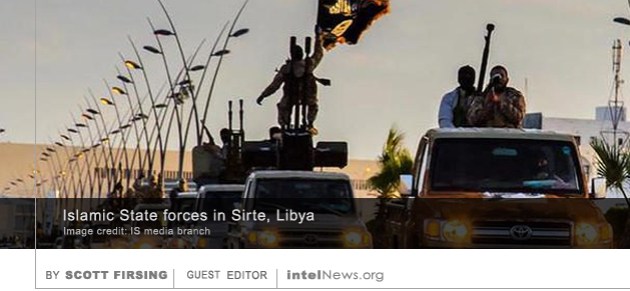 As United States air strikes and special-forces operations
 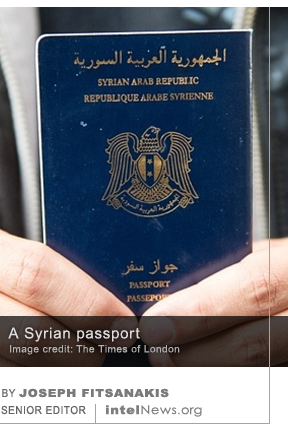 Fake Syrian passports designed for use by members of the Islamic State trying to enter Europe have been found in refugee camps in Greece during an investigation by the law enforcement agency of the European Union (EU). Officials from Europol, the EU agency that coordinates intelligence operations against organized crime across EU-member-states, said that the fake travel documents were found during a fact-finding mission in Greek refugee camps. The mission was part of a larger investigation into the production and use of forged passports by the Islamic State, the Sunni militant group that is also known as the Islamic State of Iraq and Syria (ISIS).
 Saturday’s suicide bombing, which killed over 50 and injured dozens at a wedding in Gaziantep, Turkey, was without doubt the work of the Islamic State. It was yet another attempt by the militant Sunni group to discourage the Kurds from confronting it in battle, by pointing to the deadly consequences. It was also fueled by the desire for vengeance against a population that has consistently resisted the Islamic State’s ideology. Additionally, if confirmed, the use of a child as a suicide bomber by the Islamic State may form a pattern of operational activity that can lead to broader conclusions about the current state of the organization.






 intelNews.org
CIA warned Barcelona police two months ago about possible Islamist attack
August 18, 2017 by Joseph Fitsanakis Leave a comment
In the hours following the attack, several observers noted that Barcelona was always an obvious target for the Islamic State, given that the group had already perpetrated terrorist attacks in Berlin, London, Paris and Brussels. They also raised questions about the low level of police presence and the absence of anti-vehicle barrier systems in Barcelona —one of Europe’s busiest tourist destinations. Late on Thursday, the Catalan newspaper El Periódico reported that, two months ago, the CIA alerted the Mossos d’Esquadra, the autonomous police and security service of Catalonia, of a possible terrorist attack by the Islamic State. According to the Barcelona-based daily, the CIA even mentioned La Rambla as the main target of Islamist militants.
Even before the CIA issued its warning, the Islamic State had directed several threats against Spain since 2014, when the group first appeared in Syria. As El Periódico said, the group’s followers “consider themselves obligated to re-establish Islam” in areas that were ruled by Muslim leaders in the past. For much of the medieval period, Spain and Portugal were known as Al-Andalus, and were ruled by a succession of Muslim caliphs. The Spanish daily also reported that a Twitter account associated with the Islamic State issued several warnings against Spain two weeks ago. Specifically, on July 30, the account twitted a series of messages that read: “We will implement the caliphate in Spain and will recover our land. Impending attack on Al-Andalus, God willing”. Similar threats had been issued a year ago on social media, but were later disregarded after they failed to materialize, said El Periódico.
► Author: Joseph Fitsanakis | Date: 18 August 2017 | Permalink
Filed under Expert news and commentary on intelligence, espionage, spies and spying Tagged with Barcelona (Spain), CIA, Islamic State, Mossos d'Esquadra, News, Spain, terrorism