US Congressional probe finds DoD intelligence on Islamic State was altered

ISISAn investigation by Republican lawmakers in the United States House of Representatives has reportedly found that military intelligence analysts were pressured into changing reports on the Islamic State by their superiors. The investigation follows allegations made a year ago by analysts at the Defense Intelligence Agency (DIA), the Pentagon’s primary human-intelligence agency. As many as 50 analysts claimed that their reports about the Islamic State were being deliberately tweaked by officials at the US Central Command (CENTCOM), the Pentagon body that directs and coordinates American military operations in Egypt, the Middle East and Central Asia. Some of the reports related to al-Qaeda activity in Iraq and Syria, but most were about the Islamic State, the militant Sunni organization that controls large swathes of territory in Iraq and Syria.

The allegations prompted two separate investigations, one by the Department of Defense and one by a task force consisting of Republican members of three committees in the US House of Representatives —namely the Committee on Armed Services, the Permanent Select Committee on Intelligence, and the Defense Subcommittee of the Committee on Appropriations. According to The Daily Beast, the committees have now concluded their five-month investigation and are preparing to release a 10-page report before the end of August. Citing three unnamed US officials, the website claims that the soon-to-be-released report will corroborate claims by DIA analysts that their intelligence reports were deliberately doctored in order to make American efforts against ISIS seem more successful than they have been.

According to the three officials, who are reportedly “familiar with the task force’s findings”, the 10-page document will not corroborate claims that the pressure on the intelligence analysts was exercised by senior sources inside the White House. But they told the website that the Congressional investigation could continue after the release of the report. The Daily Beast said it contacted CENTCOM for a comment on the story, but was told that the Pentagon body has yet to receive the task force report. Meanwhile, the Pentagon’s own investigation into the analysts’ allegations continues and expected to release its findings by the end of 2016.

Author: Joseph Fitsanakis | Date: 11 August 2016 | Permalink


New information points to previously unknown ISIS intelligence agency

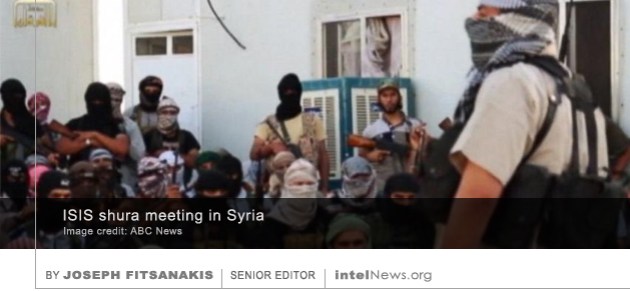
ISIS meetingThe Islamic State has set up a secretive intelligence agency whose task is to set up sleeper cells abroad and has already sent “hundreds of operatives” to Europe and Asia, according to information emerging from interrogations of suspects. According to The New York Times, the information about the intelligence agency comes from “thousands of pages” of intelligence files from American, French, Belgian, Austrian and German agencies. The documents include information from interviews with captured members or defectors from the Islamic State, which is otherwise known as the Islamic State in Iraq and Syria (ISIS).

Citing unnamed American military and intelligence officials, The Times says the ISIS intelligence agency goes by the name Emni. It appears to be a multilevel organization that includes domestic and external operational components. It is headed by Abu Muhammad al-Adnani, the most infamous Syrian official in the Islamic State, who has also served as the group’s information director and head of its special forces units. Emni’s external unit is tasked with conducting terrorist operations abroad. These are the responsibility of several lieutenants, who are permitted to recruit the most capable members of ISIS from around the world. These recruits are typically placed in units according to nationality and language skills. They are then trained and deployed in small cells that remain in touch with Emni’s headquarters but operate in relative independence from the agency.

According to ISIS defectors, Emni began deploying cells abroad in 2014, focusing primarily on Europe and Asia, including the Middle East. Allegedly, Emni cells have been or are currently operational in Germany, Austria, Spain, France, Belgium, Lebanon, Tunisia, Bangladesh, Malaysia and Indonesia. Close to 30 operatives have managed to carry out 10 attacks around the world, while another 30 have been arrested while preparing them. The Times notes that, if the information about Emni’s tasks is correct, then the recent attackers who launched operations in Europe could have far closer ties to the Islamic State than initially presumed. Interestingly, it appears that Emni is following a different tactic in the United States, where the widespread availability of weapons does not require them to deploy operatives who have received training in Iraq or Syria. Instead, they use the Internet to radicalize potential recruits. Once radicalized, “if they have no prior record, they can buy guns, so we don’t need to have no contact man who has to provide guns for them”, according to a German former member of ISIS.

Author: Joseph Fitsanakis | Date: 09 August 2016 | Permalink
Turkey arrests nine Caribbean islanders attempting to join ISIS in Syria

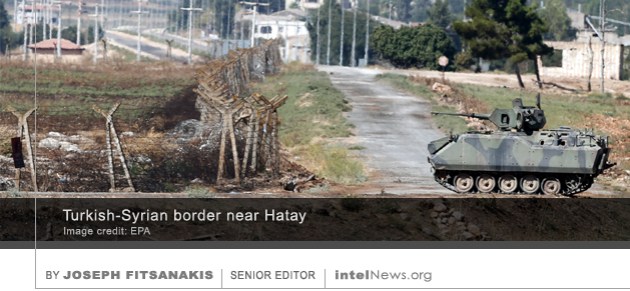
Turkey Syria borderTurkish police have detained nine citizens of Trinidad and Tobago who were on their way to Syria, allegedly to join the Islamic State. They are believed to have traveled from Trinidad and Tobago to Caracas in Venezuela, and from there to Amsterdam, Holland, before flying to Turkey. Turkey’s Daily Sabah newspaper said on Monday that the nine men were captured on July 27, after a police roadblock in south-central Turkey’s Adana province stopped a truck heading toward the Syrian border. Upon searching the vehicle, police officers found a Syrian driver and nine passengers, all of whom were Trinidad and Tobago passport holders. All ten men were arrested. The truck’s driver has been charged with attempting to smuggle the nine Caribbean islanders to Syria, where, according to Turkish authorities, they were planning to join the Islamic State. Over 30,000 foreign nationals are estimated to have joined the militant Sunni group, which was previously known as the Islamic State of Iraq and Syria (ISIS).
Turkish police said on Tuesday that the nine Trinidadians have been transferred to the Provisional Migration Management authority in Adana and will be deported back to the Caribbean later this week. Negotiations are currently underway between the government in Ankara and authorities in Holland and London, to arrange flight stopovers en route to Trinidad. Meanwhile, speaking in Port of Spain, the Trinidadian capital, the Caribbean country’s Attorney General, Faris al-Rawi, said that the nine soon-to-be deportees would be kept under strict surveillance once back in Trinidad. He added that investigators would determine any charges that the men might face, and called for “an intelligence-based approach” to the problem of ISIS recruits in the country.

Al-Rawi was referring to dozens of prior instances of Trinidad and Tobago citizens who have joined ISIS in Syria. Last January, Turkish authorities arrested four more Trinidadian nationals who were allegedly on their way to Syria. The Caribbean country’s Ministry of National Security has identified 105 men, women and children who left for Syria after ISIS pronounced the establishment of an Islamic caliphate. But nongovernmental sources claim that the actual number of ISIS recruits from Trinidad is closer to 400.

Author: Joseph Fitsanakis | Date: 03 August 2016 | Permalink

Italian mafia may be supplying weapons to ISIS, say investigators

AK-47Organized criminal groups in southern Italy may be supplying assault weapons to groups and individuals that are associated with the Islamic State, according to European investigators. British newspaper The Guardian said last week that security officials in Italy, Britain, and elsewhere in Europe have traced weapons used by Islamists to at least one arms cache that entered the European black market through a Sicilian crime family with links to the mafia.
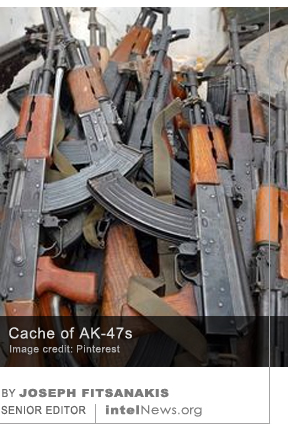
According to The Guardian, the initial link to the supply of weapons seems to originate with an organized criminal family in Catania, on Sicily’s eastern coast. The family, known locally as the “Ceusi”, is part of the “Santopaula” clan, which is the dominant criminal network in that part of Italy. Investigators have confirmed that two years ago the Ceusi family purchased a cache of 160 deactivated AK-47s from AFG Security Corporation, a Slovakia-based European weapons dealer. The purchase of the weapons, for $40,000, was legal. But the Sicilian mafia then illegally reactivated the weapons by removing the deactivating metal pins that had been inserted into the weapons’ barrels. The reactivated weapons were then supplied to the ’Ndrangheta, the Italian organized crime network that operates in the region of Calabria, in the Italian mainland. In turn, the ’Ndrangheta, which specializes in the trafficking of contraband to and from Europe, sold many of these reactivated weapons to a smuggling ring headquartered in the Egyptian port of Alexandria.

It was the Egyptian network, say investigators, that sold the AK-47s to Islamist militants in Egypt’s Sinai Peninsula, who have close connections with the Islamic State in Syria and other Islamist groups. A few of the weapons even ended up in the hands of European Islamists in France and elsewhere. Much of the intelligence regarding the AK-47s comes from telephone intercepts, said The Guaridan. But the newspaper cautioned that concrete links between the Mafia and the Islamic State have not yet been established. Nevertheless, the paper said that, according to European investigators, “organized criminals are increasingly open to trading with extremists”, and there are mounting “signs of an even closer relationship between organized criminals and Islamists” operating in North Africa and the Middle East.

Author: Joseph Fitsanakis | Date: 26 July 2016 | Permalink

Australia, Indonesia exchange intelligence personnel to combat ISIS

2016 Jakarta attacksAn ambitious new personnel exchange program between intelligence agencies in Australia and Indonesia aims to combat the unprecedented rise of militant Islamism in Southeast Asia, which is fueled by the Islamic State. The program, which is already underway, aims to strengthen intelligence cooperation between two traditionally adversarial regional powers. According to The Australian newspaper, the scheme owes its existence to the growing recognition that the security environment in the region is rapidly deteriorating due to the popularity of the Islamic State. The militant group appears to have replaced al-Qaeda in the minds of many radical Islamists in Indonesia, Malaysia, the Philippines and elsewhere, and is fueling the resurgence of smaller Islamist sects that have laid largely dormant for years.
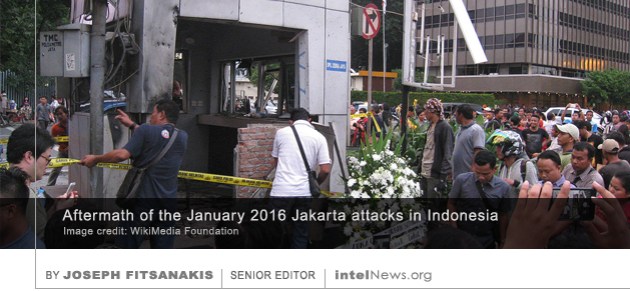
Relations between militant Islamist sects in Indonesia —the world’s most populous Muslim nation— have traditionally been factional in nature. But some experts fear that the unprecedented growth of the Islamic State is galvanizing and uniting Islamist factions throughout Southeast Asia. Chief among them is the Jemaah Islamiyah, an al-Qaeda-linked terrorist group operating across the region, which was behind the 2002 Bali bombings that killed over 200 people, 88 of them Australians. In January of this year, Jemaah Islamiyah praised a series of attacks in the Indonesian capital Jakarta, which were perpetrated by militants connected to the Islamic State. The attacks killed four people, far fewer than their perpetrators had hoped to harm. But they lasted for several hours and shocked many due to the ease with which the heavily armed terrorists were able to evade security measures. Similar attacks were recently prevented in their planning stages by security agencies in Malaysia and the Philippines.

These developments prompted the rapprochement that is currently taking place between two traditionally rival intelligence agencies, the Australian Security Intelligence Organisation (ASIO) and Indonesia’s State Intelligence Agency, commonly referred to as BIN. The two agencies have reportedly begun posting officers to each other’s headquarters on multi-month assignments. The purpose of these exchanges is to gain a detailed understanding of each other’s counterterrorist planning and operations, and devise areas of actionable cooperation. The plan can be characterized as ambitious, given that relations between ASIO and BIN were severely disrupted in late 2013 and are still damaged, according to some observers. The break in relations was prompted by revelations, made by the American defector Edward Snowden, that Australian intelligence spied on senior Indonesian politicians and their family members, including the wife of the country’s president. Indonesia responded by withdrawing its ambassador from Canberra and terminating all military and intelligence cooperation with Australia. Nine months later, the two countries signed a joint agreement promising to curb their intelligence activities against each other. Some observers suggest that it will take years for Indonesian and Australian intelligence to fully reestablish intelligence cooperation. However, the rapidly deteriorating security situation in Southeast Asia could be significantly accelerating this process.

Author: Joseph Fitsanakis | Date: 13 July 2016 | Permalink

Analysis: Will ISIS claim responsibility for Istanbul airport attack? (updated)

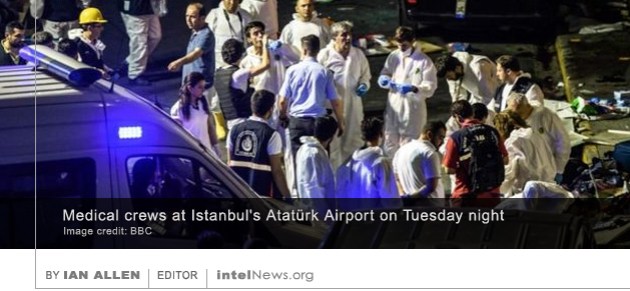
Istanbul Airport TurkeyTurkish security and counterterrorism officials are blaming the Islamic State of Iraq and Syria for Tuesday’s bloody attack at Istanbul’s Atatürk airport, which left at least 41 people dead and nearly 300 injured. But will ISIS claim responsibility for the attack? And if not, why not? ISIS is indeed the most likely culprit of Tuesday night’s terrorist attack. The modus operandi of the three attackers, which some unconfirmed reports suggest Turkey has now confirmed were foreign nationals, matches that of previous ISIS attacks on high-profile international targets. More importantly, the style of the attack does not fit the profile of the secessionist Kurdistan Workers’ Party, known as PKK, which almost always targets uniformed personnel in Turkey.

There is no shortage of motives for ISIS to target Turkey. The militant group wants to destabilize Turkey, which it sees as a prime market for spreading its ideas, especially among the country’s disenfranchised religious working class. The attack at Istanbul’s airport happened in the holy month of Ramadan, the most revered time on the Muslim religious calendar, during which ISIS said would launch a wave of violence around the world. Last but not least, foreign and domestic intelligence agencies had warned the Turkish government in recent weeks of an impending large-scale attack by ISIS, saying that the group was anxious to re-galvanize its supporters after suffering heavy military defeats in Iraq and Syria. Since the start of 2015, experts have connected ISIS to at least seven different attacks on Turkish soil, most of them in large urban centers like Ankara and Istanbul. However, the only attacks the militant group has claimed responsibility for were against Syrian anti-ISIS activists based in southern Turkey. In contrast, ISIS has shied away from officially linking itself with deadly attacks against high-profile targets in Turkey. This latest attack may fall in line with that pattern.

But why would ISIS not claim responsibility for such a media-savvy strike? There is no question that the Sunni Islamist group wants to destabilize Turkey’s economy, a goal that it sees as key to its success. That explains Tuesday night’s attack on one of the country’s busiest transport hubs during the peak of the tourist season. At the same time, however, ISIS is aware that Turkey’s main concern in the Middle East is not Sunni Islamism, but the rise of the PKK and other secessionist Kurdish groups. The latter are some of ISIS’ most formidable military adversaries, and the Islamist group would rather not distract Turkey from its escalating war against the Kurds. What’s more, because Ankara has been paying most of its attention to Kurdish separatists, ISIS has been able to build an extensive network of operatives inside Turkey, and it does not want to see it demolished by Turkish security forces. ISIS is therefore engaged in a delicate balancing act: on the one hand it wants to destabilize Turkey so as to export its sectarian war to one of the world’s most populous Sunni Muslim nations. On the other hand, however, it does not want to alter Turkey’s security priorities, which are mostly focused on Kurdish militias.

What will it mean if ISIS breaks with the typical pattern and does claim responsibility for Tuesday’s attack in Istanbul? That would be equivalent to an official declaration of war by the Islamic State against the Turkish Republic, a call for arms issued to all pro-ISIS networks in Turkey for the opening of a northern front in this widening regional conflict. It could also spell trouble for Turkey’s beleaguered security forces, which will be forced to divide their attention between two foes, the PKK in the east and in urban centers, and ISIS in the south and in popular tourist resorts throughout the country.

Author: Ian Allen | Date: 30 June 2016 | Permalink

Recent gains against ISIS are not enough, may actually backfire, say experts

First Post HWestern experts and intelligence officials are warning that the recent military gains made against the Islamic State of Iraq and Syria (ISIS) are not enough to damage it, and may in fact make the group stronger in the long run. Undoubtedly, the impressive momentum of ISIS, which calls itself the Islamic State, has been curtailed, and the image of invincibility that it once projected is no longer there. Observers estimate that the Sunni militant group has lost nearly a fifth of its territory in Syria, while it is no longer in control of about half of the land it used to occupy in Iraq. As a result of these territorial defeats, ISIS has lost a third of its oil production, which is believed to account for half of its overall revenue. Earlier this month, US President Barack Obama said that, as ISIS continues to concede territory, it is “losing the money that is its livelihood”.
But US intelligence officials do not seem to agree. Speaking on June 16 before the US Senate’s Select Committee on Intelligence, John Brennan, Director of the Central Intelligence Agency, cautioned against triumphalism. He told senators that the efforts of the international military coalition against ISIS “have not reduced the group’s terrorism capability and global reach”, adding that ISIS would “have to suffer even heavier losses of territory, manpower, and money for its terrorist capacity to decline significantly”. According to Reuters, a number of US intelligence officials and counterterrorism experts support Brennan’s views. The news agency said on Wednesday that many experts are warning that the military campaign on the ground was “far from eradicating [ISIS] and could even backfire”.

The fact that local troops fighting ISIS are almost completely composed of Shiite Arabs from Iraq and Iran, or are Kurdish Peshmerga, could add legitimacy to ISIS as the protector of the Sunni Arab minority in the region. There are also reports of human rights violations against Sunnis by the advancing Shiite forces, including an unconfirmed allegation that 49 Sunni men of fighting age were executed after surrendering to the anti-ISIS coalition in Falluja. Additionally, if ISIS loses much more territory, it will be tempted to simply abandon conventional fighting tactics and turn into a guerrilla group. Reuters quotes RAND Corporation analyst Seth Jones, who argues: “It looks like the areas that the Islamic State has lost, they are generally abandoning, and that would mean preparing to fight another way”. That could mean that ISIS fighters intend to blend in with the urban population and launch a campaign of sabotage, assassination and disruption of government services.

As ISIS has lost ground in Iraq and Syria, the flow of foreign fighters intending to join the organization has dropped significantly. But that is not necessarily a good thing, says Reuters. These fighters, who in the past were instructed to join ISIS in the Middle East, may now be told to launch lone-wolf terrorist attacks abroad. The Reuters report cites one terrorism expert, Hassan Hassan, of the Royal Institute of International Affairs in London, who argues that the international appeal of the Islamic State is not connected to the group’s military performance in the Middle East. In other words, its popularity among its Western followers will persist even if all of the group’s territorial strongholds are lost to its adversaries.

Author: Ian Allen | Date: 23 June 2016 | Permalink

Islamic State’s online army is a Russian front, says German intelligence

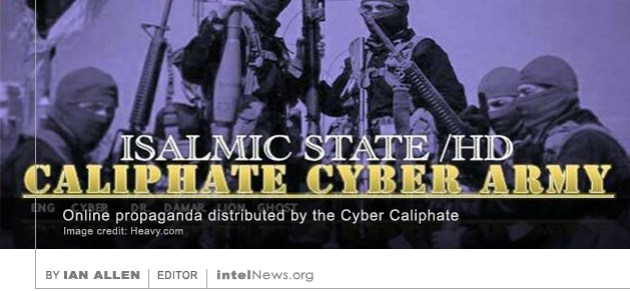
Cyber CaliphateA German intelligence report alleges that the so-called ‘Cyber Caliphate’, the online hacker wing of the Islamic State, is in fact a Russian front, ingeniously conceived to permit Moscow to hack Western targets without retaliation. The group calling itself Cyber Caliphate first appeared in early 2014, purporting to operate as the online wing of the Islamic State of Iraq and Syria (ISIS), later renamed Islamic State. Today the Cyber Caliphate boasts a virtual army of hackers from dozens of countries, who are ostensibly operating as the online arm of the Islamic State. Their known activities include a strong and often concentrated social media presence, and computer hacking, primarily in the form of cyber espionage and cyber sabotage.
Since its inception, the Cyber Caliphate has claimed responsibility for hacking a number of European government agencies and private media outlets. Its targets include the BBC and French television channel TV5 Monde, which was severely impacted by cyber sabotage in April of 2015. The Cyber Caliphate said it was also behind attacks on the servers of the United States Federal Bureau of Investigation, the Department of Defense, and the website of the Pentagon’s US Central Command. The US has since retaliated, both with cyber attacks and physical strikes. One such strike resulted in the killing of Junaid Hussain, a British hacker of Pakistani background, who was said to be among the Cyber Caliphate’s senior commanders. Hussain, 21, was reportedly killed in August 2015 in Raqqa, the Islamic State’s de facto capital in Syria, reportedly after clicking on a compromised link in an email, which gave away his physical whereabouts.

Now, however, a German intelligence report claims that the Cyber Caliphate is not associated with the Islamic State, but is rather a fictitious front group created by Russia. According to German newsmagazine Der Spiegel, which said it had seen the classified report, German authorities suggest that the Cyber Caliphate is in fact a project of APT28 (also known as ‘Pawn Storm’), a notorious Russian hacking collective with close ties to Russian intelligence. The German intelligence report echoes previous assessments by French authorities, which in 2015 stated that the TV5 Monde cyber attack was a false flag operation orchestrated by APT28. Also in 2015, a security report by the US State Department concluded that despite the Cyber Caliphate’s proclamations of connections to the Islamic State, there were “no indications —technical or otherwise— that the groups are tied”.

Author: Ian Allen | Date: 20 June 2016 | Permalink

Islamic State has regular contact with Syrian government, files show

ISIS - JFThe two main warring parties in the Syrian Civil War, the government of Syria and the Islamic State, frequently contact one another in pursuit of commercial and military deals, according to internal Islamic State documents. British-based news agency Sky News said on Monday that it had acquired “secret Islamic State files”, which included handwritten orders to operatives sent directly from officials at the organization’s headquarters in Raqqa, Syria. The group said it received the documents from a regional branch of the Free Syrian Army (FSA), a largely secular armed opposition group that was formed in 2011 by defectors from the Syrian Armed Forces. The FSA unit in Raqqa left the Syrian city once it was occupied by the Islamic State, and is currently based in Turkey. One of the group’s core preoccupations is assisting Islamic State defectors in their efforts to escape from Raqqa and reach Turkey. It was through these defectors, according to Sky News, that the secret Islamic State documents were acquired.
Among the revelations, said the British news agency, is that the militant Islamist group has been actively training foreign recruits to attack targets in the West “for much longer than security services had suspected”. The plan of the Islamic State seems to be to set up “sleeper cells” in what the group calls “specialized areas” across Europe, in order to carry out armed attacks. Another alleged revelation from the documents is that the Islamic State has operated “in direct coordination with the Syrian Armed Forces and even the Russian Airforce, which has been operating in Syria since September 2015. One of the documents appears to show that Syrian government forces allowed Islamic State troops to evacuate Palmyra along with their weapons, before Syrian and Russian troops entered the city. Yet another document describes a trade exchange between the Islamic State and the government of Syria, under which the Islamist militants gave Damascus oil in exchange for fertilizer.

When Sky News reporters asked Islamic State defectors in Turkey whether these exchanges between the Islamic State and the Syrian government were genuine, they replied “of course”, and added that such trade agreements between the two parties had “been going on for years”. Sky News has not yet released copies of the leased documents.

Author: Joseph Fitsanakis | Date: 04 May 2016 | Permalink

British, Irish citizens who fought the Islamic State are released from prison

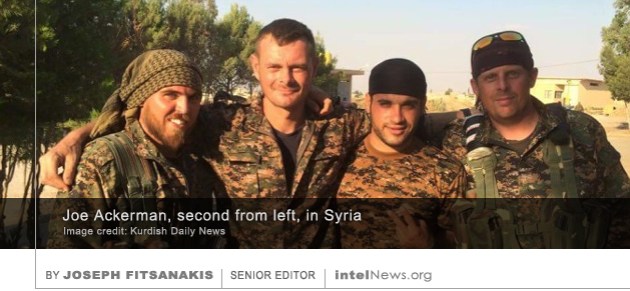
Joe AckermanTwo British and one Irish citizen, who fought with Kurdish units against the Islamic State in Iraq and Syria, but were imprisoned in Iraqi Kurdistan while they were trying to return to Europe, have been freed. The three men are Joshua Molloy, from County Laois in the Republic of Ireland, Jac Holmes from Bournemouth, England, and Joe Ackerman (pictured), from the West Yorkshire city of Halifax in England’s northern region. All three joined Kurdish militias and saw action in Syria and Iraq in recent months.
Holmes, a former information technology manager, had no military experience when, in early 2015, aged 22, he entered Syria, aiming to join Kurdish forces. He soon enlisted in the Kurdish People’s Protection Unit (YPG), a Kurdish group that serves as the armed wing of the Kurdistan Workers’ Party (PKK) in northern Syria. The Englishman from Bournemouth participated in several battles, but returned to the United Kingdom in June 2015, in order to recover from a bullet wound to the shoulder, which he suffered while in the battlefield. As soon as he was cured, he returned to Syria and rejoined the YPG. His compatriot, Joe Ackerman, is a former member of the British armed forces who traveled to Kurdistan last year and joined the YPG after entering Syria illegally. He too was eventually injured when his patrol was struck by a roadside bomb. The third man, Irishman Joshua Molloy, is also a former soldier, having served in the British Royal Irish Regiment, an infantry regiment of the British Army.

Many Western governments, including the British and Irish governments, maintain that their citizens who fight in the Syrian civil war may be prosecuted under counterterrorism legislation, even if they have fought against the Islamic State. But that has not stopped hundreds of Westerners from traveling to Syria and Iraq to join mostly Kurdish, Assyrian and other forces. Last December, intelNews reported on a study that identified over 108 American citizens who had enlisted in the various militias and armed groups fighting against the Islamic State. Nearly half of them had joined the YPG in Syria, while others had enlisted in the peshmerga forces of the Patriotic Union of Kurdistan (PUK) in Iraq, as well as in an assortment of Christian militias, including the Nineveh Plains Protection Units and the Dwekh Nawsha.

According to reports, Holmes, Ackerman and Molloy were on their way back to Europe and trying to cross from Syria into northern Iraq, when they were captured by Iraqi Kurdish government forces. They were jailed for over a week in the Kurdish city of Irbil while their captors tried to verify that they were not Islamic State volunteers. They were released on Sunday. In a statement issued last weekend, the British Foreign Office said it was helping its two citizens return to England as soon as possible.

Author: Joseph Fitsanakis | Date: 25 April 2016 | Permalink

Israel, Egypt, Jordan, enter ‘unprecedented’ intelligence-sharing agreement

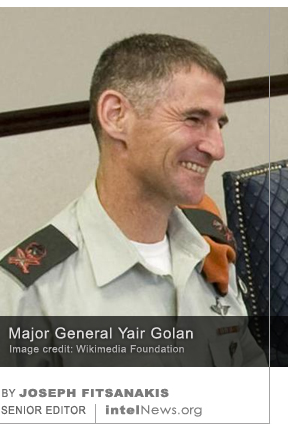
Yair GolanThe governments of Israel, Egypt and Jordan have entered an intelligence-sharing agreement aimed at joining forces against the Islamic State, which a senior Israeli military commander has described as “unprecedented”. The comment was made on Wednesday by Major General Yair Golan at a press conference hosted by Israel’s Foreign Press Association. General Golan has been serving as Deputy Chief of the General Staff of the Israel Defense Forces since late 2014.
Speaking to reporters in Jerusalem, General Golan said that intelligence was “the most important element in the whole system” when fighting an insurgency of the kind that the Islamic State is conducting in the Middle East. He went on to point out that Egypt is currently engaged in a war against Islamic State forces in the Sinai Peninsula, while “Jordan is terrified by the presence of the Islamic State in [its] cities and towns”. At the same time, Israel tries to “work with them in order to contribute something to their security”, he added, referring to Egypt and Jordan.

The two nations represent the only Arab countries that have signed peace treaties with the Jewish state. A peace treaty between Israel and Egypt was signed in 1979, whereas a similar agreement was struck between Israel and Jordan 15 years later, in 1994. General Golan cited the peace treaties between the three nations as the basis for the intelligence-sharing agreement. But he added that he would not describe the latter as “some sort of reconciliation” between Israel and the people of Egypt and Jordan. However, the agreement is “a good starting point”, he said, adding that he is “quite optimistic” about the future of Israel’s relations with Jordan and Egypt.

Author: Joseph Fitsanakis | Date: 21 April 2016 | Permalink

Comment: Europe’s answer to Brussels bombs may be more damaging than ISIS

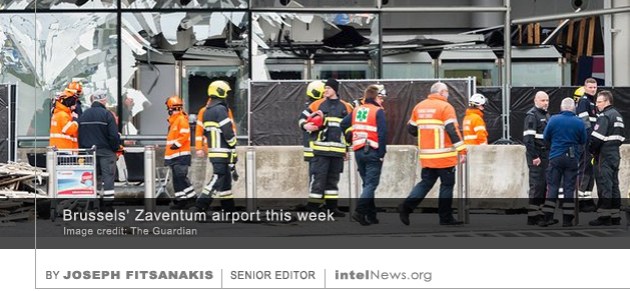
Brussels airportIn the past year, the Islamic State has claimed responsibility for at least nine terrorist attacks on foreign capitals. The growing list, which features Jakarta, Tunis, Paris, Beirut, Ankara, and Kuwait City, now includes the Belgian capital, Brussels. At least 34 people died in the attacks that rocked Brussels’ Zaventum airport and Maelbeek metro station on March 22, while another 300 were injured, 60 of them critically. This week’s bombings officially constitute the bloodiest terrorist attacks in Belgium’s history, prompting the country’s government to declare three days of national mourning.
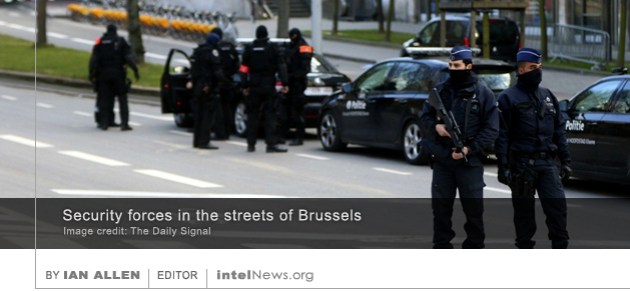
Why did the Islamic State attack one of Europe’s smallest countries, with a population of just over 11 million? Some have suggested that Brussels was targeted by the terrorist group because it was an easy target. Observers noted that Belgium’s security and intelligence services are underfunded and demoralized —a “weak link in Europe”, in the words of one expert. There is no question that Belgium’s security apparatus is in need of serious overhaul; but the need is equally great in Amsterdam, in Athens, in Madrid, in Dublin, and elsewhere in Europe. In fact, the Islamic State could have struck any of these European capitals with the same ease that it attacked Brussels —and might still do so.

In reality, the Islamic State’s decision to attack Brussels was carefully calculated and consistent with the group’s overall strategy. The primary reason that the Islamists attacked Brussels is that Belgium is one of 30 countries that actively participate in the Combined Joint Task Force, the international group behind Operation Inherent Resolve. Led by the United States military, the operation has been targeting Islamic State forces in Iraq and Syria since October 2014. The Islamic State wished to send a message to Europeans that their military intervention in the Middle East will be costly at home. Secondly, Brussels was struck because it is the headquarters of the European Union, which last month declared the Islamic State’s campaign against religious and ethnic minorities in Syria and Iraq as an act of genocide. Third, and perhaps most importantly, Belgium was targeted because a significant percentage of its population —as much as 7 percent by some estimates— is Muslim.

What is more, the degree of integration of Belgian Muslims in mainstream life is markedly limited and partly explains why so many of them —400 by some estimates, the highest per-capita number in Europe—have emigrated to Syria and Iraq in order to join the Islamic State. It is worth remembering that the Islamic State emerged as the de facto guarantor or Sunni Muslims by essentially provoking Iraq’s Shiites to attack and marginalize the country’s Sunni Arab minority. Following a series of Shiite attacks against Sunni communities in Iraq, which were part of a broader post-2003 sectarian conflict between Sunnis and Shiites, the Islamic State emerged as the protector of Sunni Arabs and has since fought against Syrian Alawites, Hezbollah, Iranian forces, Iraqi Shiites, and others. Its popular support in Iraq and Syria stems from the fear held by Sunni Arabs that, if the Islamic State is defeated, their communities will be exterminated by vengeful and unforgiving Shiites.

Having gained from sectarianism in the Middle East, the Islamic State is now implementing the same tactic in Europe. It is thus targeting countries like France and Belgium, which have significant Muslim populations, in order to provoke aggressive reactions against domestic Muslim communities. In other words, it expects that attacks like those in Belgium will favor extremist ideologies throughout the European continent, and in turn further-marginalize European Muslims. The rise of Islamophobia, the strengthening of extremist political parties, and the disintegration of European values such as acceptance and tolerance, are likely to create a new generation of disaffected European Muslim youth, many of whom will be prime candidates for Islamic State membership.

European societies must not allow the Islamic State to change the political identity of an entire continent through violence. Along with meticulous police and intelligence work, the bombs in Brussels must be answered with concerted attempts to deepen the social integration of European Muslims, and more broadly to promote cohesion between ethnic and religious groups in Europe. Anything short of that will provide the Islamic State with the same strategic advantage it has enjoyed in the Middle East for nearly a decade.

* Joseph Fitsanakis is Assistant Professor in the Intelligence and National Security Studies program at Coastal Carolina University in the United States.

News you may have missed #893: Intelligence and the attacks in Belgium

BrusselsBelgian Intelligence Services ‘Overwhelmed and Outnumbered’. Tuesday’s deadly attacks on Brussels airport and a metro station, which left at least 30 people dead, demonstrate that the Belgian security forces are overwhelmed and outnumbered by the threat posed by radical Islamists, experts say. Belgium’s security services are not so much incompetent, say experts, as understaffed—that leaves them outnumbered by the high number of suspected radical Islamists, some home-grown and some who have traveled to Syria and back.

Belgian intelligence service seen as weak link in Europe. Following the Paris attacks last November, it became apparent that the real intelligence failure had not been French but Belgian. Before those attacks one of the Belgian intelligence services, Surete de L’Etat, had only 600 personnel to keep tabs on 900 “persons of interest”, many of them potential jihadis who have travelled to Syria and Iraq. Apart from the lack of capacity, the Belgian intel services also lack the capability to deal with an internal ISIS threat.

Belgium feared tragedy was coming but couldn’t stop it. Belgium feared tragedy was coming but couldn’t stop it. Belgium has been trying to fight a growing threat with a relatively small security apparatus. Although Brussels is the diplomatic capital of the world, Belgian state security has only about 600 employees (the exact figure is classified information). Its military counterpart, meanwhile, the Adiv, has a similar number. That makes just over a thousand intelligence officers to secure a country that hosts not just Nato and the EU institutions but countless other organisations.

Malaysia foiled Islamic State plan to kidnap prime minister, senior officials

Ahmad Zahid HamidAuthorities in Malaysia said they managed to foil a plan by the Islamic State to kidnap the country’s prime minister and two other senior cabinet officials, in exchange for ransom. According to the government of Malaysia, the Islamic State also planned to stage armed attacks throughout the country, including in major urban centers, such as Kuala Lumpur, the nation’s capital. News of the alleged plot was revealed in the Dewan Rakyat, the lower house of the Malaysian parliament, by Ahmad Zahid Hamid, the country’s deputy prime minister. He told members of parliament that Malaysian intelligence had managed to detect the plot, which had been planned for January 30, 2015, but that the government did not believe it was prudent to alarm the country until the investigation of the alleged plot had been finalized.


According to Hamid, 13 individuals with direct ties to the Islamic State were behind the plot to kidnap three senior members of the Malaysian government on the same day. The targets were the Malaysian Prime Minister Najib Razak, the Defense Minister Hishammuddin Tun Hussein, and Hamid himself, who informed the parliament on Tuesday. He said that the Islamic State members were planning to ask for a large amount of money in return for delivering the three politicians to the authorities unharmed. Along with the kidnappings, the Islamic State members had planned to raid military facilities and steal weapons, then plant explosions throughout the country. They also wanted to conduct a series of armed robberies in order to acquire funds for the militant organization.

Hamid told the parliament that intelligence agencies had not been able to establish proof of the existence of an independent network belonging to the Islamic State in Malaysia. Instead, Islamic State members and sympathizers in the country are being handled from abroad, primarily from Syria, he said. Speaking on Tuesday about the alleged plot, Defense Minister Hussein said that security had been increased at all military bases and that the personal protection detail of senior cabinet officials had been augmented as a result of the plot.

Author: Ian Allen | Date: 16 March 2016 | Permalink

Defector reveals thousands of Islamic State internal documents

ISIS - JFTens of thousands of classified documents belonging to the Islamic State have been released by a disillusioned former member of the organization, who says that the group has been taken over by secularists. According to British-based agency Sky News, the documents were provided on a memory stick stolen from the Islamic State by a Syrian former member of the organization, who goes by the name “Abu Hamed”. Hamed allegedly stole the documents from the Islamic State’s “internal security police”, which Sky News also refers to as “the group’s Security Service”. He took it with him when he defected from the organization, which he says he joined as a convert from the non-Islamist Free Syrian Army. He told Sky News’ Stuart Ramsay that he left the group after concluding that it had been “taken over” by former Iraqi soldiers belonging to Ba’ath, the secularist party that was at the heart of the regime led by the late Iraqi President Saddam Hussein. As a result, “Islamic rules […] have totally collapsed” inside the Islamic State, said Hamed.

The documents that Hamed gave Sky News are said to number in the “tens of thousands” and reportedly identify nationals from over 50 countries who are members of the Islamic State. Many of the documents contain the 23-question form that all prospective members of the Islamic State have to complete before being admitted into the organization. The questionnaires contain the prospective members’ names and aliases, contact information and family background, among other identifying data. Ramsay said he met Hamed “in a secret location in Turkey”, where the former Free Syrian Army soldier is now living after defecting from the Islamic State. According to the Sky News reporter, Hamed said he abandoned the Islamist organization because its current leadership consists almost exclusively of Ba’athists, who are not known for their religious views or lifestyle.

Ramsay reports that many of the names of Islamic State members that are contained in the documents are already “well-known” to Western and Middle Eastern intelligence agencies. But the collection of members’ names contains several individuals from the Middle East, Northern Africa, Europe, as well as North America, who were allegedly not included in intelligence agencies’ lists. One file surrendered by Hamed is headlined “Martyrs”, and allegedly features the names of members of a brigade that consists “entirely of fighters who wanted to carry out suicide attacks and were trained to do so”. Hamed is also reported to have told Sky News that the Islamic State is gradually abandoning its self-described state capital of Raqqa in Syria and relocating to Iraq. Sky News said it had informed Western government agencies about the documents.

Author: Joseph Fitsanakis | Date: 14 March 2016 | Permalink