News you may have missed #0134

  • S. Korean government tries to silence anti-surveillance activist. Park Won-sun, the executive director of the Hope Institute, a civic think tank, says he will continue to criticize the country’s National Intelligence Service (NIS) for spying on civilians, despite charges filed against him by the government.
  • Cleric in CIA kidnap trial seeks millions. Hassan Moustafa Osama Nasr, an Egyptian cleric kidnapped by the CIA from a Milan street in 2003, has asked for €10 million ($15 million) in damages from the American and Italian defendants charged in his abduction.
  • Three US-based Chinese nationals accused of selling arms to China. Chinese nationals Zhen Zhou Wu, Yufeng Wei, Bo Li and Chitron Electronics and Shenzhen Chitron Electronics Co. Ltd., face a 38-count indictment for conspiring to violate the US Arms Export Control Act for allegedly exporting defense weapons and electronics, money laundering and filing false documents with the US Department of Commerce.

Bookmark and Share

French “trial of the century” continues with ex-spy’s testimony

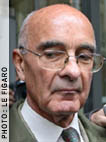
Philippe Rondot

Philippe Rondot

By IAN ALLEN | intelNews.org |
A complex court case in France, which the nation’s media have dubbed “trial of the century”, continued this week with the testimony of one of France’s most distinguished intelligence agents. Retired General Philippe Rondot, who worked for France’s domestic (DST) and foreign intelligence (DGSE), and advised several French leaders, gained international fame in 1994, when he managed to arrest Venezuelan-born operative Ilich Ramirez Sanchez, known as Carlos the Jackal. General Rondot was called earlier this week to testify whether France’s former Prime Minister, Dominique de Villepin, helped forge a series of documents showing that France’s current President, Nicolas Sarkozy, had laundered millions of dollars in defense contract bribes through secret accounts in Luxembourg’s Clearstream bank. Mr. de Villepin will face up to five years in prison if found guilty of the forgery. Read more of this post


News you may have missed #0129

  • Romanian communist spy boss dead at 80. General Nicolae Plesita, who directed Romania’s Securitate during the country’s communist period, has died. While heading the Securitate’s foreign intelligence service, from 1980 to 1984, Plesita hired the Venezuelan-born operative Ilich Ramirez Sanchez, known as Carlos the Jackal, to assassinate Romanian dissidents in France and bomb the US-owned Radio Free Europe offices in Munich, in 1981. In 1998, Plesita revealed that he had orders from the Romanian government to find temporary shelter for Carlos in Romania after the RFE bombing.
  • Settlement reached in DEA-CIA spying dispute. A tentative settlement has been reached in a lawsuit brought 15 years ago by a former US Drug Enforcement Administration agent who accused a CIA operative of illegally bugging his home. In a court filing, lawyers for the government and the DEA agent said they “had reached an agreement in principle to settle the underlying litigation”. See here for previous intelNews coverage of this case.
  • Federal judge denies request for CIA secret documents. Hundreds of documents detailing the CIA’s defunct overseas secret detention program of suspected terrorists, including extreme interrogation methods have remained secret after U.S. District Judge Alvin K. Hellerstein on Wednesday refused to release them “in order to protect intelligence methods and sources”. The ACLU argues that the CIA secret program was illegal under international and US law, that it involved the torture and deaths of some inmates, and therefore should not be shielded from public view.

Bookmark and Share

News you may have missed #0128

  • US government appeals judge’s order in Cuban Five spy case. US government officials are contending a judge’s order because they say it would be detrimental to US national security. The order requires the US government to turn over any national security damage assessments in the Cuban Five case. Washington accuses the Five of spying on the US for Cuba. Three of the five are to be given new sentences on October 13 after an appeals court ruled that the initial sentences they received (ranging from 19 years to life) were too long.
  • Indian spies want access to missed calls. Indian security agencies have told the country’s Department of Telecommunications that they need access to missed calls because “anti-social elements” may be using the system to communicate without actually making a call. Last month, India’s Intelligence Bureau asked for all VOIP (internet-based) calls in the country to be blocked until it figures out a mechanism to track them. It also said it wants access to the content of all mobile phone calls in the country.
  • New book investigates Stasi’s scientific espionage. Documents from the vaults of HVA (Hauptverwaltung Aufklärung), the foreign department of the Stasi, the East German Ministry for State Security, which were purchased by the CIA from a German informant in 1992, were made available in 2005 to Kristie Macrakis professor of history at the Georgia Institute of Technology in Atlanta. Her book, Seduced by Secrets: Inside the Stasi’s Spy-Tech World, offers a rare look into the Stasi’s secret technical methods and sources. Macrakis’s analysis of the CIA material reportedly reveals that about 40% of all HVA sources planted in West German companies, research institutions and universities were stealing scientific and technical secrets.

Bookmark and Share

FBI ordered to release Cheney records in Valerie Plame probe

Valerie Plame

Valerie Plame

By IAN ALLEN | intelNews.org |
A US federal judge has ordered the FBI to release the transcript of an interview with former US vice-president Dick Cheney, conducted during an investigation into who leaked the identity of CIA operative Valerie Plame. Plame sought compensation after she was publicly named as a secret CIA operative. Along with her husband, former ambassador Joseph Wilson, she has fought a legal campaign, arguing that several Bush administration officials, including former Vice President Dick Cheney, and even President George W. Bush himself, were behind the leak of her CIA role. Cheney had a lengthy interview with prosecutors pursuing the leak case, but the transcripts of the exchange have so far remained secret on national security grounds. But US district Judge Emmet G. Sullivan said yesterday that there is no justification to withhold the entire interview since the FBI investigation has now concluded. Read more of this post

New documents point to innocence of convicted Swedish “spy”

Bertil Ströberg

Bertil Ströberg

By JOSEPH FITSANAKIS | intelNews.org |
A man who was jailed in Sweden in 1983 for spying on behalf of the Eastern Bloc may be innocent, according to an investigation by Sweden’s TV4 channel. On May 20, 1983, Bertil Ströberg was arrested in Stockholm’s main post office, while picking up correspondence for a ‘Sven-Roland Larsson’. What he didn’t know is that Sweden’s Security Service (SAPO) was looking for Larsson after it had surreptitiously opened a letter addressed to the Polish embassy in Stockholm. The letter, which was signed by Larsson, contained a number of classified Swedish security documents and requested $25,000 Swedish kronor ($3,500) in return for further secret information. During his closed-door trial, Ströberg claimed he had made the acquaintance of someone calling himself ‘Sven-Roland Larsson’ in Stockholm, who later sent him a letter asking him to pick up a delivery in his name from the city’s main post office. Read more of this post

Spy chief’s records feature prominently in France’s “trial of the century”

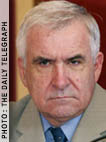
Yves Bertrand

Yves Bertrand

By IAN ALLEN | intelNews.org |
A five-year court case described in France as “the trial of the century” or “France’s Watergate” resumed on Monday with the appearance in court of one of five defendants, who is no other than France’s former Prime Minister Dominique de Villepin. He is accused of forging a series of documents showing that France’s current President, Nicolas Sarkozy, had laundered millions of dollars in defense contract bribes through secret accounts in Luxembourg’s Clearstream bank. At the center of the trial is the adversary relationship between Mr. de Villepin, who was former French President Jacques Chirac’s preferred successor, and Nicolas Sarkozy. Mr. Sarkozy accuses Mr. de Villepin of ordering an intelligence investigation into his financial dealings in order to ruin his reputation and score a political victory. Read more of this post

Lawsuit halted in 15-year-old CIA wiretap case

Judge Lamberth

Judge Lamberth

By JOSEPH FITSANAKIS | intelNews.org |
A lawsuit against an alleged illegal wiretap operation by the CIA, which was initially filed 15 years ago, was put on hold late last week by a US federal appeals court. The court imposed the temporary hold in an apparent disagreement with US District Judge Royce Lamberth, who last July said CIA attorneys committed fraud in alleging that US national security would be threatened if details of the lawsuit were openly discussed. Judge Lamberth ruled that the CIA had kept the case secret for years in order to avoid embarrassment. But the appeals court appears to have accepted the CIA’s claim that discussing the case openly will reveal operational secrets and harm US national security. A simultaneous decision by the appeals court to order the government to grant security clearances to lawyers on both sides of the argument probably means that the case, which briefly surfaced last July after Judge Lamberth’s decision to reveal it to the public, will disappear once again under the “state secrets” clause. Read more of this post

CIA censored me to avoid embarrassment, says ex-οfficer

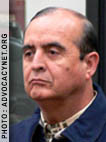
V.L. Montesinos

V.L. Montesinos

By JOSEPH FITSANAKIS | intelNews.org |
More than a month after Secrecy News reported the legal victory of a former CIA agent, who managed to have a censored report he wrote about the CIA’s dirty dealings in Peru declassified, a US news outlet has finally given some attention to the story. On August 4 (see previous intelNews reporting), Secrecy News revealed that a memorandum drafted in 2001 by CIA officer Franz Boening, detailing assistance illegally provided by the CIA to the then chief of Peruvian intelligence, had finally been declassified following an eight-year court battle. In the censored memorandum, Boening argued that the Agency violated US law by providing material and political assistance to Vladimiro Lenin Montesinos Torres, a graduate of the US Army’s School of the Americas and longtime CIA operative, who headed Peru’s Servicio de Inteligencia Nacional (SIN) under the corrupt administration of President Alberto Fujimori. Fujimori is now in prison, as is Montesinos himself. Read more of this post

News you may have missed #0085

  • How the ACLU got the CIA agents’ photos. As intelNews reported earlier this week, the ACLU has been trying to identify CIA agents who participated in torture of detainees, by taking surreptitious pictures outside the operatives’ homes. It is worth noting that uncovering the identities of CIA officers is legal, so long as it is based on publicly available records.
  • Russian espionage case is bigger than initially thought, say Czech officials. Intelligence authorities in the Czech Republic say the two Russian agents who were recently expelled from the country last week were not primarily interested in the US missile defense shield.
  • US spy community builds Wikipedia-style database. Intellipedia, the intelligence community’s version of Wikipedia has grown markedly since its formal launch in 2006. It now averages more than 15,000 edits per day and is home to 900,000 pages and 100,000 user accounts.

Bookmark and Share

News you may have missed #0084

Bookmark and Share

News you may have missed #0080

Bookmark and Share

News you may have missed #0077

Bookmark and Share

FBI investigates attorneys for trying to identify CIA torturers

By IAN ALLEN | intelNews.org |
The Washington Post and The New York Times are reporting three military attorneys at Guantánamo Bay have been questioned by the FBI for allegedly showing pictures of CIA operatives to prisoners accused of plotting the 9/11 attacks. In some cases, the pictures were taken surreptitiously outside the operatives’ homes. The lawyers were apparently trying to identify agents who may have been involved in torturing prisoners at US jails overseas. But US military officials say the lawyers could have broken laws shielding the identity of classified intelligence. The FBI investigation is reportedly headed by John Dion, head of the US Justice Department’s counterespionage section. Dion has worked on several high-profile national security cases, including the prosecution of Aldrich H. Ames, the CIA double agent who spied for the USSR. Read more of this post

News you may have missed #0074

Bookmark and Share