Settlement reached in spying scandal that rocked Credit Suisse
July 26, 2021 Leave a comment

CREDIT SUISSE, ONE OF the world’s most powerful banking firms, has announced that a settlement has been reached in a case in which it stood accused of having paid private investigators to spy at former executives. The case, which shocked Swiss public opinion in recent years, prompted the resignation of several Credit Suisse senior officials, and some claim it may have prompted a suicide.
In October of 2019, two senior Credit Suisse executives resigned amidst a high-stakes espionage operation, whose alleged target was Iqbal Khan, the former Chief Executive Officer of Credit Suisse’s wealth-management division. Khan alleged that, once he left the firm, he was spied on by private investigators paid for by Credit Suisse. In a dramatic turn of events, one of the private investigators involved in the case, described as “an external security expert”, who mediated between Credit Suisse and the investigation firm, committed suicide.
At the time, Credit Suisse described the surveillance on Khan as “strictly an isolated incident”. Later, however, two more Credit Suisse executives came forward alleging that they too had been spied on after leaving their job at the firm. These allegations prompted concerns that spying on former —and even current employees— may have been a standard operating procedure at Credit Suisse.
There is now a strong chance the allegations will never be investigated fully. On Sunday, a Credit Suisse spokesperson announced that the lawsuits brought by Khan against the firm, as well as against the private detectives who allegedly spied on him, would be dropped. The move followed a settlement between the three sides, which was reached out of court. When asked about the financial terms of the settlement, the spokesperson said no comment would be made about that.
► Author: Joseph Fitsanakis | Date: 26 July 2021 | Permalink


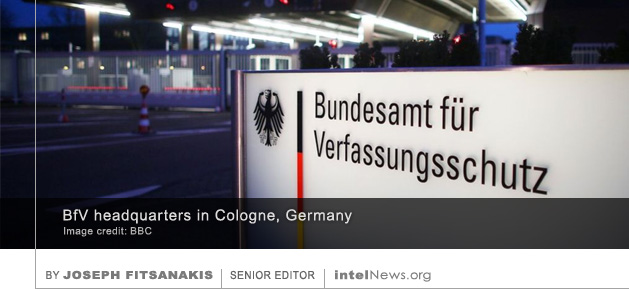 A GERMAN COURT HAS temporarily blocked an attempt by the country’s intelligence service to place a domestic far-right party under government surveillance for the first time since the Nazi era. The far-right party, Alternative für Deutschland, or AfD, was established in 2013. It shocked the German political establishment in 2017, when it received nearly 6 million votes, which amounted to 12.6% of the national vote. Since then, however, the AfD has been shunned by other political parties and the German media, for its alleged links with neo-Nazi groups and sympathizers.
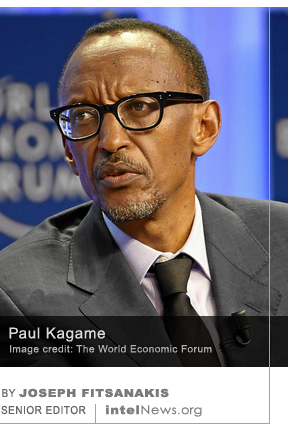 An anti-genocide activist, whose story was made famous in the 2004 Hollywood film Hotel Rwanda, has sued an airline company for complicity in his alleged abduction from Dubai and eventual imprisonment in Rwanda. During the Rwandan genocide of 1994, Paul Rusesabagina was the manager of the Hôtel des Mille Collines in the Rwandan capital Kigali. The hotel catered largely to Westerners, and its grounds were seen as off-limits by the brutal armed gangs that perpetrated the genocide. Therefore, Rusesabagina used his position to shelter over 1200 displaced civilians from the warring militias.
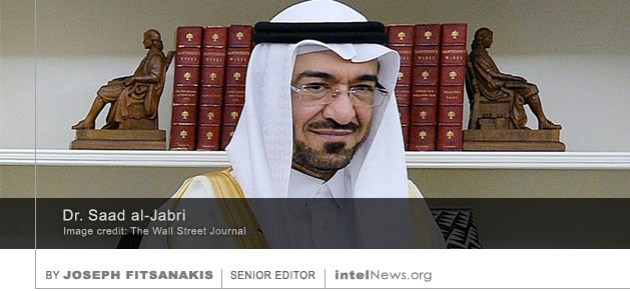
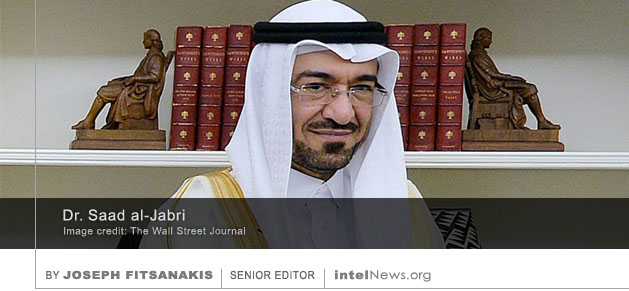 A LAWSUIT FILED IN a United States court by a Saudi former senior intelligence official, accuses Saudi Arabia’s crown prince Mohammed bin Salman of planning an illegal assassination on Canadian soil. But in a new court filing, the crown prince denies the accusation and claims that it is an attempt to distract attention from the alleged crimes carried out by the plaintiff.
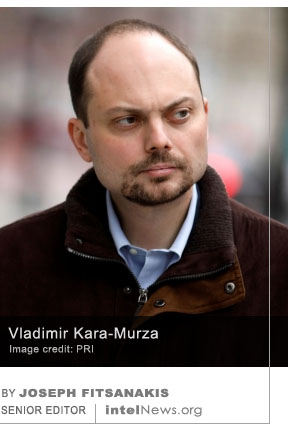 A United States-based Russian opposition activist, who claims he was poisoned twice by the Kremlin, is suing the United States government to force the release of records about his case, but is being met with resistance. The plaintiff is Vladimir Kara-Murza, 38, a senior figure in the Open Russia Foundation, a political pressure group founded by Mikhail Khodorkovsky. Khodorkovsky, an ultra-wealthy Russian businessman living in self-exile in Switzerland, is one of Vladimir Putin’s arch-enemies.
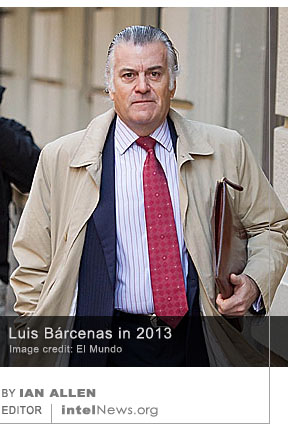 A court in Spain has begun to examine the findings of a long-running probe into an illegal network that spied on people in return for payments, which almost certainly implicates senior figures in the former governing party. The probe focuses on what is known in Spain as the Gürtel case, which is described by observers as one of the most extensive corruption scandals in Spanish political history. It centers on an extensive network of tax evasion, bribery and money laundering, which brought together leading business executives, criminal kingpins, and senior politicians from Spain’s conservative Popular Party (PP).
 Canadian border guards thwarted a sophisticated plot to kill a Saudi former senior intelligence official, who has been targeted by the oil kingdom’s crown prince because he served a rival member of the royal family, according to a lawsuit filed in an American court.
 A court in Paris has sentenced to prison two former employees of France’s external intelligence agency, who were accused of spying for the government of China. A third person, the wife of one of the accused, was also handed a jail sentence.
 The trial of two French former intelligence officers begins today in Paris, with the two men accused by French authorities of having spied for China in the 1990s and 2000s. French officials have remained largely silent on the two cases, but media reports have suggested that the two former intelligence officers were found to have carried out espionage tasks for the Chinese government.






 intelNews.org
Ex-Spanish King’s former mistress claims intelligence service spied on her
July 30, 2021 by Ian Allen 1 Comment
In 2012, it became known that the king had a six-year love affair with German-born Danish business consultant Corinna zu Sayn-Wittgenstein, 57, who is based in Britain. Since the end of the affair, in 2009, it is alleged that Carlos has been trying to retrieve nearly £60 million ($84 million), which he reportedly gifted to Wittgenstein when they were lovers. According to some media reports, Wittgenstein claims that the funds were given to her by the then-monarch “as an expression of his love” for her.
Late last year, Wittgenstein filed a lawsuit in Britain, in which she accuses her former lover of a campaign of harassment against her. She also claims that he employed agents of the Spanish National Intelligence Agency (Centro Nacional de Inteligencia , or CNI) to spy on her. The lawsuit, made public on Wednesday, alleges that, starting in 2012, current or former CNI agents were deployed by the ex-king to keep Wittgenstein “under physical surveillance”. Wittgenstein’s lawyers claim that she was followed throughout Europe, and that her personal cellphones and computers were hacked by the CNI, or by private investigators. They also claim that a team of spies broke into her estate in Britain, and installed surveillance equipment through a “perfectly drilled hole” in her bedroom window.
The business consultant is now asking for a large sum —believed to be in the tens of millions of euros— to be paid to her as compensation for alleged damages caused to her reputation. She is also asking for a restraining order against Carlos, the CNI, and anyone working for the ex-king. The former monarch denies the charges.
► Author: Ian Allen | Date: 30 July 2021 | Permalink
Filed under Expert news and commentary on intelligence, espionage, spies and spying Tagged with Centro Nacional de Inteligencia (Spain), Corinna zu Sayn-Wittgenstein, Juan Carlos I, lawsuits, News, Spain, UK